


Excess weight can increase oral health risks like gum disease, inflammation, dry mouth, and tooth decay.
Many patients opt for dental implants, having previously used dentures. Then, they come to our clinic with a seemingly trivial question, “Can I still use dental adhesive just for extra comfort?”
We empathize with this feeling. If you have used adhesive products for years, it is not easy to give it up.
In fact, it is quite the opposite. We believe strongly at Lema Dental Clinic here in Turkey that having mixed denture glue with dental implants is a bad combination that brings with it major problems.
Superglue in a Watch: The Same Analogy
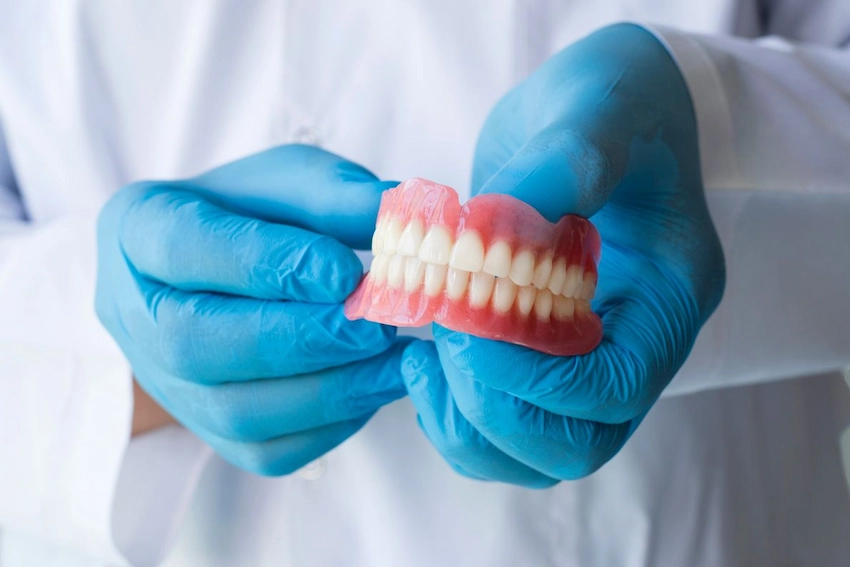
Picture your jawbone as a big, solid block of land. Dental implants are the steel beams of the strongest building. They were created from the best titanium grade, so they perfectly fit into your bone without rejection. The part of your implant that links it to your new teeth is similar to the gears of a high-class Swiss watch. It is all about precision and perfect tooth arrangement.
Now picture pouring some sticky, thick paste into those tiny gears.
That is what you do when you stick denture glue onto the new implant teeth. You will block the moving parts by clogging the mechanism,m and your dental pieces won’t position properly. In fact, with time, the situation will get a lot worse.
Health Impact: Dentists Are Warning That Glue And Implants Will Never Be A Happy Mix!
Professor Doctor Coşkun Yıldız frequently highlights a crucial aspect of dental implantation. Implant-supporting gums are just as important as the bone structure below. In fact, it is the soft tissue part. It functions as a tight barrier layer between your jawbone and the harmful microbes from the mouth.
The use of denture adhesive will lead to a series of adverse events:
- Bad bacterial colonies: The fact that denture glue is very adhesive means that it sticks to your gums as well as food and microbes.
- Gum abrasion: When you try to clean away leftover glue with a brush, you probably apply too much pressure. You end up scratching your fragile gum tissue, creating small sores.
- Bone damage: The bacteria and constant contact of the tongue and lips with the implant lead to serious gum infection, which is known as peri-implantitis. It eventually attacks your jawbone,e causing implants to fall out.
A Comparison That Tells You The Truth
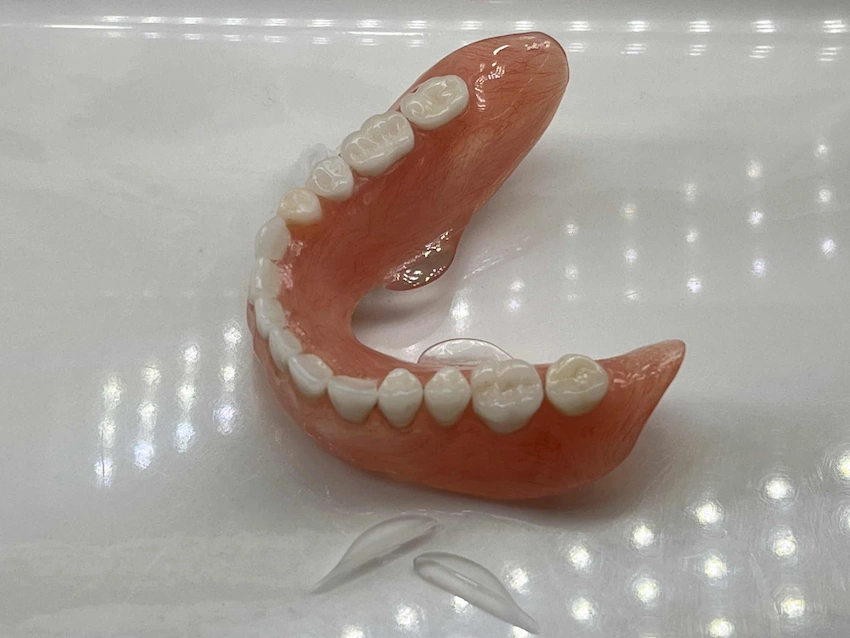
Dr. Polen Akkılıç and her team spend considerable time educating patients about this transition. Implant-based life is entirely new. However, it’s helpful to analyze side by side a glue-locked traditional denture on the one hand, and a glue-free implant-supported denture on the other.
| Characteristics | Bonding Dentures with Glue | Implant-supported Bonding Dentures (No-glue Dentures) |
| Securities | They stay in place primarily due to suction and chemically sticky pastes used for this purpose. | They are permanently and securely fastened to sturdy titanium anchors. |
| Gum Condition | Frequent use of such adhesives results in damage to your tissues and bacterial contamination. | Apart from being aesthetically pleasing, clean titanium pieces promote healthy gum seals. |
| Duties | Removal and reapplication of the chemical products is unavoidable every single day. | It is only the simple act of brushing and flossing. |
| Bite | You will experience a very limited ability to bite due to this chewing method. This is a big problem if you are not using an implant! | It gives the most natural chewing sensation you can imagine. |
FAQ (Frequently Asked Questions)
Doctor, my implant denture is a bit loose, can I just put one drop of glue?
It shouldn’t be the fix. When you’re using glue, your only goal is actually to hide the real problem underneath, but then it is still harmful since it gives bacteria access to it. It would be advisable if you call our professional team so we would be able to get it sorted out very swiftly in just a ten-minute session.
Is there a kind of denture adhesive that is safe for dental implants?
There really are no kinds of denture adhesive that are “safe” to be used with dental implants. Actually, the truth is that it’s a matter of principle that the use of adhesives is discouraged and should in no way be practiced. They leave behind their remnants, which serve as a food source for the bacteria and therefore create a favorable environment for their growth and spread.
Can I use adhesive for my upper dentures since the lower ones are implants?
Of course, you can since your upper jaw has no implants at all. It is resting on the hard tissue inside, so a small amount of adhesive would be just fine to hold it. However, please bear in mind that it will be very dangerous to a tooth to put glue on a lower implant.
How do I clean my implants if I cannot use glue removers?
Great question. You won’t need glue-removing products anymore. The best cleaning regimen is simple and consists of a gentle brush with soft hair and regular mouthwash. If available, use a water flossing unit since it washes away trapped food without damaging the delicate titanium surfaces.
Why do the patients choose this clinic for their dental implant needs?
Patients come to us in Turkey for a good reason. We are a combination of highly skilled surgeons and a great sense of aesthetics. We place your implants in the very best way so that you won’t be thinking about using denture glue at all.
Academic References
- Adell, R., Lekholm, U., Rockler, B., & Brånemark, P. I. (1981). A 15-year study of osseointegrated implants in the treatment of the edentulous jaw. International Journal of Oral Surgery, 10(6), 387-416.
- Lindhe, J., & Meyle, J. (2008). Peri-implant diseases: Consensus Report of the Sixth European Workshop on Periodontology. Journal of Clinical Periodontology, 35(8 Suppl), 282-285.
- Misch, C. E. (2014). Dental Implant Prosthetics (2nd ed.). Elsevier Mosby.
- Zitzmann, N. U., & Berglundh, T. (2008). Definition and prevalence of peri-implant diseases. Journal of Clinical Periodontology, 35(8 Suppl), 286-291.
- Goodacre, C. J., Bernal, G., Rungcharassaeng, K., & Kan, J. Y. (2003). Clinical complications with implants and implant prostheses. The Journal of Prosthetic Dentistry, 90(2), 121-132.

