


Laminate veneers resist stains and rarely turn yellow from tea or coffee.
It’s a discussion that almost always pops up at our office. Right after a patient has just spent some time in our chair and has a smile to die for but still bears a heavy burden of anxiety: Do I have to give up my morning espresso? What about my afternoon tea? You put a lot of effort into a perfect aesthetic, maybe even travel to Turkey for it, and all of a sudden, you are scared of dark liquids.
Let’s correct the misconception right away!
Actually, top-notch laminate veneers are hardly breakable at all. However, maintaining that dazzling white depends on how well you comprehend the trick of working with a new smile in the everyday world.
Teeth and Laminate Veneers: The “Glazed China” Parallel
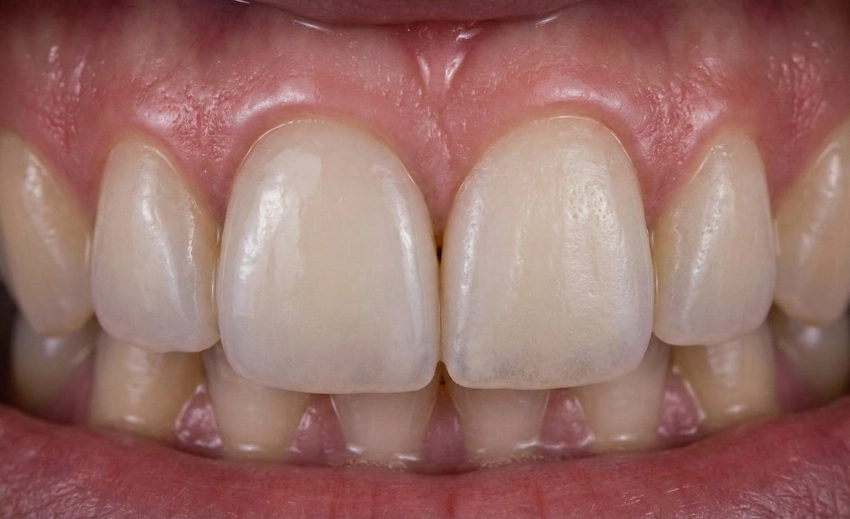
We must look at the microstructure of teeth to understand the reason for staining.
The human enamel of natural teeth actually has tiny pores. Your natural tooth can be seen as an extremely compact, microscopic sponge. When you take black tea, red wine, or coffee, the colored substances gradually penetrate the enamel’s tiny pores, causing tooth discoloration to yellow or gray.
On the other hand, porcelain laminate veneers work on a totally different physical principle. In fact, dental porcelain of medical-grade is hardly porous at all. Imagine for a second a high-end ceramic coffee mug that has been glazed. When you pour black coffee into such a mug, the drink just flows over the smooth, shiny surface. It cannot penetrate.
What we witness in our practice is as follows. Dentist Polen Akkılıç and her team at Lema Dental Clinic are designing a custom smile. They are using ultra-premium, highly polished porcelain that is fired and glazed in a specially designed dental kiln. Thus, the material itself actively repels the staining molecules found in your daily brew.
Trouble Spot: Stains Sneak in Where
If porcelain doesn’t get stained, how is it that some patients finally remark their teeth are yellowing?
But let’s look closer. The porcelain shield is virtually impenetrable, but the environment surrounding it is not. Three specific culprits can compromise your bright smile:
- Margins: A veneer is fixed to your natural tooth layer at the front using a special composite resin cement. The micro-millimeter line where the veneer meets the natural tooth (the margin) is the weak link. Composite can absorb stains over time. Plaque trapped at the gumline in this area acts as a coffee and tea reservoir. This will create a subtle yellow outline around the tooth.
- Surface Scratches: Some patients think that by scrubbing their veneers with aggressive whitening toothpastes or by using a hard-bristled toothbrush, they will get a better result. Actually, it is like using sandpaper on the “glazed mug” you have. When the glaze gets scratched, the microscopic abrasions eventually hold coffee pigments thus making the tooth appear dull and yellowed.
- Underlying Tooth: To be able to imitate the way light interacts with natural teeth, laminate veneers are often very thin and translucent. Professor Doctor Coşkun Yıldız often points out that if the natural tooth structure underneath the veneer starts to get darker or is decaying, then a dark shadow will be visible through the porcelain.
Material Breakdown: What to Expect
We at Lema Dental Clinic in Turkey, based on our practical experience, consider that the education of patients must be the main key to longevity. Being familiar with the material that is in your mouth gives you a proper guide on how to keep it.
| Type of Material | Level of Porosity | Resistance to Tea/Coffee | Expected Aesthetic Lifespan |
| Porcelain Laminate | Non-porous | Extremely high | 10–15+ years |
| Composite Resin | Slightly porous | Moderate | 5–7 years |
| Natural Enamel | Porous | Low | Lifetime (with natural color changes) |
Maintaining Your Investment at Home
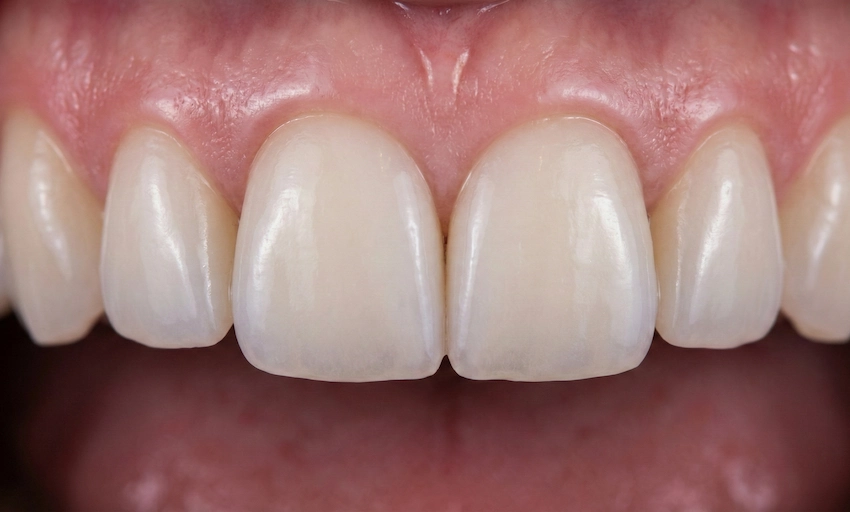
There is no need for you to ban your favorite warm drinks just to keep your veneers safe. What you are missing is just a more intelligent routine.
The very first step in the entire process is to substitute a powerful, abrasive toothpaste with a mild, non-abrasive gel toothpaste. Whitening pastes are designed to bleach the natural enamel; in fact, they do not affect porcelain other than scratching it. Secondly, if at all possible, try to acclimatize to rinsing your mouth with water immediately after having coffee or tea. It is simply the flushing of pigment removal when you do this that they won’t settle on the edges of your teeth. And finally, never relax your professional cleaning sessions. Our hygienists use non-abrasive polishing pastes that are specially made for cosmetic restorations, thus keeping the margins flawless.
FAQs
To be on the safe side, we at first recommend no highly pigmented foods/liquids for 48 hours or so. The porcelain itself should not be a problem, but the composite bonding cement that is used to hold the veneers together needs some time (a couple of days) to be fully cured and stabilized. After that, the sky’s the limit with your coffee!
The use of a straw is one of the ways of protecting your veneers from the effects of dark beverages. Besides that, the drink will hardly even touch the front teeth, so it is one of the practices that will help you get the most out of your porcelain veneers, in terms of appearance.
100% yes. Nicotine stains are very tough to remove as cigarette tar is not only extremely adhesive but also quite elusive. Even if the stain doesn’t go deep into the porcelain, it will still strongly attach to the bonding margins and the backs of your natural teeth resulting in really stubborn, hard-to-removal dark brown stains.
That is the main reason why cleaning between teeth gets rewarded. Using a regular floss, floss picks, or a water flosser can remove the plaque covered with bacteria thatholdsd the staining of coffee in the areas around the gums and in-between the teeth. Therefore by maintaining a regime of flossing, the stains at the gum line will definitely become invisible.
No, and please don’t try it! Traditional bleaching agents cannot change the color of dental porcelain. Using harsh whitening toothpastes will only scratch the surface glaze, making them look even duller over time. If they look a bit lackluster, come see us for a professional cosmetic polish.
- Magne, P., & Belser, U. (2002). Bonded Porcelain Restorations in the Anterior Dentition: A Biomimetic Approach. Quintessence Publishing.
- Aykor, A., & Ozkurt, Z. (2011). Color stability of different restorative materials after exposure to coffee, tea, and cola. Journal of Applied Oral Science, 19(5), 535-539.
- Guler, A. U., Yilmaz, F., Kulunk, T., Guler, E., & Kurt, S. (2005). Effects of different drinks on the stainability of resin composite provisional restorative materials. The Journal of Prosthetic Dentistry, 94(2), 118-124.
- Pecho, O. E., Ghinea, R., Alessandretti, R., Pérez, M. M., & Della Bona, A. (2016). Visual and instrumental shade matching using CIELAB and CIEDE2000 color difference formulas. Dental Materials, 32(1), 82-92.
- Stober, T., Gilde, H., & Lenz, P. (2001). Color stability of highly filled composite resin materials for facings. Dental Materials, 17(1), 87-94.

