


Denture adhesives improve hold, but implants offer better stability.
Denture wearers share a peculiar source of anxiety with the rest of us: the sudden and involuntary thought of the worst case happening – a sloppy laugh, a juicy steak, or a loud sneeze making your ‘pearly whites’ fall out and scatter on the floor! To prevent such scenarios, millions of people rely on a tube of cream every morning as their device to ‘hit safety.’
Through years of our clinical work, we at Lema Dental Clinic, Turkey, have seen that such products become a daily band-aid for people. They offer instant alleviation. However, they have hidden dental truths.
Actually, those ‘glues’ are quite complicated. We will look into in detail how they affect your mouth, which brands are the best, and at what time they can harm your jawbone.
How Do Denture Adhesives Work?
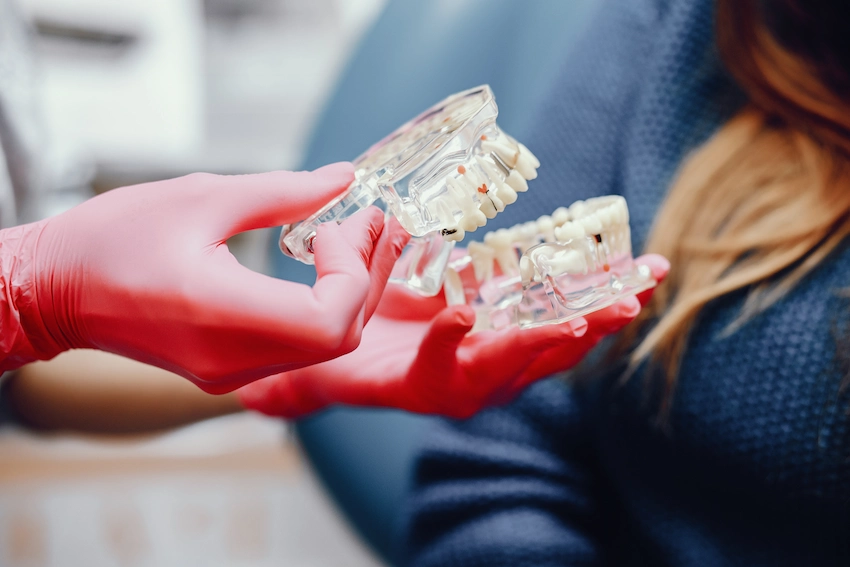
Maybe think of your denture as a boat and your jawbone as a shore, which is changing all the time, if you want a pretty good idea of how it works. The roots of your natural teeth are really deeply sunk into the bone. When you do not have these roots, your denture is left like a boat without a rudder and also without any grip.
Obviously, denture adhesives are not the same as household Superglue. These products mostly serve as a small shock absorber and a seal for a fluid.
When the cream comes in contact with the saliva in the mouth, it expands. It locates and fills the microscopic spaces between the hard plastic denture and the soft gums. This way, it removes the air pockets and forms a tight physical seal that firmly holds the teeth in place.
Soluble vs. Insoluble Options
Here is the detail that many basic guides omit. Most of the around-the-counter creams and powders are water-soluble. They proceed to dissolve stepwise during the day, as you swallow or drink warm liquids. This means that their holding power is weakened with every meal.
The options that are water-insoluble are resistant to liquids. They provide a consistent hold for the whole day, but the cleaning of this type of adhesive is slightly more time-consuming.
The Four Main Types of Denture Adhesives
Entering the dental aisle and seeing the sheer quantity of choices can be intimidating. Dentist Polen Akkılıç and her team categorize these products into four main types according to what they usually encounter in their daily practice.
1. Denture Creams and Pastes
Globally, creams/pastes are the most widely used solution. They grant a very strong and reliable grip. Also, dentures can be sealed, leaving no crumbs inside.
- The downside is that the application has to be perfect. If the user overdoes it, then the excess cream will come out of the mouth,h and it will be nasty-tasting and slimy-feeling.
2. Denture Powders
Powders are a very good alternative option that people often ignore/fail to notice. What you do is you scatter a thin and light coat of powder over the freshly cleaned and wet denture plate as the final step before putting it in your mouth.
- The catch is that powders operate using natural moisture in the mouth. They are therefore working by forming a very thin layer. This makes them very easy to clean off at night, but at the same time, their hold after some time can be significantly diminished compared to heavy creams.
3. Adhesive Strips and Wafers
These products are exactly what they sound like: ultra-thin scraps, a sort of pre-cut fabric with multiple adhesive patches. They eliminate the sticky mess of creams.
- The catch is that fancy strips provide a very tidy and travel-friendly solution. But since the thickness of them is not in your hands, if your jaw shape is highly uneven, these might not properly fit all over.
4. Cushioning Soft Pads
Cushioning soft pads help a person undergoing new denture adaptation time to recover his/her gums that are undergoing pain due to the denture by providing soft and flexible cushioning.
Quick Product Comparison
| Adhesive Type | Hold Strength | Cleanup Effort | Best Used For |
| Creams / Pastes | High (10–12 hours) | Moderate to High | Maximum hold and stopping food from trapping. |
| Powders | Moderate (6–8 hours) | Low | Sensitive gums and very easy nightly cleanup. |
| Strips / Wafers | Moderate (8–10 hours) | Very Low | Quick, neat application with zero sticky mess. |
| Soft Pads | High (8–12 hours) | Very Low | New denture wearers with painful sore spots. |
The Best Brands on the Market: Our Clinical Review
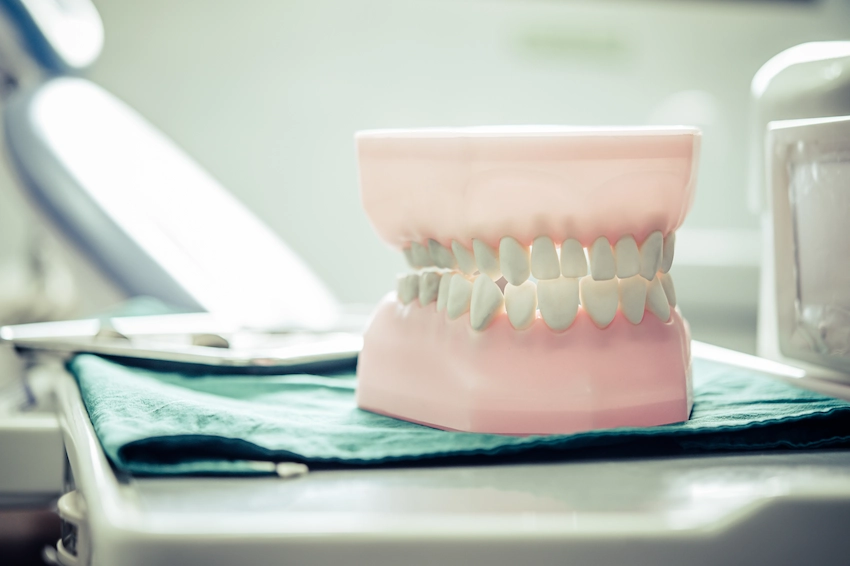
Patients ask Dentist Polen Akkılıç and her staff regularly which particular brand should be bought. We suggest ones with a high hold strength and that are the healthiest.
- Fixodent Ultra Max Hold: #1 for raw holding power on the market. The thin nozzle is to be applauded. Hot drinks will not affect this product, so it holds through your morning coffee. Be aware of its zinc content and switch to low usage in such cases
- Super Poligrip Free: The choice of our clinical team: no zinc, no artificial flavors – safe for daily use over the long term, and it will not alter the taste of your food.
- Secure Denture Adhesive: Secure does not dissolve in water. Saliva and drinks will not wash it away. It works incredibly well for loose lower dentures. It takes extra patience to clean off at night, but the stability is excellent.
- Cushion Grip Thermoplastic Adhesive: This acts like a temporary soft liner. It is a special plastic that tightens the fit of an old denture by molding to your gums. One application can last up to four days.
- Sea-Bond Wafers: When it comes to cream residue, this is the best pick. It uses a zinc-free fabric pad to cushion your gums comfortably.
- Wernets Ultra Powder: This classic, lightweight powder offers a neat, gentle hold without adding bulk or leaving a sticky film in your mouth.
Pros and Cons: Balancing the Benefits and Risks
In reality, denture adhesives are kind of double-edged swords. They certainly help calm your social fears, but if you continue to rely on them, you could be hiding serious dental problems.
The Pros:
- Mental Peace: You can speak, smile, and eat without worrying that your teeth will fall out.
- Better Chewing: Studies show that a good adhesive makes chewing easier. This lets you eat a healthier mix of foods.
- Gum Protection: By stopping the denture from moving, glues reduce painful rubbing and swelling.
The Hidden Risks:
- The Zinc Hazard: In the past, many glues used high levels of zinc. Continuous use can result in the intake of this metal at unsuspected levels, leading to various health problems,s including severe damage to the nervous system, causing numbness. As a general rule, use only zinc-free products for everyday denture holding.
- Faster Bone Loss: This is the greatest danger. As Professor Doctor Coşkun Yıldız states, a jawbone without teeth is like an ice cube melting under the sun. When the bone shrinks, the denture becomes loose, and by resorting to more glue,e you create bad pressure points which actually accelerate the shrinkage.
How to Apply Denture Adhesive Correctly
Efficient use of adhesive product is a method not only to save money but also to avoid a sticky mess. Here is a step-wise description:
- Step 1: Make sure the denture is perfectly washed and dried. If you use powder, the plate needs to be slightly wet.
- Step 2: Place short, thin bands of cream. Avoid going to the edge by at least 5mm. Three small dots are sufficient for an upper denture.
- Step 3: Give your mouth a good rinse. With your thumb,s press the denture firmly. Bite down lightly for 15 seconds to secure the hold.
- Step 4: Remove the excess cream that slips out. Besides, take out at night and clean your mouth and the plate with warm water and a toothbrush.
When Should You Stop Using Glues?
Adhesive is meant to add extra confidence to a denture that already fits well. It cannot fix an old, warped, or broken appliance.
Here is what we see in the clinic. You need to see a dentist immediately if:
- You use much more adhesive now than you did six months ago.
- Your denture still wobbles or moves when you chew, even with glue.
- You get chronic, painful red spots that do not go away.
- A single tube of glue lasts you less than one week.
The Permanent Solution: Moving Beyond the Tube
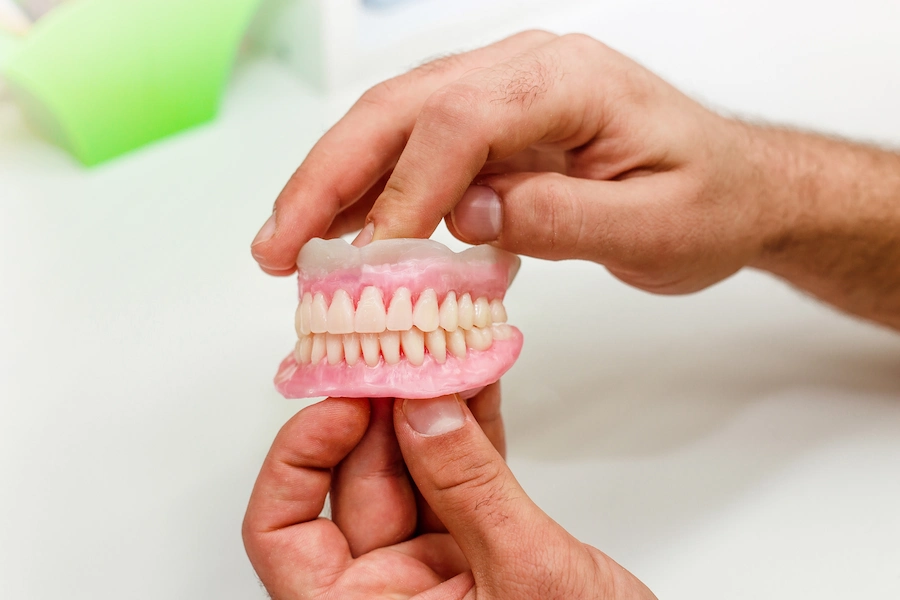
Here is the simple truth. Patients eventually get tired of scrubbing sticky paste out of their mouths every night. They get tired of worrying about their teeth during a dinner with friends. They come to Lema Dental Clinic in Turkey to find a permanent answer.
Glues help for a short time, but they do not stop your jawbone from shrinking. Professor Doctor Coşkun Yıldız and Dentist Polen Akkılıç specialize in helping patients throw away their dental glue forever using modern dental implants.
We use advanced methods like All-on-4 or All-on-6 implant protocols. We place small titanium anchors into your jawbone. Then, we attach a custom, permanent porcelain bridge on top.
This completely removes the need for glue. It stops your jawbone from shrinking. It also gives you back 95% of your natural chewing power. Turkey is now a world leader in this care, offering top-tier surgery that is easy to access.
The question remains: Are you using glue just for peace of mind, or are you forcing an old piece of plastic to work? If it is the second choice, it is time to put down the tube. Come explore a solution that looks, feels, and functions like real teeth.
Frequently Asked Questions (Doctor-to-Patient Guide)
Very little. Suppose you compare adhesive to strong spice—a tiny bit can change the whole flavour. So, simply three or four tiny dots, just like peas, on a clean plate would be enough. If the cream comes out of your mouth when you bite, then you have overused it significantly.
Yes, provided your denture is comfortable, and you carry out the application of a zinc-free product. On the other hand, if you need to put on the glue several times a day just to be able to talk, your mouth is giving a signal that you need a denture correction by a professional.
The leftover glue can be very difficult to remove physically. Here’s a great clinical tip: now that the glue is a chemical bond, you can try breaking it by rinsing your mouth with warm, saline water. After that, you can use a soft toothbrush or a damp washcloth and massage your gums in a circular motion so as to exfoliate the plaque.
Not at all. Our well-designed partial dentures use metal claws to clasp your remaining healthy teeth. That is why, in theory, they should never require glue. In the case that you find your partial denture to be loose, avoid using cream at all costs. Just bring it to the office and let us tighten the metal clips in a safe way.
Indeed, it can. Hot beverages cause the denture creams, which are generally water-soluble, to slowly become soft/flexible. Therefore, if you keep drinking hot tea or coffee throughout the day, by the time the afternoon comes, your hold will be diminished. Products such as Secure are more resistant to liquids, but implants are the only option that allows you to eat and drink with total freedom.
- An, S., Gao, W., & Professional Committee of Removable Prosthodontics. (2021). Clinical guidelines for the use of denture adhesives. Chinese Journal of Stomatology, 56(3), 232–236.
- Felton, D., Cooper, L., Duqum, I., & Minsley, G. (2011). Evidence-based guidelines for the care and maintenance of complete dentures: A report of the American College of Prosthodontists. Journal of Prosthodontics, 20(S1), S1-S12.
- Grasso, J. E. (2004). Review of denture adherents: Efficacy, safety, and patient satisfaction. The Journal of the American Dental Association, 135(8), 1143–1150.
- Papadiochou, S., & Pissiotis, A. L. (2018). Denture adhesives: A systematic review of their efficacy, consumer usage patterns, and clinical recommendations. The Journal of Prosthetic Dentistry, 120(3), 376–382.
- Yuan, F., & Drago, C. (2019). Comprehensive analysis of zinc-containing vs. zinc-free denture adhesives and systemic health risks related to over-application. International Journal of Oral & Maxillofacial Implants, 34(4), 911–918.

