


Implants are fixed and long-lasting; flexible dentures are removable and affordable.
Truth be told, the loss of a single tooth can indeed impact your life in so many ways. Besides changing your smile, it can affect how you talk and even how confident you feel every day. Many times, patients get confused as there are so many options for replacement. Flexible dentures and dental implants top the list among the choices made.
Both options are, in fact,t designed to help, though they approach the matter of dental restoration in totally different ways. At Lema Dental Clinic in Turkey, our focus is not just on how a change looks on the surface, but also on helping patients gain a clear understanding of what,t in fact, happens underneath the gum layer.
The Architectural Foundation of Your Smile
Here’s a way to picture the difference: a jawbone to a house’s foundation. Therefore, a dental implant is a huge pillar driven deep into the foundation, and it, consequently, holds the house. On the other hand, a flexible denture is like well-made, beautiful furniture that is simply placed on the floor. It is very pleasing and functional at first, but it doesn’t contribute to the strengthening of the house.
Initially, the bone would be deprived of the stimulus of chewing pressure,e which normally maintains it. Your body will consider bone that is no longer stimulated as unnecessary, and thus it will not only stop producing bone in that area, but the bone will actually gradually break down through a process referred to as resorption.
Delightful Features of Flexible Dentures
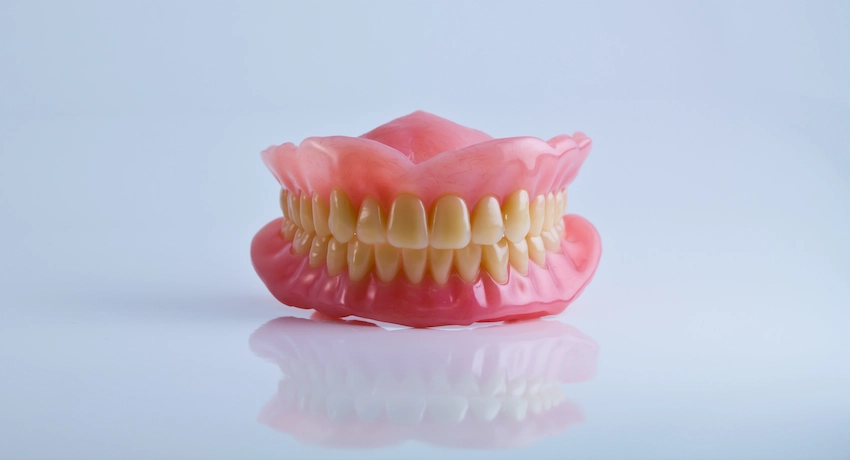
In a sense, flexible dentures are an improvement over traditional dentures. Flexible dentures are fabricated from a soft, safe thermoplastic nylon. There are no metal clasps, which are very uncomfortable, in flexible dentures.
Here is what we observe in the clinic: patients adore flexible dentures largely because they are able to obtain results almost immediately without going through a surgical process.
- Flawless Aesthetic: The translucent material merges flawlessly with your natural gums.
- Short Timeframe: You avoid the pain of surgery, and the whole process will take you only a few weeks.
- Easy to Use: Since they move with your mouth, it is much simpler for you to get acquainted with these rather than hard acrylic ones.
However, looking closely at how these work on a daily basis, it must be said that these dentures are placed on top of your gums. Hence, they actually take in your biting force instead of transferring it to the bone. For this reason, your underlying jawbone will still diminish over time. When your gums start to lose their shape, you won’t be able to wear the denture, and you will suddenly get a new one.
Dental Implants: Permanent Attachment
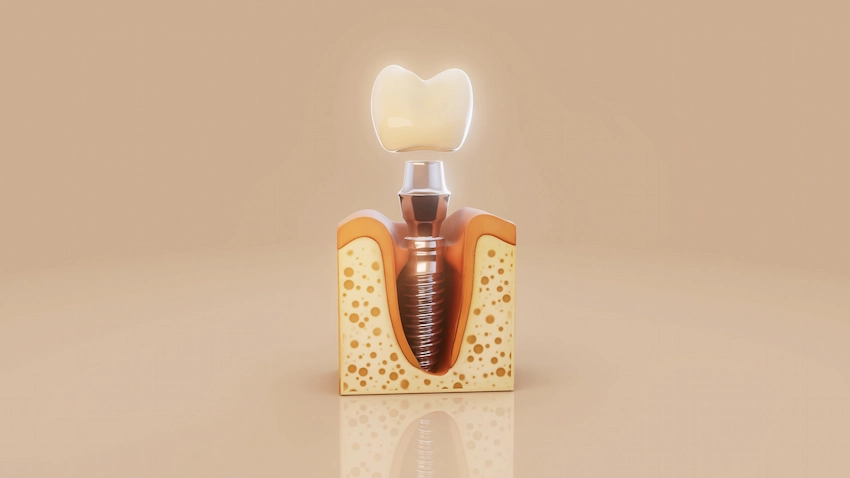
If you aim to restore the working of a natural tooth in the most effective way possible, then dental implants are the way to go.
Professor Doctor Coşkun Yıldız always emphasises that the fundamental thing is that implants are part of you, and not just something you wear like dentures. The titanium post is capable of undergoing a process where it will be locked to your jawbone biologically, and this process is known as osseointegration.
There are many important benefits arising from this process:
- Substantial Bone Maintenance: Through the function of the implant as a tooth root, the jawbone will be signaled to remain dense and healthy.
- Normal Chewing Ability: You do not have to think twice if you want to bite into an apple or chew a juicy steak.
- Enduring Strength: A titanium base can be a lifetime companion if well maintained, and all that you would have to do occasionally is maintain the crown on top.
You must also think about whether implants suit you. The treatment involves minor surgical procedures and time for recovery and healing. Also, you need enough bone of good quality and quantity. However, due to improvements in the technique of bone grafting, implant electrodes can be successfully implanted in the majority of patients nowadays.
The Lema Dental Clinic Experience
You needn’t be the one to make this choice on your own. Dentist Polen Akkılıç and her team are well-experienced in leading foreign patients through these very cases daily.
Travelling to Turkey has become quite popular among those seeking treatments that are complex enough to involve the restoration of the entire mouth. One of the things we do is carefully assess your bone density, lifestyle, and aspirations for the future. Then, we compile a customized treatment plan that meets your needs.
Comparing Your Options at a Glance
| Clinical Feature | Flexible Dentures | Dental Implants |
| Primary Role | It rests on the gums, restoring only the exterior visual aspect of a tooth | Replaces the root of the tooth, thus restoring the entire tooth structure |
| Bone Health | Bone degradation continues over time | Supports and protects the jawbone |
| Chewing Power | Approximately 25-30% of natural bite force is restored | Restores up to 90-100% of natural bite force |
| Treatment Time | 2 to 4 weeks (No surgery needed) | 3 to 6 months (Healing required) |
| Lifespan | Replacement is needed every 3 to 5 years | Implant lasts a lifetime; crown lasts 10+ years |
Direct from the Doctor: Frequently Asked Questions
Definitely. The base is made of a transparent nylon as opposed to a pink colored opaque plastic. This way, your natural gums are visible. Since there are no metal hooks, other people will just see what seems like natural teeth.
This is something we get asked very often, but the reality is quite the opposite. In fact, your jawbone contains very few nerve endings. Implant placement under local anesthesia is absolutely pain-free. You cannot feel pain,n but you will sense some pressure. Afterwards, mild soreness will be manageable with standard painkillers.
This is something that quite a few patients do. A flexible denture can be your solution for immediate needs and carry you a long way. Nevertheless, as you are well aware, your bone is going to diminish with time. If you have spent a long time before deciding on an implant, the chances are that you will even require a bone graft at the time of implant placement.
As far as strength and breaking are concerned, nylon is very hard to break. However, the fit is what gets affected the most. Since the jawbone continues to resorb over time, it will be in 3 to 5 years that you will start to experience the denture getting loose. Also, in order to keep a tight fit, you will have to get a new one.
It is all about quality at a reasonable price. In our Istanbul dental clinic, the luxury implant brands that we use, as well as 3D printing, are the same as those that a clinic in London or New York has. In addition, because we treat a very high number of patients and own highly advanced labs, we may provide world-class dentistry in a much more efficient manner.
- Albrektsson, T., Brånemark, P. I., Hansson, H. A., & Lindström, J. (1981). Osseointegrated titanium implants: Requirements for ensuring a long-lasting, direct bone-to-implant anchorage in man. Acta Orthopaedica Scandinavica, 52(2), 155-170.
- Buser, D., Sennerby, L., & De Bruyn, H. (2017). Modern implant dentistry based on osseointegration: 50 years of progress, current trends and open questions. Periodontology 2000, 73(1), 7-21.
- Kaplan, P. (2008). Flexible denture base materials: A viable alternative to conventional acrylics. Journal of the American Dental Association, 139(2), 241-245.
- Misch, C. E. (2014). Dental Implant Prosthetics (2nd ed.). Elsevier Mosby.
- Zitzmann, N. U., & Marinello, C. P. (1999). Implant-supported removable overdentures in the edentulous maxilla: Clinical and technical aspects. International Journal of Prosthodontics, 12(4), 385-390.

