


Understanding Dental Code D7210
Among the dental code systems, Dental Code D7210 is a very significant part that is used to show the surgical removal of a single fully erupted tooth. It is a code that is used when a tooth that is still visible above the gum line needs to be operated on because it is damaged or decayed severely, or just too complicated to be removed. This might also include cases where the tooth has been broken below the gum line, is extremely decayed, or is in such a position that a simple extraction cannot be done. The surgical method is the one that does not harm the rest of the teeth, gums, or bones while the problematic tooth is being removed. Polen Akkılıç, a dentist at the Lema Dental Clinic, and her professional team are the ones who, with a high degree of efficiency, perform this operation, thus ensuring the patient’s safety and comfort.
This operation, as indicated by the Code D7210, is a simpler one and is likely to consist of performing cuttings on the gum tissue, extracting the bone, or the use of some other surgical tools to get the tooth out. By applying this code, the submission of the surgical report and the corresponding billing procedure can be easily done. Lema Dental Clinic takes the initiative to offer first-rate services to their patients; thus they not only consolidate the proficiency of their team, but also ensure the comprehensive care that every patient, whose situation has led to a need for a surgical extraction, is entitled to.
When is D7210 Used?
The code D7210 applies to the case of a tooth that has grown out completely but whose removal requires the use of surgical instruments due to serious damage or an unusual location. As an example, only a surgical method will be able to properly extract a heavily fractured molar that is located under the gum in such a way that it cannot be seen. In such a case, a special procedure is performed to remove the tooth carefully and gently. D7210 is most times associated with situations where the extraction of the tooth may result in damage to the most susceptible structures such as the teeth adjacent to the one causing the problem or the jawbone if the operation is not done correctly. Professor Doctor Coşkun Yıldız and his support staff at the Lema Dental Clinic have abilities in such situations which in turn allows patients to undergo minimal damage procedures.
Moreover, D7210 might be the only option for the occurrence of a tooth infection or the presence of an abscess that leads to the necessity of a surgical extraction. This is the only way to ensure that the roots of the infection are completely removed and that they are not left with unnoticeable bacteria in the area. In addition, if the tooth is located in a spot where it may cause the crowding of teeth or may even damage other teeth, then D7210 is the way to go to give a safe and risk-free treatment that will foster oral health maintenance in the long run.
How Dental Practices Use D7210?
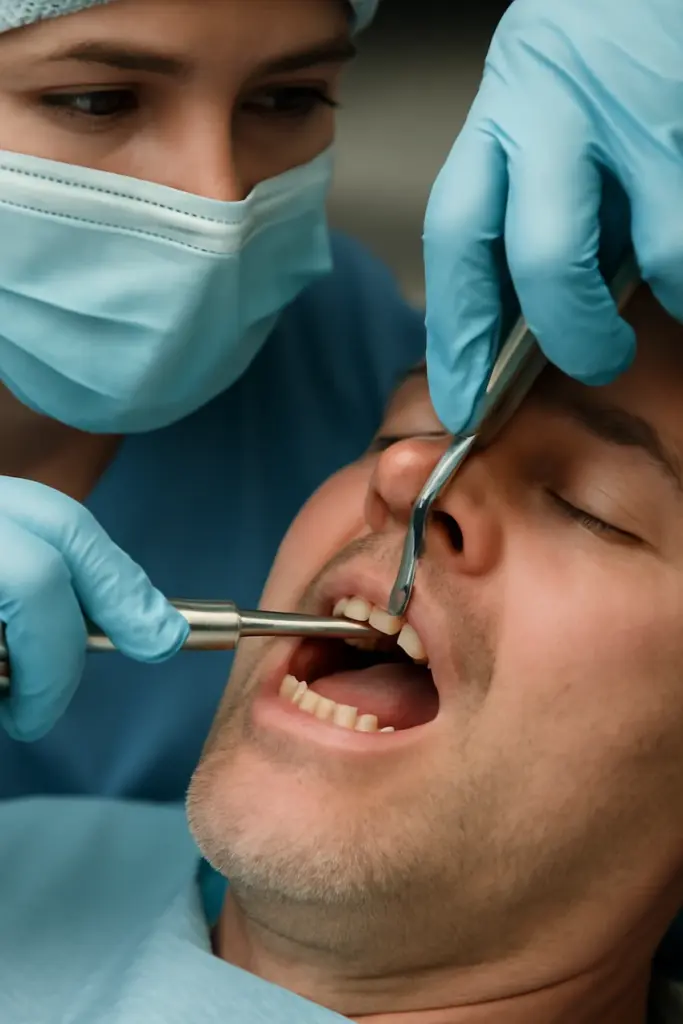
Dental offices use Dental Code D7210 to appropriately bill for the surgically more complicated removal of a tooth. The code serves as a means to distinguish a simple extraction from a more complex surgical one. The application of D7210 is a key element in the correct billing and recording of the case, especially when it comes to insurance, as it allows the dental team and the patient to be compensated appropriately for the level of care delivered. Dr. Polen Akkılıç and her team at Lema Dental Clinic not only adhere to strict standards but also ensure that every surgical extraction is done with accuracy and that each session is documented thoroughly for later use.
Dental practices, through the use of D7210, show that they have properly classified the intervention, i.e., surgical versus simple, both from a legal and medical standpoint. Furthermore, the code facilitates uniform record-keeping, which is very important in the continuation of the patient’s medical history. It guarantees that the dentist, should more treatments or follow-up be needed, can easily access a recorded history. The use of this documentation method by Professor Doctor Coşkun Yıldız and his team is not merely for the clinic’s convenience, but it is a way to keep the patient’s care plan updated and as an accurate reflection of the treatments received.
Advantages and Disadvantages of Using Dental Code D7210
Advantages:
- Comprehensive Coverage: Dental Code D7210 is a promise that anytrasurgical extraction of a fully erupted tooth is properly recorded and charged, therefore providing accurate information to both the dental office and the patient.
- Insurance Coverage: The code works well with the majority of insurance companies, which in turn makes the process of insurance reimbursement for the surgical intervention easier and more accurate. As a result, the patient’s cash payment decreases.
- By utilizing D7210, the dentist may effectively perform surgical operations in such a way that the removal of the tooth will not cause damage to other anatomical structures, thus improving the general patient outcomes are improved.
- Moreover, D7210 standardizes the processes across various dental care providers; thus, patients can receive similar levels of care, irrespective of where they are. Besides, the code facilitates dental staff in following the right methods of operation and in avoiding errors.
- The post-surgery care that is an integral part of the treatment plan is also ensured by the code, thus allowing patients to manage their recovery, avoid any complications, and heal quickly with minimal risks.
Disadvantages:
- Since D7210 is associated with a certain surgical procedure, the costs of the surgery will be much higher than a simple tooth extraction. Thus a patient who bears the risk of the insufficient insurance fee may have to make large out-of-pocket payments.
- The recovery period will be extended in the case of a surgical operation, thus the patient will likely have to experience discomfort, swelling, and the need for a follow-up care appointment.
- The risk of complications is always present in surgical operations. Possible complications may include infection, dry socket, or damage to the surrounding teeth or bone and they can prolong the healing process.
- The indication for D7210 is limited to the extraction of fully erupted teeth. In the case of impacted and deeply embedded teeth, the use of other codes like D7240 or D7250 is required which, in turn, makes the process of billing and coding more complicated.
- The performance of a D7210 extraction requires professionals who have the appropriate training and skills. Not all general dentists are capable of doing surgical extractions; therefore, it may be necessary for the patient to be referred to a specialist, which will cause a delay in the treatment.
Cautions Related to Dental Code D7210
- Patient Evaluation: The condition of the patient’s body should be examined before the use of D7210. If the patient has any health problems hidden under the surface, for example, heart diseases, blood coagulation disorders, or diabetes, it can make the surgical operations complicated. Apart from the full medical history, the patient may be required to take further tests to confirm his/her surgical fitness.
- Accurate Diagnostic Imaging: The choice to carry out D7210 ought to be dependent on the correct and clear imaging results visually expressing the dental problem and the site of the tooth. By that means, not only does it serve as a confirmation that the operation is necessary, but it also prevents the doctor from undertaking extra and unnecessary work.
- Informed Consent: Patients must be given all the information about the operation which naturally includes the potential risks and the recovery period. Interaction with the patient and obtaining his/her informed consent are two processes that ensure the patient’s understanding and trust.
- Recovery Care: It is of great significance that, after a D7210 removal, the right aftercare instructions are provided to the patient so that complications like infection, dry socket, or excessive bleeding are prevented. Moreover, the patient should always be followed up on to check if the healing process is going smoothly.
- Consideration of Other Options: The employment of D7210 should be a measure of last resort only when a simple extraction is not feasible. Before making the decision to go for a surgery option that is more complicated and costly, the dentists should ensure that less invasive alternatives cannot accomplish the task.
D7210 Procedures: What Are the Limitations?
Dental Code D7210 is a generally accepted standard that fits most cases; however, it refers only to fully erupted teeth. Consider the situation where the tooth is infected or is partially erupted; in this case, smaller devices such as D7240 can be more appropriate for the bone removal of an impacted tooth. Additionally, D7210 is not the indication for any occurrence of extra-condemning works, e.g., bone grafting or advanced periodontal treatment, which may require different coding and billing. Along with dentist Polen Akkılıç and Professor Doctor Coşkun Yıldız, the dental care providers at Lema Dental Clinic need to see the case both medically and physically and then they can make a definite diagnosis before deciding the corresponding code for the treatment.
Additionally, the D7210 code might not indicate the level of difficulty of the case if the tooth is in a very cramped area or is a part of a complex orthodontic treatment plan. As an example, a person who is undergoing bone grafting, sinus lift, or some other complicated procedure may need several additional code numbers to cover the whole treatment plan. Consequently, it is very necessary to perform a thorough physical examination along with diagnostic imaging to be completely certain that every detail of the operation is properly reflected in the patient’s medical records.
Comparison of D7210 with Related Dental Codes
| Dental Code | Description | Usage |
| D7210 | Surgical extraction of a fully erupted tooth | For teeth that require surgical intervention but are fully erupted |
| D7220 | Removal of impacted tooth – soft tissue removal | Used for teeth that are partially impacted and surrounded by soft tissue |
| D7240 | Removal of impacted tooth – bone removal | Used for impacted teeth that require bone removal in addition to soft tissue removal |
| D7250 | Removal of a partially impacted tooth with bone grafting | Used when bone grafting is necessary to restore the area after the tooth is removed |
Example Case for D7210
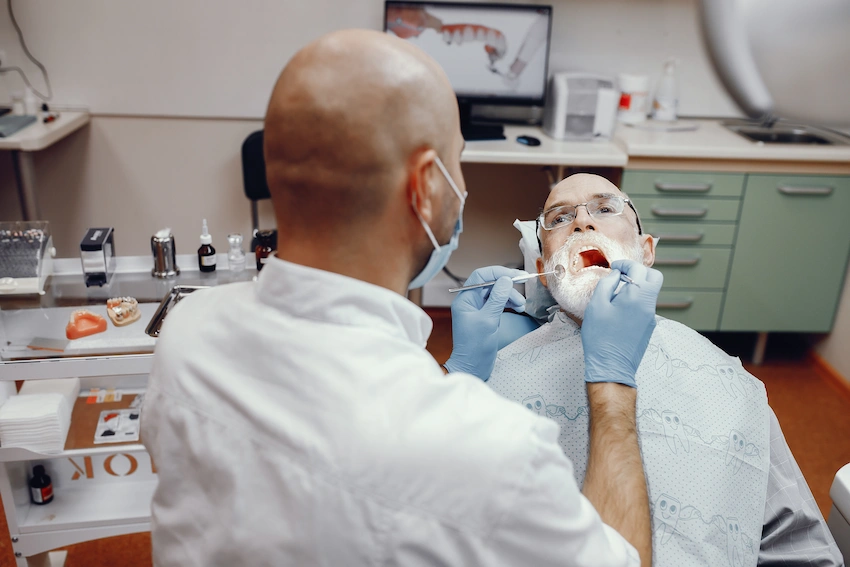
A 55-year-old male with a broken upper molar came to Lema Dental Clinic for treatment under the supervision of Prof. Dr. Coşkun Yıldız. The tooth was fully erupted but had been so heavily damaged that the damage was under the gum and could not be extracted in a normal way. After assessing the patient’s overall condition and taking X-rays, Prof. Dr. Coşkun Yıldız decided to do a surgical removal under the dental code D7210. The operation was carried out without any problems. The tissues around the tooth were slightly affected and the patient was given detailed instructions on how to take care of himself after the operation.
References:
- American Dental Association. (2023). Current Dental Terminology (CDT) codebook. Retrieved from https://www.ada.org/en/publications/cdt
- Lee, W., & Kim, S. (2021). Surgical extraction of fully erupted teeth: A review of current practices and outcomes. Journal of Oral and Maxillofacial Surgery, 79(5), 987-994. https://doi.org/10.1016/j.joms.2021.03.015
- Zadeh, H. (2019). The role of surgical extractions in modern dentistry. International Journal of Dentistry, 2019, 1-7. https://doi.org/10.1155/2019/5620438
- Smith, T. A., & Patel, R. (2020). Advanced surgical techniques in dentistry: Procedures, risks, and recovery. Dental Care Publishing.
- Williams, C., & Thompson, A. (2022). Post-operative care following surgical tooth extractions: A critical review. British Journal of Dental Practice, 35(2), 142-148. https://doi.org/10.1038/s41577-022-00549-2
Frequently Asked Questions About Dental Code D7210
Dental Code D7210 covers the surgical extraction of a fully erupted tooth that requires surgical intervention due to significant damage, decay, or complex positioning.
D7210 is necessary when a tooth is too damaged or positioned in a way that makes a simple extraction unsafe or impossible.
Yes, D7210 typically involves higher costs due to the complexity of the procedure and the need for surgical intervention.
Yes, patients typically need to undergo diagnostic imaging to assess the tooth’s condition, and they may be advised to avoid eating or drinking before the procedure.
Recovery varies, but most patients will experience swelling and discomfort for a few days, with full recovery occurring within a couple of weeks.
Yes, but it is essential to inform your dentist about any health conditions. Dentist Polen Akkılıç and Professor Doctor Coşkun Yıldız ensure that all necessary precautions are taken.
Most dental insurance plans cover D7210, but it’s important to check your specific policy to ensure coverage for surgical extractions.
As with any surgery, there are risks, including infection and prolonged healing, although these risks are minimized with proper care and technique by Dentist Polen Akkılıç.
Your dentist will provide detailed pre-operative instructions, which may include fasting and arranging transportation for the day of the procedure.
No, D7210 is used only for fully erupted teeth that require surgery. Impacted or more complex cases may require different codes.

