


Dental Code D7140 is among the most known and frequent operations to be found in the CDT manual of Current Dental Terminology. The code outlines the removal of a single tooth that has matured and naturally broken through the gum tissue and is visible in the oral cavity. Dentists and dental staff aim to work under the same standard when they refer to this code, thus the billing being accurate, the treatment plan being understandable and the communication being consistent throughout the patient records. Being familiar with this code will help you to understand the doctor’s directions and the specification of services that the dental provider will perform for your oral health.
D7140 is a depiction of a simple or a routine extraction that differentiates it from the complicated surgical removals. It defines the method that your dentist will use to remove the tooth with elevator and forceps without breaking the socket. The clinic team and Dr. Polen Akkılıç want to make sure at every patient that he/she is properly examined before a D7140 extraction is performed, and that they have prognosticated that the extraction will be the most efficient and efficacious way to solve the problem of their dental condition.
What is D7140?
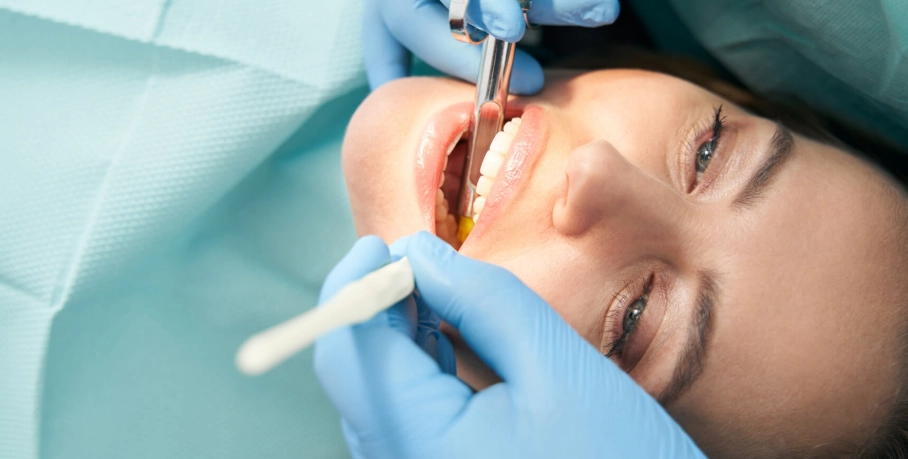
Dental Code D7140 is the one that points out the non-surgical single tooth removal when the tooth is fully visible and accessible above the gumline. The procedure entails loosening the tooth from its socket and lifting it out gently, without the need to cut the gum or remove the bone. Professor Doctor Coşkun Yıldız emphasizes that this code should only be used for teeth that have full roots and can therefore be firmly held and removed with one controlled force. The accuracy of this description facilitates the communication between the dental care providers and insurance companies.
Any D7140 extraction can only be performed with a thorough clinical and radiographic examination of the patient, before the operation. These diagnostic measures are taken by Dentist Polen Akkılıç and her team, to figure out the root canal anatomy, the bone for socket integrity, and to make sure that the tooth is not severely curved and infected so that the removal is simple. This diagnostic step, which is taken well in advance, guarantees the safety and comfort of the patient during the procedure and ensues a smooth and predictable recovery process.
When is Dental Code D7140 Used?
The code D7140 is recommended by dental professionals only in certain clinical situations where rescue by restorative methods is impossible for a tooth. The main indication is the case of dental caries so severe that it has almost destroyed the crown structure and can no longer be restored by filling or crowned. Another major reason for it is an acute dental infection that has weakened the stability of the tooth or in case where a root canal is not a feasible solution for the long term. Dr. Polen Akkılıç and her team, by performing this intervention, not only stop the infection but also relieve the patient from the pain, thus, taking care of the total dental health of the patient.
Moreover, dentists employ D7140 for the removal of those teeth which have become extremely loose as a result of advanced periodontitis which has led to the destruction of the alveolar bone. Also, the removal of D7140 is a very frequent instrumental use that is necessitated by orthodontic treatment plans and, in this way, liberates the space for the right alignment of crowded teeth. Professor Doctor Coşkun Yıldız affirms that this work is a prerequisite for numerous comprehensive dental care scenarios, thus leading to orchestrating subsequent interventions such as orthodontics or implant placement with the highest probability of success.
- Severe Tooth Decay: When a cavity has grown so large that it is beyond the possibility of restoration.
- Irreparable Tooth Damage: For instance, a crack that extends far below the gumline.
- Non-Restorable Infection: That is, a root canal cannot rescue the tooth.
- Advanced Gum Disease: which results in excessive tooth mobility.
- Orthodontic Planning: To relieve dental crowding.
What are the Benefits of Using Dental Code D7140?
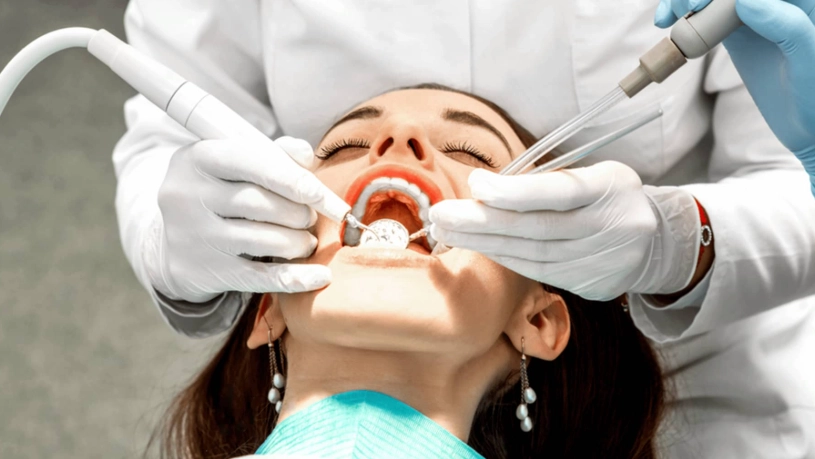
The foremost benefit of a D7140 operation is the very first and the most efficient way of the removal of the pain and discomfort which have been caused by a damaged or infected tooth. The intervention that rids the patient of the source of the problem is instrumental in the significant relief of the patient and the preemption of the condition’s progressing stage.
Dr. Polen Akkılıç and her team are committed to quickly realizing this benefit so as to bring about a rapid improvement of the life’s quality of their patients, thus, enabling them to perform both eating and speaking without discomfort and at the same time protecting the surrounding healthy teeth from potential damage.
Another prominent advantage is the procedure’s instrumental position in preventing the spread of the oral infection as well in building a healthy foundation for the future replacement of the tooth. Getting rid of a tooth that is extremely decayed means stopping the germs from spreading to neighboring teeth and the jawbone which is definitely a great long-term oral health preservation practice. Professor Doctor Coşkun Yıldız points out that this intervention is also the stage where the site can be prepared for a dental implant, bridge, or partial denture thus, facilitating complete and functional restoration of your smile. The uncomplicated character of a D7140 operation usually accounts for the healing period being abbreviated and the post-operative discomfort being lighter in comparison to surgical methods.
Warnings and Precautions About Dental Code D7140
Before undergoing an extraction, patients should disclose to their dentist the whole of their medical history without leaving out any detail. Specific systemic diseases like diabetes that is not regulated, bleeding disorders as well as a history of radiation to the jaw may necessitate different management strategies to guarantee the procedure is done safely and that there is optimal healing afterward. Dr. Polen Akkılıç and her team perform a thorough review of each patient’s health record to determine the best way as well as the likely approach for their procedure which might include a physician consultation or pre-operative medication changes for gas relief and minimizing the risk of complications.
Absolutely necessary for the accomplishment of the proper healing and the prevention of any complication is the patient’s strict following of the post-operative care instructions. The major care steps stipulate that one should not smoke, perform acts of heavy physical exertion, or use a straw in the first 72 hours at least because all three may lead to the protective blood clot’s dislodgment and then to the occurrence of a very painful dry socket. Professor Doctor Coşkun Yıldız issues to his patients after a procedure a well – written list which gives some instructions for the care that should be observed and these include mild eating, doing gentle oral hygiene in the area, and taking of any med that is given and only as directed if one wishes to be healed comfortably and efficiently.
When Should You Avoid Using D7140 and What Should You Use Instead?
It is not advisable for dental professionals to utilize Code D7140 in the case of a tooth that is not fully erupted or cannot be accessed easily for a simple extraction. It covers, for instance, impacted teeth, like wisdom teeth that are encased in the jawbone or are underneath the gum tissue. Also, it concerns teeth with roots that are highly curved, fused to the bone, or have deep cracks below the gumline. In these complicated situations, a D7140 code does not give the level of surgical intervention and skills that are needed.
Oral surgeons and dentists have to resort to specific codes for the surgical extractions in dealing with these complex conditions. The most popular alternate is Dental Code D7240, by which the removal of the impacted tooth along with the soft tissue and the bone is explained. There is another code, D7210, which is employed for the removal of an erupted tooth with the surgical elevation of a mucoperiosteal flap and bone removal. Professor Doctor Coşkun Yıldız determines the right code by taking into account the exact surgical methods needed to get the tooth removed safely and with minimum trauma.
Case Study for D7140
A 42-year-old patient came to the office of Dr. Polen Akkılıç, complaining of constant pain in the lower left first molar. The examination of the patient revealed that one of the molars had a large cavity which was not restorable, and the periapical X-ray confirmed that the decay had extended to the root. After confirmation of the diagnosis and consultation on available treatments, the patient and Dr. Polen Akkılıç concurred that the best solution would be to carry out a D7140 extraction to alleviate the pain and prevent the formation of abscess.
With the help of a local anesthetic, the operation went on smoothly, and dentists used dental elevators and forceps to take out the tooth. There were no complications. The patient was given comprehensive instructions for the aftercare, including management of the bleeding and swelling. When they met for a follow-up appointment one week later, there were no signs of infection or sore dry socket, and the site of the extraction was healing well. The patient reported that they had no more pain, and the team, therefore, began talking about tooth replacement options such as a dental implant for full recovery of the area.
| Procedure Code | Description | Indications | Complexity | Recovery Time | Complications | Alternative Procedures |
|---|---|---|---|---|---|---|
| D7140 | Extraction of a single erupted tooth | Severe decay, infection, or trauma | Low to moderate | 3-7 days | Infection, dry socket, bleeding | D7220: Surgical extraction |
| D7220 | Surgical extraction of a tooth | Impacted teeth or difficult extraction | High | 7-10 days | Infection, delayed healing | D7140: Standard extraction |
| D7953 | Bone grafting after extraction | For dental implants or severe bone loss | High | 4-6 weeks | Graft rejection, infection | D7270: Tooth reimplantation |
| D7240 | Surgical removal of impacted tooth | Non-erupted or covered teeth | High | 7-10 days | Infection, nerve damage | D7140: Non-surgical extraction |
References
- American Dental Association. (2020). Current dental terminology (CDT) 2020 codebook. American Dental Association.
- Harris, S. E., & Nunn, M. E. (2015). Management of tooth extractions: Indications, complications, and post-operative care. Journal of Oral and Maxillofacial Surgery, 73(7), 1413-1420. https://doi.org/10.1016/j.joms.2015.02.033
- Polson, A. M., & Caton, J. G. (2014). Periodontal disease and its management. Periodontology 2000, 64(1), 45-75. https://doi.org/10.1111/prd.12038
- Sisk, A. L., & Reitzik, F. (2013). Complications in tooth extraction. Oral Surgery, Oral Medicine, Oral Pathology, 115(3), 1-10. https://doi.org/10.1016/j.oooo.2012.09.001
- American Association of Oral and Maxillofacial Surgeons. (2019). Oral and maxillofacial surgery for the general dentist. Wiley-Blackwell.
Frequently Asked Questions About Dental Code D7140 and Tooth Extraction
D7140 refers to the extraction of a single erupted tooth. It’s typically used for teeth that are severely decayed or damaged.
D7140 is used when a tooth cannot be saved due to decay, infection, or trauma. The tooth must be visible and accessible for removal.
The procedure is performed under local anesthesia. The dentist carefully removes the damaged tooth with minimal discomfort.
Most patients recover in 3-7 days. Swelling and discomfort may occur but should subside with proper care.
Risks include infection, bleeding, and dry socket. Following post-operative care instructions reduces these risks.
If the tooth is impacted, a surgical extraction (D7220) may be necessary. This involves more complex procedures.

