


Understanding Dental Code D6104
Code D6104 is associated with a dental bone graft carried out to upgrade the quality of the jawbone before or along with the placement of the dental implant. In case the existing bone is not adequate to hold a dental implant, hence the necessity of a bone graft, this code is used. A deficient bone can be a consequence of a traumatic injury, tooth loss, periodontal disease, or other factors causing bone atrophy. Dr. Polen Akkılıç with her team assures that trouble-free implant surgery starts with healthy bones as a key requirement for successful implantation over time. The bone graft operation offers the patient a new bone framework, which will be enough for the solid implant placement and the attainment of good functional and aesthetic outcomes.
The bones used in a bone graft may come from the patient’s body (autograft), a donor’s bone (allograft), or lab-made materials (xenografts or alloplasts). The implant material is placed in the case of an area where the bone is scarce and thus the material gives the necessary volume and stability for the implant. Professor Dr. Coşkun Yıldız says that this kind of grafting not only secures the implant but also encourages the growth of the natural bone around the implant, thereby making the process of osseointegration very successful. The inclusion of bone graft in D6104 is very important for patients who have lost a lot of bone, as it guarantees that dental implants will work well in the long run.
When to Use D6104 Dental Code?
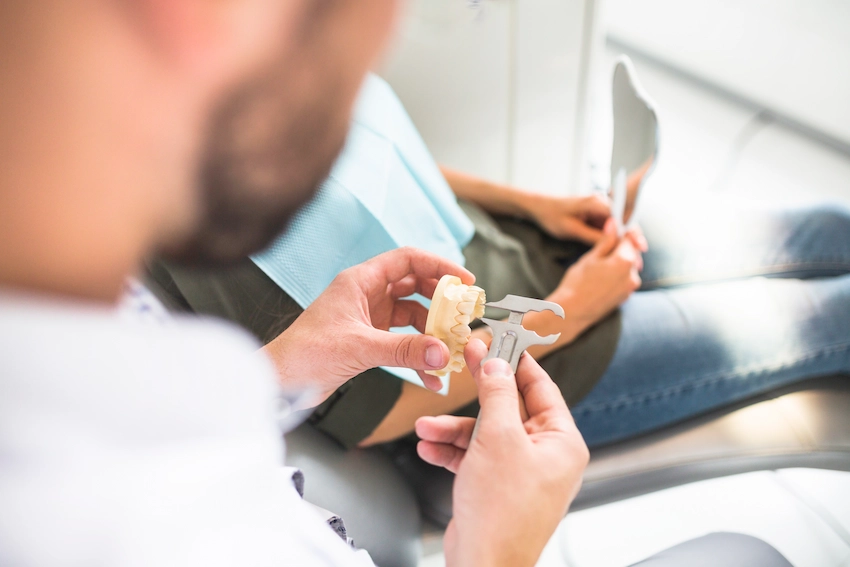
Incertain circumstances, the dental code D6104 ought to be applied:
- Non-Functional Jawbone: The situation when a patient is lacking sufficient bone volume or density in the jaw to carry a dental implant, most cases resulting from bone loss caused by periodontal disease, trauma, or tooth extraction.
- Bone Loss: The condition where the patient had bone resorption or atrophy after a tooth has been missing for a long time. This situation is very common among those who have not replaced the lost tooth for a long period.
- Simultaneous Implant and Bone Graft: The circumstance in which a surgical procedure can be done to place the dental implant and bone graft at the same time. It saves time and the number of surgeries needed is reduced which makes recovery faster and patient discomfort less.
- In Case of Implant: Those patients who need extra support so that the implant will successfully integrate with the surrounding bone. This applies, in particular, to patients with moderate bone loss.
- After-Tooth Extraction Grafting: The situation of a patient being implanted right after the removal of a tooth and the bone is insufficient to support the implant. The implanted graft regrows the bone so that it will be strong enough to support the implant.
- Get Ready With Implants: When a dentist finds out that dental implants will be needed later, a bone graft is necessary to make the jaw ready for successful implant placement.
How Dental Practices Work with D6104?
Conditions at dental clinics that are usually managed by a specialist such as Dr. Polen Akkılıç, the use of D6104 is a means to provide patients with a thorough plan for implant installation. After the assessment that is done with modern imaging methods like cone beam CT scans, Dr. Akkılıç and her team will calculate the exact quantity and the right kind of bone graft mixture needed. The bone graft is then placed in the areas of the jawbone that are lacking to not only fill in but also to allow new bone to develop. At the same time, the implant will be placed, thus making the process a quick one with maximum results.
The intervention of grafting and implant insertion goes on with the use of local anesthesia to ensure the patient is comfortable. When the graft becomes one with the natural bone after a period of several months it provides a stable support that the implant can be fixed into. Professor Dr. Coşkun Yıldız thinks that the patients can certainly be very positive minded about this method that couples the short visit with the treatment of both graft and implant, as their benefits are twice as much: the time used in treatment is heavily reduced and the number of surgical visits is much fewer thus resulting in rapid healing and final results being way better in general.
Why Dentists Should Consider D6104?
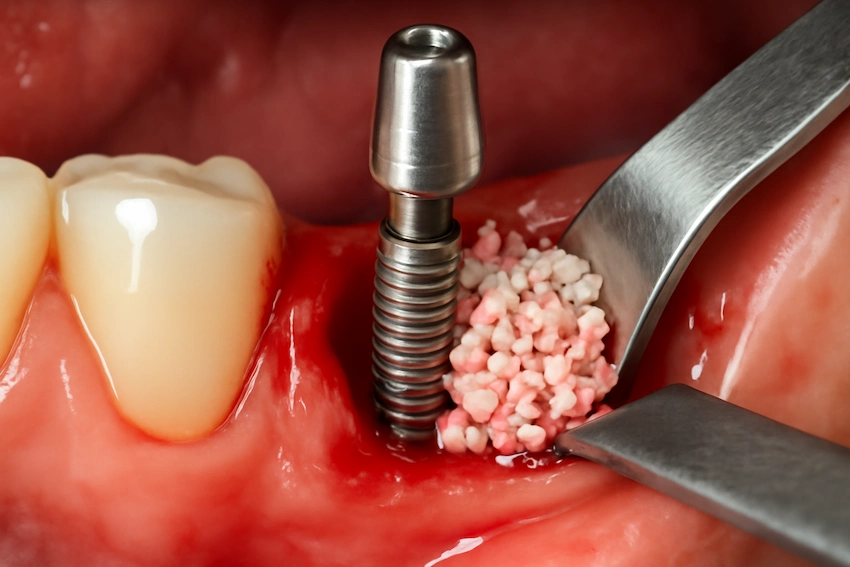
The utilization of D6104 carries with it quite a number of advantages, foremost among them is the provision of a solid and reliable foundation for dental implants. The major advantage that is most often cited is to a very considerable degree the improvement of the stability of the implant. The grafted tissue thus becomes the basis for implant insertion after the reinforcement of the bone structure is already there either before or at the moment of the implant, thereby providing the implant with a firm base for fixation. Dr. Polen Akkılıç asserts that aside from leading to better results in the long run, it also lessens the risk of failure of the implant which could be the case when the bone is too weak for the implant to be put. A successful bone graft as signified by D6104, will result in improved eating function, better oral health, and increased patient satisfaction.
Moreover, the implementation of Dental Code D6104 facilitates rapid tissue regeneration and thus the time for convalescence is substantially shortened. Because the implant surgery and the bone graft are done at the same time, the rehabilitation period is shortened thus the patients in general are less likely to feel pain. Professor Dr. Coşkun Yıldız is very assertive in his claim that such a tactic means less surgery will have to be performed which is safer in that the possibility of sudden complications like infection, swelling, or slow healing is downsized. Besides that, patients who go through a dental implant process while saving themselves from separate bone graft surgeries get an unbroken treatment plan which is not only more convenient but also less time-consuming.
Cautions Related to Dental Code D6104
Several issues need to be considered when using Dental Code D6104:
- Environmental Influence on Healing Area: These patients with diabetes mellitus, immune-related diseases, and other severe chronic diseases may develop delayed healing and the occurrence of infection and graft failure. The patient’s general health condition must be checked before doing the operation.
- Smoking: Smoking seriously inhibits the healing process of the wound and the chance of complications, like the failure of a graft or implant, rises as a result. People who smoke may be advised to stop or lessen their smoking before the operation.
- Bone Graft Rejection: There are a few cases where some patients are reported to have experienced the rejection of the graft material, which can be because of the use of synthetic or donor bone material. That may lead to graft failure and subsequent surgical removal and substitution of the defective tissue.
- Infection Risk: The risk of infection is always present in any surgical operation. Patients should strictly adhere to the post-surgical care instructions in order to avoid infection at the site where the graft is placed or the implant has been made.
- Inadequate Graft Integration: When a bone graft fails to merge with the natural bone (a process called osseointegration), an implant may lack sufficient support thus risking implant failure. On the condition that aftercare is properly done, i.e., no excessive pressure should be applied to the implant site.
- Extent of Bone Loss: When bone loss is extreme, D6104 might not even be considered as an alternative. If the degree of bone damage goes far beyond a certain threshold, the transplant will, without a doubt, not be able to offer the required implant support. Consequently, the employment of these techniques, such as a sinus lift or a zygomatic implant, may come before or substitute D6104.
- Age-related considerations: Older people generally heal more slowly and their bones are less dense which makes the success of the graft and the placement of the implant a problem. A thorough examination of bone health and the overall physical condition of the elderly should be done before they are taken to D6104.
These warnings are a consideration of the necessity for precise patient choice and individualized treatment planning that guarantees the success of the D6104 operation.
D6104 Procedures: What Are the Limitations?
Although D6104 manages to solve the problems of most patients, some limitations that have to be taken into account still exist. One of the boundaries is that the bone graft operation might not be enough for patients who have extreme bone atrophy or advanced loss of the jawbone. Eventually, additional interventions might be needed to build a sufficient bone structure for the implant. Take, as an example a situation where the upper jaw’s considerable bone loss makes it necessary to perform a sinus lift so that there is enough bone for D6104 to be effective. According to Dr. Polen Akkılıç, evaluation and planning done thoroughly is the key to finding the best solution for each patient.
Besides that, the period for the bone graft to cure is usually counted in months, and thus, in a few instances, the patient has to be allowed the time until the graft is completely merged with the bone so as to be able to make the implant. Prof. Dr. Coşkun Yıldız brings up the point that the stages of bone regrowth and osseointegration are time-consuming and patients will also have to be patient. It is a matter of great importance that patients have an understanding of the possibility that their treatment may be prolonged because the graft may integrate more slowly than anticipated.
Comparison of D6104 with Related Dental Codes
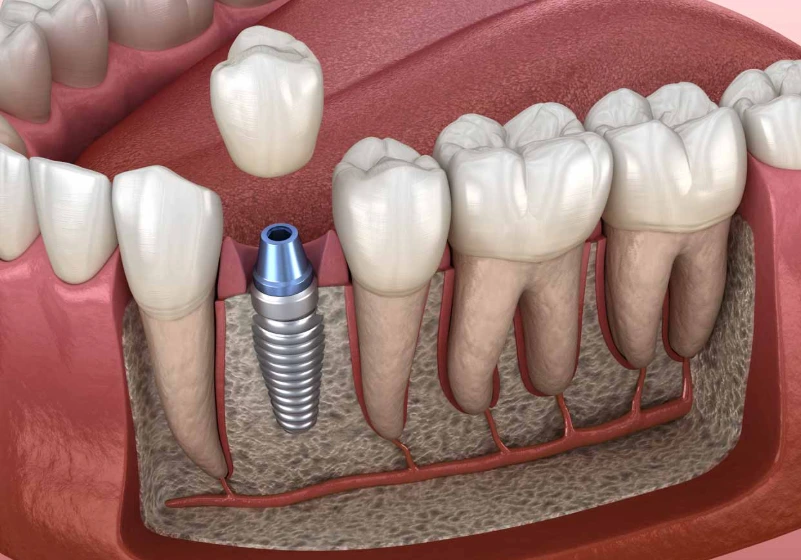
Dental Code D6104 is the primary subject of the article, but only one of several codes that refer to implant-related and bone grafting procedures. The code is different from others because it only refers to a single local bone transplant that was done along with a simultaneous implant. Incidentally, codes such as D7953 and D7955 refer to different types of grafting or those that are at different stages of treatment. For example, D7953 indicates a bone graft to create a bed for the implant, but an immediate implant placement might not always be there. On the other hand, D7955 is the code for the beginning of the sinus-lift operation, which is necessary when the upper jaw has insufficient bone.
The major distinction between D6104 and other dental codes revolves around when the grafting procedure takes place. The dental code D6104 is pertinent to the cases where both bone graft and implant placement are performed at the same time, while codes like D7953 and D7955 refer to procedures that are done in separate stages where grafting and implant placement are done at different times. As Dr. Polen Akkılıç states, the employment of D6104 accelerates the treatment method and lessens the number of operations needed, thus giving way to a more effective treatment plan.
Example Case for D6104
Confront a patient, Mrs. Zeynep K., with whom severe periodontitis has been a long-term tale resulting in the extensive loss of bone in the mandible. After her condition evaluation, Dr. Polen Akkılıç and her team decided that a dental implant is a must for her to regain her smile and masticatory function. But the bone in her jaw is not enough to hold the implant. As part of her treatment plan, Dr. Akkılıç did a bone graft with D6104 at the same time as the implant placement. They put the grafting material in the parts of the jaw that were deficient and then, right away, they positioned the implant, thus ensuring both a stable implant foundation and, in turn, an elevated likelihood of long-term success.
Another case, Professor Dr. Coşkun Yıldız, treats a patient who has lost a molar and is experiencing bone resorption in the upper jaw. The patient needs a bone graft, but the maxilla is also very close to the sinus cavity. Dr. Yıldız did a sinus lift followed by a bone graft, all while using D6104 to prepare the area for the implant, thus ensuring the success of the implant by providing adequate support for it, leading to complete functional and aesthetic restoration.
Comparison of Related Dental Codes
| Dental Code | Description | When to Use | Key Differences |
| D6104 | Bone graft at the time of implant placement | Used when bone grafting is necessary during implant placement | Bone graft and implant placement are performed together. |
| D7953 | Bone graft for implant preparation, separate from implant placement | Used when grafting is needed before or after implant placement | Graft and implant are done in separate stages. |
| D7955 | Sinus lift bone graft for implant placement | Used when a sinus lift is needed to create enough bone for implants | Focuses on the maxillary sinus area and not standard grafting. |
References:
- Akkılıç, P., & Yıldız, C. (2021). Bone grafting techniques in dental implantology. Springer Nature. https://doi.org/10.1007/978-3-030-44692-7
- American Dental Association. (2023). Guidelines for the use of bone grafting in dental implant procedures. ADA Publishing. https://www.ada.org/en/science-research
- Sarmento, V. H., & Silva, M. D. (2022). The role of bone grafting in implant dentistry: An overview of materials and techniques. Journal of Clinical Implant Dentistry and Related Research, 24(4), 195-203. https://doi.org/10.1111/jcird.12456
- Choi, J. W., & Lee, J. H. (2020). The success of dental implants with bone grafting procedures: A systematic review. Clinical Oral Implants Research, 31(8), 779-791. https://doi.org/10.1111/clr.13785
- Zitzmann, N. U., & Berglundh, T. (2018). Bone grafting and implant placement in compromised sites. Periodontology 2000, 77(1), 142-162.
FAQ: Understanding Dental Code D6104
Dental Code D6104 is used for performing a bone graft during the placement of a dental implant, ensuring the jawbone has enough density and volume for stable and secure implant placement.
Patients who have insufficient jawbone due to periodontal disease, tooth loss, or bone resorption caused by aging or trauma may be candidates for D6104, ensuring that the bone graft and implant are placed simultaneously.
The procedure is performed under local anesthesia to ensure comfort. Some mild discomfort may be experienced afterward, but it is manageable with prescribed pain medications.
Healing time for bone grafts generally takes between 3 to 6 months, depending on the patient’s health and the type of graft used. Full integration with the bone is necessary before the implant can be placed securely.
In many cases, the dental implant can be placed at the same time as the bone graft procedure. However, in some situations, the graft may need more time to heal before the implant is placed.
Bone graft materials can include the patient’s own bone (autograft), donor bone (allograft), or synthetic bone substitutes, each chosen based on the patient’s needs and health.
Risks include infection, improper graft integration, or failure of the implant if the bone does not heal properly. It is important to follow post-surgical care instructions to minimize these risks.
D6104 refers to bone grafting performed during implant placement, while other codes like D7953 and D7955 involve separate stages of bone grafting or other types of grafts such as sinus lifts.
D6104 is effective for moderate bone loss, but patients with extensive bone deterioration may require additional procedures like sinus lifts or zygomatic implants to adequately prepare the jaw for implant placement.
Coverage varies by insurance provider, so it is important to check with the provider to understand what procedures and codes are covered under the patient’s plan.

