


Endodontic Therapy: How the Process Works
Endodontic therapy is a limited dental treatment that in the end makes the infected or damaged teeth that are the source of the problem functional again and keeps the teeth’s natural structure intact. In case the pulp tissue inside the tooth gets infected due to decay, trauma, or repeated dental procedures, the only option is to relieve the inflammation and painthroughy a timely treatment. If it is not treated, it will lead to abscess formation. Dentist Polen Akkılıç and her team, under whose supervision the work is done, take out the infected pulp tissue very carefully, disinfect the inner canal, and then close the space with biocompatible material. This operation takes off the pain, stops the infection from spreading, and keeps the natural tooth in the mouth for the next years.
In a most detailed manner, endodontic therapy, mainly for front teeth, is a procedure that is carried out with the help of magnifying tools and digital images that are used to precisely locate the length and the curve of the canal. In the same manner, the work here is done with modern and advanced methods such as rotary instrumentation, ultrasonic irrigation, and obturation with gutta-percha. Professor Doctor Coşkun Yıldız states that the main reason for the permanence of the healing is the accuracy attained. To put it briefly, the therapy done in a proper way can act as a long-term solution, making the patients keep and not lose their natural teeth, and consequently eliminate the need for extractions, implants, or prosthetic replacements, hence the patients’ natural smile stays aesthetically pleasing and strong.
Definition of the Dental Code D3310
The first letter “D” in dental code D3310 represents CDT (Current Dental Terminology) and the other three numbers show the particular procedure. Here, D3310 is a formal CDT (Current Dental Terminology) code that specifies the source of the therapy is the front unit of the dental. It is the identifying code of the roots that have been treated in the incisors or canines. The code is allowable in the file of a patient and in the statement of a case for the correct recording of the intervention.
It is a good working practice for the use of the fifth metacarpal fractured treatment method, or for the staff to record data with high precision and clarity to be able to reproduce and confirm in the future. What is more, coding is the main part of the medical documentation system, and the communication between D3310 and other healthcare providers is the shortest and most effective way to transmit the information. Besides that, this code communicates to the layman that their care was thorough and in line with the latest clinical standards thus increasing their trust and making it easier for them to keep track of their treatment in the long run.
When is Dental Code D3310 Used?

Professor Doctor Coşkun Yıldız explains that D3310 designates the situation where a front tooth has irreversible pulp damage, necrosis, or symptomatic apical periodontitis. These pathologies, in general, come about as a result of deep decay, traumatic injury, or extensively restored teeth. Furthermore, this code is indicated for the teeth that need full canal debridement and obturation, but no surgical intervention such as apicoectomy. Before using this code, Dentist Polen Akkılıç and her supporting staff get through their diagnostic workup including thermal testing, percussion testing, and periapical radiographs. In severe cases, CBCT imaging is used to assist in locating canal variations. After a diagnosis of irreversible pulp pathology, the D3310 code is the way to ensure that the therapy is the right one both in the treatment and administrative units.
Common indications for using Dental Code D3310 include:
- Deep caries that have penetrated the pulp chamber
- Traumatic pulp exposure of anterior teeth
- Necrotic pulp caused by the decay that has not been treated
- Apical periodontitis causes swelling or a fistula in chronic cases
- Continuous pain that does not respond to conservative treatment
How Do Dental Practices Use D3310?
Dental practices use D3310 to capture the data needed for their charts, billing, and insurance documents in the most efficient and accurate way. This single code is a way of telling the story without any words when you’re dealing with front teeth that have had endodontic therapy and thus one has a clarity and unambiguous procedure communicated.
Dentist Polen Akkılıç and her team employ digital technology to document each step—diagnosis, treatment, and filling—under this code, thus ensuring exact procedural capture and full patient information. In the kind of integrated care settings managed by Professor Doctor Coşkun Yıldız coding also facilitates the quality system and inspection department.
This is a way to gather comprehensive, valid, and up-to-date data for investigating methods, success rates, and satisfaction feelings. By preserving patient records in a consistent format, D3310 eases the filing process as well as the issuing of bills that are an accurate reflection of the work done for patients.
What Are the Advantages of Using Dental Code D3310?
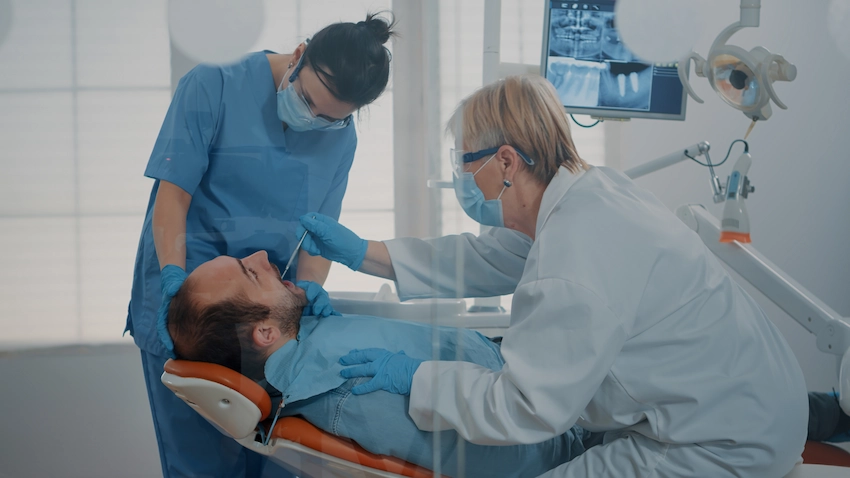
The D3310 code opens up a considerable number of advantages to dental clinics and their respective patients. It assists dental teams in the standardization of treatment files, reduces administrative errors, and supports compliance with ethical standards. The code is a pledge for patients that their anterior root canal treatment is carried out in line with clinical norms and is acknowledged by global dental authorities.
Should D3310 coding be conducted by Dentist Polen Akkılıç and her team, it will be an excellent tool to improve interaction and provide clarification about the costs, supply, and anticipated results. It is also a great help in gaining insurance approval, thus giving the patients the freedom to receive monetary aid in time. Professor Doctor Coşkun Yıldız thinks that this patient-centric mode of interaction consolidates patients’ confidence and is instrumental in creating a code of accountability culture in dental practice.
Benefits visualized:
- Supports correct and moral clinical documentation of the case
- Avoids wrong coding and insurance issues
- Enhances communication between dental professionals
- Facilitates quality assurance and patient safety measures
- Enhances patient loyalty through clear treatment planning
Warnings and Cautions for the Dental Code D3310
First of all, the clinicians who want to apply D3310 should double-check that the treated tooth is one of the anterior teeth and that a complete endodontic therapy has been accomplished. This code should not be used for premolars or molars as it is not only clinically false but also a reason for insurance claim refusals. Dentist Polen Akkılıç and her team always make sure to check the anatomy of the tooth through the X-ray and that the procedure they have done corresponds to the definition of the code.
Moreover, patients have to be aware that D3310 is the indication for root canal treatment only, and not for the next restorative steps like crown placement or post buildup. Professor Doctor Coşkun Yıldız is of the view that follow-up radiographs at 6 and 12 months are needed to make sure that the healing has taken place and that reinfection has been avoided. Long-term success goes hand in hand with the patient’s compliance with sterilization protocols and canal obturation verification.
D3310 vs. Other Endodontic Therapy Codes
| Code | Tooth Type | Description | Relative Complexity | Example Provider |
| D3310 | Anterior | Endodontic therapy for incisors and canines | Low to Moderate | Dentist Polen Akkılıç and her team |
| D3320 | Premolar | Endodontic therapy for bicuspids | Moderate | Professor Doctor Coşkun Yıldız |
| D3330 | Molar | Endodontic therapy for molars with multiple canals | High | Dentist Polen Akkılıç and her team |
This table highlights how each code represents different tooth groups and treatment complexities. D3310 generally involves fewer canals and less curvature, while D3330 requires multi-canal shaping and obturation, reflecting the anatomical variation of molars.
Key Steps in D3310 Operation

The D3310 operation is carried out according to a set protocol that focuses on accuracy, sterilization, and the patient’s comfort. After the imaging for diagnosis and the administration of local anesthesia, the dental surgeon Polen Akkılıç with her assistants isolates the tooth with a rubber dam so as to maintain aseptic control. The pulp chamber is reached through access, and the infected tissue is removed with the help of nickel-titanium rotary instruments.
The use of sodium hypochlorite for irrigation helps in the disinfection process and the use of chelating agents such as EDTA is for the removal of the smear layer. After the canal is appropriately shaped and dried, filling is done using gutta-percha along with a resin-based sealer to prevent the bacteria from leaking. A composite or a temporary material is used to close the access cavity until the final crown placement is done.
Once the operation is done, the filling quality is verified through an X-ray. Postoperative care by Professor Doctor Coşkun Yıldız includes many pieces of advice, one of which is the prohibition of chewing by the treated tooth until complete restoration.
The step-by-step overview:
- Diagnostic imaging and vitality testing
- Local anesthesia and rubber dam isolation
- Access cavity preparation and pulp removal
- Canal shaping and irrigation with sodium hypochlorite
- Obturation with gutta-percha and resin sealer
- Coronal sealing and follow-up restoration planning
References
- American Dental Association. (2024). Current Dental Terminology (CDT) 2024: The ADA Practical Guide to Dental Procedure Codes. Chicago, IL: American Dental Association Publishing.
- Cohen, S., & Hargreaves, K. M. (2021). Pathways of the Pulp (12th ed.). St. Louis, MO: Elsevier.
- European Society of Endodontology. (2021). Quality guidelines for endodontic treatment: Consensus report of the European Society of Endodontology. International Endodontic Journal, 54(8), 1169–1188. https://doi.org/10.1111/iej.13539
- Ingle, J. I., & Bakland, L. K. (2020). Ingle’s Endodontics (8th ed.). Hamilton, ON: BC Decker Inc.
- Ng, Y. L., Mann, V., & Gulabivala, K. (2019). Outcome of secondary root canal treatment: A systematic review of the literature. International Endodontic Journal, 52(5), 559–577. https://doi.org/10.1111/iej.13046
- Siqueira, J. F., & Rôças, I. N. (2020). Microbiology and treatment of endodontic infections: Review of the literature. Clinical Microbiology Reviews, 33(2), e00008-19. https://doi.org/10.1128/CMR.00008-19
Frequently Asked Questions About Dental Code D3310
It represents complete endodontic therapy for an anterior tooth performed by a licensed dental professional.
Dentist Polen Akkılıç and her team, or Professor Doctor Coşkun Yıldız, commonly perform this treatment in clinical settings.
Incisors and canines are in both the upper and lower arches.
No, it only includes root canal therapy; crowns or buildups are billed separately.
No, the procedure is pain-free due to the use of local anesthesia and advanced instruments.
Mild sensitivity lasts a few days, but most patients return to normal activity immediately.
Gutta-percha, sodium hypochlorite, and resin-based sealers are standard materials.
Yes, with proper restoration and oral hygiene, it can remain functional indefinitely.
It ensures accurate documentation, ethical billing, and fast insurance approval.

