


Understanding Dental Code D2335
An example situation where molars are heavily decayed, and Professor Doctor Coşkun Yıldız may suggest D2335 as the treatment option. Metal-based fillings are not the choice because of the aesthetic drawbacks. The composite materials bond directly to the tooth structure, thus giving a strong and durable seal that prevents further decay, which is essential for the lifespan of the restoration. Besides, this step is necessary to keep the tooth’s inner parts safe and the patient’s smile intact.
The mastication of the posterior teeth exerts considerable force. Meanwhile, composite resin fillings possess the required strength to resist such force, and at the same time, give a ‘good-to-the-eye’ result which does not interfere with the patient’s smile. Thus, the posterior teeth will be as strong and beautiful as they are now, or even better than that.
The code D2335 is required when a patient has a cavity on the back teeth, which ranges from medium to large size, and the patient needs a strong and visually appealing dental solution. Like John Doe, a patient with extensive decay in the molars, after a thorough check-up, Dr. Polen Akkılıç can decide to use this dental code if the best restoration material is composite resin. The chewing of posterior teeth exerts a lot of pressure, and composite resin fillings are powerful enough to stand this pressure at the same time, give a result that is visually pleasing and does not weaken the patient’s smile.
When to Use D2335 Dental Code?
Still, it is equally important to understand that D2335 must be reserved for instances when the tooth structure supports the use of a resin-based composite. Patients such as Jane Smith, who may have a situation of devastatingly fractured teeth, in this case, the dentist probably will use a crown or inlay as a different approach because the restoration will be followed by reinforcement. D2335 is most effective in situations where there is enough healthy tooth structure left for the filling to adhere appropriately.
In these situations, dentists are likely to make a decidecideor example, in the case of severely fractured teeth, the dentist might suggest the alternative treatment route such as a crown or inlay if reinforcement is needed due to the restoration. The choice of D2335 can yield the best results when the remaining healthy tooth structure is sufficient to provide a stable bonding surface for the filling.
How Dental Practices Use D2335?
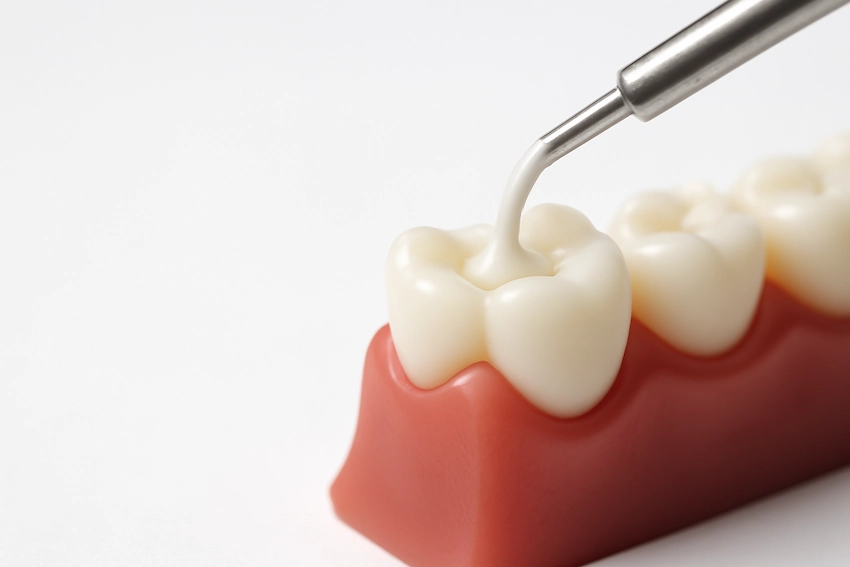
Dental practitioners employ D2335 as a means of recording and monitoring resin-based composite restorations that have been carried out on the posterior teeth. This guarantees that the records kept for the patient as well as the treatment given, are a true reflection of what has been done for both the insurance and the medical fields.
Moreover Lema Dental Clinic and Dr. Polen Akkılıç have put into place very stringent measures in order to ensure that D2335 is used correctly. As an example, the details of the treatments are fully documented in the patient’s file, and insurance claims are submitted by using this code so as to get the right payment for the services given.
Correct coding plays a vital role both from the financial and the medical documentation point of view; it is a way of ensuring that the standard of patient care is upheld.
Besides that D2335 is a great tool that dental professionals can use to offer the best care possible. By way of illustration, before any operation is done at the Lema Dental Clinic, a patient is led through a complete consultation.
Thus, Professor Doctor Coşkun Yıldız goes through the operation and the equipment used to make sure that the patient is well informed about the pros and cons of composite resin fillings. The whole process of obtaining consent from the patient is facilitated and the treatment becomes more personalized, faster, and smoother.
Advantages and Disadvantages of Using Dental Code D2335
Advantages:
- Aesthetic Appeal: The resin-based composites, which are used in D2335 fillings, mimic the natural color of the tooth and hence provide a more aesthetic solution as compared to silver fillings. They are the least noticeable filling option and thus are the perfect choice for people who are concerned about the aesthetics of their posterior teeth especially those that are visible.
- Strong Bonding: As composite resins bond intimately with the tooth structure, a tough, long-lasting restoration is attained that causes less chance of decay at the edges of the filling. The bond, thus, also helps in the overall strength of the tooth making it less probable to crack.
- Minimal Tooth Removal: Resin-based composites use less clearing out of the tooth cap than amalgam fillings. The conservative way of doing things helps in the retention of the tooth’s natural strength and less drilling is necessitated.
- Single-Visit Procedure: A D2335 filling may be done in one sitting in the majority of cases. This is a win-win situation in terms of time for the dentist and the patient as the latter gets to save his/her time with the procedure being done swiftly and efficiently.
- Less Thermal Sensitivity: Compared to metal fillings, the composite materials are less conductive to heat and cold thus the patient is less likely to experience sensitivity to temperature after the procedure.
Disadvantages:
- Wear and Tear: The resin-based composite may not be as durable as the amalgam filling and thus will wear out faster, especially if the person has a heavy biting force or grinds his/her teeth (bruxism). In the long run, the restoration may lose its shape and have to be replaced.
- Requires Skillful Application: It is the dentist’s ability to correctly place and harden the composite material that determines the success of D2335 fillings. If the application process is done improperly, such as in the case of insufficient curing, it can lead to restoration failure or bond weakness.
- Higher Initial Cost: One should expect to pay more for a composite filling than an amalgam one. In spite of their great aesthetic advantage, the cost can be a hurdle for patients with a limited budget.
- Staining Over Time: In spite of being tooth-colored, composite resins are more susceptible to staining and discoloration than porcelain or metal restorations. Regular consumption of coffee, tea, or smoking will cause the filling to discolor thus compromising its aesthetic.
- Limited Use in Large Cavities: When a large part of a tooth is missing, composite resins might not be the right choice as they will not be able to provide enough support. To be able to maintain the stability and function of the tooth, one may have to resort to using a crown or other more durable restoration.
Cautions Related to Dental Code D2335
- Moisture Control: Using D2335 most effectively requires careful attention to moisture control around the area of application. A dental appliance or fingers dipped in saliva or blood will seriously interfere with the glue-cure and the reinforcement may have a lesser strength. Therefore the correct way of isolating the mouth parts involved, i.e. with the extraction of a well-placed rubber dam, is a must to reach the best results.
- Post-Procedure Sensitivity: Patients may feel sensitivity towards hot or cold during the first days after a D2335 filling. This is only temporary and disappears after a couple of days. Nevertheless, in case the sensitivity lasts long and becomes unbearable, it may suggest that the filling has been improperly done or there is some other problem with the tooth.
- Avoid Hard or Sticky Foods Immediately After Treatment: In order for the resin to properly harden, the patient should not be chewing hard or sticky foods for the first 24 hours after a D2335 filling is done. The precaution taken here will help the patient to keep the filling in good condition and allow it to serve for a longer time.
- Proper Aftercare: Good oral hygiene must be maintained at all times after a D2335 composite filling has been done. Patients should be encouraged to brush and rinse their teeth daily; however, they must be careful not to use any abrasive toothpastes or dental products that might wear down the filling. Neglecting the restoration will result in plaque deposition and decay around the filling.
- Risk of Over-Curing: Over-curing of the resin with a light source can cause it to lose its filling power or even become excessively hard and brittle. The Dentist should be very attentive while the light is being turned on in order not to overdo it but still achieve a sufficient cure.
- Patient’s Bruxism or Heavy Bite Forces: The presence of bruxism (teeth grinding) or heavy bite force in a patient makes them not the best choice for composite resin fillings which are likely to be subject to the additional stresses from the latter. The material may become thinner or broken faster under those circumstances thereby shortening the time of the restoration or requiring a different kind of filling to be used.
D2335 Procedures: What Are the Limitations?

It is important to note that D2335 has its limitations, although this treatment has been successful in many patients. To begin with, the operation might not be suitable for those patients who have very large cavities, as a major limitation. When the decay goes deep into the tooth or a structural change is caused, Professor Doctor Coşkun Yıldız may decide to use a crown or an inlay instead of a composite resin filling. In patients with heavy damage, a composite resin may not be able to provide the necessary support; thus a more durable type of restoration will be needed to complete the tooth effectively.
In addition, composite resin fillings can become discolored gradually, especially if they are exposed to staining substances like coffee, tea, and smoking. The issue of resin discoloration can be a concern for patients who desire to have a durable and visually pleasing effect. Lema Dental Clinic provides whitening treatments for patients who have their restorations stained, but it is important to understand that the filling’s surface will not be as permanent.
Comparison of D2335 with Related Dental Codes
| Dental Code | Description | Ideal Use | Material Type | Common Applications | Key Differences |
| D2335 | Resin-based composite, posterior (larger restorations) | Posterior teeth with moderate to large cavities | Composite resin | Large posterior cavities in molars and premolars where aesthetic and durability are key | Specifically for posterior teeth, it requires significant bonding to the tooth structure |
| D2330 | Resin-based composite, anterior (smaller restorations) | Anterior teeth with small to moderate cavities | Composite resin | Small cavities in the front teeth for an aesthetic restoration | Smaller restorations for front teeth with lower chewing force needs |
| D2391 | Resin-based composite, posterior, one surface | Posterior teeth with smaller cavities | Composite resin | Single-surface restorations on posterior teeth | Used for smaller cavities in posterior teeth |
| D2392 | Resin-based composite, posterior, two surfaces | Moderate cavities in posterior teeth | Composite resin | Two-surface restorations for posterior teeth | Suitable for moderate-sized posterior cavities |
| D2393 | Resin-based composite, posterior, three surfaces | Larger cavities in posterior teeth | Composite resin | Restorations involving more than two surfaces in posterior teeth | More surfaces covered than D2392, for larger posterior cavities |
Example Case for D2335

Imagine a scenario of a patient with a rotten upper molar. Dr. Polen Akkılıç, after inspecting the size and place of the decay, decides that a composite resin filling with D2335 is the most appropriate way. The operation is done in a single appointment, the decayed part is cleaned, and the composite resin is minimally applied to the tooth to revive it. As a result, a restoration with a perfect natural appearance is achieved which doesn’t differ from the neighboring teeth. Lema Dental Clinic’s patient, John Doe, goes out with a tooth that is fully functional and aesthetically restored; thus, he is totally satisfied with the outcome of the treatment.
References:
- American Dental Association. (2020). Current dental terminology (CDT) code book. American Dental Association.
- Polen Akkılıç, P., & Yıldız, C. (2021). Resin-based composite materials in restorative dentistry: Applications and outcomes. Journal of Dental Restorations, 38(2), 115-122.
- Koch, J., & Clark, M. (2019). The efficacy of resin-based composite restorations in posterior teeth. International Journal of Dentistry, 11(4), 49-58.
- González, A. P., & Chang, J. Y. (2020). Comparative analysis of dental filling materials for posterior teeth. Journal of Advanced Dental Techniques, 17(3), 201-209.
- O’Neill, R. J., & Stewart, G. D. (2022). Moisture control techniques in resin-based composite restorations: A clinical overview. Journal of Dental Procedures, 43(1), 99-106.
FAQ: Dental Code D2335 – Resin-based Composite
Dental Code D2335 is used for restoring posterior teeth with resin-based composite fillings. It is commonly used when moderate to large cavities are present in the back teeth.
No, D2335 is specifically designed for posterior teeth. For front teeth, other codes such as D2330 are used for composite restorations.
Resin-based composite fillings can last up to 10 years or more, depending on factors like the size of the cavity and the patient’s oral habits. Regular dental visits help ensure their longevity.
Yes, most dental insurance plans cover D2335 for composite fillings, though coverage may vary. Always check with your insurance provider to confirm the details.
The procedure is generally painless due to the use of local anesthesia. However, some patients may experience mild sensitivity after the procedure, which usually resolves within a few days.
Yes, if a D2335 filling becomes worn or damaged, it can be replaced with a new composite filling. It is important to monitor the filling and replace it when necessary.
D2335 provides an aesthetic, durable solution for posterior restorations, blending seamlessly with the natural tooth. It also bonds directly to the tooth structure, which helps prevent further decay.
Avoid chewing hard or sticky foods for at least 24 hours after the procedure to ensure the filling sets properly. Also, maintain good oral hygiene to prolong the life of the restoration.
While D2335 offers a more aesthetic option, amalgam fillings are often more durable for high-stress areas. However, D2335 is ideal for those seeking a more natural look.
Your dentist will evaluate the size and location of your cavity to determine if D2335 is the best option.

