


What Does Dental Code D1351 Mean?
Dental Code D1351 is a code that indicates the use of dental sealants which represent the least invasive step in dental care aimed at the healthy preservation of teeth in the oral cavity. Intuitively, dental sealants are prophylactic materials, involved in the prevention of decay. These dental materials are thin, resin-based materials, which are bonded to the occlusal surfaces of the teeth creating a plaque food and bacteria-proof barrier. This treatment is the most precious dental care for the youngest generation and teens who are the most vulnerable to caries. Also, developing children and teenagers are the most beneficial group to have in mind when thinking about dental sealants as their newly erupting molars are susceptible to the deep grooves and consuming more sweets etc. It goes from biologically different but also economically and socially more sophisticated and complex issues and variables combined in one triple-structured problem station.
Dr. Polen Akkılıç and her skilled and experienced team at Lema Dental Clinic offer a professional and thorough dental care service. The treatment is totally painless and comfortable, gentle, and effective in disease prevention even in those parts of the mouth that are difficult to reach. According to Dr. Coşkun Yıldız, dental sealants should be placed on children’s teeth as early as possible to provide the best protection against dental caries, therefore, this method has a great role in pediatric prevention .
When Is D1351 Used?
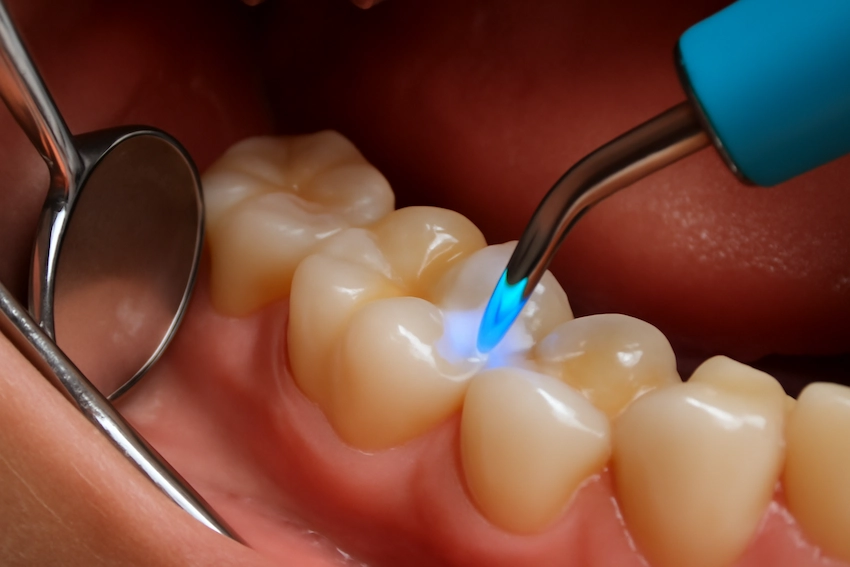
Dental code D1351 is performed during preventive dental visits, especially when patients are susceptible to tooth decay. Dr. Polen Akkılıç and her team usually advise the placement of sealants for children and adolescents after the full eruption of their permanent molars, which is generally between 5 and 15 years, as this is the time when the grooves of the teeth are the most delicate and decay is most likely to occur. On the other hand, adults can also benefit from sealants if molars have just erupted or if the patient has deep grooves that are difficult to clean which makes the occurrence of cavities very likely.
We cannot imagine a scenario in which oral sealants are applied after the onset of severe decay and yet, they are part of a bigger strategy to execute long-term oral health maintenance. Besides oral sealants are not only the privilege of children, as can be seen also in adults who have had a history of caries or orthodontic treatment, Dr. Coşkun Yıldız highlights this fact. Dental sealants are the first and foremost preventive measure that can be the solution to maintaining a healthy mouth for the future with little intervention.
How Do Dental Practices Use D1351?
Facilities providing dental services, for example, Lema Dental Clinic, utilize the code D1351 to record the local application of sealants in the patient’s chart as well as for charging purposes. The operation is generally performed with the patient through a series of steps that ensure the sealant fits and protects the tooth accurately and efficiently. At the outset, the teeth are cleaned to be free of plaque or any other dirt. Subsequently, an acid gel is spread to give a rough texture to the surface of the teeth so that the sealant can be attached tightly. After that, the sealing substance is spread over the teeth and is dried with a beam from a special light.
Lema Dental Clinic’s dentist Polen Akkılıç and her team ensure that the fissures and pits of the molars are the exact parts where the sealants are applied. It is very important to have regular visits to the dentist to check on the status of the sealants and to be sure they have neither been worn down nor broken because the effectiveness of sealants in the latter case is very low. Sealants are not forever, and they are meant to last for a number of years. The patient’s oral hygiene level and the natural wear of the sealing material over time will determine how long they last.
What Are the Advantages of Using Dental Code D1351?
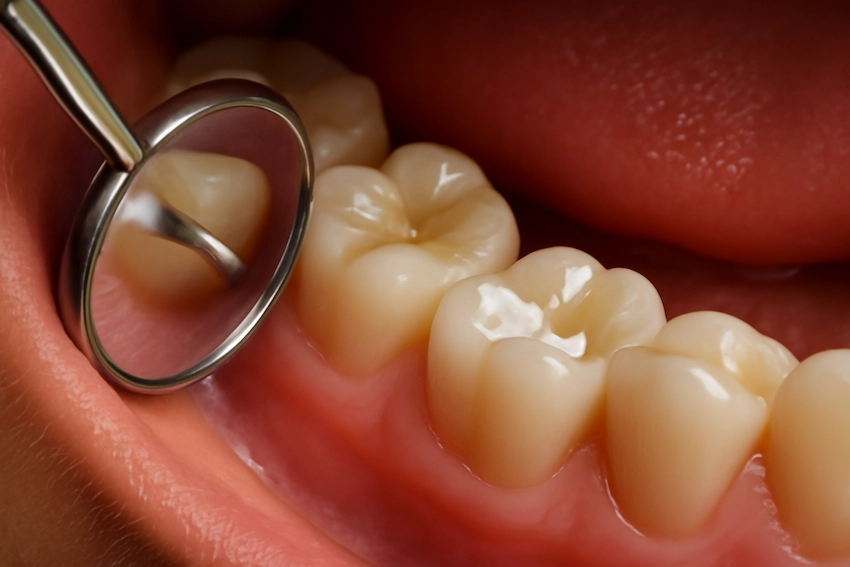
One of the most important benefits of using dental sealants under Dental Code D1351 is that it provides great protection from cavities, which usually happen in hard-to-reach places such as the grooves of molars. Sealants are very helpful because they do not let particles of food and bacteria accumulate in the grooves thus the decay process is stopped. Professor Doctor Coşkun Yıldız points out that sealants can be a great solution to the problem of cavities in children and teenagers, as these groups are the most vulnerable due to irregular brushing and consumption of products containing sugar.
Besides that, sealants on teeth constitute a preventive dental care measure that is very affordable and will not burden the patient financially in the future. By placing sealants on their teeth, patients will not have to pay for fillings, crowns, or root canals that will come later if they don’t take any preventive measures. Dr. Polen Akkılıç and her team highlight that this intervention is less radical, offers the patient long-term protection, and thus the probability of the patient coming back for a more complicated dental treatment is minimal. In fact, apart from being affordable and efficient, the treatment is also very quick, which is why the entire quadrant can be done in under 60 minutes, and the use of anesthesia is not necessary.
D1351 and Cautions Related to the Dental Code D1351
Not a Replacement for Usual Oral Care:
Sealants placed on teeth are one way to protect the teeth, but they should not be replaced by brushing, flossing, and regular dental cleanings which are a part of standard dental care. To maintain good dental health, patients must keep up with brushing and flossing even after getting sealants.
Observing the Condition of the Sealant:
At some point, sealants may lose their effectiveness, get a chip or crack. It helps patients to be comfortable with checking the condition of their teeth which is usually done by the dentist regularly and if such a situation arises, he will be able to reapply it for them. Regular dental appointments are also crucial to check the state of dental sealants so that they can provide efficient prevention of diseases. In case a sealant is broken, you may need to have it replaced.
Only the Chewing Surfaces of Molars and Premolars Are Protected:
With sealants, you protect just molars and premolars that are used for eating against cavities. These devices do not offer any protection for the places on the teeth where the sides or roots are and therefore, these areas still need to be taken care of with the proper oral care.
Potentially Sensitive:
There may be a few individuals who encounter slight sensitivity after the moment when a sealant is put on the teeth; nevertheless, it normally disappears in several days. If the feeling of being sensitive is still there or even intensifies, getting in touch with the dentist for the examination is recommended by the doctor.
Not for Mainly Decayed Teeth:
Sealants work efficiently on clean teeth without cavities. In the case where a tooth is rotting, the caries has to be removed and the tooth needs to be filled first or undergo other restorative treatment before the application of a sealant.
Be Aware of Allergies:
Very few patients might be the ones to have an allergy to the materials of dental sealants that cause an allergic reaction but practically there are almost none. Patients need to be cautious and always inform their dentist about their allergies, particularly if they are allergic to resins or other materials used in dental work.
Food Considerations:
Even though sealants are a good long-term protection measure, patients must stay away from hard biting on items like ice or pens as they do so because they might be able to break the sealants and take away their protective function.
Children and Dental Sealants:
Most likely, dentists will put sealants in children’s teeth. But it is equally important that children be taught the need to take good care of their teeth by regular visits to the dentist, even if they have had sealants because in general, these are consumable goods.
Dental Sealant Failure:
Sometimes, a seal might not be able to stick well to a tooth or the worn-out part might be too small for the dentist to acknowledge at a premature stage. This problem can be exacerbated if the patient does not practice good dental hygiene or if the tooth is not prepared properly.
If patients think about these cautions, they will be able to keep the dental sealants as their protective weapon against the development of new caries for a long time. The main factors that help the advantages of a sealant last are frequent control visits and good oral hygiene.
D0707 Procedures: What Is Included and What Is Excluded?
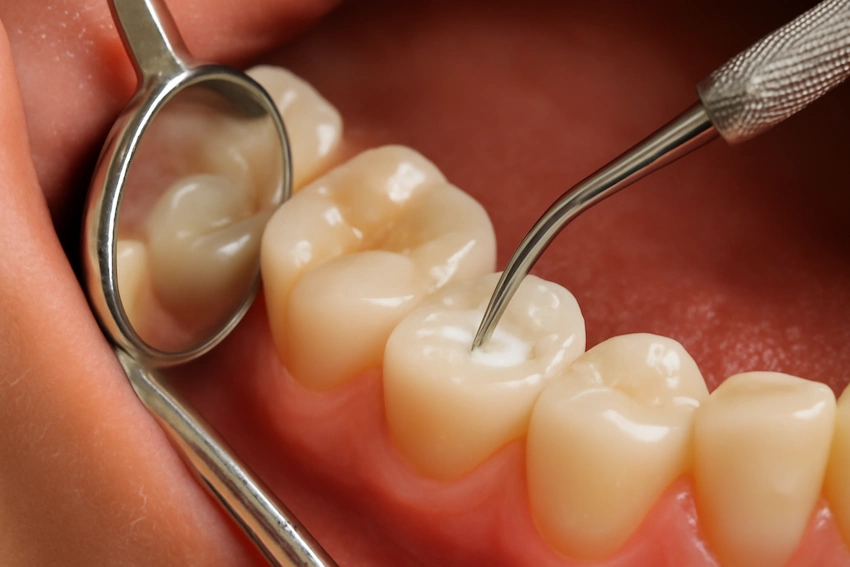
Dental Code D0707 is a distinct code used for different types of restorative treatments such as fillings, crowns, and extractions. It is different from D1351, which focuses specifically on preventive care through the use of sealants. The key difference between the two is that D0707 addresses procedures for treating existing dental issues, whereas D1351 is used to prevent future problems by protecting teeth from cavities.
Understanding the difference between these two codes is important for dental professionals to ensure correct billing and treatment planning. Dentist Polen Akkılıç and her team make sure to differentiate these codes when diagnosing and treating patients, ensuring that each procedure is accurately documented and that the patient’s treatment plan is fully aligned with their oral health needs.
Main Points of D1351 Performance
The primary function of D1351 is to deliver preventive care through the implementation of dental sealants that serve as a protective barrier for the impenetrable chewing surfaces of molars against dental caries. In general, sealants are very successful in the fight against cavities, which is especially true for patients who are incapable of flossing or brushing the areas properly. Doctor and Professor Coşkun Yıldız points out that the application of sealants at an early stage, especially for children and teenagers, is a very efficient way to prevent decay and thus the need for expensive dental treatments is reduced.
The key points of the D1351 performance are:
- Effectiveness: The use of sealants is one of the most effective methods of cavity prevention as the sealants act as a barrier to the pits and fissures of the teeth.
- Durability: The protective measures can last for a number of years providing dental health stability in the long run.
- Minimally Invasive: Since the procedure is done in a few minutes, without the patient feeling pain and no incisions being made, it is considered non-invasive and therefore the method of choice for children, is very.
- Cost-Effective: The use of sealants is a reasonably priced preventive measure that can help patients save money over time by the avoidance of costly dental treatments.
References
- American Dental Association. (2020). Dental sealants: A comprehensive review. Journal of the American Dental Association, 151(10), 787-798. https://doi.org/10.1016/j.adaj.2020.05.010
- Baker, S. R., & He, L. (2019). Preventive dentistry: A practical approach to modern treatments. 3rd edition. Elsevier Health Sciences.
- Liu, C., & Zhang, J. (2018). The effectiveness of dental sealants in preventing cavities in children and adolescents. Pediatric Dentistry, 40(3), 170-176. https://doi.org/10.1016/j.pds.2017.12.009
- Goyal, R., & Singh, A. (2021). Sealant applications in pediatric dental care: Efficacy and safety. Pediatric Oral Health Journal, 33(2), 87-94. https://doi.org/10.1016/j.peds.2020.11.007
- Nelson, T. R., & Seitz, R. A. (2017). Sealant application and effectiveness in preventing dental decay. Dental Clinics of North America, 61(4), 743-756. https://doi.org/10.1016/j.cden.2017.07.005
Table: Sealant Application Process
| Step | Description |
| 1 | Clean the tooth to remove plaque and debris. |
| 2 | Apply an acidic gel to roughen the tooth surface. |
| 3 | Rinse and dry the tooth thoroughly. |
| 4 | Apply the sealant material to the grooves of the tooth. |
| 5 | Cure the sealant with a special light to harden it. |
| 6 | Check the sealant for fit and comfort, making adjustments as necessary. |
Frequently Asked Questions About Dental Code D1351
Dental Code D1351 refers to the application of dental sealants to protect the chewing surfaces of molars and premolars from cavities
By applying a protective coating to the deep grooves of the teeth, dental sealants block food particles and bacteria from causing decay.
Sealants typically last between 5 to 10 years, depending on the patient’s oral hygiene and the wear of the material.
Yes, dental sealants can be applied to adults who have deep grooves in their molars and are at high risk for cavities.
Yes, dental sealants are safe and commonly used in children to prevent tooth decay as their molars emerge.
The procedure typically takes 15 to 30 minutes per visit and is quick and painless.
No, the procedure is completely pain-free and does not require anesthesia.
Regular dental check-ups, brushing twice a day, and flossing daily are key to maintaining the effectiveness of sealants.
Most patients experience no side effects, but some may notice minor sensitivity, which resolves quickly.
No, while sealants help protect teeth, they are not a substitute for regular brushing and flossing to maintain overall oral health.

