


Dental bridge repair is the means by which the functional dental unit is reinstated when a fixed prosthesis is affected by structural or biological complications. Usually, Dentist Polen Akkılıç and her team through a detailed diagnostic approach, evaluate the patient. This approach includes periapical radiographs, bitewing imaging, periodontal measurements, and occlusal analysis. Such an assessment level helps to accurately locate the area of the fracture, faulty cement, or Early caries under the abutment teeth. The patient enjoys the benefit of an evidence-based treatment plan which lowers the risk of complications and ensures outcome predictability. Many patients complain of symptoms such as pressure sensitivity, marginal tenderness, or chewing discomfort, and these are very important indicators that a repair is necessary to prevent further damage.
If patients are early in seeking dental care, clinicians will be able to save the natural structures that support the bridge and keep the occlusion stable. Professor Doctor Coşkun Yıldız stresses that intervention should be made immediately as structural damages that are not treated may result in abutment tooth decay, gingival inflammation, and occlusal imbalance. Those patients who postpone treatment are the ones who will undergo more drastic procedures like core build-ups or complete bridge replacement. Repair performed in a secure and orderly manner not only safeguards the periodontal tissues but also returns the normal force distribution and assists the patient in maintaining comfort during daily mastication. All the stages are aimed at achieving this goal and at preventing the problem from coming back again.
Understanding Types of Damage to Dental Bridges
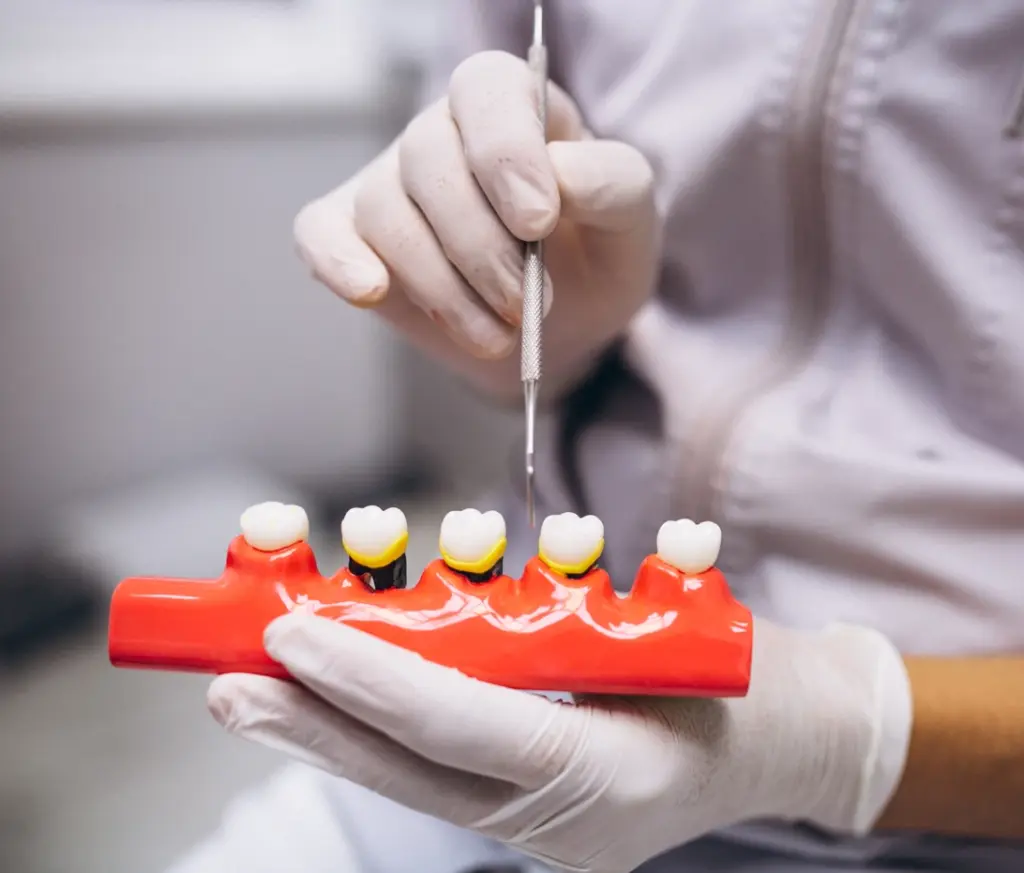
Dental bridges create two major kinds of problems: damage to the structure and damage to the biological side of the body. Structural issues comprise porcelain chipping, metal substructure fractures, pontic displacement, and weakening of the luting cement. Dr. Polen Akkılıç and her clinical staff, upon encountering these problems, analyze the stress patterns impacting each support and notice how the patient’s occlusion leads to repetitive microtrauma. Structural failures are usually the result of bruxism, malocclusion that has not been treated, or an excessive load that has been used during mastication. These mechanisms cause the metal framework to overheat in certain areas where it will eventually break. If you find this problem early, you can avoid complicated treatment and save the existing restoration.
Biological damage changes the soft tissues, bone levels, and the abutment teeth where the bridge is fixed. Periodontal inflammation, gingival recession, secondary caries, bone loss, and plaque retention under the pontic are the main factors that lead to biological deterioration. Professor Doctor Coşkun Yıldız, in his regular practice, uses periodontal therapy, radiographic monitoring, and gives his patients antimicrobial rinses like chlorhexidine mouthwash to support tissue healing in order to control these conditions. When biological issues are neglected, the abutment teeth become structurally weak and thus, the whole prosthesis is at risk. Good hygiene, follow-up visits, and early periodontal intervention provide patients with long-term stability and prevent the onset of systemic effects of oral inflammation.
What Can Cause a Broken Dental Bridge?
- Overloading the biting surface with hard food like ice, nuts, or unpopped popcorn kernels can result in the breaking of the porcelain layer or the weakening of the metal structure. Dr. Polen Akkılıç and her crew notice these kinds of damage very often when they perform occlusal evaluations.
- Long-term bruxism leads to repeated micro-injuries, which in turn result in the weakening of the porcelain-to-metal bond and finally in the breakage of the bond. It is advised to wear a specially made night guard to avoid excessive structural pressure.
- An impact on the face or an accidental blow can cause the pontic to crack or the framework to detach. Professor Doctor Coşkun Yıldız treats these cases with an immediate radiographic examination to find out the location of the invisible fractures.
- The bridge becomes less strong due to the stress caused by the substructure when it is exposed to thermal changes while eating extremely hot and cold items. Continuous temperature changes lead to the development of tiny cracks.
- Cement wear under the margins makes the area slightly mobile and therefore local stress fractures may appear as a result of uneven distribution of chewing forces.
- The misalignment of the abutment or uncorrected occlusal imbalance causes the bridge’s isolated parts to be overloaded and the metal framework to wear out more quickly.
- The old prosthetic components may lose their strength after a long period of use, especially in those patients who have a high biting force or irregular chewing habits.
What Can Cause a Failed Dental Bridge?
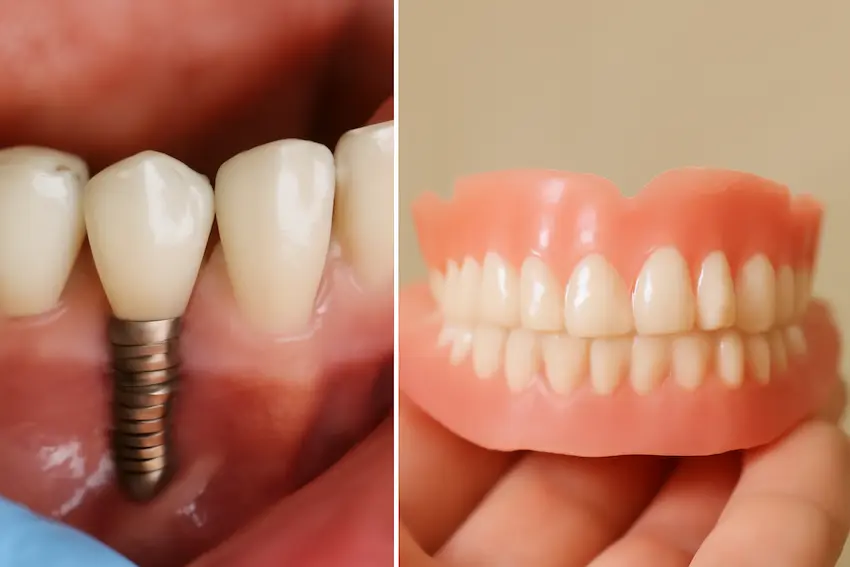
Most of the time, a failed dental bridge is connected to abutment tooth decay or periodontal disease. When plaque builds up at the edges of the bridge, bacteria penetrate the cement layer and cause caries under the existing one. If the cavity is left untreated, the dentin gets weak and the retention of the prosthesis becomes compromised. Dentist Polen Akkılıç and her team are using magnification loupes to detect these concealed lesions at an early stage and to restore the area with biocompatible core materials before the follow-up. They may also advise amoxicillin-clavulanate if the infection is the cause of the local swelling and the patient is in severe discomfort. Intervention at an early stage assists in the protection of both the abutment and the bridge.
Gingival recession and bone loss are also factors that lead to bridge failure. When the gum tissue recedes, spaces appear under the pontic which are areas for food retention and bacterial growth. This environment raises the risk of periodontal inflammation and bone resorption. Professor Doctor Coşkun Yıldız implements periodontal therapy that includes scaling, root planing, and antibacterial rinses to stabilize the tissues and then proceed with the restorative work. If the abutment teeth are severely affected by bone loss, replacement may be the only option. Taking care of it on time keeps the oral function intact, stops further structural deterioration, and is a support for the restorative success that lasts long.
How is a Dental Bridge Repaired?
- Small porcelain chips are fixed by Dentist Polen Akkılıç and her team with a high-strength composite resin bonding. The parts that are broken are rebuilt and the smooth surface is restored.
- The loose bridge is taken off, cleaned thoroughly, and recemented with the help of strong resin-modified glass ionomer cements to make sure that it is securely retained and durable for a long time.
- In case there is decay under the margins, the dentist removes the infected dentin, reconstructs the abutment with the help of a core material, and restorates the structural support before recementation.
- When the metal framework is severely broken and a full replacement is necessary, Professor Doctor Coşkun Yıldız evaluates the abutment teeth with radiographs to be certain that they can support a new prosthesis.
- After the bridge is completely detached, the clinician disinfects the abutments, evaluates for periodontal involvement, and stabilizes the teeth before any restorative step.
- In case periodontal inflammation is the reason for the looseness, the patient gets the treatment of scaling, root planing, and chlorhexidine mouth rinse to stabilize the tissues before repair.
- After repair, occlusal adjustments are made to distribute the biting forces uniformly, thus preventing the fracture of the bridge and making it comfortable and functional for the patient.
When To Get Your Dental Bridge Fixed?
If a dental bridge patient experiences pain, looseness, pressure sensitivity, or can see that the bridge is fractured, then the repair of the dental bridge should not be delayed for even a moment. These indications show that the framework as well as the biological side has already been affected. Dentist Polen Akkılıç and her team say that patients should see a doctor without delay when they experience a change in their comfort or function. The earliest stage of the problem, therefore, when the dentist intervenes, stops decay from developing, keeps the supporting teeth healthy, and the treatment is less likely to be invasive. Those who decide to put up with these signs run the risk of developing pulpal inflammation or advanced periodontal disease, which makes the repair process difficult.
Regular check-ups bring a chance for the clinic to find out the problems even before the patients show their symptoms. Professor Doctor Coşkun Yıldız during the check-up examines the occlusion, probing depths, bone support, and cement integrity. Radiographs depict the stage of caries or lesions that are not visible even to the most careful visual inspection. If the first stage is detected and treated, then the long-term success rate of the treatment will be very high, more tooth structure will be saved, and the results will be predictable. Patients get full aftercare plans, which also include hygiene instructions and dietary recommendations necessary for maintaining bridge stability.
How Do You Prevent Breaking a Dental Bridge?
To avoid the dental bridge breaking, one can simply start by chewing carefully and not putting too much force on his or her teeth. A custom night guard is very helpful to people who grind or clench their teeth as it lessens the structural stress and, thus, keeps the porcelain and metal parts intact. Dentist Polen Akkılıç and her team teach patients how to use their occlusion properly and advise them not to eat such things as bones, hard candy, or ice cubes. If one is very consistent in following these rules, the chances of a fracture will be very low, and the dental bridge will last for a long time.
Prevention of biological failure is equally important. People should brush their teeth correctly, use floss threaders and antibacterial mouthwash in order to keep the margins clean. Professor Doctor Coşkun Yıldız offers periodontal maintenance schedules tailored to each individual’s needs to keep the tissues healthy. Regular cleanings allow the dentist to spot minor issues at an early stage and keep the gum contour ideal. Such a level of care not only lessens the risk of inflammation but also protects the abutment teeth and creates a comfortable environment for the prosthesis to function properly and stably.
Is Dental Bridge Repair an Emergency?
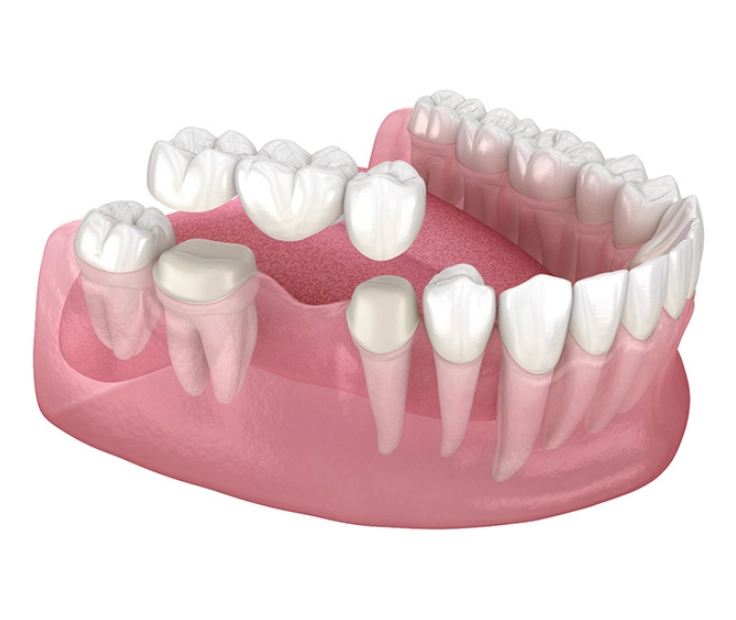
A dental bridge repair is considered an urgent matter when the patient has sharp pain, looseness of the bridge to a great extent, exposed dentin, or is unable to chew properly. In such situations, a prompt check-up is a means of avoiding infection, pulp involvement, and even further destruction of the dental structure. Dentist Polen Akkılıç and her crew are committed to bringing about the necessary changes through a thorough stabilizing procedure and by applying analgesics like ibuprofen in order to relieve the pain. Quick action keeps the natural tooth structure intact and is the safest way to achieve the desired results.
If the bridge happens to be completely detached, Professor Doctor Coşkun Yıldız thoroughly examines the abutments for the presence of decay or any signs of periodontal disease, clears the area, and decides on the most secure way to repair. In case of gingival or periapical infection, he may recommend taking amoxicillin–clavulanate. Providing the patient with immediate relief is instrumental in halting bacterial contamination, alleviating the inflammatory process, and restoring the bridge to a state of functional stability.
Common Dental Bridge Problems and Recommended Clinical Actions
| Issue | Cause | Recommended Action |
| Porcelain fracture | Excessive biting force, bruxism | Composite bonding; night guard prescribed by Polen Akkılıç |
| Loose bridge | Cement breakdown or decay | Recementing, decay removal, follow-up imaging |
| Pain under the bridge | Caries or periodontal inflammation | Radiographs; antibacterial rinse; tissue therapy by Coşkun Yıldız |
| Food trapping under the pontic | Gingival recession | Pontic redesign; periodontal therapy |
| Metal framework crack | Long-term fatigue or trauma | Full replacement with stable occlusion assessment |
Early Warning Signs That a Dental Bridge Needs Repair
- Pain or tenderness while chewing
- Unexpected movement or looseness
- Feeling of pressure or discomfort around abutments
- Food particles that regularly collect under the pontic
- The presence of a small area of broken or cracked visible porcelain
- Gum bleeding and swelling around the margins
- Unpleasant taste resulting from bacterial leakage
References:
- Rosenstiel, S. F., Land, M. F., & Fujimoto, J. (2022). Contemporary fixed prosthodontics (6th ed.). Elsevier.
- Shillingburg, H. T., Hobo, S., Whitsett, L. D., Jacobi, R., & Brackett, S. E. (2018). Fundamentals of fixed prosthodontics (4th ed.). Quintessence Publishing.
- Goodacre, C. J., Bernal, G., Rungcharassaeng, K., & Kan, J. Y. (2003). Clinical complications in fixed prosthodontics. The Journal of Prosthetic Dentistry, 90(1), 31–41. https://doi.org/10.1016/S0022-3913(03)00214-2
- Padbury, A., Eber, R., & Wang, H. L. (2003). Interactions between the gingiva and the margin of restorations. Journal of Clinical Periodontology, 30(5), 379–385. https://doi.org/10.1034/j.1600-051X.2003.20002.x
- Sailer, I., Makarov, N., Thoma, D. S., Zwahlen, M., & Pjetursson, B. E. (2015). All-ceramic or metal-ceramic tooth-supported fixed dental prostheses (FDPs)? A systematic review. Journal of Dental Research, 94(9), 128–139. https://doi.org/10.1177/0022034515598968
FAQ — Dental Bridge Repair
If a dental bridge is damaged only partially on the porcelain or cement side, it can be fixed. Dentist Polen Akkılıç and her team use the safest bonding or recementing method to restore the stability.
A dental professional can fix a broken dental bridge by bonding the cracked porcelain, treating cavities and recementing the prosthesis with the use of strong luting agents. Professor Doctor Coşkun Yıldız determines the method after looking at the images and clinical inspection.
Replacement of the bridge is necessary when the supporting or abutment teeth are not strong enough to carry the old structure. The new dental appliance not only makes the biting function complete again but also provides high stability over time.
The fixed bridge makes it possible to eat normally as the chewing forces are well distributed and secured. However, to keep the restoration intact, it is better not to eat extremely hard foods.
After a dental professional cleans the abutments properly, a bridge that has gone loose can be recemented. This treatment not only renews the secure retention but also makes the patient feel more comfortable.
You have to change your own teeth if you want to put in a fixed bridge. A restoration will be working and comfortable for a long time if you take good care of it.
A fixed bridge allows you to have the same chewing power as before and looks completely natural. It is the source of a person’s long-term trust and stable occlusion.
Food can get underneath the pontic if the gums change their shape. Good hygiene and regular visits to the dentist will keep the area from becoming irritated and will maintain the health of the tissue.

