


Understanding the D7922 Dental Code
The American Dental Association (ADA) developed the Current Dental Terminology (CDT) code set to standardize the reporting of dental procedures. The D7922 dental code specifically describes: “comprehensive fracture of mandibular bone – closed treatment.” The D7922 dental code details the extraction of a foreign body from soft tissue when the retained material causes functional discomfort, elevates the risk of infection, or leads to continuous irritation of the tissue. This code is the one used by the doctors when they remove the pieces of the broken dental instrument that has been lodged in the tissue, the part of the calculus that has gone into the tissue during the cleaning, and the debris that has been put after the trauma. Apart from documenting the intervention in detail, dentists also maintain a trustworthy clinical record by employing this code.
The D7922 code is applied by skilled dental professionals when the removal of the soft tissue is complicated, and they have to perform a precise surgical removal. If the case is such that deeper anatomical structures are involved, the clinicians refer to advanced diagnostic imaging to locate the foreign material safely. They promote the intervention that is done in time because embedded objects may disturb normal healing or intensify local inflammation. The patient is the primary focus of the clinicians throughout the entire treatment plan, and attention is especially paid to comfort, sterile technique, and the recovery from surgery that can be expected.
Such complex medical terminologies can be interchanged with their simpler equivalents as follows:
- Mandibular Bone: The mandibular bone, the movable part of the skull that houses the lower teeth and is made up of the two essential activities of speaking and chewing.
- Comprehensive Fracture: Comprehensive here means a thorough fracture; the break goes all the way through the mandible.
- Closed Treatment: The feature highlighting the D7922 operation is “closed treatment.” “Closed treatment” signifies that your oral surgeon heals the fracture without an extensive, external incision through the skin. The surgeon, by doing it cleverly, realigns the broken bone segments (a process called “reduction”) and then stabilizes the jaw to allow for natural healing from the inside.”
D7922 code is in direct contrast to “open treatment” (which would be coded as D7923), where the surgeon makes an incision to directly see the bone and may use plates, screws, or wires to fix the fracture.
When Do You Need the D7922 Procedure? What Causes Jaw Fractures?
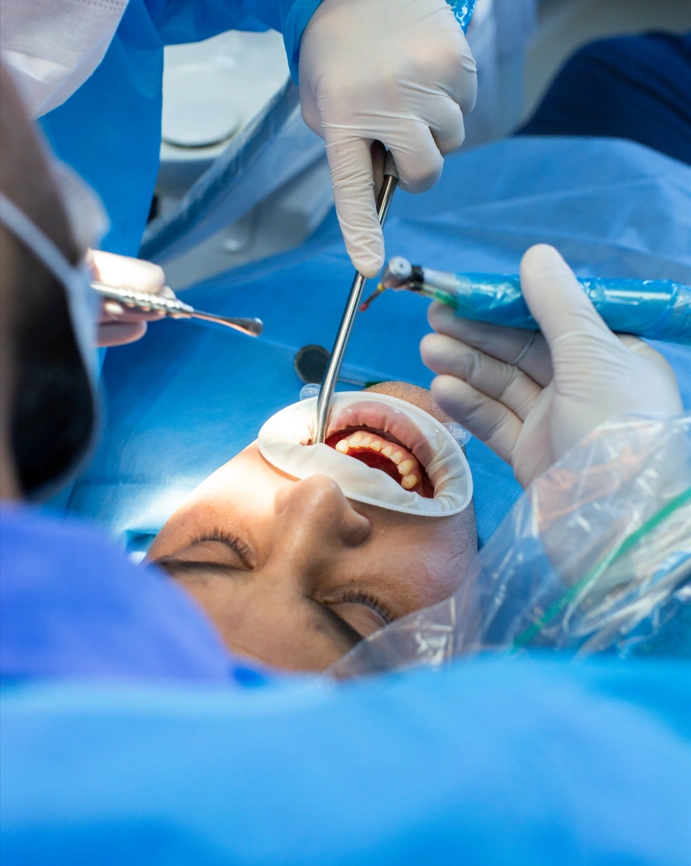
The mandible of a normal adult is really a strong bone. But certain high-impact events can create enough force to break it. The major causes consist of:
- Traumatic Injuries: These are the main causes of mandibular fractures. Some of the examples are sports injuries (especially involving sports), car crashes, falling straight on the chin, or getting into fights.
- Underlying Medical Conditions: In some situations, the jaw fracture may be the result of a condition that has caused weakening of the bone. This is known as “pathological fracture”. Diseases that may cause the collapse of the jaw weakened by osteoporosis in the advanced stage, osteomyelitis, and cysts/tumors of benign origin that affect the bone and make it vulnerable to breaking under normal forces of chewing.
Identifying the Symptoms: Signs of a Mandibular Fracture
The symptoms you can find here are those that might appear after a facial trauma. See a dentist or oral surgeon by the time if you have these in combination with an injury to the face:
- Visual Misalignment: The upper and lower teeth no longer align as they usually do, which is a condition called malocclusion.
- Pain and Tenderness: The jaw hurts terribly, and the pain gets worse when the jaw is moved, chewed on, or when talking.
- Swelling and Bruising: Swelling may be seen along the jawline or inside the mouth and in most cases, bruising is also present.
- Numbness: Numbness of the lower lip, chin, or gums is a sign that the nerve near the fracture site is affected.
- Difficulty Functioning: Not being able to open or close the mouth fully or without a significant amount of pain.
The oral surgeon will confirm the diagnosis by clinical examination and diagnostic imaging, including panoramic X-rays (OPG) or Cone Beam Computed Tomography (CBCT), which will also help in locating the fracture line and deciding if a closed reduction (D7922) is the best option.
D7922 Procedure: How Closed Reduction Works
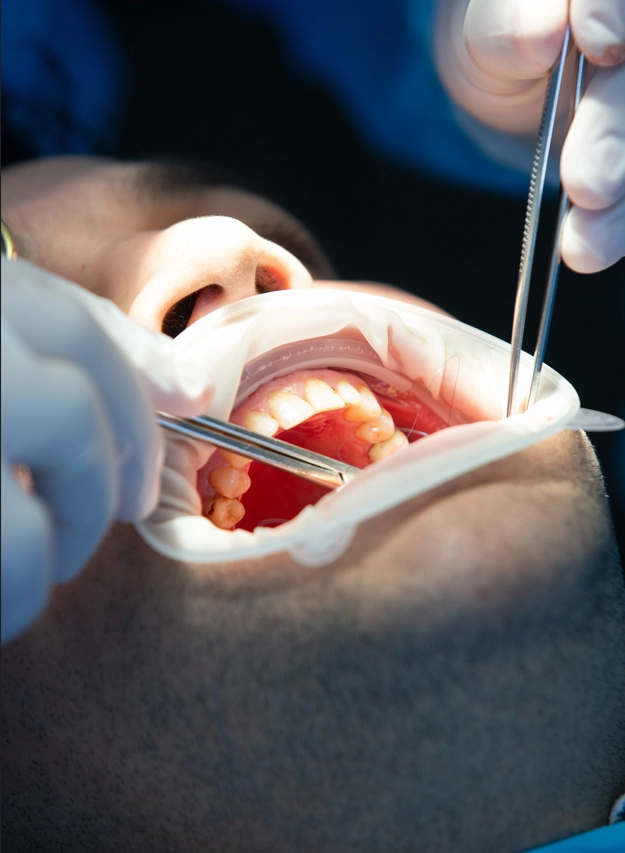
Understanding your surgery will take away some of the anxiety and help you get ready for a smooth recovery. D7922 closed treatment generally involves the following stages:
- Anesthesia to Keep You Comfortable: To numb the whole jaw area, your surgeon will locally anesthetize you. Besides that, to maintain your comfort and relaxation throughout the whole operation, they can also administer intravenous (IV) sedation or general anesthesia.
- Careful Realignment (Reduction): With the help of his/her skilled hand, the surgeon, through external method, that is, by the outside of the skin, finger or instrument, locates the broken jaw pieces and realigns them, thereby correcting the anatomical position. The precise realignment is the most crucial point of the entire process, as the healing is carried out properly at this point.
- Removal of the Device for Stable Healing: The surgeon removes the device for the fixation of your jaw once the bones have been brought into the right position. The most common way of doing so is maxillomandibular fixation (MMF), that is, “wiring the jaw closed.” However, in the past, metallic wire was not the only thing used for the procedure; today, surgeons mostly utilize high-quality, non-irritating elastic bands that are attached to small brackets glued to your teeth. The functionality of these elastics is the same as if your upper and lower teeth were pressed tightly together; thus, no movement at the fracture site is allowed.
- Checking for Proper Alignment: The last look at the X-ray before coming out of the operating room is the surgeon’s to make sure that the fracture segments are in the best position.
The Road to Recovery: What to Expect After Your D7922 Procedure
If you aim for a recovery without any kind of complication, you ought to be very proactive in managing your aftercare. Generally, the time in which the immobilization will be kept will range from 4 to 6 weeks, depending on how severe the fracture is and the person’s healing ability.
What you should definitely do after the operation:
- Food Changes: It will be obligatory for you to follow a liquid diet or consume only very soft, pureed food. Nutritionists from your care team will help you with your protein intake through juice, broth, blended soup, and smoothies.
- Strict Oral Hygiene: Keeping your mouth free of infection is the first and most important thing in order to avoid infection. Your surgeon, after the operation, will give you advice on using a water flosser, antiseptic mouthwash (e.g., chlorhexidine), and a very soft child’s toothbrush for cleaning around the brackets and teeth without disrupting the fixation.
- Pain and Swelling Control: You will be given a prescription for painkillers to use when experiencing pain. In addition to moderate swelling, ice should be applied to the jaw’s exterior during the first 48 hours after the operation.
- Restriction on Activity: Any activity requiring much effort and contact sports is not allowed. Even sneezing or yawning should be handled delicately and you will be advised to cut the food into very small pieces if you are on a soft diet after the removal of the fixation.
Why Dentists Use D7922 In Clinical Practice
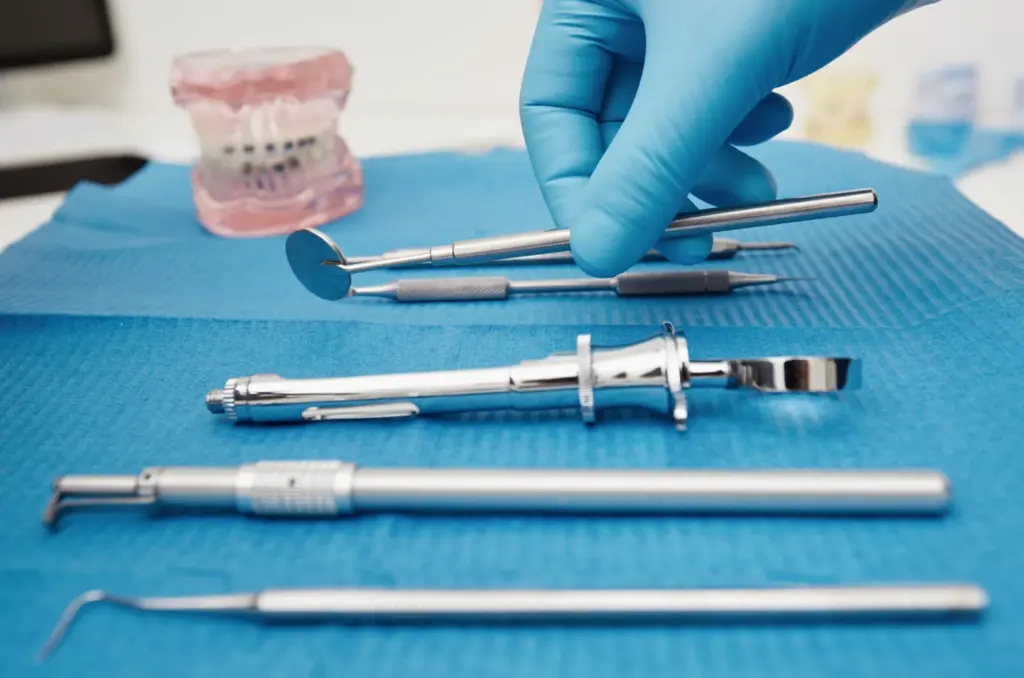
Clinicians implement the D7922 dental code when a patient is afflicted with localized swelling, continuous pain, or limited movement due to an embedded material. The diagnosis is made through a structured clinical examination, and radiographic imaging locates the exact position of the foreign object. Each stage of the treatment is aimed at complete removal, alleviation of the tissue irritation, and restoration of normal function.
This code is instrumental in ensuring timely intervention, and it conveys substantial clinical advantages during the removal of the foreign body. The removal of soft tissue becomes less variable when the clinicians employ minimally invasive surgical methods that extend the protection to the surrounding structures. Every case is accompanied by a clinical plan that is comprehensive and comprises imaging, exploration, extraction, and postoperative evaluation. This organization of healing phases ensures stable recovery and enhances the patient’s overall recuperation process.
The Importance of Technology in D7922 Operations
The modern means of diagnosis elevate D7922 operations from being mere acts of chance to being comfortable and certain. It is through devices like Cone beam CT scans, digital radiography, and Intraoral cameras that the clinicians can achieve high precision in stipulating trouble parts that need clearing surgically. With the aid of these technologies, the operations will have fewer injuries, and the doctor can be sure of the exact place to remove.
Magnification devices and refined micro-instruments are also available to the clinicians to help in gentle and accurate removal. When it is a complicated situation, advanced 3D imaging can help reveal the extent of natural structures and plan out the route for surgical safety. The union of such techniques results in the improvement of the procedural part and faster solid recovery.
Reasons Why the D7922 Code Is of Great Importance to Your Dental Insurance
D7922 operation falls into the category of major oral surgery services. As a result of this, most dental insurance schemes extend coverage for such a treatment, but they also may vary quite significantly from one level to another. It can be termed as a necessary medical procedure to fix a broken bone.
- Understanding the Benefits You Have: A confirmation from your dental insurance provider before the surgery is very helpful. Check the coverage for CDT code D7922, be aware of your deductible and coinsurance, which are your money responsibilities, and inquire whether there are any specific requirements for pre-authorization.
- Medical Insurance: In case of an accident, the medical insurance can cover the expenses of the operation (e.g., injury in a car crash, while playing sports). We would be happy to have our billing professionals assist you in the dental and medical insurance claim process.
Conclusion: Journey to Physical and Functional Restoration
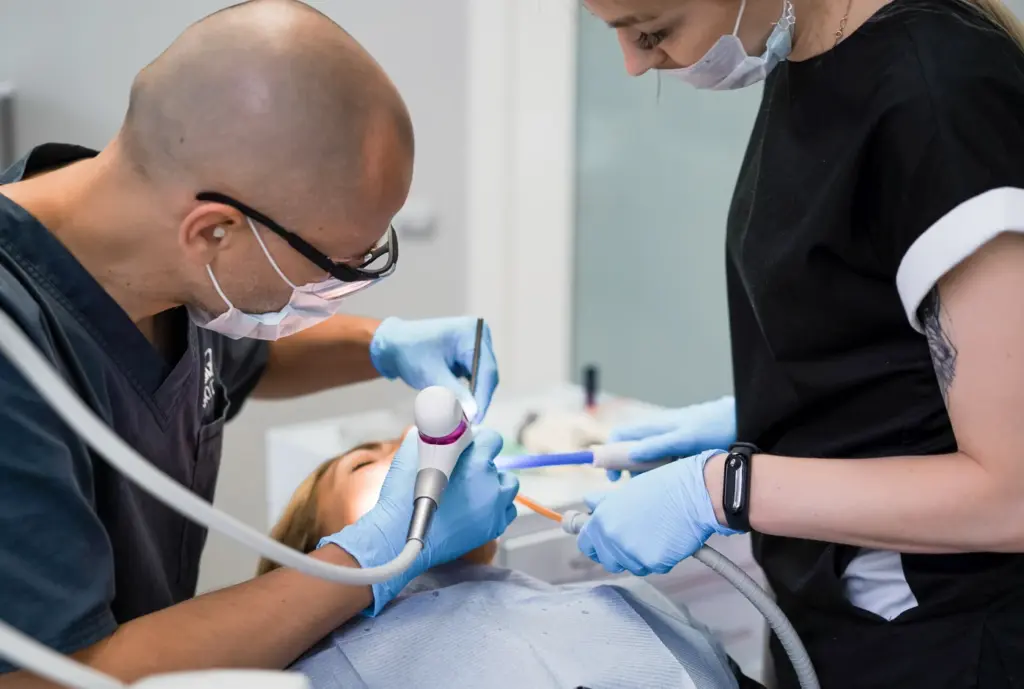
A mandibular fracture is a grave situation, yet the D7922 approach offers a minimally invasive and highly efficient alternative for the recovery process. This closed operation allows your body’s natural healing capacities to mend the fracture with the expert guidance of your oral surgeon. By getting familiar with the operation, being loyal to your aftercare plan, and having open talks with your healthcare team, you will be able to get the safe and successful result you are after, which is complete functioning and health of the jaw back.
If you are worried about a jaw injury or if you have been diagnosed with a fracture, then do us the favor and get in touch with our practice right away. We will arrange a consultation with our expert oral surgery team for you.
References
American Dental Association. (2024). CDT 2024: Dental procedure codes. ADA Publishing.
Hargreaves, K. M., & Berman, L. (2020). Cohen’s pathways of the pulp (12th ed.). Elsevier.
Malamed, S. F. (2019). Handbook of local anesthesia (7th ed.). Elsevier.
Laskin, D. M. (2018). Oral and maxillofacial surgery. Quintessence Publishing.
Pogrel, M. A. (2017). Management of dental instrument fragments in soft tissue. Journal of Oral Surgery, 75(4), 620–628.
Frequently Asked Questions About D7922 Dental Code
The D7922 code covers the removal of foreign materials from soft tissues when they cause discomfort, inflammation, or functional issues.
The procedure feels comfortable because dentists use effective local anesthesia and gentle surgical techniques.
Foreign materials remain when trauma, broken dental instruments, or debris enter the tissue during dental procedures or accidents.
Healing usually progresses quickly, and most patients return to normal function within a few days.
Dentists use imaging such as CBCT or X-rays to accurately locate foreign bodies and plan safe removal.

