


Knowing the nitty-gritties of a dental procedure recommended to you is like a superpower that lets you make the right choices for your oral health independently. When your dental planner uses the word “alveoloplasty” or the code “D7311,” it means that you must be in need of some accurate and clear information to figure out what it is all about. In fact, it is a step that, though on the surgical side, is so common and directly contributes to comfort during the healing phase and positive outcomes in the long run.
This comprehensive manual takes you on an extensive journey through the D7311 dental code. We will uncover the medical jargon used, highlight the benefits of the procedure, and even show how different the code is from the others. We aim to equip you with the kind of patient-friendly, safety-first knowledge that not only tells you how alveoloplasty leads to a recovery that can be expected but also to a stronger oral base.
What is the D7311 Dental Code?
D7311 is a dental code literally representing a procedural instance within the American Dental Association’s (ADA) Current Dental Terminology (CDT) manual. The formal definition of the procedure is stated as “alveoloplasty in conjunction with extractions – per tooth.”
If you want to understand the definition fully, it would be good to see its parts separately:
- Alveoloplasty: The distressing surgical procedure where after the tooth removal the jawbone is surgically reshaped and smoothed using a power tool or a manual instrument is referred to as alveolar procession or bone file (alveoloplasty or alveoplasty is the surgical reshaping and smoothing of the jawbone after the tooth extraction, the name is derived from the latin terms “alvulus” -the bony socket that holds a tooth-and “plasty” –meaning to form or shape-).
- In Conjunction with Extractions: This is the most important feature of the definition. It restricts the reshaping of the bone to be done during the tooth removal appointment.
- Per Tooth: This is the alveoloplasty performed around the extraction site of one specific tooth. If you have multiple teeth and require separate alveoloplasty on each of them, then you should have a D7311 code for each of them.
On the ground, a D7311 operation means the dentist or oral surgeon not only takes out your trouble-causing tooth but also goes ahead to get the bone underneath ready for the best healing. They won’t just leave it raw and unprepared after the extraction but will bring out their specific tools and gently file down exposed sharp edges, spurs, or irregular contours in the socket and the immediate surrounding ridge. This results in a uniform restorative smooth bony foundation over which your gum tissue can heal evenly and comfortably.
What is Alveoloplasty in Dentistry?
Alveoloplasty is quite an ordinary oral surgical procedure but has one single primary objective only: to produce perfect bony architecture for healing, future dental restorative procedures, and the patient’s comfort. The jawbone that supports your teeth is a living structure, but it is not always perfectly smooth. After a tooth is removed, the empty socket often has sharp, uneven edges known as bony spicules or undercuts. These irregularities, if not taken care of, may cause the patient to experience several post-operative issues.
In a way, alveoloplasty is the last and most important stage of site preparation. Just as one would sand a piece of wood when making furniture to both prevent splinters and get the perfect fit, your dentist contours the bone to both prevent future discomfort and make the bone a stable base. This preventative measure is a diagnosis of a well-planned, patient-centred care approach.
The most direct health benefits of alveoloplasty are huge:
- Promotes Uninterrupted Healing: A bone surface that is smooth enables the gum tissue to close over the extraction site without getting caught or irritated by sharp edges that are underneath the surface. This results in a quicker and more predictable soft tissue healing.
- Prevents Post-Operative Pain: Bony spicules are able to pierce the fragile healing gum tissue, and thus, localized pain with inflammation will arise in the area where spicules protrude. The condition is sometimes called “bone spicules,” and alveoloplasty gets rid of this potential pain source at its root.
- Facilitates Future Tooth Replacement: The contour of the jawbone plays a vital role, no matter of whether implants, bridges, or partial removable dentures are the next steps. Firstly, for implants, it will offer the main support, and secondly, for dentures and bridges, it will guarantee the most comfortable fitting without any possible pain caused by pressure points.
- Enhances Long-Term Oral Hygiene: An even and smooth ridge is much easier to clean, regardless of whether you are doing it by brushing, flossing, or taking care of a dental prosthesis. By doing so, the spots where food and bacteria can settle are reduced, thus preventing infection and inflammation from occurring again.
What is the Difference Between D7310 and D7311?
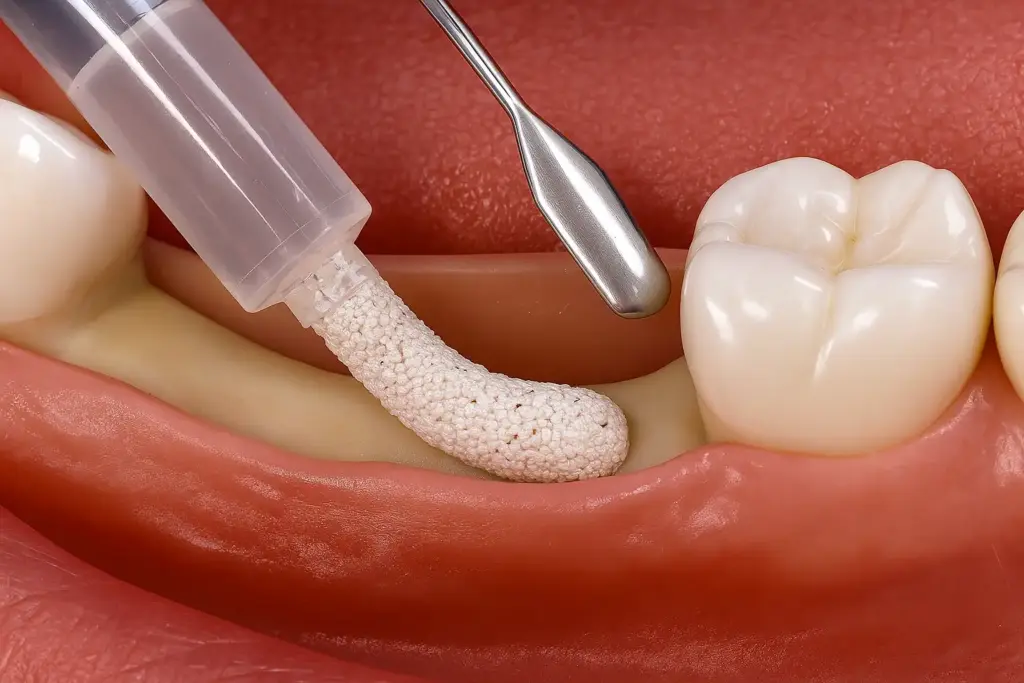
It is very important to be able to tell the difference between D7310 and D7311 if you want to be able to correctly understand your treatment plan and the details that go along with it. The two codes specify the same main procedure – alveoloplasty – but refer to two different situations clinically, depending on the extent of the operation.
The main difference is in the number of teeth that are going to be removed and also the degree of the bone reshaping.
D7311: Alveoloplasty in conjunction with extractions – per tooth
- Scope: This code is the one that is used when only one tooth is removed and the bone reshaping is limited to the area of the particular tooth’s socket and the closest surroundings.
- Billing: It is mostly billed on a per-tooth basis.
- Clinical Example: The condition of your molar is so bad that you cannot save it. The dentist extracts this single tooth and then smooths the bone around that particular socket to ensure a comfortable healing process.
D7310: Alveoloplasty in conjunction with extractions – per quadrant
- Scope: This code details the scenario where multiple teeth are being removed within one quadrant of the mouth (a quadrant means any of the four sections: upper right, upper left, lower right, lower left). The alveoloplasty procedure includes reshaping the bony ridge throughout that entire section to a smooth and uniform arch.
- Billing: The billing is done for one single procedure per quadrant, irrespective of the number of teeth removed in that section.
- Clinical Example: The removal of all your left upper teeth is the next step to getting a full denture. The oral surgeon takes out all the teeth in that quadrant and then reshapes the entire upper left bony ridge thoroughly. It is a far more extensive procedure compared to D7311.
Summary Table for Clarity:
| Code | Procedure Name | Scope | Typical Scenario |
|---|---|---|---|
| D7311 | Alveoloplasty in conjunction with extractions – per tooth | Single tooth extraction site | Smoothing the bone after removing one problematic molar. |
| D7310 | Alveoloplasty in conjunction with extractions – per quadrant | Multiple extractions in one jaw section | Reshaping the entire ridge after removing several teeth for a partial or full denture. |
Why is Alveoloplasty (D7311) a Recommended and Beneficial Procedure?
A dentist recommending a D7311 alveoloplasty is essentially endorsing a standard of care that not only emphasizes your comfort but also oral health stability over the long term. It is not a needless extension but a strategically valuable procedure with quite a few benefits that have been proven through research.
1. Directly Patient Comfort and Healing
The main immediate result of alveoloplasty is less discomfort during recovery. By actually removing in a systematic manner bony spikes (one of the most frequent and most painful situations where these spicules) from the area of tissue healing, the intervention prevents the problem from emerging through the gum. The patients who have undergone the procedure of alveoloplasty experience a more rapid and less painful recovery period because their potential source of irritation has been surgically eradicated.
2. Future Dental Implants: Preservation of Bone
If a dental implant is to be the solution for the missing tooth, then alveoloplasty is a very important step to start with. Continuous integration of dental implants (osseointegration) efficiently demands that there should be enough volume and density of properly shaped, healthy bone. With a D7311 operation, the surgeon gets the chance to idealize the bone specimen right after it has been detached. Apart from the fact that bone is being conserved, it is also being shaped in a way that the next implant fixation will not only be easier and more predictable but also be more successful.
3. Optimal Function and Fit of Prosthesis are Ensured
Even if the implant is not the immediate decision, the jaw ridge without defects is what is necessary for any other type of tooth replacement. The use of a removable partial denture, as an example, is dependent on the even contact of the ridge for stability purposes. Irregularities and sharp bone ledges, however, can cause the development of localized pressure points, thus causing pain, leading to denture sores, as well as making the process of chewing difficult. Alveoloplasty results in a balanced and anatomically correct basis, which is directly translated into better prosthetic functioning, enhanced comfort, and better speech for the patient.
4. Complex Extractions Standard of Care in
In quite a number of clinical situations, alveoloplasty is not just an alternative but an integral and necessary part of removal that is both safe and complete of the tooth. This is especially the case for:
Teeth broken at the gumline:
Where bone needs to be very gently reshaped so that the root fragments can be accessed and removed.
Teeth with long, curved, or divergent roots:
This leads to irregular socket shapes after the removal.
Teeth associated with bony defects or pathology:
Where the surrounding bone is already damaged and thus requires being recontoured in order to get back to a healthy state.
In such circumstances, D7311 is the appropriate stage to initiate the complete removal of the tooth and leave the place healthy, cleaned, and ready.
The D7311 Procedure: A Step-by-Step Guide
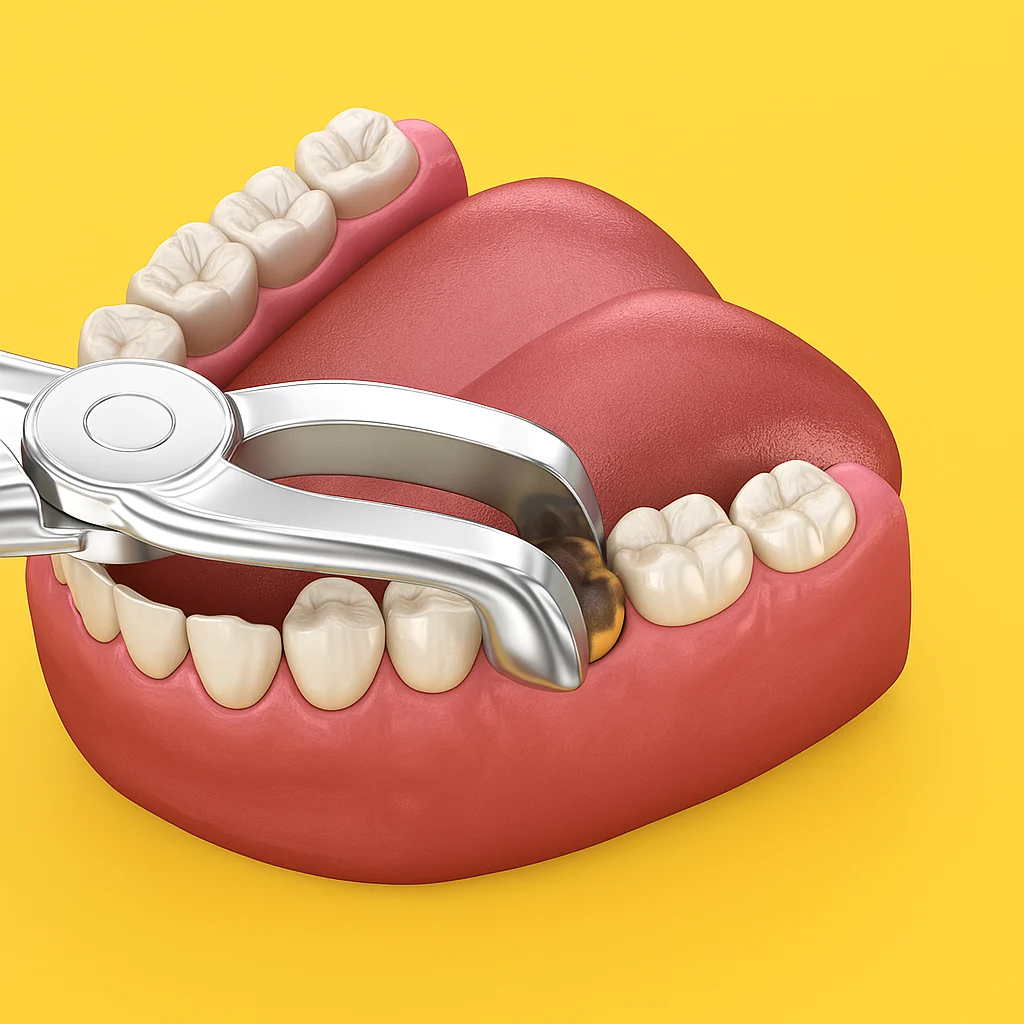
When you understand the process that is going to be done, it follows that your anxiety level drops significantly. Below is an elaborate step-wise description of a regular D7311 alveoloplasty:
Comprehensive Diagnosis and Treatment Planning
It all starts with an in-depth clinical examination of the patient. The dentist will go through your medical history, perform a clinical test, and, almost in every case, take a diagnostic X-ray. For complicated cases, a 3D Cone Beam CT (CBCT) scan may be required to accurately see how the tooth is related to the bone and the other vital structures. This point in the treatment is used to confirm that the extraction, along with alveoloplasty, is indeed necessary.
Local Anesthesia Administration
The patient’s comfort and safety will always be the main concern. To achieve this, the doctor will inject a local anesthetic that will make the area of the tooth, the nearby gum, and the bone numb. You will remain conscious and aware but pain will be absent. You may feel pressure and movement but no pain.
Atraumatic Tooth Extraction
A dentist will take out the tooth in a gentle and careful manner. To do this, usually methods that aim at preserving most of the healthy bone around the area are applied are used are applied which will be the base for the next alveoloplasty procedure.
Socket Debridement and Inspection
After the removal of the tooth, the socket will be cleaned by the dentist very thoroughly. The process is done through irrigation with a disinfectant and remnants of the tooth, roots, or infected tissue are removed. Inspection of the socket and the adjacent bone walls is conducted for detecting any sharp edges, spurs, or undercuts.
Bone Contouring (Alveoloplasty)
Alveoloplasty is a surgical operation in which a dentist utilizes special surgical instruments like bone files, rongeurs, or a slow-speed surgical handpiece (drill) with water to do the work. The practitioner will do the work slowly, thoroughly and precisely until all irregular bony areas are smoothed and rounded. The result will be a nice curving contour that can hardly be felt, if any, by the tip of a surgical instrument.
Final Irrigation and Closure
Any leftover pieces of bone are removed by the final wash that is done with sterile saline on the reshaped area. If the gum flap has been lifted, then the soft tissue is placed back in its position and secured by suturing (stitching). Your dentist may also put bone grafting material into the socket to keep the bone volume; however, this would be a separate intervention with its own code (e.g., D7953).
Post-Operative Care Instructions:
Loaded with comprehensive information and in written form, the care instructions for the site of the extraction will be given to you. The care advice will talk about managing bleeding, diet (soft foods), oral hygiene (gentle rinsing), pain relief, and restriction of activities. The most significant factor in your hands for a smooth and uneventful recovery is following the directions given to you without fail.
Conclusion: D7311 Alveoloplasty – An Informed Step Towards a Healthier Smile

D7311 dental coding is a prime example of preventive oral surgery in the 21st century. The title under which you are billed is far from being the only thing that counts here; it is a sure clinical step whose main goals are patient comfort and health as well as successful long-term outcomes. Alveoloplasty is a real foresight move that turns a simple tooth extraction into a procedure carefully thought out for optimal healing and future oral health stability.
Knowing the reason, process, and exclusive perks of the D7311 procedure enables you to have a confident and informed dialogue with your dental care provider. This insight gives you the power to become a proactive partner in your care, which in turn leads to healthy, functional, and comfortable smiles that last for years to come. Always talk to your capable dentist or oral surgeon to figure out the most suitable and personalized treatment plan for your individual needs.
Sources:
- American Dental Association. (2023). Current Dental Terminology (CDT). American Dental Association.
- Hupp, J. R., Ellis, E., & Tucker, M. R. (2018). Contemporary Oral and Maxillofacial Surgery. Elsevier.
- Fragiskos, F. D. (2007). Oral Surgery. Springer Science & Business Media.
- Peterson, L. J., Ellis, E., Hupp, J. R., & Tucker, M. R. (2003). Peterson’s Principles of Oral and Maxillofacial Surgery. PMPH-USA.
Frequently Asked Questions About Alveoloplasty Dental Code (D7311)
D7311 is a code for alveoloplasty identifying alveoloplasty. D7311 means alveoloplasty along with tooth extractions from one to three teeth per quadrant. The operation is to smooth and reshape the jawbone to facilitate healing.
The main purpose of alveoloplasty is to get rid of the sharp bone fragments, and at the same time, it creates a smooth bone surface for dentures, implants, or natural gum healing.
As a rule, the operation is done under local anesthesia, so the patient should not experience pain during the procedure. Still, there may be slight discomfort for a day or two after the surgery, but it can be taken care of easily with medicine that the doctor’s office will provide.
D7310 is the code for alveoloplasty of more than 4 teeth per quadrant, whereas D7311 is the code for alveoloplasty of 1 to 3 teeth per quadrant.
The initial soft tissue healing, where the gum closes over the socket, typically takes 1 to 2 weeks. During this time, you should follow all post-operative instructions diligently. The underlying bone continues to remodel and heal over several months. The recovery timeline is very similar to that of a standard tooth extraction, with the added benefit of a reduced risk of delayed complications.

