


It is often hard to understand dental procedures and billing codes as they appear to be in a different language altogether. When your doctor talks about dental implants, you might find the term “D6057” and be unaware of the exact meaning. This code is important for a successful and lasting dental implant.
Knowing dental code D6057 gives you the power to decide wisely about your dental health investment. This detailed guide will show the readers what the D6057 medical code is all about, why it is the most necessary, and what one can expect along the treatment route. We want to equip you with the right and precise information so that you can be sure of your care when talking to your dental professional.
What Does Dental Code D6057 Cover in Dental Procedures?
According to the American Dental Association (ADA), Current Dental Terminology (CDT), Dental Code D6057 refers to a “prefabricated abutment” specifically. This abutment is the essential part that your dentist will attach firmly to the implant that is in your bone.
The main role of the abutment is to be the permanent solid base to a crown, the final restorative unit of a dental implant. The whole dental implant can be compared with a three-part system, the implant being the D6057 post that most probably will be made of titanium, the abutment the connecting piece, and the crown the visible tooth.
A pre-made abutment means that the doctor will take a precision, standard-size part that is made for a specific brand and model of an implant and that fits it perfectly. With this choice, in the end, there is a simple, safe fit that can be a reliable solution for many years, and the health of the implant and the surrounding bone and gum tissue.
The Critical Role of the Abutment in Your Dental Implant System
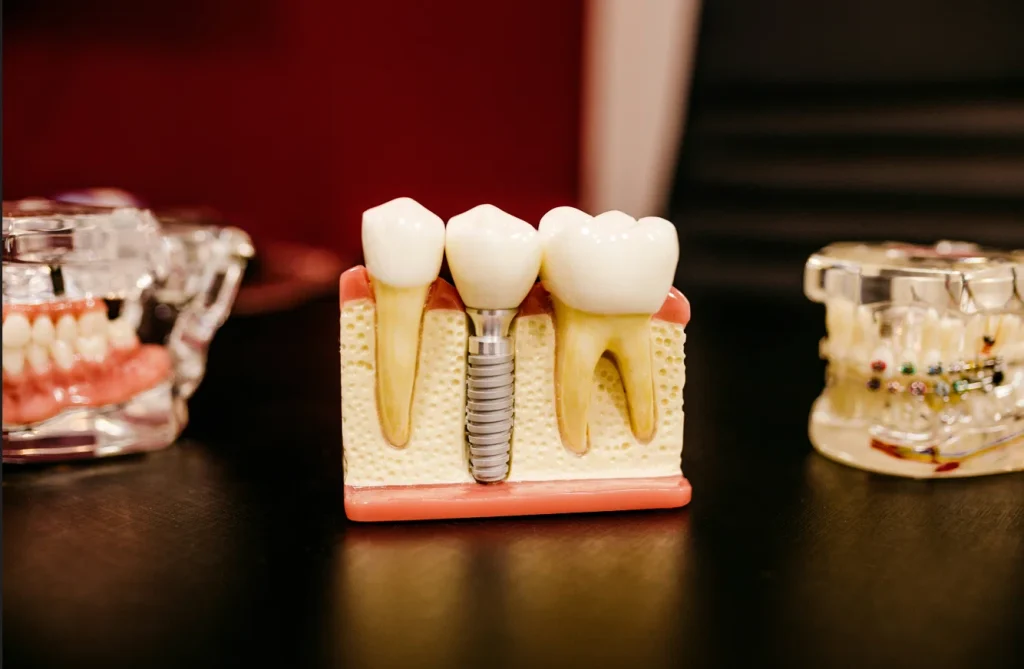
The abutment is not only the connecting device; it revolves around the implant’s function, attractiveness, and health. The abutment is the cornerstone. The establishment of three important results, the very first one being that of a tight, safe binding between the implant and the crown, extending the latter against the bacteria that cause infections, is the main outcome of a well-operated D6057 abutment.
A seal like the one in question is the basis for the protection of the jawbone and the implant’s longevity. Secondly, the abutment is supposed to be friendly with gum tissues. Not only does it shape the gums to form a naturally-looking collar around the new tooth, but it also makes the implant cleaning process easier and more thorough.
On top of that, the abutment offers a solid, reliable support for the crown to be able to resist everyday biting and chewing. This strong support makes it possible for you to be able to eat your favorite foods again without any worries or discomfort, thereby regaining the complete function of your smile.
Prefabricated vs. Custom Abutments: Understanding Your Best Option
A dentist will suggest either a prefabricated (D6057) or a custom abutment depending on which of the patient’s anatomical features will lead to aesthetic and functional results of the highest quality. A prefabricated abutment is a manufactured, high-quality component that provides a tested, economical solution for most standard implant cases. When implant placements are correct and gum tissues are healthy, dentists can confidently go on with prefabricated abutments as they offer a good fit and shorten the treatment duration.
In cases where a more personalized approach is necessary due to, for example, a complicated angulation or the need for a certain aesthetic effect in the front of the mouth, the dentist will suggest a custom abutment. The dental lab will make this piece exactly to the specification, which, among other things, can ensure the perfect emergence profile of the crown. Your dentist will provide the reasons for using either a prefabricated or a custom abutment as the safest and most effective solution for your unique smile thus making it a long-term oral health outcome.
A Step-by-Step Guide to the D6057 Abutment Placement Process
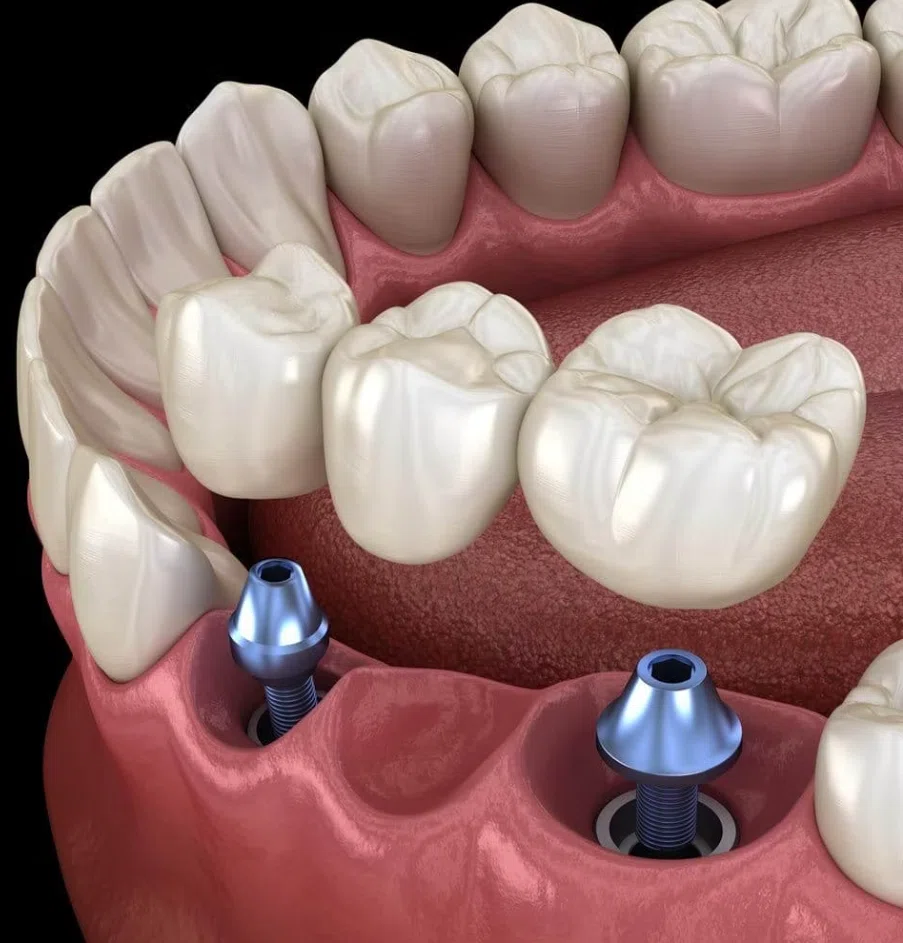
Knowing how the D6057 abutment is inserted will bring ease to your procedure and make it more predictable and comfortable. Usually, the intervention takes place after the implant fusion with the bone, a process known as osseointegration.
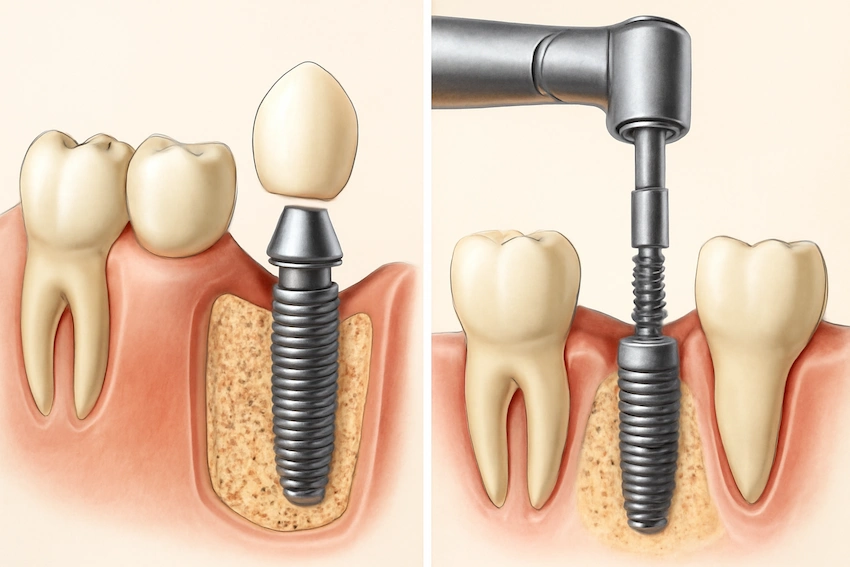
- Assessment and Access: The dentist will first numb the area to your complete comfort. He will then create a small, accurate incision in the gum tissue to expose the top of the implant that has healed.
- Healing Abutment Removal: If you have a temporary healing abutment installed, the dentist will take it off carefully.
- Abutment Selection and Seating: To make the best match, your dentist will pick the right prefabricated abutment (D6057) from the manufacturer’s system for your implant. After that firm, he will screw or glue the abutment to the implant fixture.
- Impression for the Crown: Once the abutment is installed, your dentist will do a detailed digital scan or take a physical impression. This impression is a must for the dental lab, as it is a representation of the exact position of the abutment, so that they can prepare the permanent, custom-fit crown for you.
- Temporary Crown Placement: If your dentist may put a temporary crown on the abutment for its protection while your permanent crown is being made, that would be the case of Temporary Crown Placement.
- Final Crown Delivery: At your following visit, the dentist will detach the temporary crown, clean the area, and permanently cement your new, natural-looking crown to the abutment D6057. To make sure that the bite is correct, the dentist will then check it.
The simplified plan of this operation is the way a prefabricated abutment is used to finish your tooth restoration, highlighting the efficiency and reliability.
Comparative Table: Dental Implant Abutment and Related Codes
The table below defines the detailed usage of the D6057 code through comparisons with other typical dental implant procedure codes. Recognizing these differences aids in the correct understanding of treatment plans and insurance benefits.
| Dental Code | Procedure Name | Definition & Scope | Primary Purpose & Clinical Context | Key Differentiators & Clinical Notes |
|---|---|---|---|---|
| D6057 | Prefabricated Abutment | The placement of a standard, factory-manufactured abutment. | To provide a reliable, cost-effective, and efficient connecting foundation for the final crown on a dental implant. Used in cases with ideal implant positioning and standard soft tissue contours. | The “Off-the-Shelf” Solution: This is a stock component. It is less expensive and allows for faster treatment compared to a custom abutment. Its use depends on the implant system’s available components and the patient’s anatomical situation. |
| D6056 | Custom Abutment | The placement of an abutment that is specifically designed and fabricated in a dental laboratory for a single, unique patient. | To create a perfectly tailored connection that optimizes aesthetics, emergence profile, and biomechanics. Used for complex cases, angled implants, or when the highest level of gingival (gum) aesthetics is required (e.g., front teeth). | The “Tailor-Made” Solution: This abutment is custom-milled or cast for a specific implant site. It is more expensive but offers superior control over the final crown’s appearance and the health of the surrounding gum tissue. |
| D6058 | Abutment Supported Retainer (Crown) | This code refers to the final prosthetic tooth (the crown) itself, not the abutment. It describes a crown that is attached to and supported by an abutment. | To create the visible, functional artificial tooth that is cemented or screwed onto the abutment. This is the final step that restores aesthetics and chewing function. | The “Tooth” Itself: D6058 is for the crown, while D6057/D6056 are for the abutment underneath it. These codes are separate and are almost always used together in a complete implant restoration. |
Why Material Choice Matters for Your Implant Abutment
The component of your D6057 that will decide not only the final look but also the gum health is the material. Prefabricated abutments are most time made of the metal titanium, which provides great strength, is biologically compatible, and has been clinically verified over a long period of time.
In this way, titanium forms a very strong link that can remain unbroken even by the great forces of mastication. For those patients who wish to have a metal-free alternative or have thin gum tissue, and who may have a dark implant line that shows, zirconia abutments would be a perfect solution. Zirconia is a very hard ceramic that supports a tooth-like base that also lets the light get through the gums just as it does with a natural tooth.
This feature makes it the most suitable method for attaining a very aesthetic result, especially for the front teeth. Your dentist will make the abutment material decision that is the most beautiful, functional, and healthy for your smile.
The Significant Benefits of Choosing a D6057 Prefabricated Abutment
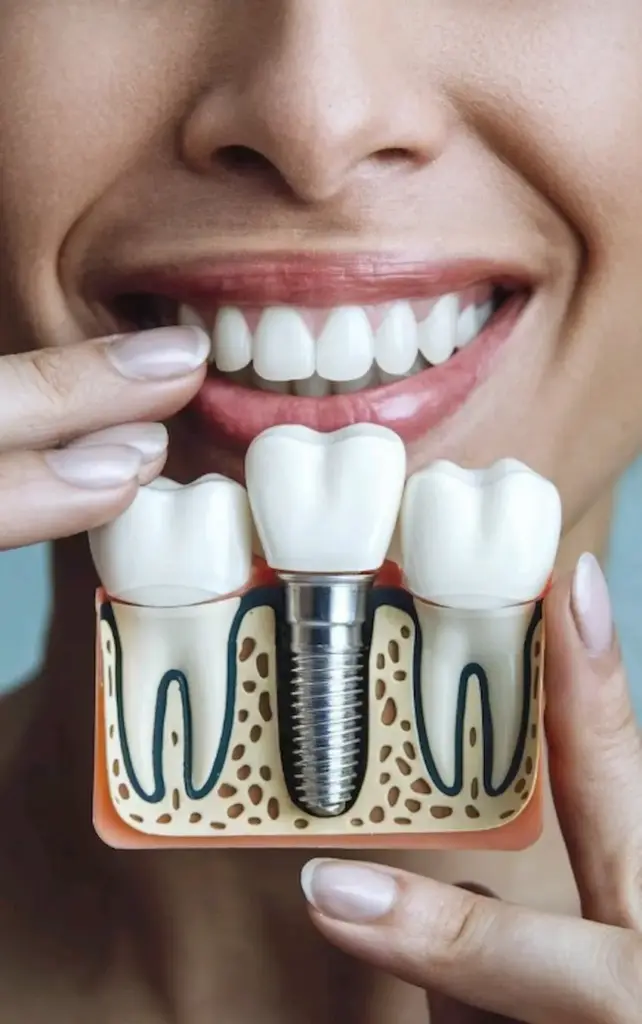
A patient is able to take advantage of many essential advantages through the choice of a D6057 prefabricated abutment, which all lead to a successful treatment outcome.
- Proven Reliability and Safety: Prefabricated components are made in large quantities with the same high-quality standards under the close supervision of quality control. That is why a perfect and stable fit is guaranteed every time. Such precision accounts for zero wear and tear situations and the building of a bacteria-resistant, healthy seal.
- Cost-Effectiveness: Since they are standardized, prefabricated abutments are cheaper than custom-milled ones. Without any compromise of the quality or the durability, this gives a possibility for everyone to make the total cost of the dental implant restoration be in the range of his/her budget.
- Efficient Treatment Timeline: As the abutment is already in production, the doctor can usually install it right after the implant is mended. The efficiency here is achieved by the reduction of appointments and the shortening of the period of waiting for the final crown.
- Established Clinical Success: Prefabricated abutments have been used in numerous dental implant cases with success, and this fact has been documented throughout the years. By doing so, you can be sure that you are getting a reliable component that will be a stable base for your new tooth for a long time.
Conclusion: Investing in a Secure Smile with D6057
The D6057 dental code labels more than just a bill; it marks the insertion of the element responsible for the implant’s stability, health, and longevity. In the case of employing a prefabricated abutment, you seek a safe, tested, and nearly cheapest way to make your smile come back. Knowing what the D6057 abutment is for and how it will be done gives you the opportunity to be on the treatment plan together with the dentist, and so you can decide with confidence.
Please do not hesitate to ask your dental care provider about any doubts you have regarding this operation. To help you reach the result of a safe, working, and nice smile that will be with you for years to come, they are the best source for tailor-made treatment plans using quality components such as the D6057 abutment.
Sources:
- American Dental Association. (2023). Current Dental Terminology (CDT). American Dental Association.
- Misch, C. E. (2014). Dental Implant Prosthetics. Elsevier Health Sciences.
- Jivraj, S., & Chee, W. (2006). Treatment Planning of Implants in the Aesthetic Zone. British Dental Journal, 201(2), 77–89.
- Sailer, I., et al. (2018). All-ceramic or metal-ceramic tooth-supported fixed dental prostheses (FDPs)? A systematic review of the survival and complication rates. Part II: Multiple-unit FDPs. Journal of Dental Research, 97(11), 1202-1211.
Frequently Asked Questions About D6057 Dental Code
D6057 refers to the fabrication and placement of a custom-fabricated abutment on a dental implant. This abutment is specifically designed for the patient’s unique needs to connect the implant body to the final restoration, such as a crown or bridge.
D6057 should be used when a custom abutment is necessary due to unique anatomical needs, such as issues with angulation, tissue contours, or aesthetic considerations. If a standard, prefabricated abutment is used, then a different code (D6056) should be applied.
D6056 is used for a prefabricated abutment.
D6057 is specifically for a custom-fabricated abutment.
D6058 refers to the restoration (crown) placed on the abutment, not the abutment itself.
Yes, D6057 can be used for any tooth location (front, back, upper, or lower). The key factor is the need for a custom abutment, not the location of the tooth.
Common mistakes include using D6057 when a prefabricated abutment (D6056) should have been used, or billing for a custom abutment when no such customization was needed. Inaccurate or incomplete documentation may lead to claim denials or underpayment.

