


Trying to figure out dental treatment plans and insurance forms can be so confusing that it might be compared to cracking a complex code. Among the many CDT procedural terminology codes, it is quite likely that you have come upon D5110. A simple step of knowing what the code means gives you tremendous power to use both your logic and your intuition and thus make the most efficient decisions in regard to your oral health.
This ultimate guide is your way to understanding the D5110 dental code in terms that anyone can understand. It explains the basics of the procedure, the indispensable benefits, and the professional care standards, which are a guarantee of safety and success.
What is the D5110 Dental Code?
The American Dental Association (ADA) mentions the D5110 code as either a “complete denture for the upper jaw” or a “complete denture for the lower jaw”. In a nutshell, the operation is about the creation and application of a full artificial teeth set for a single dental arch where natural teeth have been lost. This specially made oral appliance not only enables you to eat the food of your choice, but also to speak normally and keep the facial structure for a naturally healthy look.
Practitioners use this unique code to ensure accurate record-keeping and easy communication with dental insurance companies. If you have D5110 on your treatment plan, it means that your dentist will perform a comprehensive, professionally-managed process of restoring the teeth of one dental arch with a high-quality, custom-fitted denture.
Who is the Perfect Patient for a D5110 Complete Denture?
A dental professional may suggest a D5110 complete denture for a patient who has either lost or will lose all the teeth of the upper or lower jaw. The most common reasons for tooth loss are:
- Periodontal Disease in the Advanced Stage: A most extreme case of bacterial infection, this one is natural to both the gums and the bone that supports the teeth, which can make teeth become loose and, hence tooth loss after a long period without treatment.
- Extensive Tooth Decay: The presence of severe dental caries, which significantly compromises the structural strength of a number of teeth, may render them non-restorable and, therefore, the removal and substitution of teeth may be necessary.
- Traumatic Injury: On some occasions, an accident can lead to the loss of a number of teeth and therefore a full-arch solution is necessary.
- Medical Necessities: Some medical conditions or treatments, for instance, radiation therapy for oral cancer, may require the removal of compromised teeth to protect the general health.
Your dentist will decide if a D5110 complete denture is the right choice for you. Among other things, your dentist will perform a thorough oral examination and also diagnostic imaging such as X-rays or a CT scan to assess the health of your jawbone and confirm a firm base for your new denture.
The D5110 Process: A Step-by-Step Journey to Your New Smile
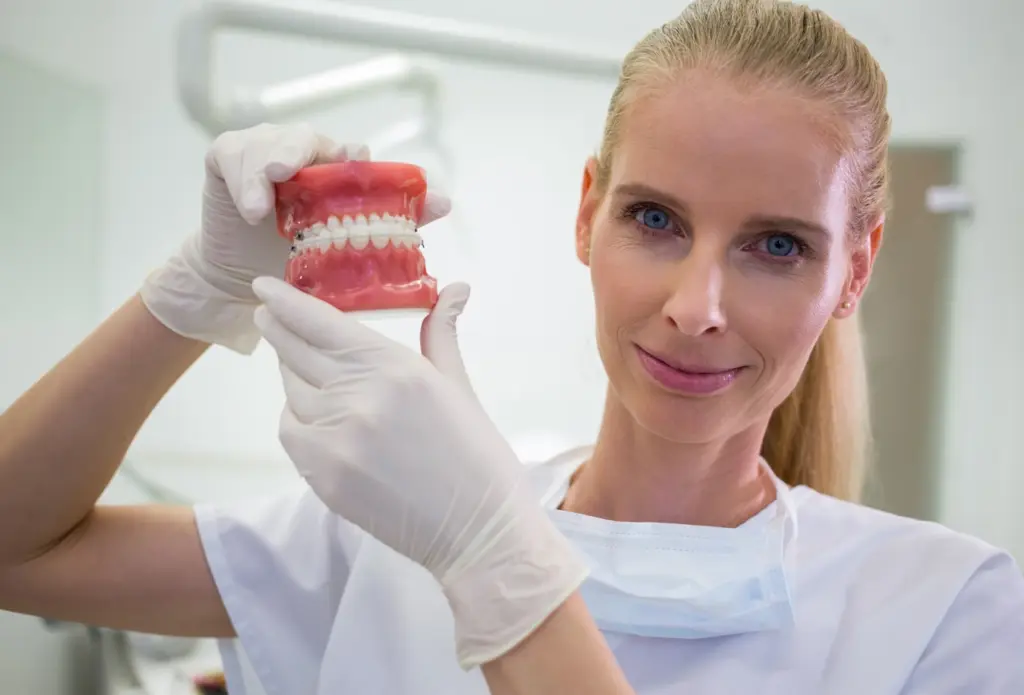
The production of a D5110 complete denture is a detailed, multi-appointment, and time-consuming procedure that incorporates the newest dental technology for an accurate, comfortable, and functional fit. Your dentist’s journey with you is the best way to a successful outcome.
Step 1: Comprehensive Diagnosis and Treatment Planning
The dentist starts the treatment with a thorough oral examination and an in-depth discussion concerning your medical history and your personal expectations. The main thing here is the establishment of treatment goals as a mutual understanding and the development of a customized care plan for you.
Step 2: Making Precise Impressions
Your doctor will take an exact mold of your gum ridges and the remaining anatomical parts by using a soft material similar to putty. These primary impressions depict the unique forms of your mouth that will be used in making your denture.
Step 3: Determining Your Correct Jaw Relationship
During the following appointment, your dentist will use a wax rim to find the exact spatial relationship of the upper and lower jaws. This step is indispensable for the new denture to provide a balanced bite which in turn gives the user the power of eating efficiently and talking clearly.
Step 4: Selecting Your Prosthetic Teeth
You are allowed to decide on the shape, size, and color of your artificial teeth. This partnership decision not only makes sure that the denture looks natural but also that it matches perfectly with your facial features thus, raising your self-confidence.
Step 5: The “Try-In” Appointment for Final Approval
Before manufacturing the final denture, your dentist will fit a wax model with the selected teeth in your mouth. The try-in is for you to see the denture and feel the fit. The comfort, function, and aesthetics will be confirmed by both you and the dentist and if necessary, any changes to that perfect result will be made.
Step 6: Delivery of Your Final D5110 Complete Denture
Following the approval of your try-in, the dental lab will fashion your final denture with high-quality, durable acrylic resins. At the delivery appointment, your dentist will place the completed denture and if necessary, he or she will make the slight adjustments to remove the pressure points, most of which will provide comfort immediately. Instructions on the method to wear, remove by oneself, and care for your new appliance will be given to you in a very clear and detailed manner.
Step 7: Essential Follow-Up Care
The skeletal parts and gums keep changing their shape as a result of the natural process, especially after the loss of teeth. Through follow-up visits, your dentist will assess the fit of your denture and the health of your oral mucosa. These visits allow the opportunity to make minor adjustments, usually called “relines”, thus providing a secure and comfortable fit for a long period of time.
The Direct Benefits of Choosing a D5110 Complete Denture
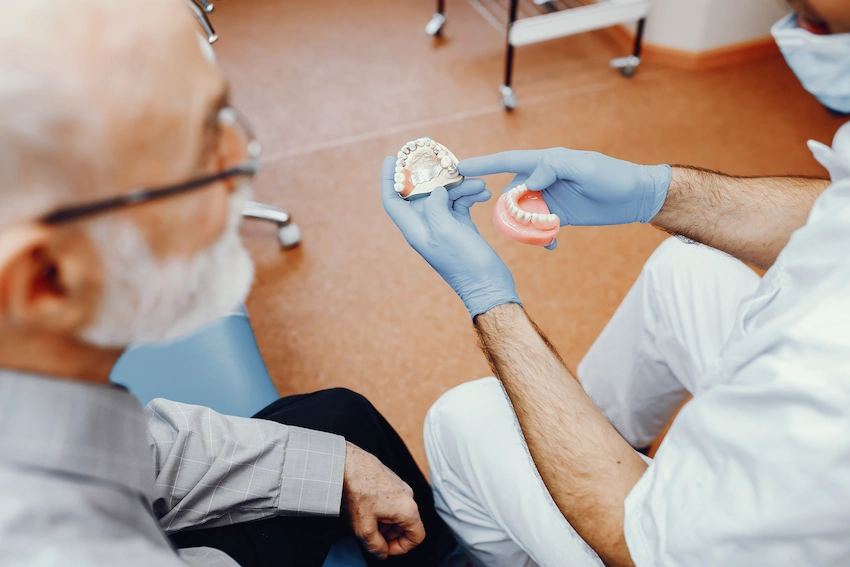
If you invest in a D5110 complete denture, you will be rewarded with substantial benefits that, apart from considerably beautifying your daily life, will also enhance your holistic well-being.
- Restores Full Chewing Function: A complete denture allows you to have a healthy and varied diet, which is, essentially, the fuel of your systemic health and thus, the energizing factor that you need is provided to you.
- Enhances Speech Clarity: With the replacement of lost teeth, you will be able to pronounce words correctly and thus, you will get back clear and confident communication.
- Preserves Facial Aesthetics: The loss of teeth may cause the facial muscles to become loose and thus, the face will have an aged look. A denture, by supporting your lips and cheeks, can keep the facial contour more youthful.
- Boosts Self-Esteem and Confidence: The full, white, and healthy smile is the one that directly affects your self-image in a positive way and as a result, you are empowered to smile, socialize, and participate in life without the feeling of being self-conscious.
Professional Care: Your Safety and Comfort Come First
Your D5110 complete denture made by a licensed dentist is the safest oral health step that you can take. The custom-fit that a professional denture offers will protect you from various potential problems that may be the result of ill-fitting, over-the-counter alternatives.
Good dentures from a dentist:
- Prevents Soft Tissue Irritation and Sores: Proper fitting distributes the pressure evenly over the entire gum area, thus preventing the friction points that are the cause of painful sores and inflammation.
- Protects Underlying Bone Health: The support of a denture will reduce the uneven pressure on the jawbone, thus it will slow down the natural bone resorption that comes after tooth loss.
- Ensures Optimal Function: The closeness is what stops the denture from slipping or rocking; therefore, you will be able to bite and chew without losing the support and thus, the balance will be stability plus confidence.
- Gives a Predictable, Successful Result: The factors that lead to success, both clinical and personal, are your dentist’s know-how and the multi-step method.
Understanding the Investment and Insurance for D5110
The cost of a D5110 complete denture is reliant on factors such as the place where it’s done, the dental laboratory’s charges, and the kind of materials used. Typically, a dental insurance plan covers complete dentures and most of the cost after a deductible is paid by the insurance company. Before the treatment, our office staff gives you a detailed estimate and they also coordinate with your insurance company to check your benefits and make the best use of your coverage. In this manner, you will be aware of your financial commitment before the treatment begins.
D5110: Your Path to a Restored Smile Starts with Knowledge

The D5110 dental code stands as an indication of a dental routine that is tried, trusted, and transformative, which eventually brings back the health, function, and confidence. As a result, you get the safety, comfort, and success-match for your one-of-a-kind needs-with the care given professionally by a skilled dentist. If you have questions about complete dentures or if you want to consider tooth replacement options, then at a consultation, we would be glad to see you. Our job is to provide you with top-notch care and all the information you need so that the right decision is yours to make.
Sources:
- American Dental Association. (2023). Current Dental Terminology (CDT). Code D5110: Complete Denture – Upper or Lower.
- Academy of General Dentistry. (2022). “Patient Education: Denture Care and Maintenance.”
- National Institute of Dental and Craniofacial Research. (2021). “Tooth Loss in Adults (Age 20 to 64).”
- American College of Prosthodontists. (2023). “Facts & Figures: Edentulism and Tooth Replacement.”
Frequently Asked Questions About the D5110 Dental Code
The D5110 dental code is the method of producing a full set of dentures for top or bottom jaw. Dental practitioners utilize this code in explaining the entire course of procedures that culminate with the fitting and placement of a complete denture. Thus, the steps involved are consultations, impressions, fabrications of molds, fittings, and adjustments to ensure the best fit and comfort for the patient.
The D5110 procedure is associated with cases where the patients have either total or substantial tooth loss in an upper or lower jaw or both. The procedure is especially good for those people who wish a definitive answer to the problem of missing teeth and, at the same time, want to keep their former chewing, speaking, and smiling habits. Your dentist will inspect your gums and the remaining teeth before making his/her final decision whether complete dentures are suitable for your oral health.
Complete dentures that are fabricated under the D5110 protocol generally have a lifespan of around five to ten years with proper maintenance. The fact of the matter is, however, that in the long run, the form of your gums will differ, thus needing a new set or an adjustment of the old ones.
The dentures produced under the D5110 are, most of the time, made of top-notch materials like acrylic resin or flexible polymers. The factors that lead to the selection of these materials are their durability, comfort, as well as the ability to look similar to natural teeth. There is also the case where porcelain is utilized for the teeth in order to make them more attractive and imitate the translucency of natural enamel.
Yes, it will have to be replaced. In the course of time, normal usage and changes in the bone of your jaw will necessitate your denture being either refitted or replaced. If you take good care of your denture and regularly visit your dentist, a top-quality complete denture will undoubtedly be able to give you a period of service equal to five to eight years before you have to replace it again.
Yes, the D5110 procedure can be combined with dental implants (D6010) for added stability. Implant-supported dentures provide a secure fit and improved functionality, preventing dentures from slipping. Your dentist will determine if this is a suitable option based on your oral health.

