


D4346 Dental Code: The Exhaustive Guide to Scaling and Root Planing Per Quadrant
Figuring out dental treatments and how to pay for them through insurance might make you feel like you are solving a complicated mystery – literally. In fact, one of the most important and most frequently used therapeutic codes is D4346. So if the dentist tells you that you have periodontal disease and suggests a “deep cleaning,” then knowing this code is the first step towards being an active and informed patient of your oral health care.
This is not only a simple explanation. It is, in fact, the farewell, comprehensive resource diving deep into the D4346 dental procedure. We will delve into its clinical aspect, the procedure, the money side of it, the research supporting its effectiveness, and the time it takes. Think of it as your ultimate guide to reclaiming your gum health.
Chapter 1: Deconstructing D4346 – A Simple Definition and Its Profound Meaning
Essentially, the D4346 dental code is regarded by the American Dental Association (ADA) as “scaling and root planing – per quadrant.” The very brief description involves three main elements that need to be explained further.
- Component 1: Scaling (The Debridement Phase): Scaling refers to the intentional removal, along with the microbial plaque, of the hard, calcified deposits (called by the agents calculus or tartar) that are taken from the surfaces of the teeth. A regular cleaning (D1110) is performed above the gumline, which is different from D4346 scaling, which is subgingival, i.e., it is carried out deep below the gumline inside the periodontal pockets. This objective is achieved by a mixture of:
- Ultrasonic Scalers: Tools that are fixed on the high-frequency vibrations and a cooling water spray are used to separate large pieces of calculus.
- Hand Scalers (Curettes): Small, highly accurate stainless steel instruments via which the clinician is able to locate and remove manually the tiny, most indurate deposits, thus ensuring that the root surface is thoroughly clean.
- Component 2: Root Planing (The Smoothing Phase): This is the factor that makes root planing different from a simple scaling. The root surfaces are thoroughly smoothed or “planed” after the deposits’ removal. Periodontal pathogens get their nutrition from rough, irregular root surfaces. Root planing results in the root surface being glassy and smooth, which ultimately accomplishes two leading objectives:
- It prevents bacteria and plaque from coming back again.
- It allows the binding of the gingival (gum) tissue to the tooth, thus deepening the pocket reduction.
- Component 3: Per Quadrant (The Unit of Measurement): For diagnostic and procedural purposes, the mouth is divided into four sections, or quadrants:
- Quadrant 1: Upper Right
- Quadrant 2: Upper Left
- Quadrant 3: Lower Left
- Quadrant 4: Lower Right
Treating by quadrant recognizes the considerable time, skill, and local anesthesia necessary for properly handling a whole section. A deep cleaning of the whole mouth is a result of four D4346 procedures.
Chapter 2: The Clinical Imperative – When and Why is D4346 Medically Necessary?
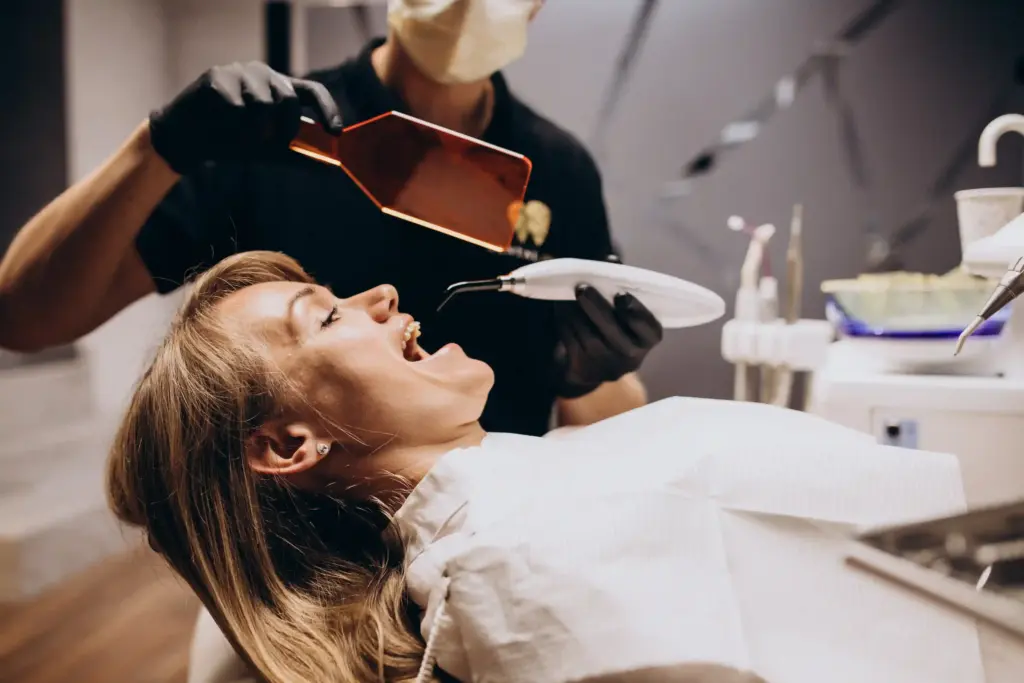
A D4346 operation is definitely not a “super cleaning.” It represents a major, non-surgical, first-line therapy for periodontal disease in its active stage. Based on definite clinical findings, your dentist or periodontist will decide and recommend it, not by mere conjecture.
Diagnostic Criteria for D4346:
- Periodontal Probing Depths of 4mm or Greater: During the examination, the clinician utilizes a periodontal probe—a very small ruler—to measure the space between the tooth and gum. Healthy pockets are within 1-3mm. Pockets of 4mm and more profound are impossible for you to clean with ordinary brushing and flossing and thus are indicative of active disease.
- Clinical Attachment Loss (CAL): It quantifies how much of the connective tissue fibers that bind the gum to the tooth have been damaged. It is a more definite indication of periodontitis than solely pocket depth.
- Bleeding on Probing (BOP): Normal gums do not bleed. Bleeding even when gentle probing is performed, is the most conspicuous sign of acute inflammation and infection.
- Radiographic Evidence of Bone Loss: Dental X-rays showing the level of alveolar bone that supports the teeth are the means by which the loss of bone can be identified. Bone loss, whether horizontal or vertical, is the very first step to progressive periodontitis.
- Presence of Subgingival Calculus: Both X-rays and the sense of touch while probing can unveil the presence of the deposits firmly affixed to the roots below the gumline.
The Consequences of Untreated Periodontitis: If you decline the performance of the recommended D4346, bacterial infection will remain there. The inevitable progression will be:
- Increasing damage to the bone and ligament that support the teeth.
- Gum recession, tooth mobility (looseness), and shifting.
- Ultimately, tooth loss.
- Systemic HealthConnections: Chronic periodontal inflammation has been associated with increased risk of cardiovascular diseases, poorly controlled diabetes, respiratory infections, and adverse pregnancy outcomes.
Chapter 3: The Code Family – How D4346 Differs from D4341, D4342, and D1110
Knowing what D4346 is not is equally essential. The ADA’s coding system is exact for a reason.
| Dental Code | Procedure Name | Scope of Treatment | Clinical Indication |
|---|---|---|---|
| D1110 | Adult Prophylaxis | A preventive cleaning of the crowns of all teeth. | For patients with healthy gums or mild, localized gingivitis. No pocketing >3mm. |
| D4346 | Scaling & Root Planing – Per Quadrant | Therapeutic deep cleaning of the crowns and roots of all teeth in one quadrant. | For generalized, active periodontitis affecting most teeth in a quadrant. |
| D4341 | Scaling & Root Planing – Per Tooth | Therapeutic deep cleaning of the crowns and roots of one to three specific teeth. | For localized periodontitis isolated to a few teeth, often due to a specific factor like a poorly contoured filling. |
| D4342 | Periodontal Scaling | Removal of plaque and calculus from crown and root surfaces, but without root planing. | For patients with significant calculus and gingival inflammation, but where root planing is not deemed necessary. Sometimes used in recall/maintenance. |
| D4910 | Periodontal Maintenance | A post-therapy cleaning for patients with a history of periodontitis. Includes monitoring of pocket depths, inflammation, and recession. | After active treatment like D4346 is complete. Typically performed every 3-4 months for life to manage the chronic condition. |
Chapter 4: The Patient Experience – A Step-by-Step Walkthrough of the D4346 Procedure
Anxiety could be lessened if the patient knows what is going to happen. Below is a detailed timeline of a typical D4346 appointment for one quadrant.
Pre-Procedure: The Diagnosis and Treatment Plan
- Include the recording of the pocket depths and the performance of X-rays, and a thorough periodontal examination will be done on you.
- Your dentist will draw up a formal treatment plan specifying the number of quadrants for D4346, the related costs, and the most probable insurance estimate.
During the Procedure (Approx. 60-90 minutes per quadrant)
- Re-assessment & Local Anesthesia: The quadrant is briefly re-examined with the probe. A local anesthetic is then given to totally numb the area. It is very important for your comfort, as the work is going on below the gumline in areas that are very sensitive.
- Ultrasonic Scaling: To quickly do away with the major part of the calculus, the clinician employs the ultrasonic scaler. The patient will hear a buzzing sound and feel the vibrations as well as the cooling mist of the water being sprayed.
- Hand Instrument Scaling and Root Planing: The clinician, using a fine set of curettes, does the work thoroughly, going from one tooth to another, from one surface to the next. The fingers of the operator are searching for any roughness and thus making sure that the whole root is decontaminated and evened out.
- Irrigation and Flushing: A pocket can be irrigated with an antimicrobial solution, such as chlorhexidine, to remove the debris and decrease the bacterial load.
- Final Check: The clinician will use the curette and probe to confirm that all deposits have been removed and the root surfaces are smooth.
Immediately After the Procedure:
- The numb period will be a few hours. You have to be cautious and not bite your cheek, lip, or tongue.
- The clinician will provide very detailed written post-operative instructions.
Chapter 5: The Financial and Insurance Landscape of D4346
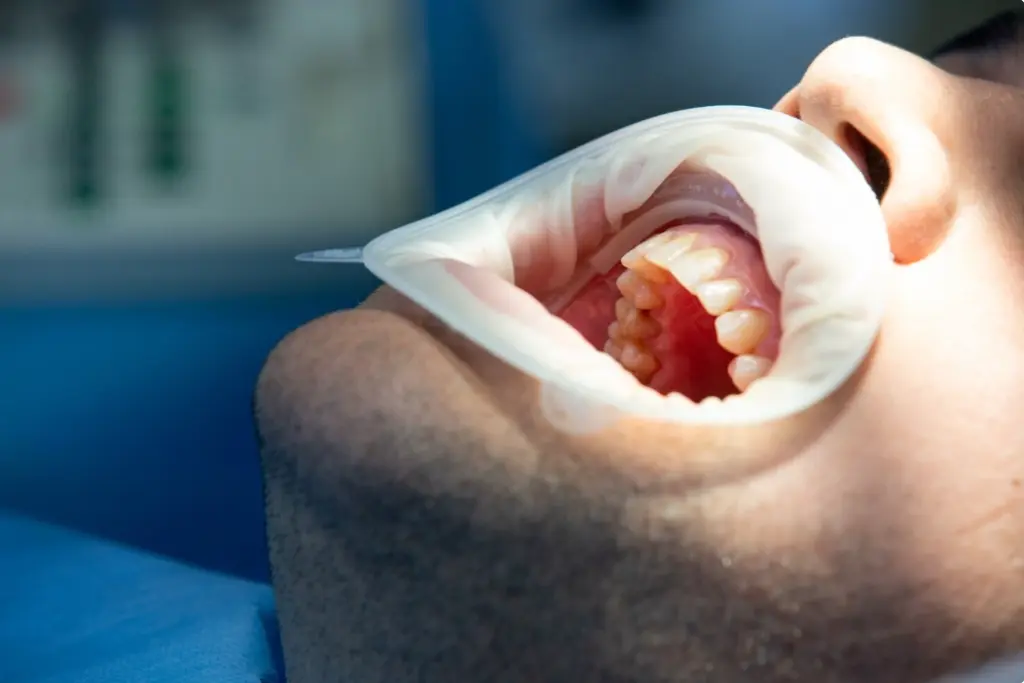
Cost Breakdown: The price of a single D4346 quadrant varies greatly but is usually between $250 and $450. Factors contributing to the cost are:
- Location: Prices are higher in urban centers and certain regions.
- Facility Upkeep: Specialist periodontists may have higher rates than general dentists.
- Disease Severity: Deep pockets and stubborn calculus of an advanced-stage disease will require more time and skill. A deep cleaning (four quadrants) of the whole mouth may be a considerable financial burden, usually amounting to between $1,000 and $1,800 or even more.
Navigating Dental Insurance:
- Coverage Tiers: Most dental insurance plans put D4346 in the “Basic” or “Periodontic” category and usually cover 50% to 80% of the cost after the deductible has been met.
- The “Age Limit” Nuance: Checking your plan’s limitations is very important. Some plans limit the number of D4346 procedures per tooth or per mouth in a certain period (e.g., once every 24-48 months).
- Medical Necessity and Pre-authorization: As D4346 is the treatment for a disease, it is considered medically necessary. Nevertheless, many insurance companies require that the pre-authorization or pre-determination be carried out first. This is when your dentist sends the periodontal charting and X-rays to the insurance company for approval before the work is done. In this way, you are protected from unexpected coverage denials.
- The Reason Denials Occur: If the documents supporting the claim (probing depths, X-rays) are not clear enough that the insurer’s specific criteria for medical necessity are met, then the claims may be rejected.
Chapter 6: The Road to Recovery – Post-Procedure Care and Long-Term Management
The outcome of your D4346 operation is equally dependent on the excellent clinical work and your diligent aftercare.
First 24-48 Hours:
- Discomfort Management: Some tenderness and sensitivity to temperature are to be expected. Most of the time, a spot on the shelf, painkillers such as ibuprofen are enough.
- Oral Hygiene: Practice extreme caution. You might be handed a soft-bristled toothbrush or be told to refrain from brushing the treated area during the first 24 hours an,d at the same time, apply a pre-scribed antimicrobial rinse such as chlorhexidine gluconate (Peridex™).
- Diet: Consume only soft, cold foods (e.g., yogurt, mashed potatoes, and smoothies). Stay away from anything that is hot, spicy, crunchy, or hard.
- Smoking: Avoid smoking. Smoking most severely delays the process of healing and is one of the major risk factors for periodontal disease.
The First Few Weeks:
- As the soreness disappears, you can slowly go back to your regular, gentle brushing and flossing routines.
- In case of a tooth that is sensitive, the problem should get better with time. At the same time, a desensitizing toothpaste may be used to facilitate the process.
The Critical Follow-Up:
- Re-evaluation Appointment (4-6 Weeks Post-Treatment): This is not a cleaning. Your dentist will re-examine all the treated pockets by probing to decide the healing reaction. The objective is the reduction of pocket depth, absence of bleeding, and improvement of gingival health.
- Lifelong Periodontal Maintenance (D4910): Like diabetes or hypertension, periodontal disease is a chronic, manageable condition. It cannot be “cured” with one round of treatment. The active phase (D4346) has to be followed by a lifetime dedication to a strict maintenance schedule, usually every 3 to 4 months. These visits are more thorough than a routine cleaning and, therefore, very important to prevent relapse and keep your oral health investment safe.
D4346 – Your Foundation for a Healthy Smile and Body
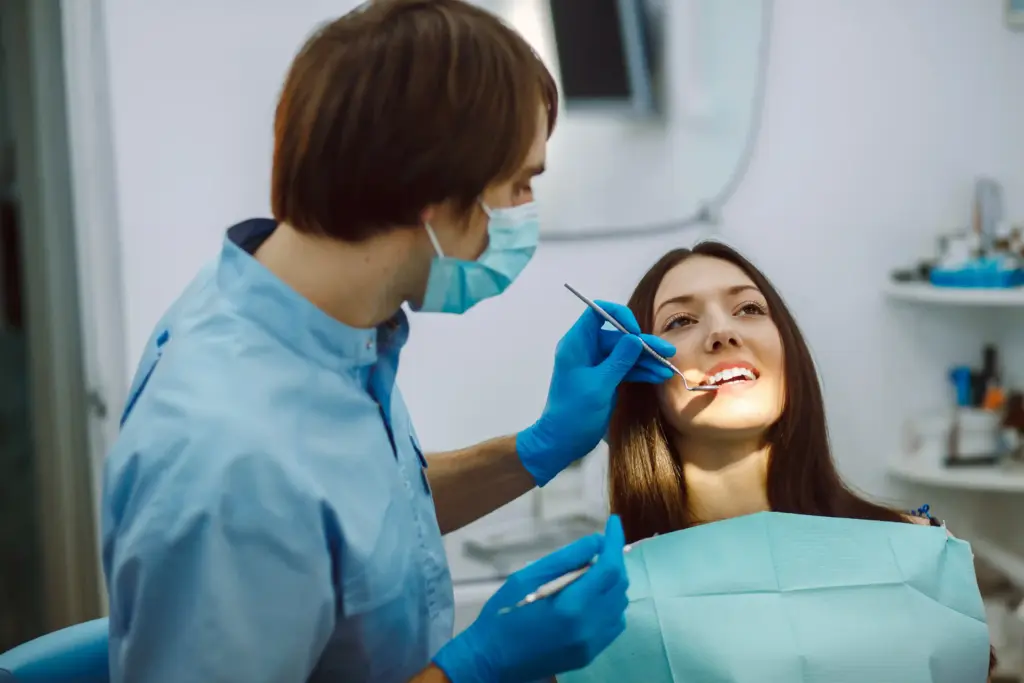
Oral health is a major part of overall health, and the D4346 dental code is not just a complex term or a line item; it signifies a crucial move towards protecting your oral health. When the situation is like periodontitis, the D4346 procedure is the most potent weapon to use to fight off the disease.
Knowing and agreeing to get the D4346 treatment is a way of not only keeping your teeth but also lessening the chances of other health issues that can result from the spread of the infection to the rest of the body.
Scaling and root planing under the D4346 code is an important step in the evolution of your dental care journey. Be aware that undergoing a D4346 treatment plan is an indication that your dentist is concerned about your health in the long run.
Paying for a D4346-coded treatment is equivalent to making a deposit not only in your oral bank but also in your general health. The mouth, being the entry point to the rest of the body, it is important to have D4346 as one of the strongest tools to keep that entry point healthy.
Sources:
- American Dental Association. (ADA). Code on Dental Procedures and Nomenclature.
- American Academy of Periodontology (AAP). (n.d.). Staging and Grading Periodontitis.
- American Academy of Periodontology (AAP). (n.d.). Periodontal Maintenance.
- Journal of Periodontology. (2013). Periodontal Disease and Systemic Health: A Mutual Relationship?
- Lang, N. P., & Lindhe, J. (Eds.). (2015). Clinical Periodontology and Implant Dentistry (6th ed.). Wiley-Blackwell.
- Fair Health Consumer. (n.d.). FH Consumer Cost Lookup. fairhealthconsumer.org
- U.S. Food and Drug Administration (FDA). Drug Approval Package: Arestin.
- Sgolastra, F., et al. (2012). Laser Application in Non-Surgical Periodontal Therapy: A Systematic Review. Journal of Clinical Periodontology.
- Cobb, C. M. (2002). Clinical significance of non-surgical periodontal therapy: an evidence-based perspective of scaling and root planing. Journal of Clinical Periodontology.
Frequently Asked Questions (FAQ) About D4346 Dental Code
The D4346 dental code refers to a specific procedure known as scaling and root planing, which is crucial for treating advanced gum disease. But what exactly does this code represent, and why is it important for certain patients?
The D4346 procedure is performed to halt the progression of periodontal disease (periodontitis). Its purpose is to remove plaque, tartar (calculus), and bacterial toxins from below the gumline and to smooth the tooth roots. This helps eliminate the infection, reduce inflammation, shrink periodontal pockets, and allow the gums to reattach to the teeth, preventing further bone and tooth loss.
With effective local anesthesia, the procedure itself should be pain-free. You will feel pressure and vibrations, but not sharp pain. Post-operative discomfort is typically mild and manageable, similar to a muscle ache, and can be controlled with over-the-counter pain relievers.
The D4346 dental code is used for scaling and root planing treatments, a non-surgical procedure designed to address moderate to severe gum disease (periodontitis). This procedure involves removing plaque, tartar, and bacteria from beneath the gum line to restore gum health and prevent tooth loss.
If you’re experiencing symptoms such as bleeding gums, bad breath, or gum recession, it might be time to consider D4346 treatment. This procedure is often recommended when gum disease has reached a more advanced stage and requires a deeper, more intensive cleaning.
Scaling and root planing under the D4346 code is essential when regular cleanings are no longer effective in treating gum disease. It helps to clean deeper pockets between the teeth and gums, preventing the infection from spreading and causing more severe dental issues.

