


The D2930 dental code is an essential instrument in children’s dentistry, explaining the usage of prefabricated stainless steel crowns for primary teeth. Such crowns are made not only to restore the teeth but also to protect those with severe decay, fractures, or any kind of damage that cannot be handled by a filling. The D2930 code is about the placement of a full-coverage stainless steel crown, usually on primary molars, to make sure that the tooth is still able to function until it is naturally shed.
The comprehensive manual provides a summary of the D2930 operation, explaining points such as its usage, purpose, benefits, safety aspects, and aftercare. Through the knowledge of D2930’s part in children’s dental care, parents become capable of deciding the best oral health treatment for their kids.
What Is the D2930 Dental Code?
D2930 dental code highlights the use of a prefabricated stainless steel crown placed on a decay/fracture-compromised primary tooth. A stainless steel crown covers the whole tooth, offering protection, durability, and a stable surface for the masticatory process. Unlike other fillings that only restore small areas of one tooth, a stainless steel crown is used when the destruction is significant, and the tooth can’t be renewed by regular fillings or inlays any longer.
These kinds of crowns are extremely vital for primary teeth since they are going to be the main characters of the child’s growth story. Primary teeth not only pave the way for permanent teeth but also play a role in the development of speech and correct chewing functions. In case a primary tooth gets compromised, then it becomes necessary to safeguard it so as to keep its normal functions until it naturally falls out. D2930 code thus comes up with a way that keeps the primary tooth intact until the time of natural exfoliation.
When is the D2930 Procedure Used?
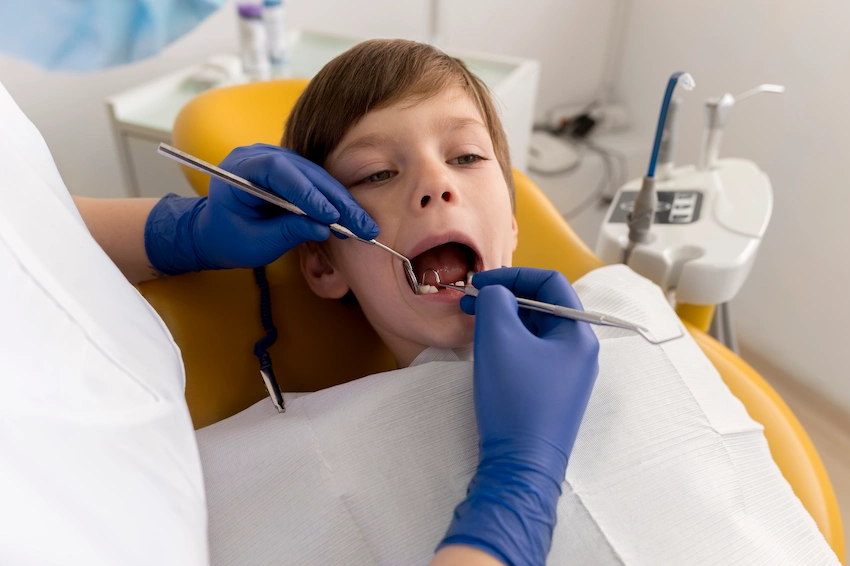
The D2930 operation is generally a dentist’s choice when decay has taken over a child’s primary molar and the decay has spread to multiple surfaces of the tooth. This may mean decay on the mesial, distal, buccal, or lingual surfaces that consequently weakens the structure of the tooth. In such a situation, a composite filling may not be strong enough to support the tooth, particularly when the infection has penetrated the tooth’s structure on several surfaces.
Besides significant decay, pulpotomy or pulpectomy is also an area where the D2930 is commonly employed. These treatments for the vital pulp include the removal of the infected tissue inside the tooth, followed by the sealing of the tooth with a restoration. As a result, a stainless steel crown is the most dependable way to return a tooth to its former state after pulp therapy because it offers the required strength to be able to endure the masticatory forces.
On top of that, the D2930 operation can be used to save fractured primary molars. A tooth that has been broken or cracked as a result of a blow or excessive wear may, therefore, need a stainless steel crown to both regain its shape and functionality. Otherwise, the leftover tooth structure might not be able to bear the forces of chewing, and so, it could be further damaged or even a tooth loss situation could result.
The Benefits of Using Stainless Steel Crowns in Pediatric Dentistry
One of the main benefits of stainless steel crowns in pediatric dentistry is their durability. Stainless steel is very strong, and it can tolerate the normal functions of chewing, biting, and grinding without breaking. Even if it resists corrosion, it can very well be exposed to the human mouth’s humid environment. Thus, this material still remains an excellent long-term solution for children who are in the process of learning good oral hygiene habits.
A stainless steel crown is also another aspect where time plays an important role. Different from a custom-made crown, a preformed crown is a pack of dental items fitted for a single pop-in operation, so in a very short time, the child and the parent will be less frightened. Without a doubt, the doctor can carry out a faster and less invasive procedure since the crown is fixed, no deep impression is required, and no custom-made crown needs to be fabricated.
Another factor that galvanizes the use of stainless steel crowns is their Cost-Effectiveness. As to full-coverage restorations, i.e., porcelain crowns, the recipients of the latter will have to pay more, as contra stainless steel crowns will be a more affordable option, thereby making them an ideal choice for children who will eventually lose their primary teeth. The affordability is what makes the children have the necessary protection without the burden of expensive treatment costs.
While aesthetic concerns in pediatric dentistry are always given their due weight, it is often the case that when a tooth is severely decayed, then durability is prioritized over aesthetics. Stainless steel crowns are very conspicuous, especially when placed on molars, but they give the tooth great protection. Though as good as ceramic or composite options from a natural look point of view, the fact that the crown can stop the tooth from further decay and keep it functional is a lot stronger than the appearance issue. Furthermore, stainless steel crowns closely resemble the natural color of primary teeth, particularly when they are on the rear teeth.
Step-by-Step Breakdown of the D2930 Procedure
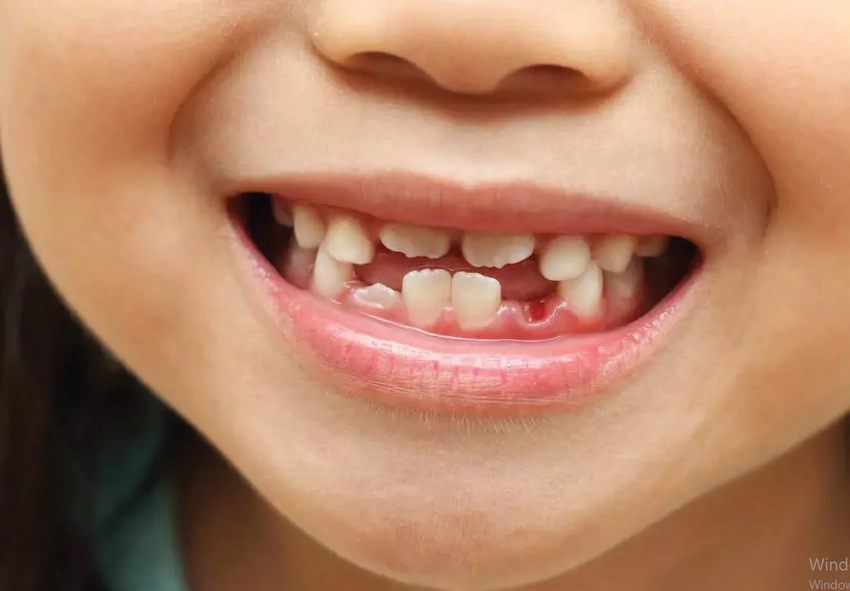
The D2930 procedure is quite a simple operation and has a few main steps involved:
1. Diagnosis and Evaluation
Prior to doing the D2930 operation, the dentist will keenly survey the child’s oral health. This includes not only the visual check, but also X-rays, and sometimes clinical tests to find out decay or fracture. Moreover, the dentist looks at the surroundings and makes sure the tooth isn’t about to exfoliate. Upon finding a tooth fit for a crown, the operation will be carried on.
2. Tooth Preparation
After choosing a stainless steel crown as the best option, the dentist will inject an anesthetic into the area surrounding the impaired tooth. This will guarantee that the child is free from any pain during the operation. The dentist will then do away with all the decayed tissues together with the reshaping of the remaining tooth structure so as to fit in the crown. This preparation may include drilling the tooth to remove infected areas and create a smooth surface for bonding.
3. Crown Selection and Adjustment
By looking at the tooth, the dentist decides on the right size of a prefabricated stainless steel crown for a proper fit. In order to meet the requirements of different primary teeth, the developers came up with various-sized and -shaped stainless steel crowns. The crown is fitted by the doctor to the tooth that has been prepared, and the doctor looks at the fit, the margin, the occlusion, and the shape, and if necessary, adjusts to ensure that the child’s bite is correct and functional.
4. Cementation
Once the crown is suitable, the doctor applies a proper biocompatible cement with which the crown is attached to the tooth. The crown is fitted on the tooth, and the dentist makes sure that it is close-fitting. Since the cement hardens, the crown becomes a permanent fixture. Then, the dentist examines the fitting and, if the crown does not obstruct the child’s regular bite, he leaves.
5. Final Adjustments and Polishing
When the cement is firm, the dentist once more examines the child’s bite and, if necessary, makes an adjustment. To ensure that the child’s bite is both comfortable and functional, the excess cement is removed and the surface is smoothed out by polishing the crown.
Aftercare for the D2930 Stainless Steel Crown
Stainless steel crown care does not involve any kind of complexity but in any case, it is necessary to follow the dentist’s instructions in order to be able to keep the crown in place and working properly. Parents are responsible for their children’s oral hygiene, in they should not forget brushing and flossing on a daily basis. After the procedure, children may experience slight sensitivity, which should go away within a few days.
In the case of the crown being newly attached, sticky or hard foods, which could cause the crown to be thrown off, should not be eaten. The child is allowed to eat and drink as usual once the adaptation period is over. Check-ups should be made regularly to ensure the crown is tight and the other teeth are healthy.
Conclusion: The Role of D2930 in Pediatric Dental Care
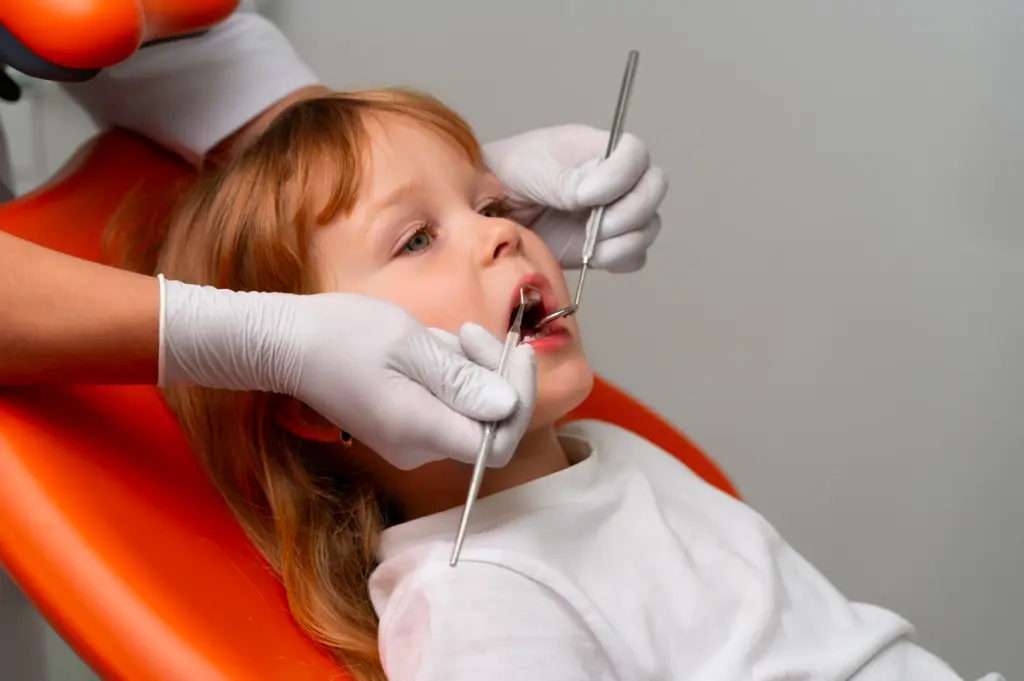
The D2930 dental code is one of the indispensable instruments that helps pediatric dentists in their quest to maintain children’s oral health by providing primary teeth with an efficient, cost-effective, and durable restoration. Stainless steel crowns are the best option for teeth with heavy caries or fractures, thus safeguarding the right oral function, allowing children to maintain dental harmony until their permanent teeth emerge. By using D2930, pediatric dentists educate children to avoid more complex dental issues in the future.
References
American Dental Association. (2024). CDT 2024: Dental procedure codes. ADA Publishing.
Casamassimo, P. S., Fields, H. W., & McTigue, D. (2019). Pediatric dentistry: Infancy through adolescence. Elsevier.
Seale, N. S., & Randall, R. (2015). The use of stainless steel crowns in pediatric dentistry. Pediatric Dentistry, 37(1), 145–160.
Wright, J. T., Crall, J. J., & Fontana, M. (2021). Clinical guidelines for restorative dentistry in children. Journal of the American Dental Association, 152(8), 670–679.
Innes, N. P., Ricketts, D., & Evans, D. (2020). Managing dental caries in children with full-coverage restorations. International Journal of Paediatric Dentistry, 30(3), 314–323.
Common Questions About the D2930 Dental Code
The lifespan of a stainless steel crown depends on the child’s oral habits and the condition of the adjacent teeth; it can be up to several years. The majority of the crowns stay intact till the natural exfoliation of the primary tooth.
The answer is negative; the operation is done under local anesthesia, hence no pain should be felt by the child when the crown is being put on. There might be some slight discomfort or sensitivity, which is short-lived and occurs only after the period of the operation.
Certainly, after the permanent tooth has grown out and the primary tooth has been removed, the ordinary practice is to exchange a stainless steel crown for an aesthetically more pleasing restoration, for instance, a porcelain crown or a composite filling.
Most dental insurance plans cover the cost of a stainless steel crown for primary teeth, as they are considered a necessary treatment for cases of extensive decay or damage. However, it is always wise to find out from the insurance provider in advance about the coverage of the plan.

