


In the tightly organized vocabulary of the American Dental Association’s (ADA) Current Dental Terminology (CDT), each dental intervention is assigned a particular code that facilitates precision in diagnosis, treatment, and billing. D2391 is one of the most commonly referred to codes in restorative dentistry. The code refers to an instrumental procedure that mixes art and science: the single-surface composite resin restoration on a premolar tooth.
This exhaustive write-up will dissect the D2391 code from every perspective, offering a thorough grasp for dental professionals as well as patients who wish to understand their treatment plans. We will investigate the coding anatomy, the material characteristics, the clinical procedure step-by-step, its tactical role in oral health, and the comparison with other restorative alternatives.
Advantages and Disadvantages of Composite Fillings (D2391)
| Advantages | Disadvantages |
|---|---|
| Aesthetic: Matches the color of your natural teeth. | Cost: Typically more expensive than amalgam. |
| Bonding: Chemically bonds to the tooth, which can strengthen it. | Durability: May not last as long as amalgam in high-stress areas for some patients. |
| Tooth Conservation: Requires less removal of healthy tooth structure. | Placement Time: Takes longer to place than amalgam. |
| Versatility: Can be used for repairs beyond just cavities. | Staining: Can stain over time with coffee, tea, or tobacco use. |
Section 1: D2391 Code Unpacking – A Multi-Layer Definition
To know D2391 inside out, one must analyze each of its parts:
- “D”: The standard prefix for all dental procedure codes.
- “2391”: The specific identifier. The “2” most of the time indicates the category of “Restorative” procedures. The “391” points the exact service out: a one-surface composite filling on a certain type of tooth.
- Composite Resin: A composite resin is a tooth-colored, high-tech, and adhesive system that consists of several components rather than just one. The resin matrix (usually Bis-GMA or UDMA) is mixed with the inorganic filler particles (silica, quartz, or glass). The components are combined to provide a material that is strong, can be given a glossy surface and, most importantly, is able to micromechanically and chemically bond with the tooth tissue.
- Premolar (Bicuspid): These are the teeth that can be found between the canines and the molars. An adult has 8 premolars. Their anatomy is complex and typically they have two cusps (i.e., “bicuspid”), a central fossa, mesial and distal marginal ridges. Due to this anatomy, they are involved in the cutting as well as the grinding of the food during mastication. In case you are restoring a premolar, keep its functional morphology in mind.
- One-Surface: This is the aspect that most significantly determines the code. It represents a caries lesion or damage that is localised in one of the five anatomical surfaces of the tooth: Occlusal (O): The surface which is utilized for chewing. This is the most common surface for a D2391. Mesial (M): The surface closest to the midline of the face.Distal (D): The surface that is the farthest from the midline.Facial (F): The surface facing the cheeks or lips.Lingual (L): The surface facing the tongue. The preparation that involves two of these surfaces (e.g., Occlusal and Mesial, or O&M) is coded as D2392. Three surfaces correspond to D2393.
- Occlusal (O): The surface through which the chewing is accomplished. This surface is the one that is mostly involved in a D2391.
- Mesial (M): The surface nearest to the midline of the face.
- Distal (D): The surface that is the farthest from the midline.
- Facial (F): The surface facing the cheeks or lips.
- Lingual (L): The surface facing the tongue. Two of these surfaces (e.g., Occlusal and Mesial, or O&M) indicate a preparation, and the code changes to D2392. If three surfaces are involved, the code is D2393.
Section 2: Clinical Indications – When Should a D2391 be Performed?
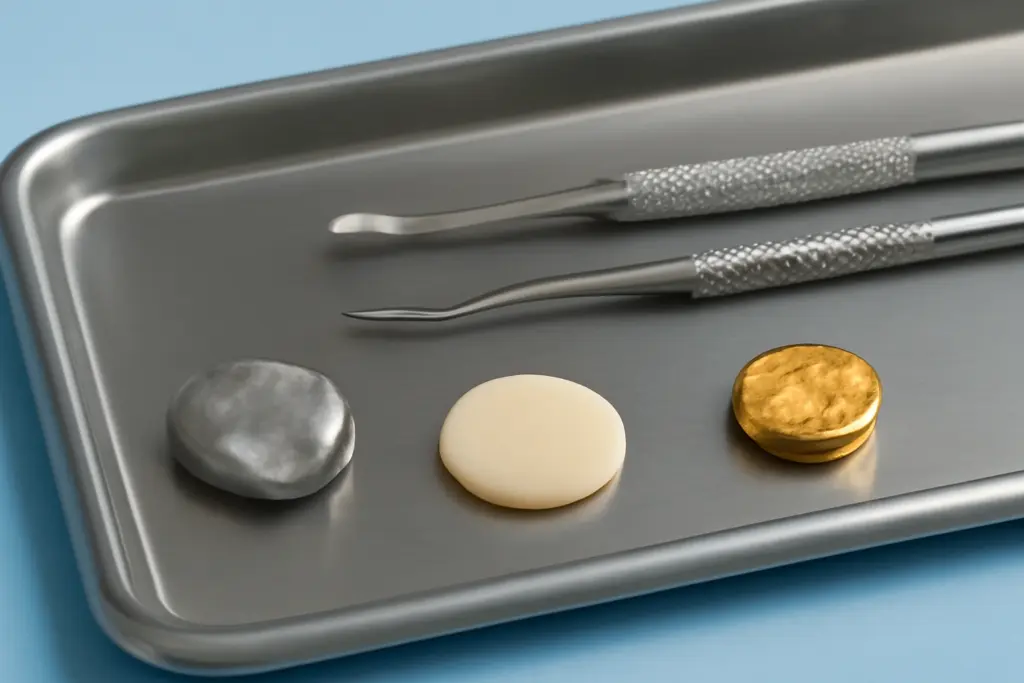
A D2391 restoration initiation is basically a decision made from clinical observation supported by diagnostics.
2.1. Primary Indication: Caries Management
- Pit and Fissure Caries: The occlusal grooves of premolars are the most common sites of caries due to their morphology, which is prone to retaining food and bacteria. A small or moderate carious lesion limited to enamel and dentin of the occlusal surface is a typical situation for a D2391.
- Smooth Surface Caries: Less frequently, a caries lesion on the facial, lingual, mesial, or distal surface of a premolar that has not yet progressed to an adjacent surface can also be restored with a D2391. These are usually detected by bitewing X-rays.
2.2. Other Clinical Scenarios
- Minor Tooth Fracture: A minor chip or fracture caused by the impact or abrasion that affects only one surface.
- Failed Restoration Replacement: The replacement of a small, existing, one-surface, worn-out amalgam or composite filling that has been caused by secondary caries or marginal breakdown.
- Developmental Defects: Restoring hypoplastic areas (underdeveloped enamel) on a single surface.
2.3. Diagnostic Tools
- Visual-Tactile Examination: An explorer and good lighting are used to assess the surface texture and integrity.
- Bitewing Radiographs: They are necessary for the detection of proximal (mesial/distal) caries, which are invisible to the naked eye. The radiograph is the tool that confirms the lesion is limited to one surface.
- Diagnostic Models & Photographs: These are used in cases of complicated planning or aesthetic situations.
Section 3: The Clinical Protocol – A Step-by-Step Deep Dive
Placement of a D2391 restoration involves a careful, precise, and multi-step procedure.
3.1. Anesthesia and Isolation
- Local Anesthesia: Used to ensure the patient’s absolute comfort.
- Isolation: The step that is very crucial but often gets neglected. The tooth must be kept absolutely dry and free from saliva or blood contamination. The best way is a Rubber Dam, a piece of latex or non-latex material that isolates the tooth. Other methods are cotton rolls and isolation systems like Isolite®. Proper isolation is the primary factor that determines the lifespan of the bonded restoration.
3.2. Cavity Preparation
- Principles: The preparation for a composite restoration is grounded on the principles of adhesive dentistry. The goal is to be minimally invasive, removing only the decayed and weakened tooth structure while saving as much healthy enamel and dentin as possible. This is completely different from the “extension for prevention” concept, which was used for amalgam fillings and required that more healthy tooth structures be removed to achieve mechanical retention.
- Instrumentation: Both high-speed and low-speed handpieces, along with burs of different shapes and sizes, are used to take out caries. At present, many dentists are also opting for lasers or air abrasion units for an even more conservative method.
3.3. The Adhesive Bonding
The foundation for a composite restoration to be successful.
- Etching: Phosphoric acid gel is placed on the prepared enamel and dentin and is left there for 15-30 seconds. The acid dissolves the surface, thus creating microscopic pores.
- Rinsing and Drying: The acid is being rinsed off. The dentin is kept visibly moist (not dried) in order to maintain the collagen network.
- Application of Bonding Agent: A low-viscosity resin (the “bond”) is light-cured after being inserted into the etched micropores. It forms the hybrid layer – the mechanical interlock between the tooth and the composite – which not only seals the dentin but also provides a great retention force.
3.4. Composite Placement, Contouring, and Curing
- Incremental Layering: Small, incremental layers of composite are (normally no more than 2mm in thickness) applied. Each layer is individually light-cured with a high-intensity blue LED light. This permits total polymerization, lowers polymerization shrinkage stress (which can result in post-operative sensitivity and marginal gaps), and allows for accurate anatomical contouring.
- Shaping and Finishing: After the last curing, the dentist uses fine diamonds, burs, and disks to shape the anatomy of the premolar – thus, the cusps, ridges, and fossae are restored. Functionality and prevention of food impaction are the main reasons for correct contour.
- Polishing: Finally, progressively finer polishing points and pastes are utilized to produce a smooth, glass-like surface. A very polished restoration is more visually pleasing, less plaque can build up on it, and it is less likely to stain.
Section 4: D2391 in the Context of the Restorative Spectrum
Knowing the differences through a comparison is the way to understand D2391.
- D2391 vs. D2390 (1-Surface Composite in a Molar) are the only differences are the material and the method. The difference lies in the tooth. Molars are exposed to higher chewing forces; therefore, the wear resistance of the material is even more important. Some dentists may use a different, higher-strength composite for molars.
- D2391 vs. D2140 (1-Surface Amalgam in a Premolar) is a strong, long-term, proven material that is both technically and economically efficient. However, the material’s limitations are that it is not aesthetically pleasing, needs more tooth removal for mechanical retention, doesn’t bond to the tooth, and contains mercury, a source of environmental and health concerns for some patients. Composite (D2391) is a beautiful, environmentally safe, and adhesive alternative. Among its disadvantages are: higher sensitivity to the technique, longer time required for placing the restoration, higher price, and the possibility of more rapid wear and marginal degradation in high-stress areas over time.
- Amalgam is a strong, long-term, proven material that is both technically and economically efficient. However, the material’s limitations are that it is not aesthetically pleasing, requires more tooth removal for mechanical retention, doesn’t bond to the tooth, and contains mercury, a source of environmental and health concerns for some patients.
- Composite (D2391) is an attractive, environmentally friendly, and adhesive option. Among its disadvantages are: higher sensitivity to the technique, longer time required for placing the restoration, higher price, and the possibility of more rapid wear and marginal degradation in high-stress areas over time.
- D2391 vs. D2330 / D2331 / D2332 (Direct Resin Veneers) is codes that represent the front teeth and is primarily concerned with the aesthetic restoration of the facial surface, thus involving different artistic and technical factors.
Section 5: The Long-Term Outlook – Durability, Cost, and Insurance
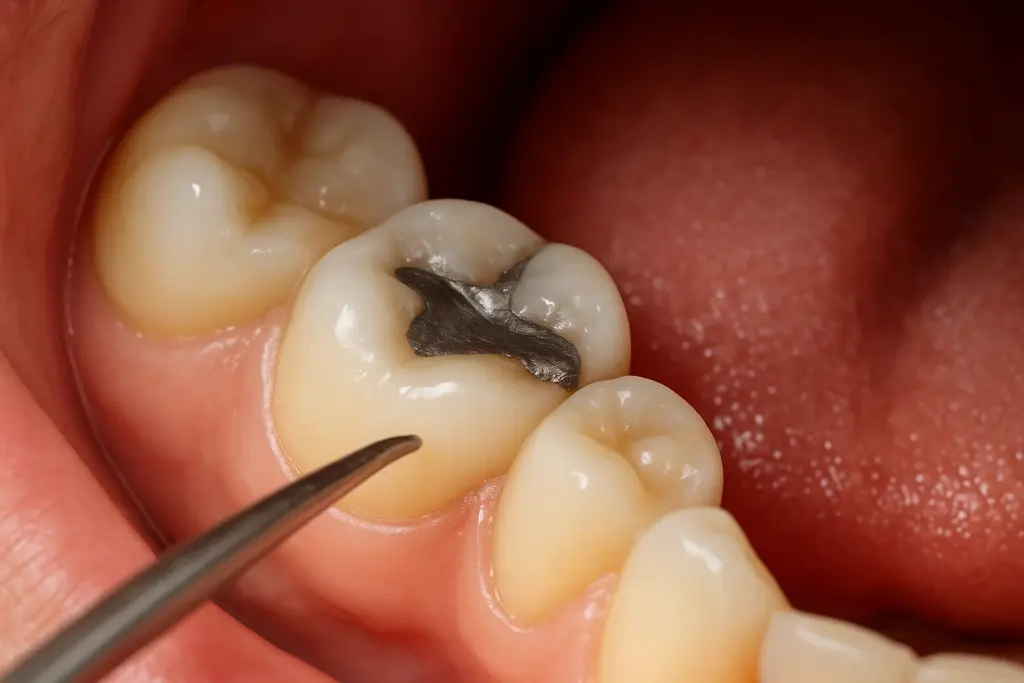
- Longevity and Maintenance: A D2391 restoration, if performed properly, can last from 7 to 10 years or even more. The duration of its life is a factor that is indirectly dependent upon the dentist’s skill, the quality of the materials used, and, most importantly, the patient’s oral hygiene. The main reason for the recurrence of decay (secondary caries) at the margin is thus the principal cause of the derailment.”
- Cost Factors: The cost of a D2391 service may be as low as $175 and as high as $400. It depends on the location, practice overhead, and the specific composite material used.
- Insurance Considerations: Most dental insurance plans cover composite restorations. But, they mostly have “posterior composite clauses.” That is, they may pay for a D2391 at the lower amalgam rate (D2140), thus the patient has to bear the cost difference. Hence, it is very important for patients to confirm their benefits before the treatment.
Section 6: The Patient’s Journey – From Diagnosis to Aftercare
Knowing the process helps the patient to understand the experience and, thus, the patient is less likely to feel intimidated.
- The Diagnosis: The dentist will explain to you and show the cavity on the X-ray and/or in the mouth with a small mirror.
- The Procedure: You will feel numbness for a few hours after the appointment. The actual process is without pain.
- Post-Operative Care:
- Don’t eat until the anesthetic wears off, so as not to bite your cheek or tongue. The affected nerve may cause a slight sensitivity to the cold for a few days or even weeks, but this is completely normal. Try to keep the mouth clean at all times—use a gentle toothbrush and floss daily—this will not only protect the newly restored tooth but also the rest of your teeth. Do not take any highly pigmented food or beverage (coffee, tea, red wine, berries) for the first 24-48 hours if you want to keep the surface clean of stains.
- Do not eat until the anesthetic wears off, so as not to bite your cheek or tongue.
- You may experience minor sensitivity to cold for several days or even weeks while the nerve is healing. This is completely normal.
- Do not slacken from good oral hygiene—use a soft toothbrush and floss regularly to keep your newly restored teeth, as well as the healthy ones, safe.
- Wouldn’t it be better if you refrained from eating highly pigmented foods and drinks (coffee, tea, red wine, berries) during the first 24-48 hours so that you don’t have to worry about staining your teeth?
Conclusion: The Art and Science of D2391
The D2391 dental code stands for a lot more than just “filling a cavity.” The code is a representation of the modern dental techniques of least invasive, adhesive, and aesthetic methods. It is a dental operation that requires the clinician’s precision, dental anatomy, and materials science knowledge.
On the other hand, the patient receives a long-lasting, tooth-friendly, and natural-looking treatment that not only restores functionality but also the patient’s self-esteem. If done in a top-notch manner, a D2391 restoration is a way for a dentist to be recognized for his/her skill in disease control and natural dentition conservation for the long run.
Sources:
- American Dental Association (ADA). Current Dental Terminology (CDT 2024). American Dental Association, 2023. (The definitive source for code definitions and descriptors).
- Tyas, M.J., Anusavice, K.J., Frencken, J.E., & Mount, G.J. (2000). Minimal intervention dentistry—a review. *FDI Commission Project 1-97*. International Dental Journal, 50(1), 1-12.
- Van Meerbeek, B., De Munck, J., Yoshida, Y., et al. (2011). Buonocore Memorial Lecture. Adhesion to enamel and dentin: current status and future challenges. Operative Dentistry, 28(3), 215-235. (A foundational review on the principles of adhesive dentistry critical to composite success).
- Demarco, F.F., Corrêa, M.B., Cenci, M.S., Moraes, R.R., & Opdam, N.J. (2012). Longevity of posterior composite restorations: not only a matter of materials. Dental Materials, 28(1), 87-101. (A comprehensive review of factors affecting the lifespan of composite fillings, highlighting that clinical technique and patient factors are as important as the material itself).
Frequently Asked Questions About D2391 Dental Code
The D2391 code specifies a one-surface composite resin filling on a premolar tooth. This means:
Material: Tooth-colored composite resin.
Tooth: A premolar (bicuspid), the tooth between your canines and molars.
Surface: The cavity or damage is confined to just one of the tooth’s five surfaces (most commonly the chewing surface).
No, the procedure itself is not painful. The dentist will use a local anesthetic to completely numb the tooth and the surrounding area. You will feel pressure and vibration, but no sharp pain. Some patients experience mild sensitivity to cold for a few days or weeks after the procedure, which is normal.
Most dental insurance plans do cover composite fillings, but with a potential caveat. Many plans have a “posterior composite clause,” meaning they will pay for the D2391 at the lower, silver amalgam (D2140) rate. You are then responsible for the difference in cost (the “upcharge”). It is always best to check with your insurance provider before treatment.
D2391 is necessary when a cavity forms on a premolar tooth. The composite resin used in this procedure helps restore the tooth’s function and appearance while blending seamlessly with the natural tooth color.
After a D2391 procedure, it’s essential to brush and floss regularly to keep the filling and surrounding tooth structure healthy. Avoid chewing on hard objects, and visit your dentist for regular checkups to ensure the filling stays intact.

