


One of the dental codes, D1354, shown on the dental treatment plan, is likely to elicit a number of questions in the patient’s mind. Is it a measure that has to be done to prevent the situation, or is it an optional upsell? Is it a procedure for children only, or can adults have it as well? What is the procedure, basically, under the outerwear? Understanding the D1354 code implies understanding one of the most powerful, least expensive, and most empirically reliable methods of modern dentistry for dental caries.
The dental code D1354 is used to denote the application of a preventive resin sealant on one single permanent tooth as per the American Dental Association’s (ADA) Current Dental Terminology (CDT) cited by the ADA. Preventive resin sealing of a single permanent tooth may look like a very basic dental operation; however, it is essentially a major part of preventive oral healthcare, whose main objective is to protect the most vulnerable parts of the teeth from the bacterial onslaught that eventually results in decay.
It is not only an explanatory source but also a comprehensive reference for the material we will deal with. We will understand the material aspects of the sealants, the complex pathological anatomy of the way that certain teeth are failing, go through the clinical protocol, literally from one step to another, do a thorough cost-benefit analysis, as well as an in-depth investigation of the safety data, with the ultimate goal of equipping you with complete knowledge.
Deconstructing the D1354 Code: A Detailed Definition
The formal ADA definition of D1354 is:
“Sealant – per tooth: This procedure is a technique to minimize the progression of non-cavitated caries lesions in the pits and fissures of teeth by sealing these surfaces with an adhesive material.”
Breaking down this definition piece by piece is very important:
- “Minimize the progression of non-cavitated caries lesions”: This is about control of the decay at its very earliest stage, pathologically, “white spot lesion.” At this point, the enamel underneath is demineralized, but no cavitation (physical hole) has formed. A sealant is not only a preventive measure; it can actually stop the progression of existing early lesions by cutting off bacteria from their source of nutrients. [Source: *Featherstone, J. D. (2004). The continuum of dental caries—evidence for a dynamic disease process. Journal of Dental Research, 83 Spec No C, C39-C42.*]
- “Pits and Fissures”: The discussion here is about the deeply indented, naturally occurring grooves on the occlusal (chewing) surfaces of the posterior teeth (premolars and molars). Fissures, from the developmental perspective, are the consequence of the fusion of the enamel lobes. Their anatomy is most of the time narrower than one toothbrush bristle (which is about 100-150 μm), thus, they are perfect, very well-protected shelters for biofilms. [Source: *Simonsen, R. J. (2002). Pit and fissure sealant: review of the literature. Pediatric Dentistry, 24(5), 393-414.*]
- “Adhesive Material”: Typically, this is either Bis-GMA-based resin composites or glass ionomer cements (GICs). Resin sealants bond micromechanically to acid-etched enamel, thus a long-lasting physical barrier is formed. Besides, glass ionomer materials are equipped with the fluoride release feature, which, by that, offers the preventive effect a secondary, albeit, they are usually less resistant to wear than resins.
The Scientific Rationale: Why Pit and Fissure Sealants are Essential

The availability of convincing evidence in support of sealants can be traced back to a thorough understanding of dental caries epidemiology and histology.
The Statistical Imperative:
- With the help of dental sealants, the destruction of the back teeth is kept at bay by 80% in the first two years and the protective influence lasts up to 50% even after four years, says the CDC. [Source: Centers for Disease Control and Prevention. (2016). Vital Signs: Dental Sealants Prevent Cavities.]
- As a matter of fact, pits and fissures constitute only 12-15% of the total tooth surfaces, yet they lead to almost 90% of the caries in children and adolescents. Consequently, the first and second molars are the ones that get heavily influenced. [Source: *Ahovuo-Saloranta, A., et al. (2017). Pit and fissure sealants for preventing dental decay in permanent teeth. Cochrane Database of Systematic Reviews, 7(7), CD001830.*]
The Pathological Environment of a Fissure:
Deep occlusal fissure is a catastrophic source of ecological problems. It supplies:
- A Most Suitable Habitat for Bacteria: To this anaerobic, protected environment, the most common bacteria that are Streptococcus mutans and Lactobacillus species come to live.
- Food Particles Depository: While the food particles enter the carbohydrates-rich rich are pushed deep into these grooves during chewing.
- An Acid Warehouse: The bacteria that are in the fissure metabolize the sugars that are trapped in the fissure, thus producing acids that demineralize the enamel. At the same time, the fissure is too small to allow saliva, the mouth’s natural buffer and remineralizing agent, to neutralize the acid or to remove it by washing.
A dental sealant essentially changes this environment by getting rid of the fissure, thus converting a complex, retentive ecosystem into a smooth, cleanable surface.
Candidate Selection: Who Truly Benefits from D1354?
Though children are mainly targeted, the criteria for putting on a seal are complicated and age groups cannot be segregated.
Primary Candidates: Children and Adolescents
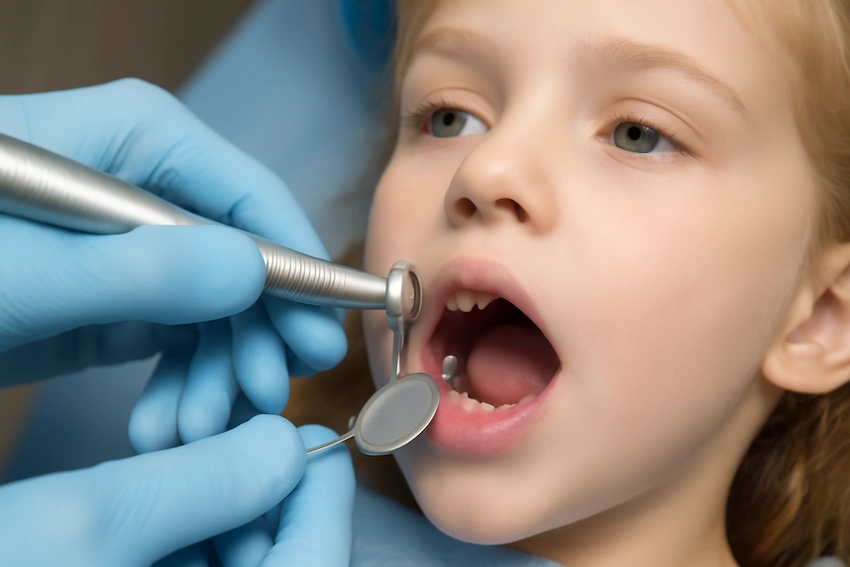
- First Permanent Molars (“6-year molars”): These teeth come out at around 6 years of age, and their enamel is not fully mature, thus being more soluble and vulnerable to acid attack for the first couple of years. Therefore, it is highly important to seal them as early as possible after their complete eruption (when there is no gingival tissue covering the grooves).
- Second Permanent Molars (“12-year molars”): These also follow the pattern of vulnerability when they come out.
- High-Risk Profile: Children with a past of caries, bad oral hygiene, frequent intake of sugar, orthodontic appliances, or developmental defects in enamel (e.g., hypoplasia) are considered high-priority candidates.
Expanding Indications: The Adult Patient
- Dry Mouth (Xerostomia) Patients: People with lowered salivary flow due to medications (e.g., for hypertension, depression), autoimmune diseases (e.g., Sjögren’s syndrome), or radiation therapy have their dental caries risk drastically increased. A sealant will give them the necessary physical protection.
- Caries-Active Adults: Any adult who has a pattern of new or recurrent decay, especially on the occlusal surfaces, will make a good candidate for sealants.
- Deep, Sound Fissures in Restored Mouths: An adult can, for example, have quite a few fillings and still a couple of molars with deep, caries-free fissures. By proactively sealing these teeth, you are protecting them from the eventual breakdown.
Code Clarification: D1354 vs. D1351
It is very important to differentiate D1354, which is for permanent teeth, from D1351, which refers to sealants on primary (baby) teeth. The decision to seal primary molars is individualized, made most often for caries high-risk children, where the advantages of tooth preservation until its natural exfoliation are more than the cost and effort.
The D1354 Clinical Protocol: A Meticulous Step-by-Step Guide
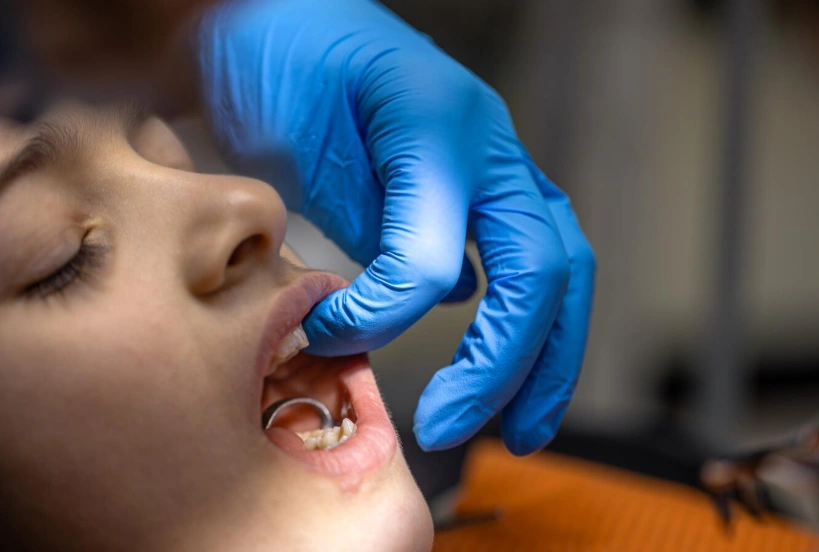
The proficiency with which the sealant is done is absolutely dependent on very careful work, especially with regard to moisture control.
Step 1: Diagnosis and Tooth Selection
The clinician identifies the tooth by sight and touch, usually with the assistance of an explorer and dental radiographs, and determines that the tooth is a suitable one (i.e., it has deep, caries-susceptible fissures without visible cavitation), one for the procedure.
Step 2: Profound Prophylaxis
The occlusal surface must be liberated from all pellicle, plaque, and debris. This can be done by using a non-fluoridated pumice slurry in a rubber cup or with an air-polishing device. It has been proven that this stage is very important for getting a strong bond. [Source: *Garcia-Godoy, F., & de Araujo, F. B. (1994).] Enhancement of sealant bond strength by pre-treatment of enamel with air-abrasion. American Journal of Dentistry, 7(4), 187-189.*]
Step 3: Absolute Isolation
This is a crucial stage of the procedure. The tooth should be free from any contact with saliva. Most effectively, this is done with a rubber dam; however, if cotton rolls and dry angles are properly placed, they can also work. In case saliva contamination occurs after etching, this will prevent resin from penetrating into the enamel micropores, hence microleakage and early failure will result.
Step 4: Enamel Etching
On the occlusal surface, a 37% phosphoric acid gel is applied for 15-30 seconds. The acid dissolves the ends of the enamel prisms, thereby creating a microscopically rough, high-surface-energy area that is very hydrophilic and can be used for micromechanical retention. A correct etching produces a surface that has a frosty white appearance.
Step 5: Rinsing and Drying
The acid is rinsed off completely for no less than 15 seconds. The tooth is then dried with an oil-free air syringe until the frosty look is seen. At this moment, the surface must not come in contact with saliva, breath, or fingers again.
Step 6: Sealant Application and Curing
The application of the low-viscosity liquid sealant is performed by the operator who carefully liberates the etched fissures of the occluded tooth with the help of a small brush or an applicator tip. The sealant is put into the grooves gently to avoid the formation of air bubbles. If the sealants are light-cured, the manufacturer-recommended time (usually 20-40 seconds) is used for a blue LED light of high intensity to polymerize the material.
Step 7: Final Evaluation
The clinician checks the sealant for:
- Coverage: Completeness of the obliteration of all the targeted pits and fissures.
- Contour: The presence of a smooth, continuous surface without the absence of voids or bubbles.
- Occlusion: The bite is checked by the use of articulating paper. If there are any high spots, they are removed by using a fine finishing bur to prevent premature wear or fracture.
Conclusion: D1354 as a Cornerstone of Modern Preventive Dentistry
The D1354 dental code is something far beyond a mere billing entry; it is the code for an extremely efficient, evidence-based, and economically viable clinical intervention. It symbolizes a move away from the restorative, “drill-and-fill” model to a preventive, proactive one.
Patients and parents, by learning about the science, the protocol, and the data of dental sealants, can no longer be in doubt but are certain instead. Choosing the D1354 option is not only to accept a treatment, but it is also to make a strategic long-term investment into oral health, which eventually leads to preserving the natural tooth structure and breaking the cycle of repetitive restorative dentistry. It is among the easiest and smartest decisions you can make for a lifetime of healthy smiles.
Sources:
- American Dental Association. (2023). Current Dental Terminology (CDT).
- Featherstone, J. D. (2004). The continuum of dental caries—evidence for a dynamic disease process. Journal of Dental Research.
- Simonsen, R. J. (2002). Pit and fissure sealant: review of the literature. Pediatric Dentistry.
- Centers for Disease Control and Prevention. (2016). Vital Signs: Dental Sealants Prevent Cavities.
- Ahovuo-Saloranta, A., et al. (2017). Pit and fissure sealants for preventing dental decay in permanent teeth. Cochrane Database of Systematic Reviews.
- Griffin, S. O., et al. (2008). The effectiveness of sealants in managing caries lesions. Journal of Dental Research.
- American Dental Association Council on Scientific Affairs. (2022). Bisphenol A (BPA).
Frequently Asked Questions (FAQ) about the D1354 Dental Code
The D1354 procedure is a protective treatment where a thin, resin coating is painted onto the chewing surfaces of back teeth to prevent cavities.
The primary purpose of the D1354 dental code procedure is to act as a barrier, sealing the deep grooves (pits and fissures) of teeth. This D1354 sealant prevents food and bacteria from getting trapped and causing decay, effectively reducing the risk of cavities.
The D1354 dental code treatment is most often recommended for children and teenagers as their permanent molars and premolars erupt. However, the D1354 sealant can also be beneficial for adults who have deep grooves in their teeth and are at a high risk of developing cavities.
No, the D1354 dental code procedure is completely painless. There is no drilling or removal of tooth structure involved in the D1354 sealant application, and it typically requires no anesthesia.
A D1354 sealant can last for several years, often up to 5 or 10, with proper care. The longevity of the D1354 dental code treatment depends on the patient’s oral habits and should be checked for wear during regular dental check-ups.
Yes, most dental insurance plans provide coverage for the D1354 dental code, especially for children and adolescents. Coverage for the D1354 sealant is common because it is a cost-effective, preventive measure.
The key difference is that the D1354 dental code is for prevention, while a filling is for restoration. The D1354 sealant is placed on a healthy tooth to prevent a cavity, whereas a filling is used to repair a tooth that already has decay.

