


The Ultimate Manual to Dental Code D1110: Your Routine Teeth Cleaning Demystified
In the complicated realm of healthcare billing and dental terminology, the D1110 code is one of the least ambiguous codes to be found. With the simplest of words, it stands for what most people say is a “cleaning,” but the surface of this highly important dental intervention is barely touched by this description. If you have ever been in a dental chair and thought what it is that they do there for the next 45-60 minutes, or if you have looked at your dental bill and wondered what D1110 refers to, then you are not the only one. This detailed manual will acquaint you with the world of dental prophylaxis, explaining why this common dental procedure is actually complex and how it paves the way to a healthy oral cavity for life.
The American Dental Association (ADA) locates D1110 as “prophylaxis – adult,” but even this clinical definition cannot reveal the real importance of the intervention. It is an adult prophylaxis journey from its antiquity in ancient dental practices up to its present-day utilization as a preventive dentistry’s foundation, to be reckoned as the most priceless of your overall health care investments. This manual will dissect D1110 from the very lowest technical details to the enormous impact it has on your overall health system and will empower you to become a dental care-consultative partner.
Chapter 1: Understanding the Terminology – What Does D1110 Really Mean?
The Language of Dentistry: CDT Codes
Learning what D1110 involves is not enough; we also need to know where it comes from. The Code on Dental Procedures and Nomenclature (CDT) is the work of the American Dental Association and is considered the common language for dental interventions in the USA. Coding facilitates the correspondences among dental offices, insurance companies, and authorities. In particular, the D1110 coding refers to services offered under the hygienic category (D1000-D1999), thus criminalizing its main function as a prevention measure rather than therapeutics.
Breaking Down the Components: Prophylaxis-Adult
Prophylaxis is a term with its origin in the Greek roots “pro” (before) and “phylax” (guard) and therefore it literally means “gather guard beforehand”. This word formation perfectly reflects the method’s preventive character. Unlike restorative methods that solve existing problems, prophylaxis gets control over dental problems before they arise.
Moreover, the “adult” term is as important. It differentiates the procedure from the child’s prophylaxis (D1120) and denotes that the treatment is for patients whose dentition is fully matured, i.e., generally 14 years of age and above. Compared to the adult mouth, a child’s is simpler and unaffected by longer exposure to the environment, has less complex restorative histories, and different periodontal considerations.
From the Past to the Present: The Evolution of Prophylaxis
The idea of hygienically cleaning one’s teeth with the help of a professional is as old as the earth. According to archeological evidence, the earliest methods for dental care have been found in different civilizations, where they used sticks for chewing, bird feathers, and even porcupine needles for dental cleaning. Nowadays, the hygiene we associate with that era-derived the professionalization of dental hygiene in the early 20th century. The first dental hygienists, who were trained by Dr. Alfred Fones in 1913, focused mainly on oral prophylaxis and patient education. Since then, the procedure has gone through a big leap in technology and yet it keeps its core determinant, prevention.
Chapter 2: The Clinical Procedure – A Minute-by-Minute Breakdown
Pre-Procedure Assessment: The Foundation of Care
An elaborate examination precedes the commencement of the cleaning work by the dental hygienist. This indispensable moment is frequently overlooked by patients but it lays the groundwork for the whole therapy. It includes:
- Medical History Review: Evaluating the condition of the patient, new medications, or diseases that could affect oral health or the treatment plan differently. In fact, patients on blood-thinning drugs may be fine with the new methods, whereas those with artificial joints might require an injection of antibiotics before the operation.
- Oral Cancer Screening: A visual and tactile examination of the face, the neck, the lips, and the whole oral cavity aimed at detecting any cancerous or pre-cancerous lesions or changes. This brief, saving, and quite frequently neglected part is a major source of locating the very first signs of oral cancer.
- Periodontal Evaluation: The use of a periodontal probe to determine the depth of the sulcus spaces between gums and teeth. Generally, the measurements are from 1 to 3 millimeters, and the detection of deeper pockets can be indicative of gum disease.
- Restoration Assessment: Inspecting the condition of existing dental works, i.e., fillings, crowns, bridges, and other for their wear, damage, or leakage.
The Scaling Process: The Heart of the Procedure
Scaling is the main therapeutic element of D1110, and it is about the very deliberate removal of plaque and calculus (tartar). The following points highlight the extent of the skill and care needed in this operation:
- Ultrasonic Scaling: The hygienist frequently follows up the work with an ultrasonic scaler, which breaks down and washes away large accumulations of calculus by using high-frequency sound waves (usually 25-30 kHz) together with a cooling water spray. The part of the device that moves is about 25,000-30,000 times per second, and by this movement, tiny bubbles are created which implode (cavitation), thus assisting to tear
- Hand Instrumentation: The dental hygienist, after completing ultrasonic scaling, proceeds with the use of hand scalers (such as sickle scalers) and curettes (like Gracey curettes) for sensitive and accurate work. These small metal tools obtain access to areas where the ultrasonic scaler cannot effectively reach, for example, a deep space between teeth or a slight concavity on the root surface.
- Subgingival vs. Supragingival: In a D1110 operation, the primary emphasis is on the elimination of supragingival (above the gumline) calculus. However, a small amount of subgingival cleaning (below the gumline) may be done in healthy sulcular depths, which usually do not exceed 3 millimeters.
Polishing: Beyond Cosmetic Benefits
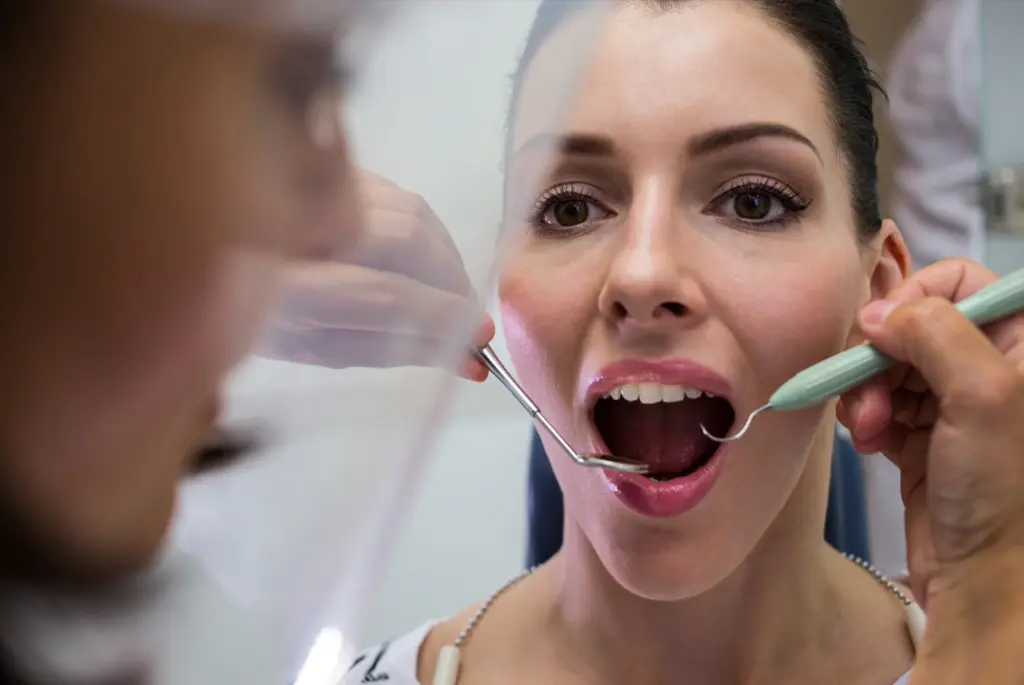
Even if most patients consider polishing a purely cosmetic activity, it still performs different vital clinical functions:
- The abrasive element: The hygienist, through a slow-speed handpiece with a prophy angle and a rubber cup, puts on a specially made prophylaxis paste. This paste contains abrasive particles (for instance, pumice, zirconium silicate, or diamond powder) in a flavoring binder. The abrasiveness is very tightly controlled to remove the surface stains without damaging the tooth enamel.
- Plaque removal: Polishing gets rid of the acquired pellicle sub-layer-a thin protein layer that comes from teeth and serves as the point of attachment for plaque bacteria. Eliminating this layer, the procedure produces an impeccable substrate that prevents the adherence of new plaque for 24-48 hours.
Contemporary prophy pastes may also contain fluoride, which can be integrated into the enamel surface during polishing, providing extra protection against decay.
Interproximal Cleaning and Flossing
Professional flossing serves multiple purposes:
- Debris Removal: Making certain that there are no prophy paste remnants or other debris left between teeth.
- Contact Point Evaluation: Determining the closeness of the contacts between teeth, which can lead to the formation of possible areas where food may accumulate and the erosion of dental surfaces.
- Technique Demonstration: Giving a chance to show the correct flossing method for the dental anatomy of the patient.
Fluoride Treatment: The Final Defense
Although usually charged differently (D1206), most of the time, a fluoride application is the final part of a D1110 procedure:
- Mechanism of Action: Fluoride operates using three main methods: It stops demineralization, it promotes remineralization, and it hinders bacterial metabolism.
- Application Methods: Fluoride can be applied as a gel worn in trays, a varnish painted on teeth, or a foam, depending on the patient’s and dentist’s preference. The patient’s caries risk, age, and preference determine the choice.
Chapter 3: The Science Behind the Procedure – Why D1110 Matters
Understanding Plaque and Calculus Formation
In order to understand the value of professional cleaning, it is necessary to know what we are cleaning:
- Dental Plaque: This is a living community consisting of more than 700 different species of bacteria, Polymer matrix-forming bacteria, and can be seen on teeth already within a few hours of cleaning. Just after cleaning, bacteria start to colonize the tooth surface; they are usually abcdefg streptococci. After a few hours to a few days, the biofilm (dental plaque) develops more bacteria; dental plaque results in inflammation of the gum (gingivitis).
- Calculus (Tartar): When plaque is not removed, it becomes mineralized by the salts in the saliva, thus turning it into hard tartar. Usually, this process takes between 24 and 72 hours. Tartar is not directly cancerous; however, its surface is rough, and that is an excellent place for the next plaque to come, as well as it is a community of bacteria and their toxin deposits.
The Host Response: Inflammation and Its Consequences
The damage that comes from periodontal disease is not the bacteria themselves but the body’s inflammatory response to the bacteria:
- Gingivitis: When bacteria are present in large numbers, the body sends cells that deal with inflammation, together with fluid. This causes redness, swelling, and bleeding – the classical signs of gingivitis. At this stage, the disorder is fully reversible with the right cleaning.
- Periodontitis: If the inflammatory process is still going on, the body starts to erode the connective tissue and bone that are the structures of the teeth. This unfolding of the story is the transition from reversible gingivitis to chronic periodontitis that can only be controlled, but not cured.
The Systemic Connection: Oral Health and Overall Wellness
All of these interconnections were first found through studies in the last two decades.
- Cardiovascular Disease: One of the main reasons atherosclerosis (hardening of the arteries) is caused by the systemic inflammatory process triggered by periodontitis which is a chronic inflammatory condition. Through this systemic inflammatory process, the inflammations in different parts of the body, in general, including C-reactive protein and other markers, are increased and eventually heart attack and stroke are the consequences.
- Diabetes: The triangular relationship between diabetes, periodontal disease, and inflammation of the gums is a two-way one. Diabetes, by its nature, makes a person more vulnerable to infections such as gum disease, while the inflammation caused by periodontal disease makes the management of blood glucose more difficult.
- Respiratory Health: The bacteria in the mouth may travel through the windpipe to the lungs and cause pneumonia, mostly in old people or those with a weakened immune system.
- Pregnancy Outcomes: Periodontal diseases in women during pregnancy affect both premature labor and birth of babies with low birth weight, as the occurrence rates of both are doubled, which might be oral bacteria that are spreading through the blood and reaching the placenta.’
Chapter 4: D1110 vs. Other Procedures – Knowing the Difference
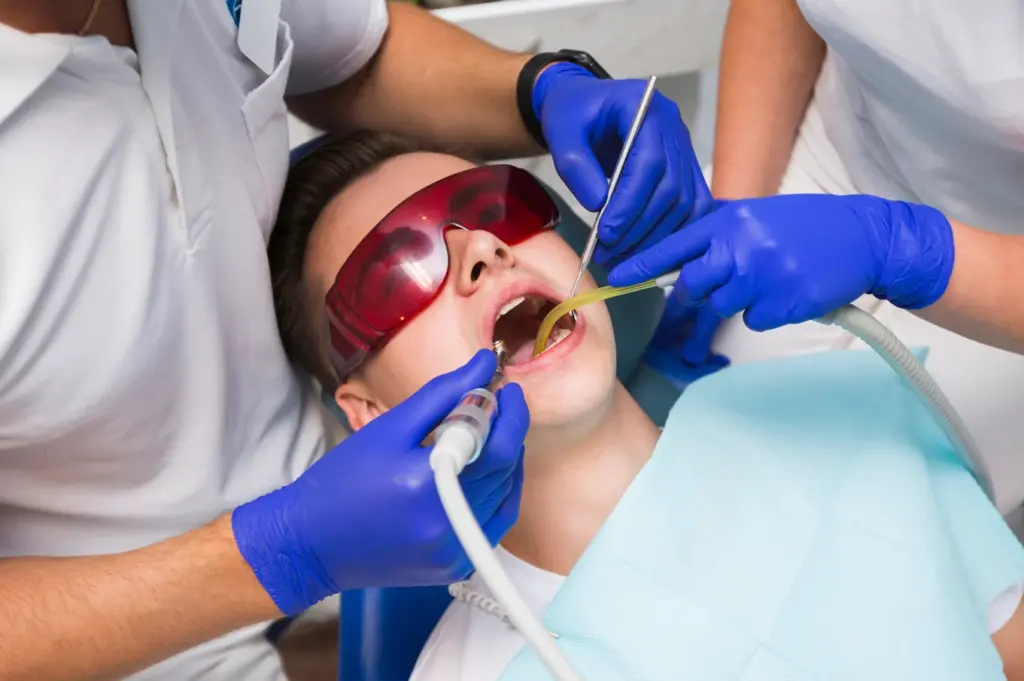
D1110 (Adult Prophylaxis) vs. D1120 (Child Prophylaxis)
These operations are similar in idea; however, significantly different, these procedures:
- Focus and Technique: In D1120, more time is spent on providing education, fluoride application, and sealants if suitable. The actual cleaning is usually less due to children generally accumulating less calculus.
- Psychological Approach: Pediatric cleanings aim at making the children have positive dental experiences by using child-friendly methods and language.
D1110 (Adult Prophylaxis) vs. D4341/D4342 (Scaling and Root Planing – “Deep Cleaning”)
The difference is essential for both insurance and clinical practice:
- Depth of Cleaning: D1110 is mainly a supragingival (above the gum) cleaning; D4341 refers to subgingival (below the gum) root cleaning in the pocketed areas.
- Anesthesia Requirements: Generally, D1110 is carried out without the use of anesthetics; however, in D4341, due to the sensitivity of the root area under the gum, local anesthesia is injected to numb the area most of the time.
- Time and Complexity: D1110 for a full mouth may be done within 45-60 minutes, while D4341 can only be done in several 60-90 minute appointments, and each session is limited to only a part of the mouth.
- Therapeutic vs. Preventive: D1110 is a preventive method that results in health maintenance; on the contrary, D4341 is a therapeutic one, which involves treatment of the infected tissue.
D1110 (Adult Prophylaxis) vs. D4910 (Periodontal Maintenance)
Periodontally treated patients may confuse these two operations:
- Frequency: D1110 is generally done every six months, whereas D4910 is scheduled every 3-4 months.
- Focus: D1110 is for maintaining health in patients with usually sound gums, whereas D4910 deals with chronic periodontitis in those who have had bone loss.
- Documentation: D4910 involves more detailed periodontal charting and monitoring of specific sites.
Chapter 5: Insurance, Cost, and Frequency Considerations
Insurance Coverage: Understanding the Fine Print
Most dental insurance plans provide for two D1110 procedures in a calendar year; however, the actual coverage depends on several factors:
- Time Intervals: The majority of plans have a minimum requirement of six months between cleanings; however, in certain cases, cleanings can be done more frequently if a medical necessity is documented.
- Plan Limitations: Several insurance plans restrict coverage by calendar year (January-December) while others use a rolling 12-month period starting from the date of the first service.
- Deductibles and Copays: Even though a great number of dental plans fully cover preventive services, there are some that stipulate that a deductible must be met and that a copayment is to be made.
Medical Necessity and Documentation
Dentists are obliged to document clinical indications for D1110 for insurance purposes:
- Calculus Presence: Visible or detectable calculus deposits should be recorded.
- Inflammation Indicators: Signs such as bleeding on probing, redness, or swelling should be recorded.
- Patient Symptoms: Reports of bleeding gums, bad breath, or other complaints help justify medical necessity.
Chapter 6: The Role of Home Care – Partnering with Your Dental Team
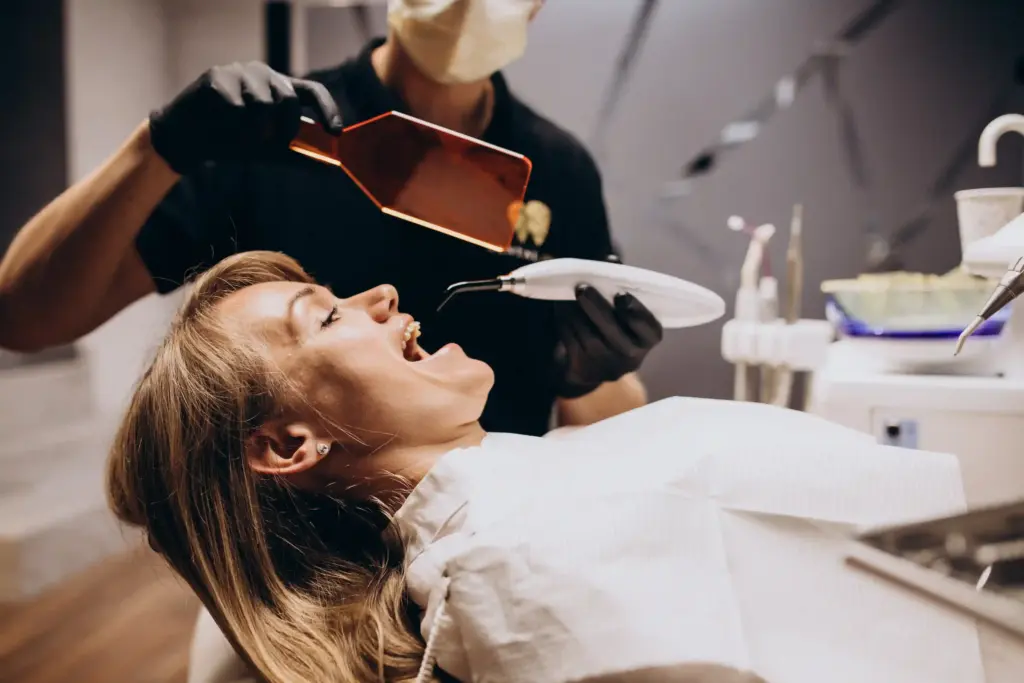
The Limitations of Professional Care
A D1110 procedure is like wiping the slate clean; nevertheless, the responsibility for keeping that cleanliness lies mostly with the patient. No matter how thorough a professional cleaning can be, it still can’t make up for careless daily oral hygiene.
Effective Home Care Techniques
- Brushing Methodology: The modified Bass method, which consists of placing the bristles at a 45-degree angle to the gumline and using gentle circular motions, effectively removes plaque from the sulcus.
- Interdental Cleaning: Flossing is the most effective method of cleaning between teeth; however, alternatives such as water flossers, interdental brushes, and soft picks can be equally effective if used correctly.
- Tongue Cleaning: The tongue is the main reservoir of bacteria that cause plaque and bad breath. Gentle tongue cleaning should be done daily.
The Partnership Model
Best oral health comes from a partnership between the patient and dental team:
- Professional Responsibility: Carrying out thorough cleanings, recognizing problem areas, and educating patients regarding their specific requirements.
- Patient Responsibility: Carrying out effective daily home care, going to regular appointments, and informing the dentist of any changes or concerns between visits.
Chapter 7: Common Misconceptions and Patient Questions
“My Gums Bleed, So I Shouldn’t Brush”
Not brushing bleeding gums is a widely believed misconception that makes the situation worse. Bleeding is a sign of inflammation, and the cause of the inflammation is bacteria. A gentle but thorough cleaning will initially lead to increased bleeding but ultimately, it will result in the disappearance of inflammation and bleeding.
“I Don’t Need Professional Cleanings Because I Brush Well”
Even if someone is doing an excellent job of home care, most people still have hard-to-reach spots, especially the area behind the lower front teeth and the cheek side of the upper back teeth. Furthermore, once tartar has formed, it cannot be removed through brushing alone.
“The Cleaning Damaged My Teeth”
Certain patients are concerned that polishing or scaling may cause damage to the tooth structure. When done correctly and with the use of modern techniques and instruments, D1110 is a safe and minimally invasive procedure that only removes foreign materials, not healthy tooth structure.
“I Can’t Afford Regular Cleanings”
Though the cost issue is a real one, the neglect of preventive care will usually result in a much higher cost for restorative treatments in the future. Many dental offices provide payment plans or membership programs in order to make care more affordable.
Chapter 8: The Big Picture – D1110 as Health Investment
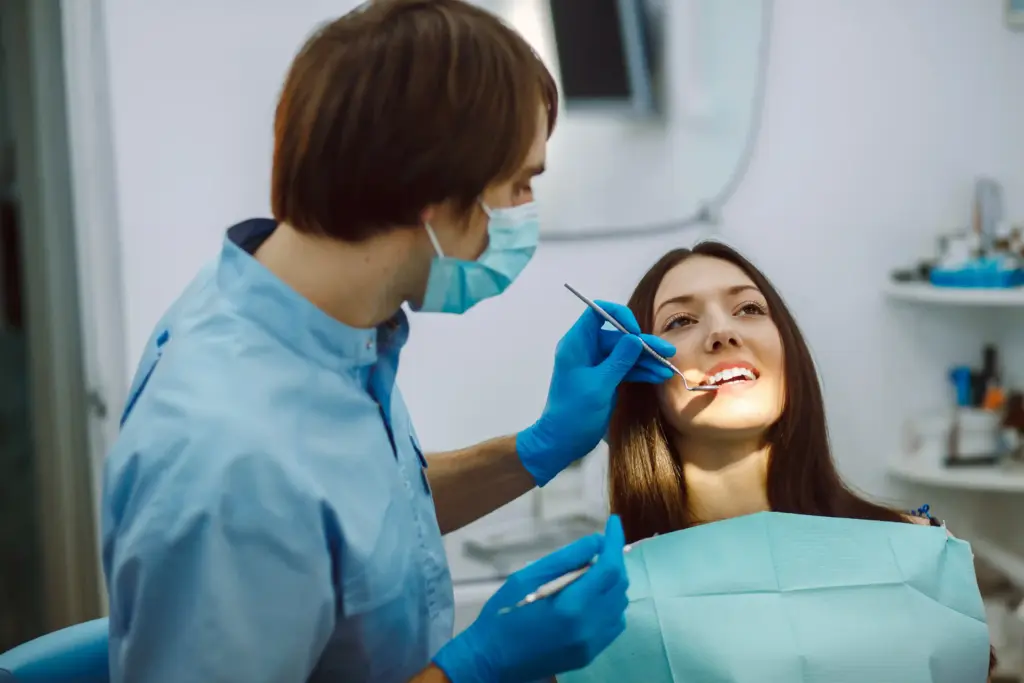
Quality of Life Impacts
Disease prevention, regular professional cleanings are a big contribution to quality of life:
- Social Confidence: Clean teeth and good breath are facilitators of social interaction and contribute to self-esteem.
- Functional Benefits: A healthy mouth is one that can eat and speak comfortably.
- Financial Savings: The cost of preventive care is usually 10-20% of the cost of future restorative treatment that is a result of neglect.
The True Value Proposition
The D1110 intervention is one of the greatest values healthcare offers when taking a holistic perspective:
- Prevention of Pain: Avoiding the discomfort that comes with dental caries and infections of the gums.
- Preservation of Natural Teeth: Keeping your natural teeth for your entire life.
- Systemic Health Benefits: Lessening the inflammatory load throughout the whole body.
- Early Problem Detection: Being able to detect issues like oral cancer at the stage when it is still curable.
D1110: Embracing the Power of Prevention

The dental code D1110 is much more than a routine cleaning. In fact, it stands for the very idea that prevention is wiser, more comfortable, and more economical than treatment. This operation is a combination of the oldest wisdom with the latest science, technical skill with patient education, and individual care with an awareness of systemic health.
Knowing the details of what is being done in those minutes in the dental chair makes the experience less of a boring routine and more of an active partnership in health upkeep. When you have a D1110 on your treatment plan or invoice, don’t forget to see it for what it really is: a proactive oral health, overall wellness, and quality of life investment.
Next time you sit in a dentist’s chair for your prophylaxis, you will be able to do it with the assurance that you are taking part in one of the most valuable preventive health measures available-a fix that not only cleans your teeth but protects your future health.
References:
- American Dental Association. (2023). Code on Dental Procedures and Nomenclature.
- Journal of Dental Education. (2022). Patient Understanding of Dental Procedures.
- Journal of Periodontology. (2023). Long-term Benefits of Regular Prophylaxis.
- ADA Code Maintenance Committee. (2023). CDT Code Updates.
- Journal of the History of Dentistry. (2021). Historical Evolution of Dental Prophylaxis.
FAQs About D1110 Dental Code
D1110 is the American Dental Association (ADA) code for “prophylaxis-adult,” representing a routine professional teeth cleaning for adults to remove plaque, calculus, and surface stains.
Most dentists recommend every six months, though some patients with specific conditions may need it more frequently.
Yes, most dental insurance plans fully cover two D1110 procedures per year as part of preventive care benefits.
D1110 is a preventive cleaning for healthy gums, while “deep cleaning” (scaling and root planing) treats active gum disease below the gumline.
No, D1110 focuses on removing plaque and calculus, not whitening teeth. It may remove some surface stains through polishing.
It includes scaling (plaque and calculus removal), polishing, flossing, oral cancer screening, and personalized oral hygiene instruction.

