


Getting a dental care system is not only about understanding the procedures but also about knowing the codes that define the procedures. If you have accurate knowledge, then you have the power to make informed decisions regarding your dental health. One of the dental codes that matters a lot nowadays is D0367. This patient-centric article gives a detailed explanation of the D0367 dental code.
We will certainly define this diagnostic method, explain the concept, tell about the equipment used, and clarify the technology employed. Additionally, we will talk about a sensible question that many patients come up with, like whether the insurance would cover D0367 or not. Our aim is to provide you with a set of clear and trustworthy details that show how this device, besides being a great aid for accurate diagnosis, is also very helpful in the safe and effective management of your dental care.
What is the Dental Code D0367?
Dental code D0367 is an advanced and detailed diagnostic imaging apparatus description. It relates to a Cone Beam Computed Tomography (CBCT) scan. The American Dental Association (ADA) assigned this code to specify the capturing and the interpretation of a single 3-dimensional (3D) image dataset for one jaw, either the upper (maxilla) or the lower (mandible).
The procedure offers a highly detailed, three-dimensional image of your teeth, jawbone, nerves, and other craniofacial structures. Dentists decide to go for D0367 CBCT scans when 2D X-rays do not give enough anatomical details for them to be sure about the diagnosis and create a correct treatment plan. This is the imaging method that is at the core of today’s precision dentistry and it is the one that makes it possible for clinicians to see complicated anatomy with ideal clarity, which is great for them but also for you.
What is Included in the Dental Code D0367?
The dental code D0367 is the code for a package that entails the whole production and interpretation of the 3D scan by the dental provider. It is a full program that starts with the patient being positioned and ends with a descriptive diagnostic report being handed over to the patient.
A D0367 intervention specifically includes:
- Image Acquisition: The dentist or a qualified technician will accurately place you in a CBCT machine. To complete the scan, the device will revolve around your head, capturing as many as 100s of slices of images that are very accurate in a single fast move. The operation takes up a few moments only and is done in an effort to keep you comfortable.
- Data Reconstruction: The device’s modern software is able to make the changes to the slices of images it takes in a flash and without requiring any manual intervention into a single three-dimensional data set of the jaw.
- Interpretation and Report by Professionals: A certified dentist, commonly a specialist like an oral surgeon or an endodontist, thoroughly examines the 3D representation on a computer screen at the workstation and describes their findings in formal diagnostic reports. They follow the anatomy in the 3D model from all sides, spot the problematic areas, and then write the report describing the results. This report is then stored as a permanent part of the patient’s health record and is the foundation of the treatment plan personalized for the patient.
What Equipment or Materials are Commonly Used for Procedures with Dental Code D0367?
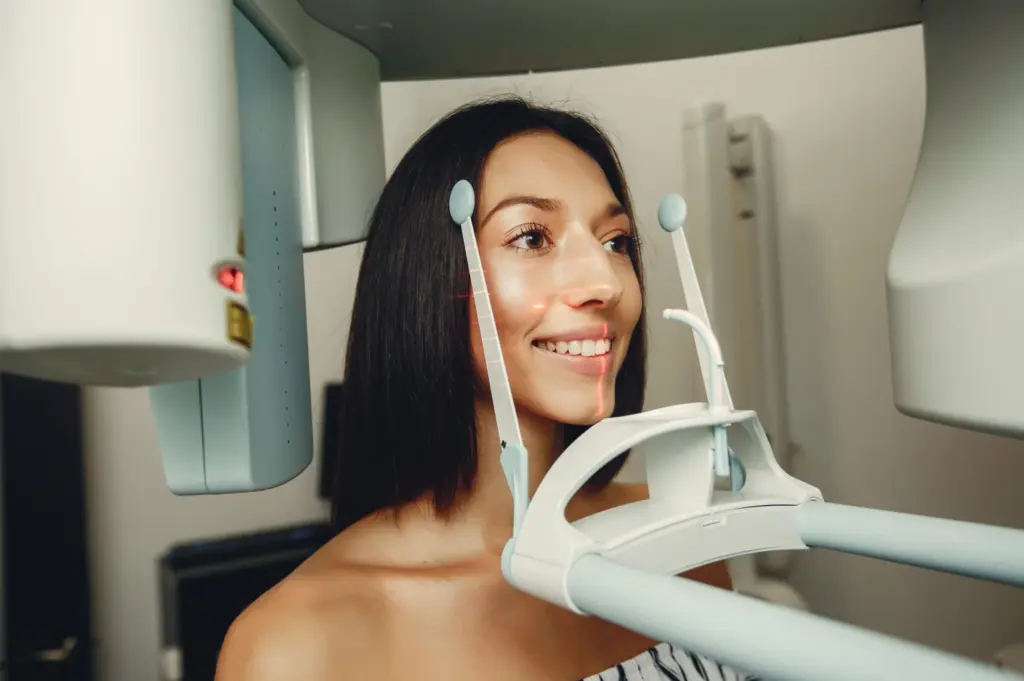
The main machinery for a D0367 is a Cone Beam Computed Tomography (CBCT) unit. This device, used for medical imaging, is a considerable advance over the regular dental X-ray system, and it was designed with both high accuracy and patient safety in mind.
Among other things, the main parts of the system are:
- The CBCT Scanner Unit: This is the one machine that is free-standing and comprises a rotating C-arm or gantry. During the inspection, the X-ray source and the detector, which are on this arm and move in opposite directions, will be rotating around your head.
- The X-ray Source and Detector: The scanner emits a low-dose, cone-shaped X-ray beam together with a high-resolution digital sensor. It is this precise pairing that gives the fast 3D volumetric data capture capability with a lot less radiation than conventional medical CT scans.
- Specialized Software: Advanced computer programs are the only way to complete the missing steps for the 2D pictures taken to create an interactive 3D model. Your dentist will be finding his way through the mouth, virtual reconstruction layer by layer, using this software to do exact measurements and assessments.
- Protective Lead Aprons: As part of the safety measures, the dental crew will place a lead apron with a thyroid collar on you so as to reduce the exposure to the radiation that may be scattered, thus ensuring safety during the process of imaging.
Common Clinical Applications for the D0367 CBCT Scan
A dentist can suggest a D0367 scan only if there are certain tightly packed complex clinical conditions where they cannot get sufficient information from a regular X-ray. The detailed 3-D data have a big influence on both the safety and the success of the different treatment results.
Some of the regular uses are:
- Dental Implant Planning: The scan shows everything that is needed about the bone like density, volume, and most of all location of the nerves and sinuses. On this basis, implants can be accurately virtually placed to both guarantee a good tightness and also prevent critical anatomical areas from being damaged.
- Endodontic Diagnosis and Treatment: Just imagine a complicated root canal situation in which it is possible, through 3D, to find extra canals, root fractures, or infections that are absolutely indistinguishable on 2D X-rays, thus leading to the most predictable and successful outcomes.
- Oral Surgery Preparation: The extraction of the impacted teeth, especially of the wisdom type, is just one example where the scan helps by showing mapping of the exact position of the teeth towards the mandibular nerve, which greatly lessens the nerve injury that usually happens during the operation.
- Evaluating Pathologies: In fact, the D0367 scan is a very good instrument in locating and assessing cysts, tumors, or other kinds of abnormalities that may be present within the jawbone, thus giving the doctor an opportunity for early-stage diagnosis and proper management.
Understanding the Safety and Benefits of D0367 Imaging
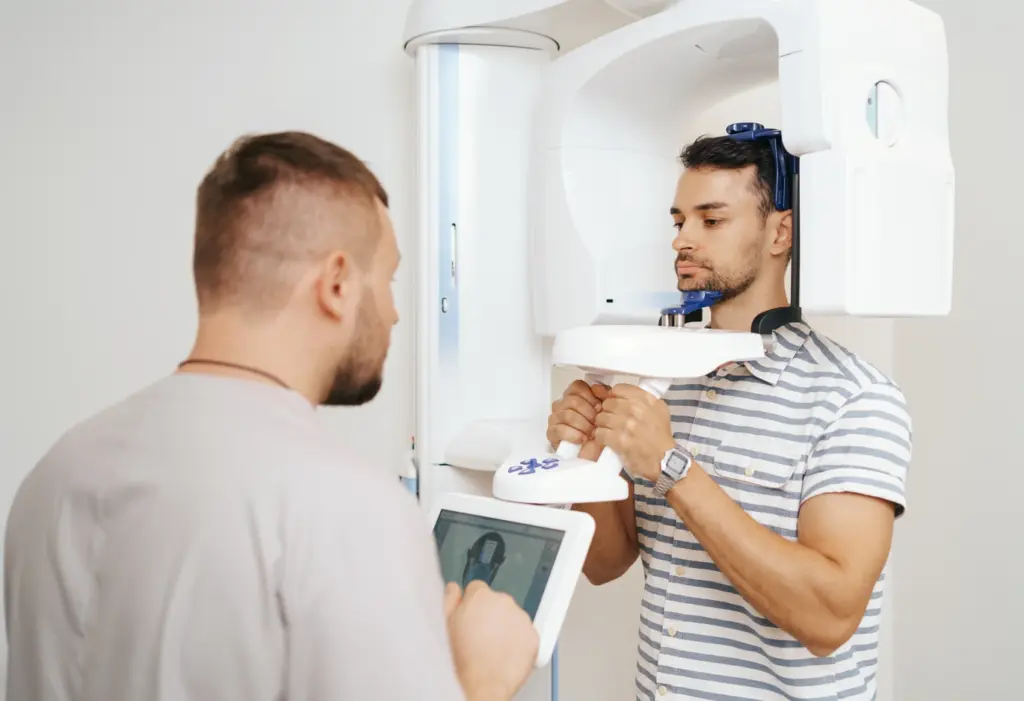
The D0367 CBCT scan is the ultimate solution for accuracy in diagnosis and planning for treatment and it is done while patient safety is highly prioritized. The use of all radiation, including CBCT, is under the ALARA (As Low As Reasonably Achievable) principle. Dentists only order this test in a situation where the benefits of the scan clearly outweigh the minimal risks.
The major positive sides of the operations are:
- High Diagnostic Accuracy: With the availability of 3D views, doctor no longer has to deal with overlapping structures and so can have a clear and unambiguous view of the area that needs examination.
- Extended Treatment Safety: Beforehand, by being aware of the exact anatomy, the dentist can carry out the procedures that lead the way for nerves, sinuses, and neighboring teeth to be avoided, thus precluding the occurrence of complications.
- Better Predictability: More accurate pre-operative planning results in time-efficient performance and highly predictable outcomes that have a long life; for example, implant placements are one of the major benefits.
- Minimal Radiation Dose: One should know that the effective radiation dose from a D0367 CBCT scan of a single jaw is usually lower than that of a conventional medical CT scan of the same area, and sometimes is equal to a series of standard dental X-rays.
Is Code D0367 Covered by Dental Insurance?
The dental insurance for the D0367 code is a great example of the most difficult situations. The coverage that is available for D0367 varies a lot from one insurance provider to the next and even from one plan to another. Most insurers acknowledge the medical necessity of CBCT for certain complex procedures, but they usually require a pre-authorization request from your dentist before they issue the coverage.
To get through the insurance maze for a D0367 operation, you should:
- See Your Dentist: Your dentist will give a thorough explanation and most often the 3D pictures as well to show that the medical necessity of the scan is for your specific treatment, like implant placement or the examination of an impacted tooth.
- Get in Touch with Your Insurance Provider: Directly before the appointment, you should call the patient service number that is on your insurance card. Ask them about the coverage specifically for “Current Dental Terminology (CDT) code D0367”. Also, ask them about their pre-authorization necessities.
- Know Your Plan Details: Besides your deductible, be sure to ask about what coinsurance you will have to bear and if the coverage is only for the diagnostic imaging part or also for the professional interpretation fees. Good and early communication gives you a clear picture of your potential financial burdens.
D0367: The Importance of Accuracy in Today’s Dental Practice

The D0367 dental code is more than just a number used for billing purposes; it stands for a major diagnostic imaging breakthrough that is directly responsible for the improvement of both the quality and the safety of your dental care. The Cone Beam CT scan for one jaw is the answer to the closest possible view in three dimensions that gives your dental squad the ability to come up with a diagnosis with a very high level of certainty and do the subsequent complex treatments with remarkable accuracy.
By learning more about the D0367 operation, realizing its implemented scenarios, and being aware of its safety, you become one of the decision-makers in your treatment. Apart from considering the diagnostic advantages, take into account any money matters and talk about them with your dentist so that this effective tool can be part of your custom-tailored route to gain the best oral health condition under control.
Sources:
- American Dental Association. (2023). Current Dental Terminology (CDT). American Dental Association.
- American Academy of Oral and Maxillofacial Radiology. (2013). Clinical recommendations regarding use of cone beam computed tomography in orthodontics. [Oral Surgery, Oral Medicine, Oral Pathology and Oral Radiology, 116(2), 238-257].
- Scarfe, W. C., & Farman, A. G. (2008). What is Cone-Beam CT and How Does it Work? Dental Clinics of North America, 52(4), 707–730.
- Tyndall, D. A., & Price, J. B. (2018). Cone-Beam CT: A New Tool for the Dentist’s Toolkit. Journal of the American Dental Association, 149(7), 651-663.
Frequently Asked Questions (FAQs) About D0367 Dental Code
Dental Code D0367 refers to Cone Beam Computed Tomography (CBCT) used for imaging the dentition, jaw, and facial structures. This advanced imaging technique provides three-dimensional (3D) scans to help diagnose, plan, and monitor treatment for dental and oral conditions.
A Cone Beam CT scan provides a 3D view of the patient’s teeth, bones, and soft tissues. It allows dental professionals to assess complex structures such as the sinus cavities, teeth alignment, bone density, and nerve pathways, which is crucial for planning procedures like dental implants, orthognathic surgery, and root canal treatments.
Traditional X-rays provide 2D images of the teeth and bones, which may not give a full picture of a patient’s dental health. In contrast, Cone Beam CT scans offer 3D imaging with higher resolution, allowing dentists to see more details, such as the position of nerves or the density of bone tissue, which can be crucial for precise treatments like implants or surgery.
Insurance coverage for D0367 can vary depending on the provider and the reason for the scan. Many insurance companies cover Cone Beam CT scans if they are deemed medically necessary for treatment planning, especially for procedures like implants or complex oral surgery. Patients are advised to check with their insurance provider to confirm coverage and any associated costs.
The actual Cone Beam CT scan usually takes just a few minutes, with the entire process taking approximately 10 to 15 minutes from start to finish. The scan itself is quick and non-invasive, and the images are available immediately after the scan.
Yes, Cone Beam CT scans are considered safe for dental use, offering a lower radiation dose compared to traditional medical CT scans. However, like all imaging techniques, the procedure should be used only when necessary and under a dental professional’s guidance to ensure minimal radiation exposure.

