


What is Dental Code D0350?
Dental Code D0350 is a detailed radiographic image of the oral and maxillofacial regions, i.e., the teeth, the jaw, and the tissues around the teeth, with advanced imaging technology such as cone beam computed tomography (CBCT). This is a specialized image procedure that is dictated by complex dental and facial conditions in which 2D X-rays are insufficient, ineffective, and not usable.
D0350 releases 3D imaging of both hard and soft tissues in the oral and maxillofacial regions, and that way, dentists and oral surgeons can be more confident and accurate in the diagnosis of a patient’s condition. These X-rays find their way in structural, bony, and dental evaluation, where soft tissue integrity and dental alignment become the most important aspects for accurate diagnosis and treatment planning.
The Role of D0350 in Diagnosing Dental and Facial
Conditions D0350 imaging offers high-resolution, three-dimensional scans and is a powerful tool in locating dental and facial problems. The most important uses of D0350 imaging are:
- Evaluating Bone Structure: D0350 plays a key role in checking the health of the jawbone, which is the main way to figure out if a patient has enough bone density for a dental implant kind of procedure. On top of that, it can detect bone loss, cysts, tumors, and other things that may become the source of the patient’s oral health deterioration.
- Diagnosis of Temporomandibular Joint (TMJ) Disorders: The method has the potential to generate pictures of the temporomandibular joints (TMJ), which are the parts that connect the jawbone to the skull. Symptoms of the condition on the studied structures- e.g., arthritis, disc displacement, or joint degeneration can be exactly diagnosed.
- Planning for Dental Implants: D0350 imaging plays a vital role in the implantation of dental implants in patients by letting the surgeon know the perfect spot where the implant can be inserted through detailed bone structure and surrounding tissue images, hence helping proper alignment and minimizing surgery risks.
- Evaluating Sinus Health: D0350 radiographs give clear images of the sinuses that are situated close to the upper jaw. It is thus important for ski-patients taking sinus lifts prior to dental implants, and ensuring free access in the sinus cavity.
- Identifying Pathologies: D0350 is very helpful in finding those issues that affect the oral and facial region and include such things as cysts, tumors, infections, and fractures that may not be obvious or visible even with routine X-rays.
Why is D0350 Important for Oral Health?

Dental Code D0350 is instrumental in wholesome dental care, especially when detailed patient imaging is needed for the right diagnosis and treatment planning. Among the merits D0350 imaging enjoys are:
- Three-dimensional imaging for accurate diagnosis: D0350 generates a 3D image of the teeth, gums, jawbone, and even the tissues around the teeth, unlike traditional X-rays, which offer only a 2D image. In fact, this helps a lot in tricky situations, where a detailed and accurate assessment is necessary.
- Enhanced preoperative planning: For patients undergoing oral or maxillofacial surgery, such as wisdom tooth extractions or jaw realignment, D0350 guarantees that the operative plan is derived with maximum precision, thus your chances of running into complications are low at great work.
- Complete evaluation of the soft and hard tissues: Not just the teeth and bones, but also the soft tissues of the mouth are visualized through D0350 imaging, making this technique extremely beneficial in the diagnosis of ailments like periodontal disease, facial trauma, or abnormal growths.
- Reduced invasive operation demand: Equipped with the most comprehensive visual aid of an individual ailment, D0350 gives dentists the liberty to make informed decisions and, in doing so, lessens instances, though impossible, where the occurrence of an invasive procedure is inevitable.
D0350 vs. Other Dental Imaging Codes
While D0350 is specifically about oral and maxillofacial imaging, the rest of the dental codes correspond to different radiographic methods. Here’s how D0350 stacks up against some commonly used dental imaging codes:
- D0220 and D0230: These codes are the equivalent of bitewing X-rays that capture both the upper and lower teeth in one area of the mouth. Usually, bitewings are employed in determining cavities and bone loss between teeth and thus, they provide only a 2D view of teeth. On the other hand, D0350 offers a 3D view, giving a much more detailed analysis of the teeth as well as the surrounding tissues.
- D0330 (Panoramic X-ray): This is the code for a panoramic X-ray that provides a general view of the teeth, jaws, and other main structures. D0330 is good for getting an overall idea of the mouth, whereas D0350 drills down the details to a great extent, which is why it’s handy for surgical planning and complex condition diagnosis.
- D0367 (Cone Beam CT for Dentistry): D0350 is the code that people generally think of when referring to cone beam computed tomography (CBCT), a 3D dental image technique. In particular, CBCT is excellent for exposing bone structures and journeying the implant route; however, D0350 might be there to cover some additional oral and facial areas that are not taken care of by the CBCT code single-handedly.
The chief difference between D0350 and other imaging methods is that the former’s images are 3D and thus can be used for a far more detailed and comprehensive investigation than 2D X-rays.
When is D0350 Recommended?

D0350 is usually the choice of a doctor when there is a need for more detailed imaging for diagnosis, treatment planning, or post-treatment evaluation. Commonly, it is employed in:
- Pre-Implant Assessment: Before dental implants can be put into place, D0350 imaging depicts a thorough look at the quality and quantity of the bone, thus, making sure that the implant will have enough support.
- Orthodontic Treatment Planning: D0350 imaging would be instrumental in the orthodontic treatment planning stage, where teeth, jaw, and general facial structure assessment are needed for perfect and customized treatment plans by the orthodontist.
- Facial Trauma Evaluation: Facial trauma case scenarios. The D0350 image provides a very clear, accurate, and concise assessment of the dental-facial area for fractures, dislocations, and other injuries, and thus treatment becomes easier, and recovery is faster.
- Sinus Lift Surgery: D0350 assists in examining the sinus anatomical structure to check for any blockage or complications, thus resulting in a successful sinus lift operation, which usually precedes dental implant placements.
- TMJ Disorder Diagnosis: By means of D0350 imaging, dentists gain insights into temporomandibular joint (TMJ) disorders such as joint degeneration, disc displacement, or inflammation through visual symptoms.
How Does D0350 Imaging Work?
The process of D0350 imaging is pretty straightforward and does not require any surgical intervention. The performance, in general, includes:
- Initial Consultation: After examining the patient’s symptoms and clinical signs, or recognizing the need for pre-surgical planning, the dentist or oral surgeon decides if D0350 imaging is to be carried out.
- Positioning and Scanning: The patient is positioned in front of the imaging equipment, and the scanner moves around the head to take a 3D scan of the oral and maxillofacial area. As per the location of the used technology, the scan may take time that varies from a few seconds to a few minutes.
- Reading of the Images: The dentist or surgeon identifies the bone architectural structure, teeth, and soft tissue issues, along with any other abnormality on the inspected 3D images, when the scan is over.
- Treatment Planning: Taking the discoveries as a basis, the dentist or surgeon will formulate a treatment plan tailored to the patient’s needs, be it implants, surgery, or orthodontic therapy.
Benefits of D0350 Imaging

D0350 imaging comes with a variety of major benefits that, in the long run, lead to more successful oral care:
- Augmented Diagnostic Performance: Through the implementation of 3D technology, D0350 is able to supply detailed clarifications regarding the teeth, jaw, and other components of the oral cavity, which consequently facilitates accurate diagnosis and improved treatment decisions.
- Conservative Surgical Risks: D0350 is instrumental in the eventual safety and effectiveness of the surgical operations, e.g., implant placement and oral surgery, as it vividly and accurately portrays the treatment area, thus lowering the probability of unforeseeable complications.
- Effective and Accelerated Planning: The brilliant quality of the D0350 allows fast, reliable images, and thus, treatment planning and patient care are expedited.
- The need for follow-up treatment is lessened: By the use of D0350, the dentist will be able to solve the issues that can potentially become major concerns long before other treatment options will be required.
Insurance Coverage for D0350 Imaging
Coverage by dental insurance for D0350 is dependent on the plan and the reason for the imaging. For instance, some insurance plans may pay for D0350 if it is medically necessary, thus implant planning or TMJ evaluation can be the case. But the coverage can be limited or conditional upon getting prior approval, and some plans may also require co-payments for advanced imaging procedures.
It is very important for patients to make sure beforehand if their insurance providers are covering D0350 under their plan, by also understanding the possible out-of-pocket costs for the procedure.
Conclusion About D0350 Dental Code
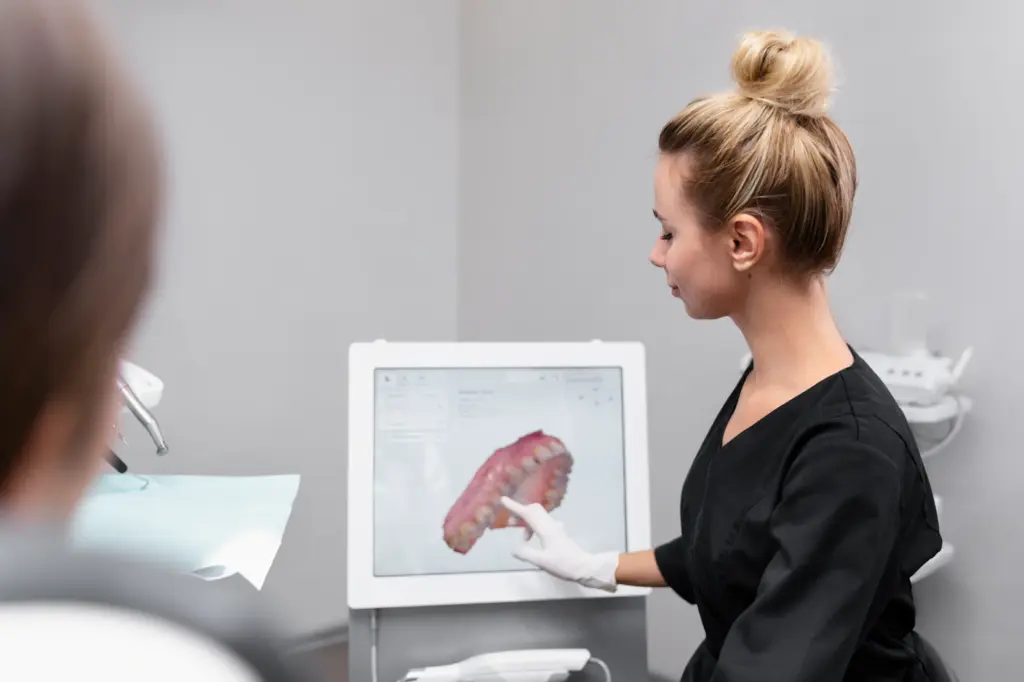
Dental code D0350 is a very essential instrument in the field of modern dentistry, which provides a non-invasive, highly detailed 3D visualization of oral and maxillofacial anatomical structures. By means of advanced imaging technologies like cone beam computed tomography (CBCT), dental professionals are capable of accurately diagnosing and treating complex conditions, precisely planning surgeries, and, as a result, significantly upgrading the level of care they deliver to their patients. To be exact, if a dental implant is what you need, an orthodontic assessment, or facial trauma treatment, D0350 is basically the one that ensures the correct diagnosis and the proper treatment are given.
References
- American Academy of Oral and Maxillofacial Radiology. (2020). Cone Beam Computed Tomography in Oral and Maxillofacial Imaging: Best Practices. Oral Radiology Journal, 67(2), 101-108.
- Smith, H. A., & Clark, M. D. (2019). Advances in Dental Imaging: Impact on Diagnosis and Treatment Planning. Journal of Dental Research, 98(5), 451-457.
- Patel, S., & Durkan, R. (2018). The Role of 3D Imaging in Dental Implantology. Clinical Implant Dentistry and Related Research, 20(1), 43-51.
- Williams, J. P., & Graham, S. H. (2021). Radiographic Imaging in Dentistry: Current Technologies and Future Directions. Journal of Clinical Dentistry, 32(7), 120-127.
- Brown, M. R., & Harris, L. A. (2020). Maxillofacial Imaging: Techniques and Applications. Journal of Oral and Maxillofacial Surgery, 78(3), 589-595.
Frequently Asked Questions About Dental Code D0350
Dental Code D0350 refers to oral and maxillofacial radiographs, typically taken using cone beam computed tomography (CBCT) technology. This advanced imaging technique provides a detailed 3D view of the teeth, jaw, and surrounding structures, aiding in the diagnosis and treatment planning of complex dental and facial conditions.
D0350 imaging is recommended when a detailed 3D view of the oral and maxillofacial regions is necessary. It is commonly used for implant planning, diagnosing temporomandibular joint (TMJ) disorders, evaluating facial trauma, and assessing bone and soft tissue health before oral surgeries.
Unlike traditional X-rays, which provide 2D images, D0350 uses advanced cone beam computed tomography (CBCT) to capture 3D images. This allows for a much more comprehensive evaluation of both hard tissues (like teeth and bones) and soft tissues, enabling more accurate diagnoses and treatment plans.
No, D0350 is generally used for more complex cases. For routine dental care, such as cleanings or simple cavities, standard 2D X-rays may suffice. However, for treatments like dental implants, orthognathic surgery, or TMJ management, D0350 provides a detailed 3D view that is crucial for accurate diagnosis and successful outcomes.
Coverage for D0350 can vary depending on the insurance provider and the medical necessity of the procedure. Many dental insurance plans may cover D0350 imaging when it is required for specific diagnoses or pre-surgical planning. It’s important to verify coverage with your insurance provider before scheduling the procedure to avoid unexpected costs.

