


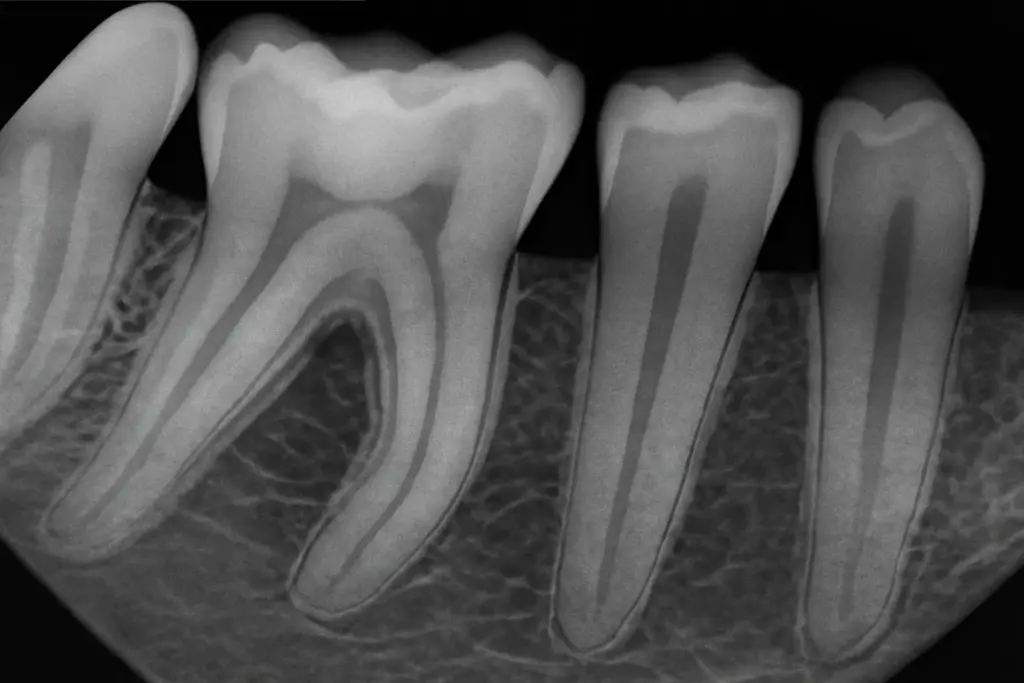
Diagnostic imaging is a major part of the healthcare approach to dental concerns in the 21st century. A substantial D0220 dental code is an imperative indicator that points to a periapical radiograph of a single tooth and it is one of the least invasive ways to give insight into the root and the bone around the tooth. The pictures let the doctors figure out the problem in the earliest stage and with the highest precision. Being familiar with the D0220 operation will reassure you and make the whole process transparent when you are there for a routine check or if you need to figure out a problem with just one tooth.
In a highly specialized area like dentistry, which demands absolute precision, the American Dental Association’s (ADA) Current Dental Terminology (CDT) codes can be considered the universal language. Out of all the codes, D0220 is the one that is of great significance. Initially, this code was most closely associated with “Intraoral – periapical first film” – a definition only kept for the sake of history – and now this code is practically a representation of one of the most versatile dental diagnostic tools – the panoramic radiograph, or ‘pano’.
This piece of writing is an extensive analysis of the D0220 concept, looking beyond the mere definition to understand its technology, clinical necessity, the nuances of the interpretation, and its changing role alongside advanced 3D imaging.
Section 1: Deconstructing the D0220 Code and the Technology
1.1. The Nomenclature Paradox
Why “Intraoral” for an Extraoral Image? The categorization of D0220 under “Intraoral” radiographs is a throwback to the past. The early versions of the CDT codes did not have a clearly defined category for the then-new panoramic technology. As these devices became the main source of a single, comprehensive extraoral image, the D0220 code was the one most commonly referred to for this purpose. The dental community is aware that D0220 is a panoramic radiographic image when used in the context of billing.
1.2. The Technical Principle
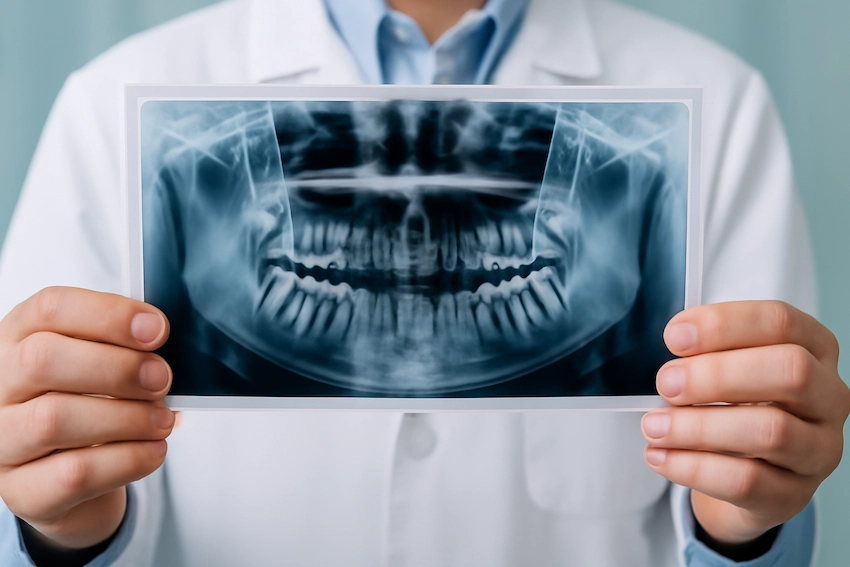
Panoramic Tomography X-ray is not a simple image; it is a form of tomography. The essential idea is the simultaneous movement of the X-ray source and the image receptor (a digital sensor or photographic film) around the patient’s head. They revolve around a fixed point, called the “fulcrum,” which is adjusted to the patient’s jaw.
- The Focal Trough: This is the main point. The machine is built to concentrate on a thin, curved layer – the focal trough – which is made according to the average human dental arch. The things in the trough are clearly visible, while the things that are outside of it are indistinct or completely cut out.
- The Process: The patient is given a plastic bite block to hold his/her head in the right position. The machine exposes a very narrow part of the radiation as it rotates, thus recording only a very small portion of the jaws. The computer then merges these tiny parts into one continuous 2D image.
Section 2: The Unparalleled Clinical Applications of D0220
The panoramic radiograph is the main diagnostic imaging tool in the field of dental medicine because of its wide range of possibilities. Its use is almost unlimited for different dental specialties.
2.1. General Dentistry & Comprehensive Diagnosis
- The “Big Picture” Assessment: D0220 becomes a very useful baseline for a new patient examination. It provides a comprehensive view that can detect hidden pathologies, extra (supernumerary) teeth, or developmental anomalies that a visual check and intraoral X-rays cannot reveal.
- Periodontal Disease Screening: Although a full-mouth intraoral series is more detailed for the measurement of individual bone levels, a pano can give a decent overview of generalized bone loss patterns, calculus deposits, and the bone-to-root ratio of the whole dentition.
- Caries Detection: Bitewing X-rays are the best for the detection of early interproximal (between teeth) decay, while a pano can uncover large carious lesions, especially in those areas that are always neglected.
2.2. Oral and Maxillofacial Surgery
- Wisdom Teeth Evaluation: One of the most frequent uses of a D0220 is to show the inclination, impaction depth, and closest relationship of lower wisdom teeth to the inferior alveolar nerve canal, which is essential for the evaluation of surgical risk and for planning an extraction.
- Pre-Surgical Assessment for Implants: It is a great first screening tool to visualize bone height, find out where the maxillary sinuses and the mandibular nerve canal are, and locate potential implant sites. However, for the final surgical planning that requires cross-sectional detail, a CBCT (D0366) is considered the gold standard.
- Trauma and Pathosis: Besides, it is the only way to quickly and easily see fractures of the jaw, cysts (e.g., dentigerous cysts, radicular cysts), benign tumors (e.g., odontomas), and other types of bony lesions.
2.3. Orthodontics
- Treatment Planning: Orthodontists use D0220 for evaluation purposes of:The presence and developmental stage of all permanent teeth.Root parallelism and length.The presence of any impaction (e.g., canines).Overall bone and jaw growth pattern.The condition of the Temporomandibular Joints (TMJs).
- Cephalometric Analysis: Many contemporary panoramic devices can be equipped with a cephalometric unit, thus, enabling the lateral skull X-ray to be made in the same session, which is vital for advanced orthodontic diagnosis.
2.4. Pediatric Dentistry
- Monitoring Development: It is the best way to follow the sequence of permanent teeth eruption, identifying congenitally missing teeth, and detecting supernumerary teeth that may be closing the eruption path.
2.5. Restorative Dentistry and Endodontics
- Though it is not a main instrument, a pano may help in complex restorative cases, expose the reasons behind the failure of a root canal, or display periapical lesions (infections at the root tip) that the patient may not yet be experiencing.
Section 3: Interpretation, Limitations, and Pitfalls
Even the most powerful tool is only as effective as its operator. Knowing D0220’s shortcomings is important.
3.1. Inherent Limitations of Panoramic Technology
- Magnification and Distortion: The image is not a 1:1 representation. There is an inherent, uneven magnification (usually 15-30%) and geometric distortion, thus making very accurate measurements unreliable unless calibration is done.
- Overlap: In some areas, especially the front teeth (incisors), the overlap is very significant which can be the cause of the hiding of cavities or bone loss.
- The “Ghost Image:” Radiolucent (dark) shadows of structures on the opposite side can be seen. For example, the cervical spine can produce a ghost image over the anterior mandible; thus, the details are hidden.
- Limited Detail: The resolution is not as good as that of intraoral periapical X-rays. Early bone loss and small caries may go undetected.
3.2. Critical Anatomical Landmarks to Identify
An accurate interpretation of a D0220 demands the identification of anatomical features in a systematic manner:
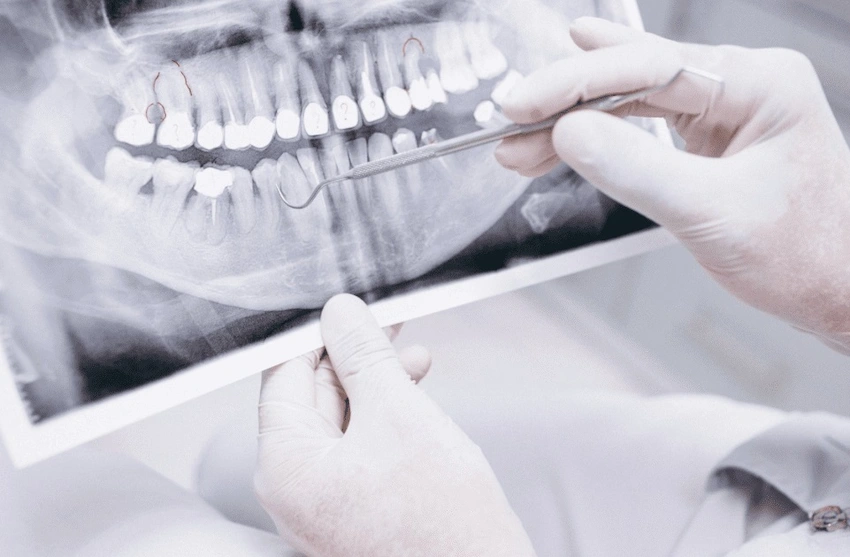
- Mandible: Inferior alveolar nerve canal, mental foramen, mandibular condyle, and coronoid process.
- Maxilla: Maxillary sinus floor, nasal fossa, zygomatic process, and hard palate.
- Other: Hyoid bone, styloid process, and the ghost of the opposite mandible.
3.3. Patient Positioning is Paramount
The quality of a D0220 depends heavily on how well the patient is positioned. If the patient is not positioned within the focal trough correctly, several artifacts can occur:
- Smile Line: If the chin is too high, the anterior teeth appear to curve upward like a smile, and the condyles may be cut off.
- Frown Line: If the chin is too low, the anterior teeth curve downward into a frown.
- Spinal Shadow: If the patient is slumped forward, the cervical spine creates a dense, white radiopacity in the center of the image; thus, the anterior teeth are obliterated.
Section 4: D0220 in the Context of the Modern Dental Imaging Spectrum
D0220 is not the only option for dental imaging. There is a range of choices between different radiographic techniques.
- D0220 (Panoramic) vs. D0210 (Full Mouth Intraoral Series): D0210 is the ultimate in detail when it comes to each single tooth and the supporting bone, but it takes more time, gives more radiation (still at a very low level), and provides less context for the overall jaw. They are to be used together, not as substitutes.
- D0220 (Panoramic) vs. D0366 (Cone Beam CT – CBCT): This is the contemporary transition. CBCT offers a 3D volumetric dataset, thus abolishing superimposition, distortion, and it also allows for cross-sectional views. The reason why CBCT is preferred over the pano for complex implant planning, endodontic surgeries, as well as for the precise localization of impacted teeth is that CBCT is the one which has taken over. However, in the case of a basic screening overview, the D0220 is still more affordable and has a lower radiation dose.
Section 5: Practical Considerations for Patients and Clinicians
- Radiation Dose: The effective dose of a D0220 is very low, normally, between 4-7 µSv (microsieverts). To help one understand the amount of this dose, it can be said that it is less than the radiation exposure during a cross-country flight and pretty much less than that of a medical CT scan.
- Cost and Insurance: The payment for D0220 usually varies from $125 to $300. Most dental insurance programs will cover it but they will set a limit on how often it can be done—commonly once every 3 to 5 years for adults—unless a particular new condition is the reason for the necessity of it.
- The Patient Experience: The method is very fast (<30 seconds), non-invasive, and does not cause any discomfort except that the patient has to bite on a small plastic piece. Patients have to keep still if they want a good image.
Conclusion About D0220: The Enduring Value of the Panoramic View
Although advanced 3D imaging methods are already there, the D0220 panoramic radiograph is still a very important landmark in the dental practice. It is the most typical screening tool, offering inimitable and comprehensive “maps” of the oral and maxillofacial complex. Its power is in the capacity to efficiently unmask a huge range of problems, guide the next diagnostic steps, and be the basic image on which the complex treatment plans are most often constructed. For the general dentist as well as a specialist, knowing and applying the D0220 code and the technologies involved is a prerequisite for giving complete, anticipatory, and high-quality patient care.
Frequently Asked Questions About D0220 Dental Code
The dental code D0220 refers to a periapical film that focuses on one tooth, which is a detailed representation of the root and the bone surrounding the tooth.
D0220 X-ray plays a significant role in checking the health of the single tooth, the root, and the bone around it. Besides, it is also a great help in locating cavities, infections, fractures, and, in general, finding dental problems that are invisible to the naked eye during a routine exam.
The D0220 X-ray is a short and simple one, and normally, the whole process is done in several minutes.
In no way could it be D0220 X-ray hurt. The only thing that may cause a little bit of discomfort is the temporary placement of the X-ray sensor in your oral cavity when the device is held for a couple of seconds.
The intervals of D0220 X-rays have to be determined according to your dental condition and the dentist’s examination and advice. In case of a regular check-up, X-rays are normally done once a year or at any time when there are specific concerns.

