


Dental X-rays remain an integral part of the current dental treatment system and are achieved by visualizing the teeth, gums, and bones under the skin in a very thin way. These pictures are the first steps to solving a wide range of dental problems such as cavities, pathological conditions under the gum, bone loss, or any other condition that would affect the patient’s oral health. Progress in dental radiographic technology led to the rising popularity of digital dental X-rays due to the quickness, safety, quality, and precision they provide in comparison with traditional film-based X-rays. This article attempts to point out the difference between digital and traditional X-rays with less radiation exposure, better image quality, faster time, and more accurate treatment planning and patient comfort as the main focus.
Firstly, traditional X-rays were used for a long time as the norm in dental clinics accompanied by photographic films that recorded the images. But the birth of digital X-rays made the imaging process faster, accurate, and less invasive. The comparison between digital and traditional X-rays helps us to understand that the former is leading in many ways, especially in terms of decreasing the exposure to radiation and enhancing the accuracy of diagnosis, thus a good result is achieved for the patient. Let’s take a deeper look at these differences.
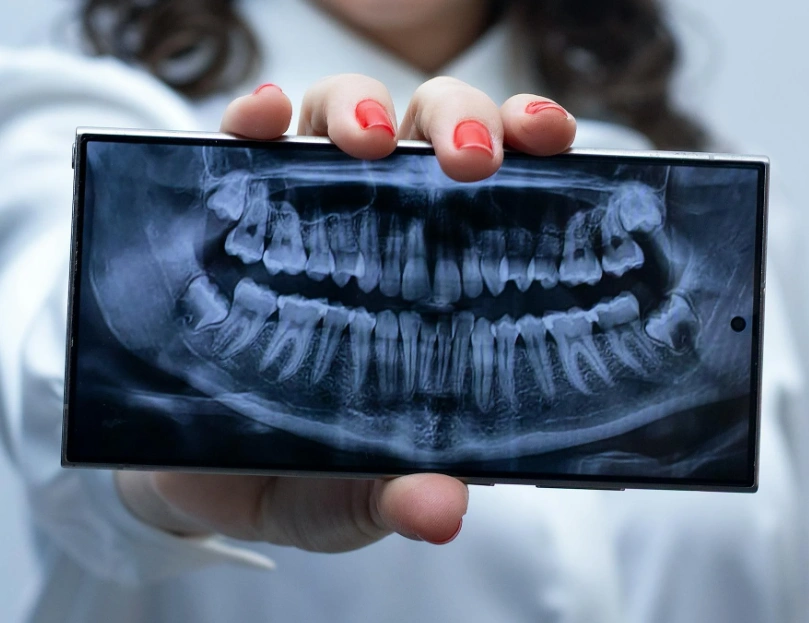
Digital Dental X-Rays and Traditional Methods: Key Differences
Technology and Speed
- Digital X-Rays: Digital dental X-rays use an electronic sensor to get a very detailed image in a very short time and the image is displayed immediately on the computer.
- Traditional X-rays: Traditional X-rays are done on film that has to be developed, so it usually takes up to half an hour or more before the images are accessible.
Image Storage and Sharing
- Digital X-Rays: The dental images are in a digital format, so they are very easy to store and share with other medical professionals.
- Traditional X-Rays: The traditional X-ray films are the physical ones and thus have to be stored in a certain place that not only takes up more space but also makes sharing difficult.
Efficiency and Workflow
- Digital X-Rays: The workflow becomes fast and efficient due to the immediate availability of digital images which can be used for quick diagnosis and treatment planning.
- Traditional X-Rays: Traditional X-rays are film-based hence the developing process has to be completed first and in case the image is not clear, another one should be taken leading to the inefficiency of these methods.
Image Quality: Advantages of Digital Dental X-Rays
One of the most notable advantages of digital dental X-rays is their improved image quality, which makes the photos visually clear and detailed to a great extent. Such high-quality images can unveil even the tiniest things like the very first stage of a cavity, a minuscule crack, or the initial signs of bone loss. Dentist Polen Akkılıç and her team at LEMA DENTAL CLINIC are quite familiar with the use of digital X-rays as they frequently employ them to discover the minutest details essential for accurate diagnosis and treatment. Besides, the facility of modifying the picture like brightening or zooming in on particular parts further refines the accuracy of the diagnosis.
Moreover, digital X-rays come with an added benefit i.e. easy method of operation, thus greatly enhancing the accuracy of the diagnostic process. Medical professionals have the liberty to change the lighting, contrast, and even zoom in on certain segments to better comprehend the potential issue. As an instance, a dentist can request the image to be adjusted to a point where it helps in profiling the crack in the tooth. Subsequently, the doctor can quickly adjust the picture until it is as clear as possible. On the other hand, traditional X-rays lack such a level of flexibility which could compel you to take another imaging shot if this one is unclear or overexposed.
Besides the mentioned benefits, it is also worth noting that high-definition digital X-ray machines feature to a great extent reducing the risk of leaving out important details. Sometimes photographic exposures are incorrect in the case of the traditional method making it necessary to bring on new shots, thereby causing inconvenience. Conversely, with digital dental instruments, a clinic can obtain its desired results during the first trial thereby reducing X-ray generation to a minimum.
Time Savings: Fast Results of Digital X-Rays

The efficiency brought about by the digital dental X-ray procedure has been the primary source of time saving for both the patients and the doctors. These types of images can be easily viewed on a computer screen or any other digital device in less than a minute after capturing the shot. Generally, film developing takes much time thus one has to wait for the processed images. Besides being available immediately, digital X-rays allow the whole procedure of diagnosis and treatment planning to be accelerated, thus the same day immediate decision can be made by doctors like Professor Doctor Coşkun Yıldız.
Besides, the instant availability of digital tools for picture correction contributes to another layer of time-saving. For instance, in a case where the first picture does not give a clear view, the dentist is empowered to quickly enhance it, zoom in, or brighten the setting to get improved visibility. Meanwhile, if the doctor takes the traditional route and the image is unclear, the only resolution that they have is to retake the X-ray which results in a prolonged appointment for the patient. The accomplishment of this maneuver is the foremost attraction of practitioners who have a heavy workload and want to cater to many patients equally effectively.
The rapid return of digital X-ray results is primarily intended to benefit patients as this leads to a significant reduction of their waiting time and, in turn, the whole dental visit turns to be more enjoyable. A great number of patients, especially those with dental phobia, are satisfied that the digital X-ray processes are accomplished in a fast and efficient manner reducing the overall time spent in the dentist’s chair and thus their anxiety level too.
Radiation Exposure: Differences Between Digital and Traditional Methods
Radiation Levels
- Digital X-Rays: It is possible to lower the radiation that is needed for a digital X-ray by 80% and still have a very good image.
- Traditional X-Rays: Conventional X-rays require more radiation doses since the film used is less sensitive.
Safety for Patients
- Digital X-Rays: As far as safety is concerned, digital X-rays can be considered the safest method given that it is less invasive in terms of radiation. Hence, they are the most appropriate solution if one is left with the frequent use of a situation like routine check-ups and monitoring.
- Traditional X-Rays: The higher radiation exposure in traditional X-rays elevates the risk. Hence, patients requiring regular imaging are the most vulnerable ones.
Impact on Children and Vulnerable Groups
- Digital X-Rays: Since radiation is low, digital X-rays can be considered the safest method for children, pregnant women, and other vulnerable groups.
- Traditional X-rays: One of the traditional X-ray scopes considered to increase the radiation dose exposure in those groups that are most sensitive is the children’s chest X-ray. Therefore, digital X-rays should be the safer alternative for these patients.
Patient Comfort: Differences Between Digital Dental X-Rays and Traditional Methods
Patient comfort is one of the major concerns of modern dental care in which digital X-rays are clearly superior to traditional methods. The sensors for digital radiography are smaller, thinner, and more pliable than conventional X-ray films. They can be easily arranged inside the mouth. Those patients who have sensitive mouths or a strong gag reflex will benefit from these. Dentist Polen Akkılıç and her team at LEMA DENTAL CLINIC assure you that they take care of your comfort during the recording process with minimal discomfort with the use of digital sensors.
Besides being comfortable, the whole performance is much faster than before. Patients do not need to put up with the long wait for the images while the operator is holding the film in place because the images are ready instantly. Hence, the speed and facilitation of the process result in less discomfort. Traditionally, the patient should wait for the film to be processed, which can lead to anxiety, especially if the patient has a dental phobia.
Furthermore, the procedure is so speedy that the patient may proceed to the next stage of treatment without delay. I.e., the dentist, after having the digital images, can discuss the findings and the following steps immediately without the waiting time that is required for film development. The waiting time is replaced by the comfort and the speed of the patient journey when it comes to this point.
Digital Dental X-Rays and Rapid Diagnosis: Detecting Early-Stage Problems
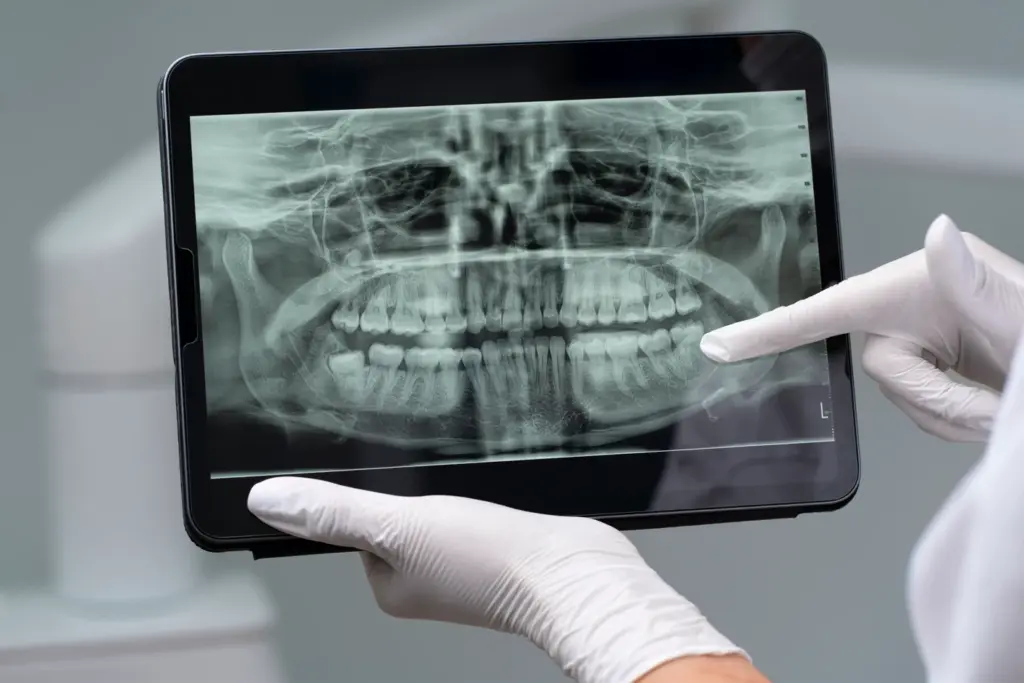
The main advantage of digital X-rays comes from their ability to detect the smallest dental problems which very often pave the way to more serious problems. The first-stage detection saves the patients from time-consuming, money-consuming, and painful procedures such as root canals or extractions. Professor Doctor Coşkun Yıldız and his team at LEMA DENTAL CLINIC employ digital X-rays to detect minor caries, fissures, or incipient gum disease without it eventually becoming a more severe problem.
Real-time interaction with an image is the other experiment of the digital file which also helps fast clinical decisions. The doctor may examine one area of the picture in greater detail and also have more control of the lighting and contrast to help faster identification of the diseases, which are always in the larval stages. These early issues will not be allowed to develop and the patient will be treated before the condition worsens.
Through early detection of issues, digital X-ray imaging lends itself to prevention, such as through fluoride therapy, dental fillings, or more visits to the dentist. This approach not only goes a long way toward improving patients’ oral health over time, but it also sets the tone for future wellness.
Treatment Planning and Monitoring: The Function of Digital X-Rays
Digital X-rays are instrumental in treatment planning as they enable dentists to make accurate and thoughtful decisions. The ultra-clear nature of digital X-rays reveals in great detail the teeth, gums, and bone framework, which is necessary for the planning of any dental implant, crown, or root canal procedures. Dentist Polen Akkılıç and her team use digital radiography as their diagnostic tool to figure out the severity of the dental problem and then come up with the most suitable treatment for the patient’s personal requirements.
Besides that, digital X-rays cannot be done without it if treatment progress is to be accurately reported. As an example, digital X-rays may be referred to as standard monitoring tools in orthodontics, implant healing, and root canal treatment where they are used to track the movement of teeth, evaluate bone regeneration, and check the effectiveness respectively. The opportunity to look at digital X-rays side by side over a period plays a big role in making sure treatment plans still deliver the expected results and it is therefore possible to make the necessary changes. Thus, this constant follow-up is what ensures the patients to be handed in the best care during their whole treatment period.
Radiation Exposure Comparison Table
| Method | Radiation Exposure (%) | Image Quality | Advantages | Disadvantages |
| Digital X-Rays | Up to 80% less | High resolution, clear details | Lower radiation exposure, faster results, adjustable images | High initial setup cost |
| Traditional X-Rays | Higher | Moderate resolution | Familiar technology, widely available | Higher radiation exposure, slower results |
References
- Berman, L. H., & Ramer, M. (2007). The impact of digital radiography on diagnostic accuracy in dental care. Journal of the American Dental Association, 138(10), 1361-1367. https://doi.org/10.14219/jada.archive.2007.0261
- De Araujo, M. A., & Martins, M. C. (2012). Digital radiography in dental diagnosis: A review of its applications and advantages. Brazilian Journal of Oral Science, 11(3), 245-250. https://doi.org/10.1590/S1677-32252012000300001
- Fluckiger, R. M., & Griggs, S. (2014). Radiation safety in digital dental radiography. Journal of Clinical Dentistry, 25(4), 114-119. https://doi.org/10.1016/j.jcd.2013.12.002
- Schwartz, S. A., & Choi, J. (2016). Benefits of digital radiography in dental practice: An overview. International Journal of Dentistry and Oral Health, 2(1), 1-6. https://doi.org/10.29011/2575-8577.100010
- Sullivan, R. M., & Poff, S. (2019). Comparing radiation exposure in digital versus traditional dental X-rays: A systematic review. Journal of Dental Research, 98(5), 470-475. https://doi.org/10.1177/0022034519831692
FAQ: Comparison of Digital Dental X-Rays with Traditional Methods
Yes, digital dental X-rays use up to 80% less radiation than traditional X-rays, significantly reducing the potential risks associated with radiation exposure.
Digital X-rays use electronic sensors to capture images and transmit them directly to a computer, offering clearer images, faster results, and lower radiation exposure compared to traditional film X-rays.
Digital X-rays provide superior image resolution and clarity, allowing for better detection of early-stage dental problems, making them superior to traditional film X-rays in terms of diagnostic accuracy.
Digital X-rays help dentists create accurate treatment plans by providing detailed images of teeth, gums, and bone structures, aiding in the diagnosis and selection of appropriate treatment options.
The main disadvantage of digital X-rays is the high initial cost of the equipment. However, the long-term benefits, such as faster diagnosis and lower radiation exposure, often outweigh this initial investment.
Yes, digital X-rays are stored electronically, making it easier to back up, retrieve, and share images with other healthcare professionals. This improves collaboration and enhances patient care, particularly when specialized treatment is needed.
Digital X-rays have a smaller environmental footprint as they eliminate the need for chemicals used in film development and produce less waste.
Digital X-rays provide immediate results, with images available seconds after the X-ray is taken. This allows for faster diagnosis and treatment planning, ensuring that patients receive timely care.

