


Secure upper dentures with proper fit and small adhesive amounts.
It’s very difficult getting used to living with a removable upper denture. Your first activity in the morning is usually washing the plastic. Then, you just hope the suction will hold up for the rest of the day. On some occasions, the natural sealing surface on the roof of the mouth might be failing. In case it is, using denture glue will inevitably become part of your daily regimen.
Through our clinical work at Lema Dental Clinic in Istanbul, Turkey, this is the reality of denture-wearing we witness most often. Patients are worn down. They fear their teeth might slip right in the middle of the meal or conversation. We want to assist with this problem. Implant-supported teeth fixed in place are our ultimate aim. At the same time, you must understand the use of your current denture to keep your mouth healthy and comfortable, as well as small steps to make it more effective.
Initially, what we find at our clinic. We will show everything, including proper adhesive application, the hidden dangers of prolonged use, and even better, permanent choices for your smile.
How to Apply Denture Glue: A Step-by-Step Guide
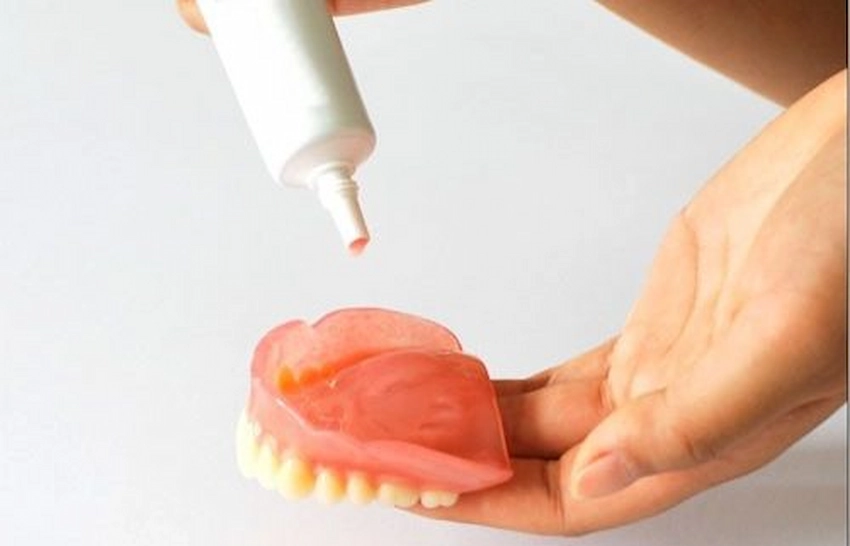
Applying the paste onto a denture isn’t like filling a container with thick paste. As a matter of fact, think of the upper mouth as a highly sensitive suction cup. If you happen to be using too much glue, then the seal is broken, and the leftover paste oozes out. So, the whole analogy is like brick wall construction. A thin and neat mortar layer holds the bricks well, while a thick and messy layer makes the bricks fall apart and slide one over the other.
To get a strong, safe grip, follow this routine:
- Wash and Dry Thoroughly: Paste will check how well it sticks to the surface when the latter is completely dry. So, first, wash your denture. Then dry it completely with a clean towel. Even the tiniest drops of water can spoil the bond.
- Apply According to the Three-Dot Rule: Go with tiny placements. Three small dots along the gum line for a top denture are perfect. One more dot should be placed in the middle of the palate area.
- Don’t Get Close to the Edges: Paste must be kept at least half an inch away from the borders to prevent glue oozing when biting.
- Insert and Firmly Press: Warm water rinse makes the gums a little wet. Without breaking the seal, hold the denture in place for ten seconds. To help glue spread better, bite down normally.
The Hidden Risks of Denture Glue
The truth is… adhesives are, in fact, just a makeshift. They cannot fix the underlying problem. Dentist Polen Akkılıç and team are constantly faced with this scenario. As a result of prosthetically covering the loss of teeth with more and more glue, patients’ jawbone keeps shrinking without them realizing it.
When you lose your teeth, your jawbone stops doing its job. It shrinks over time. As the bone melts away, the denture gets loose. To fix the loose fit, people naturally use thicker layers of paste.
Anyway, let’s think about the paste a bit more. What exactly goes in it? Lots of dental adhesive pastes are fortified with zinc for increased hold. Unfortunately, chronic overdosing with zinc can have serious negative impacts on nervous system function, causing numbness and, very rarely, blood abnormalities or other severe symptoms. A simple solution to a lunch break issue can end up being a significant health hazard.
Moving Past the Paste: Permanent Solutions
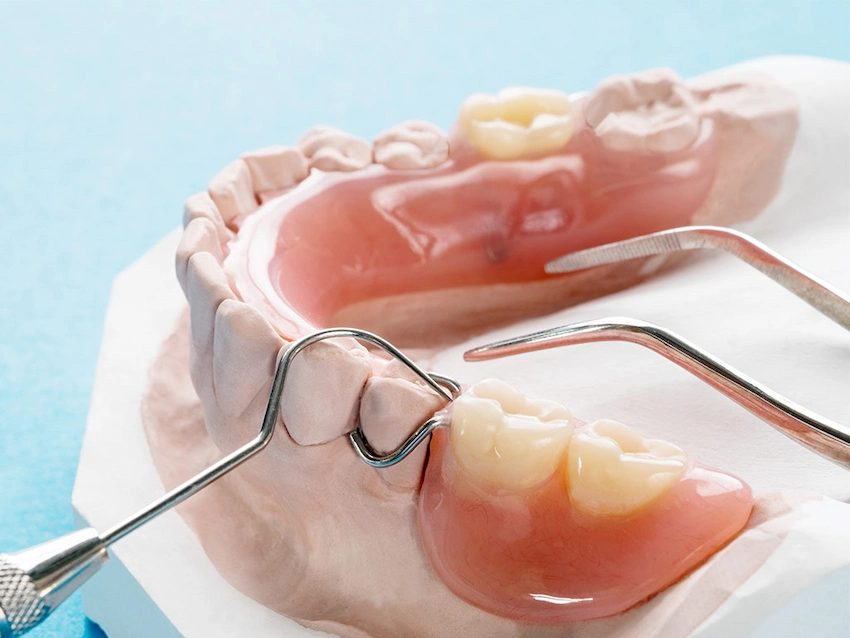
Professor Doctor Coşkun Yıldız often reiterates a basic fact. There is no reason for any patient to ever have fears about their teeth accidentally falling into their coffee. The days of plastic and paste are behind dental care by a long way.
Some patients suffer such a severe level of bone loss that they cannot even keep their upper denture in place anymore. For these patients, we provide them with permanent fixed teeth using All-on-4 or All-on-6 implants. An incredibly beautiful Zirconium bridge gets directly and securely fitted into the jawbone.
Visualize your jawbone as a house foundation. Regular dentures merely sit on the lawn. They simply move around when it rains. An implant is equivalent to a heavy steel beam that is driven down into solid rock. It gives you strength that never moves.
Comparing Your Choices: Glue vs. Implants
To see the difference clearly, let’s look at the facts.
| Feature | Denture with Glue | Permanent Zirconium Implants |
| Bite Strength | 20% to 30% of normal | 90% to 100% of normal |
| Roof of Mouth | Fully covered (loss of taste) | Completely open and free |
| Bone Health | Encourages bone loss | Maintains bone strength |
| Daily Care | Remove, clean, and reapply glue | Brush and floss regularly |
| Health Risks | Possible zinc poisoning, mouth irritation | Safe, body-compatible materials |
Frequently Asked Questions (From the Doctor’s Desk)
Exactly how much glue should I put on my upper denture?
In fact, the glue you put on your denture should be minimal. In most cases, three or four small dots of glue should be enough. However, the point that you must consider is – if you are forced to squeeze out long, thick strings of the adhesive just to keep your teeth in place, then your denture is broken or does not fit anymore. It is a sign that you need a new one.
I still have a problem with my upper denture falling out even when I am using adhesive. Why?
Your jawbone is shrinking gradually as time passes by. On the other hand, your plastic denture is still of the same size. In case there is a significant gap between your gums and the plastic, using glue will be of no help. It is an indication of shifting of the base. You will need a clinic visit.
Is it safe if I accidentally swallow a little denture paste?
At most, swallowing a tiny amount during the course of a day will hardly be penalized from a safety point of view. However, consumption of many times the amount of glue daily is rather dangerous for you. This is especially the case with zinc-containing pastes. If the glue is constantly dripping down your throat, then you are way overusing it. A review of top news sources and scientific articles is recommended. Check the “AskPharmacist” and “MedlinePlus” sections.
Should I keep my dentures on overnight while using glue?
Definitely not. The real question is… how do your gums get their rest? By sleeping with glued plastic, germs and fungi get trapped next to your skin. This leads to the development of very unpleasant mouth infections. So it is practically always that you take them out and put them clean before you go to sleep.
How can I completely give up denture paste usage once and for all?
The top choice in modern dentistry is dental implants. With this, small titanium posts get placed in your jaw. Furthermore, a permanent Zirconium bridge is connected to them. You will never have to buy another tube of paste, and you can indulge in your favorite foods without hesitation.
Academic References
- Carlsson, G. E. (2014). Responses of jawbone to amputations and dental implants. Journal of Dental Research, 93(1), 14-19.
- Coates, R. J., & Freeman, C. (2018). Zinc toxicity and denture adhesives: A literature review. The Journal of Prosthetic Dentistry, 119(2), 223-228.
- Felton, D., Cooper, L., Duqum, I., Minsley, G., Guckes, A., Hage, S., … & Sweitzer, B. (2011). Evidence-based guidelines for the care and maintenance of complete dentures. Journal of the American Dental Association, 142, 1S-20S.
- Misch, C. E. (2007). Contemporary Implant Dentistry. Mosby Elsevier.
- Zitzmann, N. U., & Marinello, C. P. (2002). Treatment outcomes of fixed or removable implant-supported prostheses in the edentulous maxilla. Clinical Oral Implants Research, 13(4), 431-443.

