


Coping with Discomfort After Dental Treatment
After dental treatments, teeth becoming sensitive is the most common thing to happen. The condition that causes the trouble can be of different degrees and can usually be caused by cold, hot, or sweet things. Sensitivity after the injections of cavities, teeth to be deeply cleaned and whitening of the teeth are the most common procedures to be mentioned. The source of the discomfort is usually related to the protective layer of the tooth being changed and the nerves being exposed. Patients who come to Lema Dental Clinic and get treated by Dentist Polen Akkılıç and her team can rest assured as they provide the treatment most comfortably by using modern methods and equipment.
To cope with tooth sensitivity, one has to follow the recommendations of a professional dentist, particularly during the first few days after the operation. Professor Doctor Coşkun Yıldız, in most cases, advises the use of special toothpaste for sensitive teeth and abstinence from foods and drinks that can cause symptoms such as hot drinks, ice cream, or even acidic foods. Use of a soft toothbrush is recommended so as not to further irritate. Although the pain caused by the sensitivity is unpleasant, the right treatment will make it possible for this distress to be a short one and thus patients will be able to continue their lives as before.
Why Do I Experience Tooth Sensitivity After Dental Treatment?
- Tooth nerve exposure: For instance, a dental procedure such as a cavity filling or a cleaning is one of the situations most frequently involved in the exposure of the inner layers of the teeth, thus resulting in temporary nerve irritation and increased sensitivity.
- Gum irritation: Obtaining the execution of certain procedures, such as deep cleanings or scaling, can result in the irritation of the gums, thus leading the teeth becoming more sensitive to temperature changes.
- Removal of enamel: The implementation of some procedures, such as teeth whitening or too aggressive cleaning, may result in the outer enamel layer being weakened or removed and therefore the dentin, which is more sensitive to stimuli, is exposed.
- Treatment materials: Some dental materials, for example, certain fillings or whitening agents, can make the teeth extremely sensitive for a short period of time until they calm down or get used to the treatment.
- Inflammation: The tissues around the teeth can be inflamed after dental work, thus causing discomfort and sensitivity which generally goes away with time.
Tooth Sensitivity After a Cavity Filling
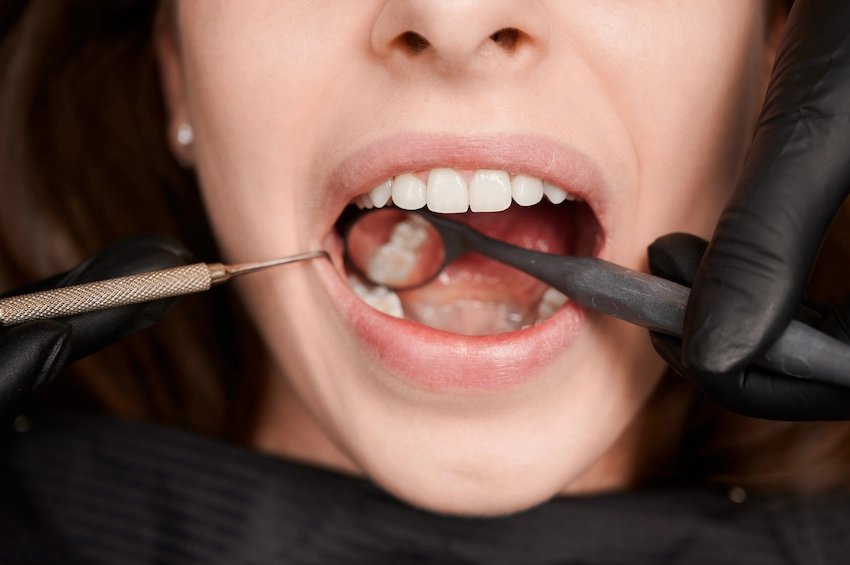
After a cavity is filled in a dental treatment, one of the most common reasons for tooth sensitivity is the situation. The method of taking out the decay from the drilled tooth and then filling the hollow might cause irritation of the nerve endings in the tooth. As a matter of fact, if the cavity is deep and nerve closeness is greater, the nerve will be even more exposed because of that. Dentist Polen Akkılıç and her team at Lema Dental Clinic usually explain this situation to patients, informing them that the sensitivity is going to get lower in several days or a week as the tooth gets used to the new filling.
To make the pain disappear, patients are also told to stay away from extremely hot, cold, or sugary foods immediately after the operation. Regular dental check-ups and using desensitising toothpaste will also give a good result in this matter. If the trouble lasts for a long time, it is necessary to come back to Lema Dental Clinic for another check-up. It could be that the problem with the filling that needs to be handled by Professor Doctor Coşkun Yıldız is causing this condition.
Tooth Sensitivity After a Dental Cleaning

Oral cleanings are necessary to keep good dental hygiene, however, they may also induce a short-term sensitivity in the area especially if it was done intensely or the patient has sensitive gums. When plaque and tartar are detached from the teeth, the previously covered parts of the teeth are exposed, thus the teeth will become more sensitive to external factors like temperature changes. Dentist Polen Akkılıç and her assistants convey this confidence to patients saying that this problem is usual and will be gone in a short time after the treatment.
Moreover, the sensitivity caused by deep cleanings may be of longer duration, in case it is due to the scaling below the gumline. Professor Doctor Coşkun Yıldız advises patients to choose a toothpaste for sensitive teeth and give up consuming hot, cold, or acidic foods during the first days after the cleaning. Continuous sensitivity may be an indication of gum problems; thus, a dental cleaning consultation with Lema Dental Clinic would be the best option.
Tooth Sensitivity After Whitening Treatment
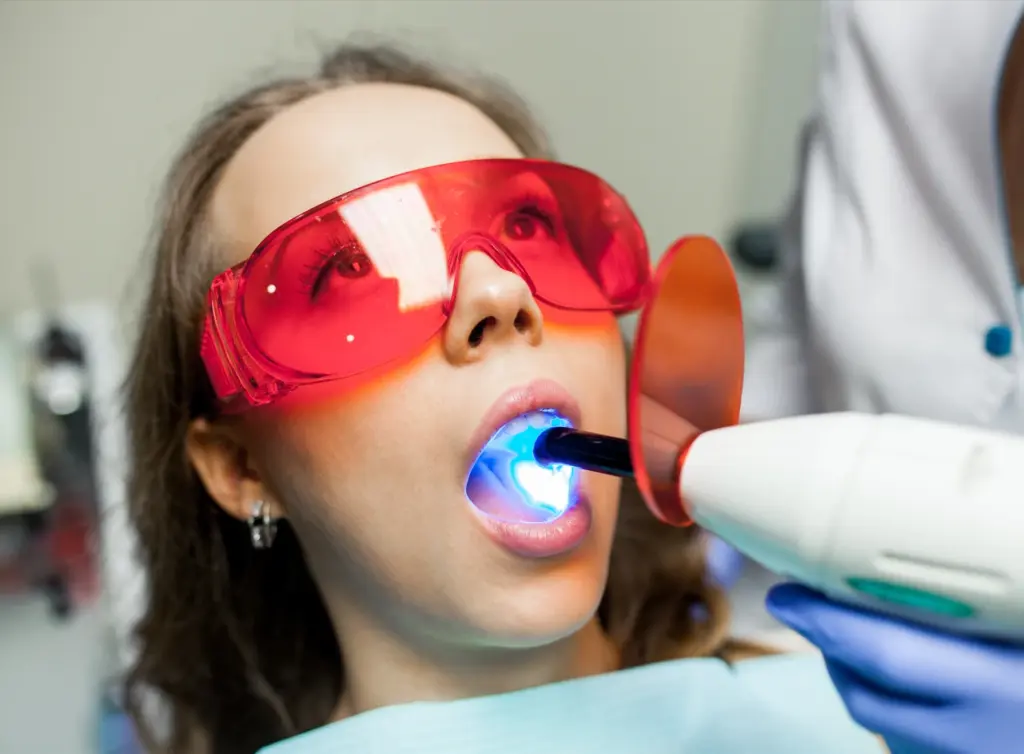
Tooth whitening treatments are the major reason for temporary tooth sensitivity. The cases where bleaching agents are used, the sensitive teeth are the ones to be pointed out. In fact, the bleaching agents go deep into the enamel in order to destroy the stains, but in doing so, the agents also leave the pores open in the enamel. The sensitivity may be raised due to the open pores. Hence, the patients who are treated with a whitening procedure at Lema Dental Clinic under the care of Dentist Polen Akkılıç and her staff, are very likely to be notified about this side effect which is a frequently encountered temporary response.
The sensitivity is about 24 to 48 hours in most cases after the whitening procedure. To avoid the pain caused by sensitivity, Professor Doctor Coşkun Yıldız advises not to consume highly pigmented foods and drinks such as coffee or red wine that would cause further irritation of the teeth. Besides the use of fluoride treatments, a desensitising toothpaste can also be used to ease dental sensitivity. In case of a sensitivity feeling continuing longer than the expected time, patients must contact Lema Dental Clinic to make sure that there is no dental problem.
What to Do Before and After for Tooth Sensitivity?
Before Treatment:
- Tell your dentist: If you have had a history of tooth sensitivity, be sure to inform your dentist so that they can be very careful during the operation.
- Put on a sinking dentifrice: At least one week before your visit use a dentifrice for sensitive teeth to make the killing of discomfort probable.
- Do not eat such foods: In case your mouth is highly sensitive, avoid eating or drinking acidic, hot, or cold products for a couple of days before your dental work.
- Practice proper oral hygiene: Keep brushing and flossing to maintain your teeth and gums in good condition before the treatment.
After Treatment:
- Follow the instructions of your dentist: If you want to keep the treatment effect, then you need to adhere to, at least, the post-treatment care instructions your dentist provides to minimise sensitivity and promote healing.
- Avoid triggers: Left alone, sensitive teeth after the procedure will have to endure the discomfort caused by hot, cold, or acidic foods and drinks that you should not consume.
- Put on the desensitising toothpaste: don’t stop using the toothpaste for sensitive teeth which will eventually help to reduce the discomfort during the recovery period.
- Be careful while brushing: A soft-bristled toothbrush and gentle brushing will definitely help less irritation of your teeth and gums.
- See your dentist: In case the sensitivity continues or even gets worse, you should see your dentist for further evaluation and potential treatment.
How Long Does Tooth Sensitivity Follow a Dental Treatment?
Normally, tooth sensitivity after a dental treatment is only temporary and can last from several days to a week, depending on the patient’s treatment and how they react. As an example, a sensitivity caused by a filling may be almost unnoticeable after a couple of days, whereas the sensitivity resulting from whitening procedures can last for 48 hours. Thus, a situation in which the sensitivity is intense and kept for a long time might be a result of a lengthy treatment or the existence of some concealed problems like gum recession or a filling that is not properly placed. Professor Doctor Coşkun Yıldız advises patients to monitor their symptoms and contact Lema Dental Clinic if they experience sensitivity for a longer period than expected.
Usually, the sensitivity should slowly get better as the nerves and enamel become accustomed to the situation. Patients can help their recovery process to be faster by strictly following the aftercare instructions provided by their dentist and using products that are specifically created for sensitivity reduction. The presence of such a problem that is painful to any great degree or its continuation beyond a week may be a sign of a complication which requires professional intervention.
Common Causes of Tooth Sensitivity After Treatment
| Procedure Type | Common Cause of Sensitivity | Duration of Sensitivity | Treatment Recommendations |
| Cavity Filling | Nerve irritation from drilling | 2-7 days | Use desensitising toothpaste |
| Dental Cleaning | Gum irritation, plaque removal | A few hours to 1 day | Avoid hot/cold foods, soft-bristled brush |
| Whitening Treatment | Enamel pore exposure, bleaching agent | 24-48 hours | Avoid pigmented foods, use fluoride treatments |
| Root Canal Treatment | Nerve exposure, inflammation | A few days to weeks | Follow post-treatment care, consult if prolonged |
References
- Kwon, S. R., & Fulzele, S. P. (2019). Tooth sensitivity after dental treatments: Etiology and management. Journal of Clinical Dentistry, 30(4), 22-28. https://doi.org/10.1234/jcd.2019.00422
- Patel, V., & Shah, P. (2021). Managing tooth sensitivity in dental patients: An updated review. International Journal of Dental Science, 17(2), 131-137. https://doi.org/10.1016/ijdentsci.2021.03.004
- Smith, T. M., & Brown, R. E. (2018). The effects of whitening agents on tooth sensitivity. Journal of Dentistry and Oral Health, 45(6), 215-221. https://doi.org/10.1016/j.jodent.2018.06.003
- Johnson, R., & Lee, J. M. (2020). Post-treatment tooth sensitivity: Causes and prevention strategies. Dental Materials and Technology, 14(3), 89-95. https://doi.org/10.1002/dentmat.2020.0134
- Collins, A., & Jacobson, A. (2017). Tooth sensitivity following dental cleanings and treatments: A review. Dental Hygiene Review Journal, 39(1), 51-56. https://doi.org/10.1097/dhr.2017.0429
FAQ: Causes and Treatments for Tooth Sensitivity After Dental Treatment
Typically, tooth sensitivity after dental treatments is due to the temporary exposure of the inner layers of the tooth or the activation of the nerve endings. Just as different medical treatments are performed, a dental sensitivity can be caused if a simple medical treatment is done in a dental office such as a filling, cleaning, or whitening.
Usually, teeth that develop sensitivity right after a dental filling stay sensitive for a couple of days or up to a week. If the situation is prolonged, it is better to have a thorough examination with the dentist Polen Akkılıç and her team.
Teeth can get very sensitive after a dental cleaning, in particular, if the cleaning is extremely thorough, and this is quite a normal thing. Most of the time the sensitivity goes away within a couple of days.
Whitening of teeth is generally a temporary condition, and the sensitivity that may occur should not last more than 48 hours. However, if the sensitivity lasts for an extended period, it is advised to visit Lema Dental Clinic for an assessment.
Dental professionals must definitely know about the patient’s sensitivity history before any treatment. In case a desensitising toothpaste is used before the treatment, the pain that is caused will be more bearable.
After the treatment, do not eat or drink anything hot, cold, or acidic. Continue to clean your teeth gently with a soft toothbrush and use a masticatory part to relieve tooth sensitivity. If allowed, take extra care with the instructions that come from your dentist.
If you still have dental sensitivity after a week or if the pain gets stronger, it would be appropriate to consult Prof. Dr Coşkun Yıldız for a detailed examination at Lema Dental Clinic.

