


Yes, with advanced bone grafting.
Typically, new patients who visit our clinic for the first time have their main concern is the visible part of their smile, the white and straight teeth that they dream of having. However, the truth is that an attractive smile is only as solid as the bone that holds it up. At Lema Dental Clinic in Turkey, we often compare the jawbone to a skyscraper foundation in our explanations to patients. If the ground under the building is soft or falling away, it doesn’t matter how lovely the building is; sooner or later, it will go off balance.
What if, however, that “ground” becomes eroded because of aging, tooth loss, or gum disease? Can it be put back? The answer is definitely yes. Stopping the loss is only half the battle; a big part of it is bringing the mouth back to its old charm.
The “Use It or Lose It” Biological Trap
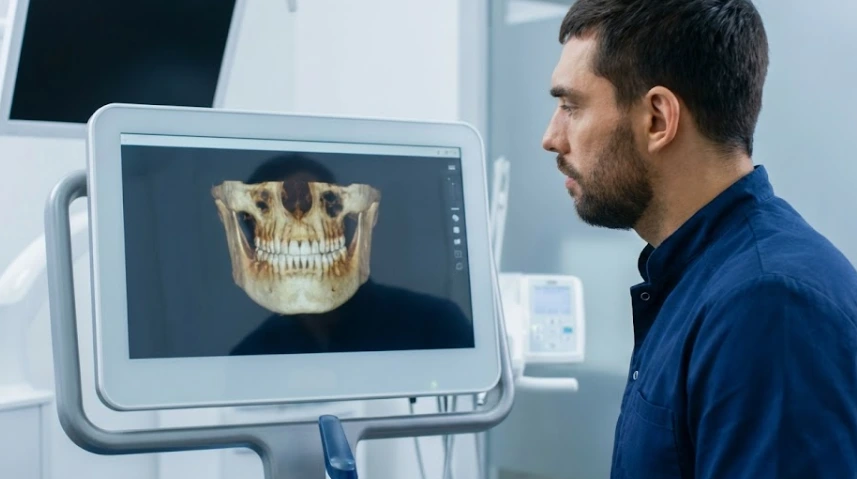
Your jawbone is incredibly dynamic. It stays strong because the roots of your teeth act as internal “workout equipment,” sending vibrations and pressure through the bone every time you chew. This stimulation tells your body to keep sending calcium and phosphorus to that area.
But if we analyze more thoroughly the case of a tooth extraction, it is quite clear that soon after the resorption process will be initiated by the body. The loss of the bone that was once supporting the tooth is no longer being “used”, so the body starts to withdraw those minerals to be utilized in other areas. This causes the jawbone to become thinner over time, and eventually, it can alter your facial features or make it necessary to have a dental implant with some kind of treatment.
Clinical Interventions: The Surgical “Rebuild”
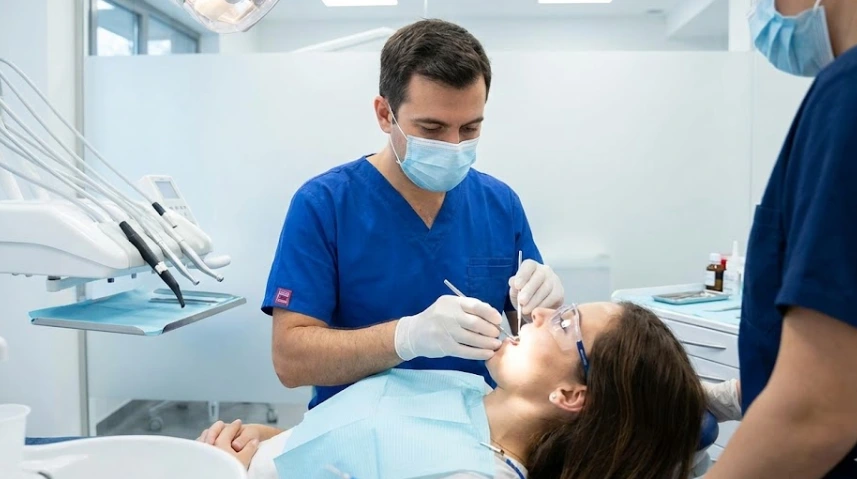
In our clinical experience at Lema Dental Clinic, we don’t just wait for nature to take its course. Professor Doctor Coşkun Yıldız often notes that modern dentistry allows us to “engineer” bone growth where it has been lost.
Bone Grafting: The Biological Scaffold
The most common way to increase density is through a bone graft. We place specialized bone material (which can be your own bone, a donor’s, or a synthetic version) into the area of deficiency. Think of this material as a scaffold for a new house. It doesn’t stay there forever; instead, it acts as a guide, encouraging your body to grow its own natural bone cells into the space.
The Sinus Lift: Handling the “Eggshell”
In the upper jaw, the bone is often thin near the sinus cavities. Dentist Polen Akkılıç and her team frequently perform sinus lifts. We often compare the sinus membrane to the delicate skin of an eggshell. Carefully lifting this membrane and putting the bone graft material under it, we create enough “soil” for a dental implant to be securely fixed.
Comparing Your Options for Bone Growth
How we choose to increase your bone density depends on the severity of the loss and your ultimate goals. Here is what we see in the clinic regarding timelines and methods.
| Method | Best For | Typical Timeline | Recovery Level |
| Nutritional Support | Prevention & Early Loss | 6 – 12 Months | Non-invasive |
| Socket Preservation | Immediately after extraction | 3 – 5 Months | Minimal |
| Major Bone Grafting | Severe atrophy/reconstruction | 6 – 9 Months | Moderate |
| Sinus Lift | Upper jaw implant support | 4 – 9 Months | Moderate |
| Dental Implants | Permanent bone maintenance | Immediate (post-healing) | Surgical |
The Role of Lifestyle and Nutrition
The question isn’t just about surgery. Your body needs the raw materials to build that bone scaffold. What we see in the clinic is that patients who prioritize their internal chemistry heal significantly faster.
- Vitamin D3 and K2 together are like a “traffic control” for calcium. D3 helps you absorb it, whereas K2 makes sure it gets stored in the bone of your jaw and not in your arteries.
- Magnesium is Your Ally: Bone is not made up of calcium only; it is the magnesium that gives the bone its stabilization and thus prevents it from getting brittle.
- Weight-Bearing Exercise: It helps keep the entire body healthy, and a healthy body can produce more bone mass systemically, which in turn will benefit the jawbone.
Why Seek Treatment in Turkey?
The reality is that complex bone regeneration requires high-level technology that is often prohibitively expensive in the West. At Lema Dental Clinic, we utilize advanced 3D imaging and PRF (Platelet-Rich Fibrin) therapy—using your own blood’s growth factors—to speed up bone density increases. By coming to Turkey, you are accessing the same (and often superior) surgical techniques at a fraction of the global cost.
FAQ: Insights from the Doctor’s Desk
The surgical procedures, such as grafting, are done under local anesthesia or sedation. You won’t feel the “growth” happening. The most you will feel is some pressure and minor swelling during the first week of healing.
If the bone is already significantly gone, nutrition alone won’t grow it back. However, if you have early-stage thinning, a diet high in minerals and the presence of healthy teeth (or implants) can naturally strengthen what you have.
The most common signs are receding gums, teeth that feel slightly loose, or a “sunken” appearance in your cheeks. At Lema Dental Clinic, we use a CBCT scan to measure the exact millimeters of your bone density.
Yes, this is their greatest “secret” benefit. Because the titanium post mimics a tooth root, it restarts the stimulation of the jawbone, effectively “freezing” bone loss in its tracks.
Once the graft has fully integrated—a process that takes a few months—the new bone is biologically indistinguishable from your original bone. It is perfectly capable of supporting a lifelong dental implant.
- Albrektsson, T., & Johansson, C. (2001). Osteoinduction, osteoconduction and osteopromotion. European Spine Journal, 10(2), S96-S101.
- Buser, D., et al. (2017). Long-term stability of contour augmentation with early implant placement. Journal of Dental Research, 96(10), 1104-1110.
- Kern, M. (2015). Resin-bonded Fixed Dental Prostheses. Quintessence Publishing.
- Misch, C. E. (2010). Contemporary Implant Dentistry. Mosby Elsevier.
- Price, C. T., et al. (2012). Essential Nutrients for Bone Health and a Review of their Availability in the Average North American Diet. The Open Orthopaedics Journal, 6, 143–149.

