


Yes, even without any teeth, you can get full-arch dental implants like All-on-4 or All-on-6.
Waking up without teeth was not only a physical limitation, but it was a thief. It stole the joy of eating a crisp apple, the confidence of laughing out loud in a crowded room, and eventually, the very shape of your face. I am guessing that if you are reading this, it is highly likely that you or someone you care about is living with total tooth loss, a condition we in medicine simply call edentulism.
The quick and simple answer is a definite yes. You can certainly have dental implants even if you have absolutely no teeth left. This is the primary problem that modern implant dentistry aims to address.
However, let us take a more detailed look at it because the principle of restoring a whole mouth is quite different from that of a single tooth replacement. As a matter of fact, at Lema Dental Clinic in Turkey, we witness that change regularly. We are not just inserting screws in the gums but we are rebuilding your face’s structure.
The Problem: Why Your Jawbone is the Key
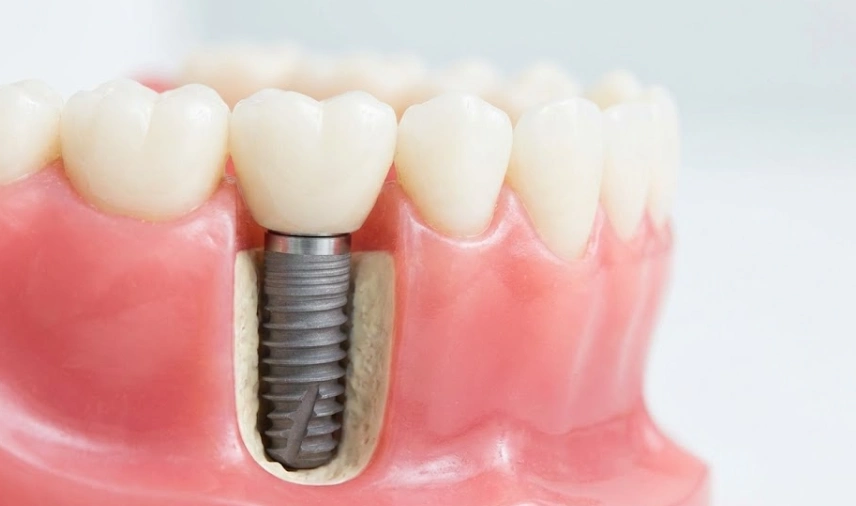
To identify the correct answer, you first need to comprehend your problem. The loss of teeth means that your jawbone no longer gets the necessary stimulation from masticatory forces.
Imagine the jawbone to be some sort of muscle or a dune. The bone without the “exercise” of tooth roots pushing against it starts to resorb—it basically disappears. This is the main reason why denture users frequently complain that their faces look more “sunken”.
Professor Doctor Coşkun Yıldız explains it to our patients as follows: “You cannot erect a skyscraper on a swamp. The firm ground is what we need.” If you have been toothless for a considerable period of time, you may have lost some of that foundation. Nevertheless, this does not exclude you from getting implants. It simply means that we have to adjust our approach. Where necessary, we will perform Sinus Lifting or bone grafting so that “new concrete” can be laid before the “building” is erected which will guarantee your new smile will last a lifetime.
The Innovation: All-on-4 and All-on-6 Galore
We do not have to replace every one of your lost teeth with a single implant. That would be overkill both in terms of surgery and financially. However, we resort to smart engineering in place of that.
In our practice, Dentist Polen Akkılıç and her staff are experts in “All-on-Systems.” Picture a heavy table. You do not need 32 legs to support it; you only need either 4 or 6 legs placed cleverly at the corners of the table to be able to carry the whole weight.
- All-on-4: In this method, we insert four titanium implants of the highest quality in the jaw. Two implants are positioned vertically in the front, and two are angled in the back. The angulation is critical as it helps us gain better quality bone and quite often enables us to completely avoid the need for bone grafts.
- All-on-6: Essentially the same as the previous method; however, 6 rather than 4 implants are placed. Apart from that, it gives more stability and this route is usually preferred if the patient is in a condition of enough bone density.
The “Turkey” Factor: Why Lema Dental Clinic?
You might ask yourself, “Why would I have to travel to Turkey for that?”
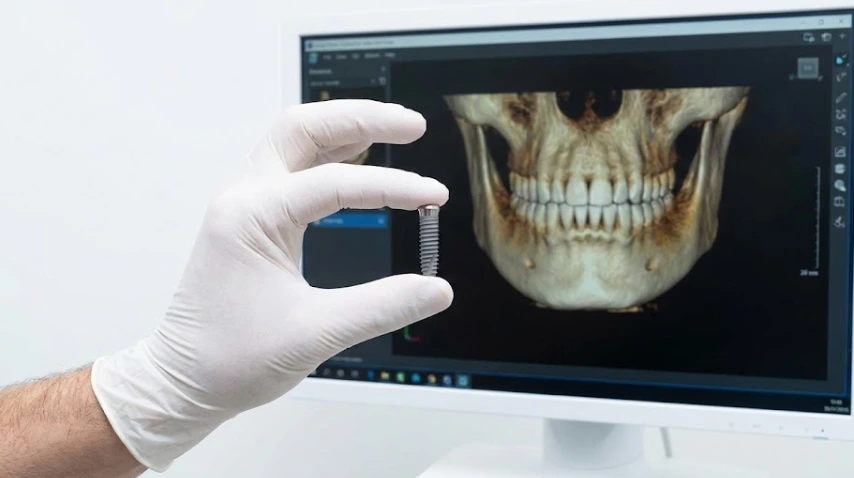
The fact is, full mouth restoration is a complicated surgical procedure that requires a maxillofacial surgeon, in addition toa general dentist. So, at Lema Dental Clinic, we merge surgical exactness with top-notch aesthetics. Therefore while Professor Doctor Coşkun Yıldız takes care of the surgical soundness of the implants, Dentist Polen Akkılıç, the smile design, that is, the gum, tooth shape, and color which will be exactly like those of natural teeth.
We consider it a form of medical art. You are not simply receiving new teeth; you are getting a facial rejuvenation.
Face off Your Choices: Dentures vs. Implants
What do you say we analyze the feature differences between traditional dentures and implants? The first option is sticking with them, the second is upgrading.
| Feature | Traditional Dentures | All-on-4 / All-on-6 Implants |
| Stability | Rather unstable. Sufficient only with suction or adhesives. May easily move or fall out. | Very stable. Fixed securely into the jawbone. Non-removable. |
| Jaw Bone Condition | Accelerates bone resorption due to lack of stimulation. | Helps preserve bone structure by mimicking natural tooth roots. |
| Chewing Power | Around 20–30% of natural bite force. | Approximately 80–90% of natural bite force. |
| Coverage Area | Upper denture covers the palate, which may reduce taste sensation. | Does not cover the palate; allows better taste perception. |
| Cleaning | Must be removed and soaked in cleaning solution every night. | Cleaned like natural teeth with brushing and flossing. |
| Durability | Typically replaced every 5–8 years. | Implants can last a lifetime; prosthesis lasts 15+ years. |
Frequently Asked Questions
The majority of patients find the experience much less painful than they had anticipated. You will not feel a thing while the operation is going on because you will be either sedated or under local anesthesia. After that, there will be swelling and pain, naturally, as with any form of surgery. Nevertheless, the pain level is usually below that of a tooth extraction because, in an All-on-4 procedure, less nerve-rich areas are exposed.
In almost all cases, the answer is yes. What we do in such cases is to fit the Zygomatic implants (which go into the cheekbone) or to perform a sinus lift on patients with extensive bone wastage. Generally, “no bone” means “not enough bone for the standard implants,” but we are well-equipped to tackle this scenario.
Normally you will need only two visits. The initial trip (3-5 days) is mainly for the surgery and attaching temporary teeth. At the same time, you heal and let the bone fuse with the implants at home. You then come back for the last stage (about a week) where they will fix your permanent, custom-made porcelain or zirconia teeth.
Not at Lema. We steer clear of the “piano key” style—flat, opaque, and too white. Dentist Polen Akkılıç, through prosthetics, gives the natural enamel translucency and texture in all aspects. The facial structure is the one according to which the shapes are matched so they will be your own.
Definitely. When your permanent teeth are put on after the osseointegration (healing) phase, your bite power will be almost fully restored. You will no longer have to resign yourself to consuming only soft foods.
- Malo, P., de Araújo Nobre, M., Lopes, A., & Rodrigues, R. (2019). The All-on-4 concept for full-arch rehabilitation of the edentulous maxillae: A longitudinal study with 5-10 years of follow-up. Journal of Clinical Medicine, 8(9), 1384.
- Branemark, P. I., et al. (1977). Osseointegrated implants in the treatment of the edentulous jaw. Experience from 10 years. Scandinavian Journal of Plastic and Reconstructive Surgery. Supplementum, 16, 1-132.
- Papaspyridakos, P., et al. (2012). Implant success rates of full-arch fixed prostheses supported by varying numbers of implants: A systematic review. Clinical Oral Implants Research, 23, 5-9.
- Jivraj, S., & Chee, W. (2006). Treatment planning of the edentulous maxilla. British Dental Journal, 201(5), 261-279.
- Esposito, M., et al. (2014). Interventions for replacing missing teeth: different types of dental implants. Cochrane Database of Systematic Reviews, (7).

