


Yes, one tooth is fixable.
A smile is similar to a flawlessly synchronized orchestra. When each component is in perfect harmony, the output is pleasing and harmonious. But when only one tooth is slightly turned, overlapping, or sticking out, it acts like a lone violin player totally out of tune. It breaks the visual line and immediately attracts attention.
You don’t always have to tear down your whole mouth and put in new teeth or wait for years with traditional metal braces to get rid of that one spot that no one is happy with. Now, aesthetic dentistry gives us the possibility of highly targeted solutions that let us fix only one isolated architectural flaw without destroying the surrounding natural harmony of your smile.
The Soloist in the Arch
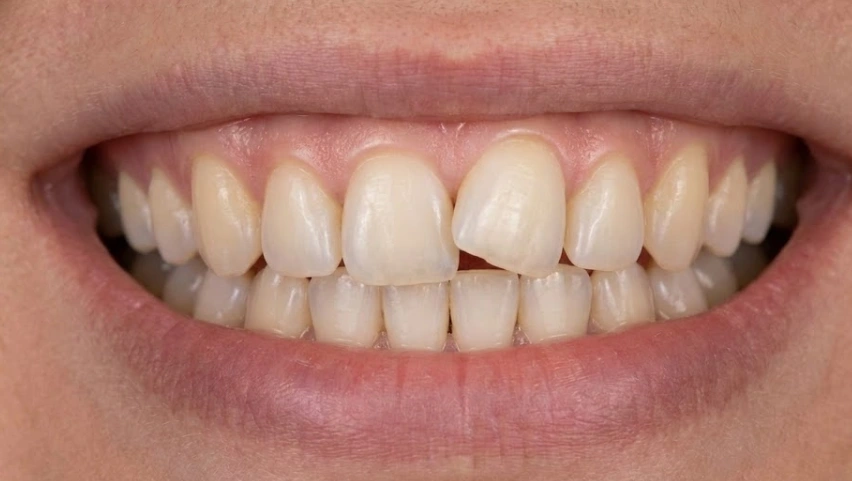
This is how we see it in the clinic. Many patients have been living with an untreated overlapping or twisted central incisor for years, just because they think that this single tooth problem can only be solved through a very long and exhausting treatment. In their mind, wearing braces, having wires and lots of adjustments are the main things they imagine.
Professor Doctor Coşkun Yıldız frequently points out that the psychological burden of a single crooked tooth is in most cases not in proportion to its physical size. Incredibly, a patient would cover their whole smile with their hand just because of a mere one-millimeter rotation. Cosmetic intervention aims not simply at aligning teeth; it seeks to restore the patient’s liberty to express happiness without any hesitation or reservation.
Regardless of a healthy bite (occlusion), if there is only an aesthetic issue, the discordant tooth can be treated as an isolated problem.
Targeted Clinical Solutions in Turkey
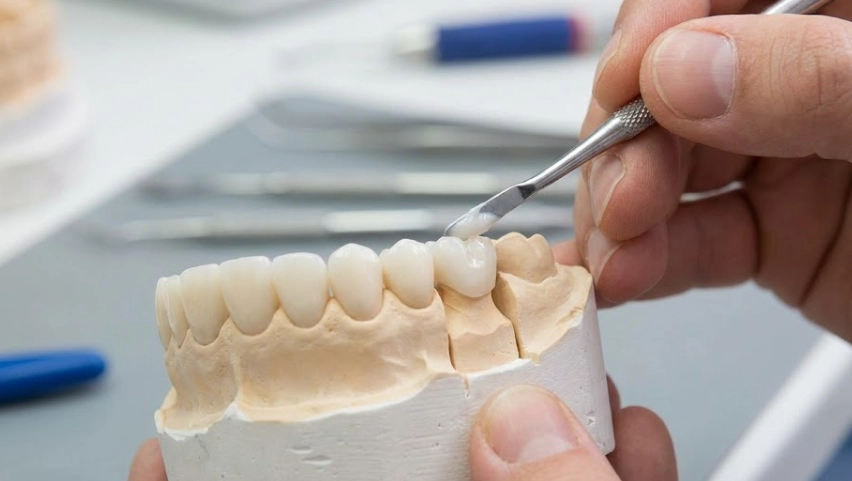
From our Lema Dental Clinic’s point of view, we see that precision is almost at its maximum when it comes to isolating a treatment. Actually, changing a single tooth is the most time-consuming and complicated issue in cosmetic dentistry. It has to be a perfect match visually to reflect light in the same way and have the appearance and color of the neighboring natural teeth. This is what clinical camouflage really means.
Dentist Polen Akkılıç with her team use a variety of distinct methods to carry out the desired optical illusion based on the degree of the misalignment. Sometimes, contact point shifting can be easily fixed with composite edge bonding, where a certain resin is shaped directly onto the tooth to create a completely new front that is also straight. In case of large rotations, a porcelain veneer, which is custom-made, or a single clear aligner might be the better choice.
However, we can analyze how these different methods stack up against each other in the case of a single tooth correction.
| Treatment Pathway | The Clinical Approach | Best Suited For | Expected Timeline in Turkey |
| Composite Bonding | Sculpting tooth-colored resin over the misaligned tooth to create a straight optical illusion. | Very minor overlaps, slight rotations, or small gaps. | 1 Day (Single visit) |
| Porcelain Veneer | Preparing the front surface and bonding a custom-milled ceramic shell to redefine the angle. | Moderate crowding, stained teeth, or noticeable rotations. | 5–7 Days |
| Clear Aligners | Physically moving the tooth into the correct position using clear plastic trays. | Severe rotations where the tooth root must be safely relocated. | 3–6 Months |
| Zirconia Crown | Capping the entire tooth if structural integrity is compromised alongside misalignment. | Crooked teeth that also have large fillings or decay. | 5–7 Days |
Top Inquiries on Correcting a Single Misaligned Tooth
The question remains a top concern for our patients, and the answer is no—if executed correctly. By utilizing advanced digital color-matching and master ceramists, we ensure the porcelain mimics the exact translucency and micro-texture of your adjacent natural enamel. It will be indistinguishable to the naked eye.
Usually, no. Composite bonding is an additive process. If a tooth is severely jutting forward, adding material to it will only make it look bulkier. In these cases, minor contouring combined with a porcelain veneer, or a short course of clear aligners, is necessary to bring the tooth back into the arch.
Absolutely not. If we are treating a single crooked tooth with a veneer or crown, the surrounding teeth are left completely untouched and pristine. We focus exclusively on the specific tooth requiring correction.
Before any permanent changes are made, Lema Dental Clinic utilizes 3D intraoral scanners to map your mouth. We then create a digital blueprint and often a physical “mock-up” that sits over your teeth, allowing you to test-drive the straight tooth and verify the aesthetics before the final ceramic is milled.
Single-tooth corrections are overwhelmingly comfortable. Composite bonding typically requires no anesthesia at all. For a veneer or crown preparation, localized numbing ensures you feel absolutely nothing during the procedure.
- Alothman, Y., & Bamasoud, M. S. (2018). The success of dental veneers according to preparation design and material type. Open Access Macedonian Journal of Medical Sciences, 6(12), 2402–2408.
- Dietschi, D. (1995). Free-hand composite resin restorations: A key to anterior aesthetics. Practical Periodontics and Aesthetic Dentistry, 7(7), 15–25.
- Kravitz, N. D., Kusnoto, B., BeGole, E., Obrez, A., & Agran, B. (2009). How well does Invisalign work? A prospective clinical study evaluating the efficacy of tooth movement with Invisalign. American Journal of Orthodontics and Dentofacial Orthopedics, 135(1), 27-35.
- Magne, P., & Belser, U. (2002). Bonded porcelain restorations in the anterior dentition: A biomimetic approach. Quintessence Publishing.
- Peumans, M., Van Meerbeek, B., Lambrechts, P., & Vanherle, G. (2000). Porcelain veneers: A review of the literature. Journal of Dentistry, 28(3), 163-177.

