


Stress indirectly causes tooth loss.
It sure is a scary thought. You’re already overwhelmed with work pressures, anxiety problems, or a sudden personal ordeal and then just out of nowhere, you notice a loose tooth. So can our mind, through stress, make our teeth fall out of our heads?
The truth is very simple, although the actual process is complicated. Stress cannot pull your teeth out as if by some kind of magic. You won’t just wake up one day, after a horrible week, to see your teeth lying on the pillow next to you. Still, if we take a look inside the gum, the existence of these things and their relations become clear. Stress is the ultimate silent catalyst. If you compare it to a wooden house foundation being eaten by termites, you’ll get an idea. You don’t see the damage happening day after day, but the whole house’s structural integrity becomes weaker and weaker until, one day, the floor falls through.
At Lema Dental Clinic, a clinical experience office, we witness the crushing end-stage consequences of long-term anxiety disorders each time we operate. We have patients, practically thousands, who come to Turkey for full mouth treatment without knowing that their first step to oral health deterioration was psychological stress that they didn’t deal with for years.
The biological chain reaction
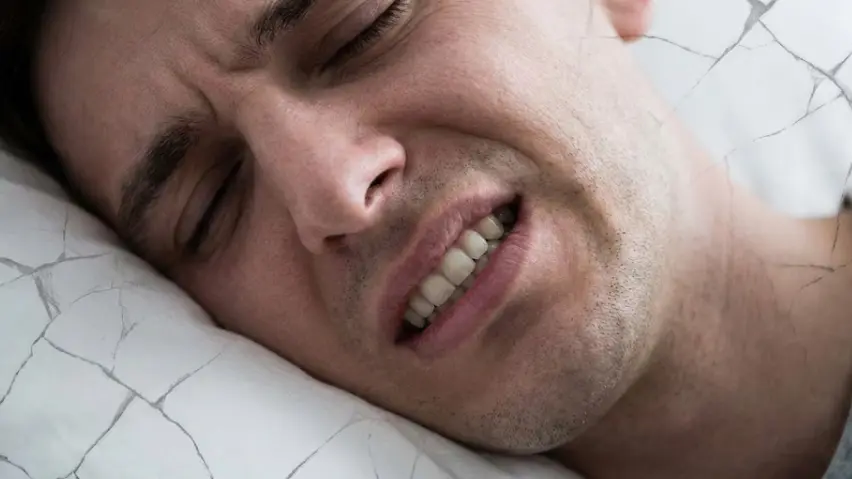
No matter whether it is a tight deadline or a family issue, your brain when it senses danger will release the hormones cortisol and adrenaline into your system. The fight or flight response was the best option for the survival of the species when the main enemies were animals that people had to either run away from or fight with to defend themselves, but it is very harmful to the body if it lasts not for a few minutes, but for months, years…
Excessive anxiety can produce very specific physical symptoms in your mouth through two main processes: teeth grinding or bruxism and stress-periodontitis (advanced gum disease).
Bruxism: The nighttime demolitions
Professor Doctor Coşkun Yıldız is of the opinion that the patients do not usually realize how powerful the jaw muscles can be. One of the sleep stages is called sleep bruxism and it is the one when a person under stress, without realizing it at first, can clap his/her teeth with the force of up to several hundred pounds per square inch.
This excessive grinding, using an abrasive substance, keeps on abrading the enamel that serves as a tooth’s natural barrier until the latter gets so thin that the exposed dentin becomes visible and the cracks in the tooth root resulting from repeated flexing of the tooth start to develop.
At the moment when the root breaks, the tooth is no longer able to withstand the forces that it is subjected to and quite often is taken out.
Rebuilding What Stress Destroyed
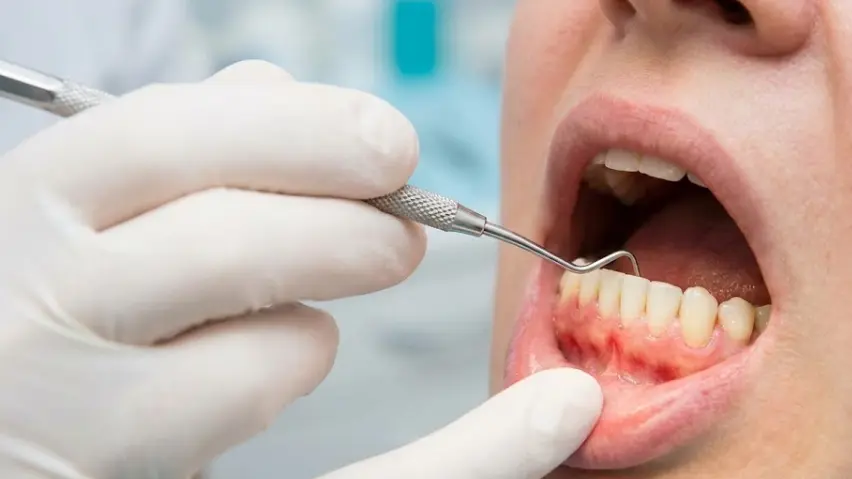
This is what we see in the clinic. Patients often blame themselves highly for dirty mouths and think they have just failed at brushing. We have to tell them that chronic stress modifies a person’s biology in such a way that even good daily brushing is no longer sufficient to keep the oral tissues healthy.
Luckily, modern dentistry has great options to offer. Dentist Polen Akkılıç and her team are experts in identifying the damage and completely rebuilding the dental structures from the ground up. We use a combination of advanced periodontal therapies and state-of-the-art implantology to not just bring back the function but also the smile of a healthy dentition. More than a thousand patients each year come to our centers in Turkey for the specific reason of breaking the negative circle of stress-induced dental problems, getting world-class, long-lasting restorations, thereby renewing their lives.
Clinical Progression of Stress-Induced Dental Damage
| Stage of Damage | Primary Clinical Symptom | Structural Consequence | Lema Clinic Intervention |
| Early | Morning jaw pain, sensitive teeth. | Enamel wear, inflamed gingiva. | Custom occlusal splints (night guards), deep cleaning. |
| Moderate | Visible tooth shortening, bleeding gums. | Dentin exposure, early bone loss. | Gum grafting, root planing, porcelain crowns. |
| Severe | Noticeable tooth mobility, severe pain. | Root fractures, advanced periodontitis. | Extractions, bone grafting, localized implants. |
| Terminal | Spontaneous tooth loss. | Complete loss of alveolar bone structure. | Full-arch restoration (All-on-4/All-on-6 implants) in Turkey. |
Top Queries on How Stress Sabotages Your Smile
It varies depending on the intensity of the clenching, but significant enamel loss can occur in as little as a few months during periods of acute stress. Because enamel does not regenerate, this wear is permanent and accelerates the risk of decay and fractures.
A night guard is a highly effective defensive tool, but it is not a time machine. It absorbs the shock of the grinding, protecting your teeth from further deterioration, but it cannot replace the enamel you have already lost. Restorative treatments like veneers or crowns are required to rebuild the lost structure.
Absolutely. Anxiety and stress medications frequently cause xerostomia, or chronic dry mouth. Saliva is your mouth’s natural defense mechanism; it washes away food particles and neutralizes bacterial acids. Without adequate saliva, decay spreads rapidly, further weakening the teeth.
Yes. Dental implants are the gold standard for replacing teeth lost to root fractures or periodontal disease. Because the titanium posts integrate directly with your jawbone, they provide the same stability as a natural tooth, entirely restoring your ability to chew and speak confidently.
Patients choose Lema Dental Clinic in Turkey for a synthesis of elite surgical expertise and state-of-the-art technology. Complex full-mouth restorations require precise coordination between periodontists, prosthodontists, and master ceramists. We provide this comprehensive, high-tier care in a single, dedicated facility, ensuring your new smile is built to last a lifetime.
- Lobbezoo, F., Ahlberg, J., Raphael, K. G., Wetselaar, P., Glaros, A. G., Kato, T., … & Manfredini, D. (2018). International consensus on the assessment of bruxism: Report of a work in progress. Journal of Oral Rehabilitation, 45(11), 837-844.
- Boyapati, L., & Wang, H. L. (2007). The role of stress in periodontal disease and wound healing. Periodontology 2000, 44(1), 195-210.
- Rosania, A. E., Low, K. G., McCormick, C. M., & Rosania, D. A. (2009). Stress, depression, cortisol, and periodontal disease. Journal of Periodontology, 80(2), 260-266.
- Manfredini, D., & Lobbezoo, F. (2009). Role of psychosocial factors in the etiology of bruxism. Journal of Orofacial Pain, 23(2), 153-166.
- Genco, R. J., Ho, A. W., Kopman, J., Grossi, S. G., Dunford, R. G., & Tedesco, L. A. (1999). Relationship of stress, distress and inadequate coping behaviors to periodontal disease. Journal of Periodontology, 70(7), 711-723.

