If you can access dental treatments, it is indeed a wise idea to correspondingly foresee whether, on the other hand, these treatments will interact with the other medical procedures, especially if the other procedure is an MRI (Magnetic Resonance Imaging) one. Many times that people ask if it is safe to have dental veneers while going through an MRI scan. The best thing is that dental veneers that are customarily made from porcelain or composite materials do not have any kind of interferences with MRI scans.
Nevertheless, there are quite a few aspects that you should be well-versed in, in particular, about all your dental treatments and the area of the body being scanned. Lema Dental Clinic, located in Istanbul, Turkey, is dedicated to making sure your dental treatments are compatible with medical procedures like MRIs so that you may have both a gorgeous smile and a healthy, safe body.
What is an MRI, and How Can It Interact with Dental Veneers?
Magnetic Resonance Imaging (MRI) is a procedure that takes pictures of the inside of the human body through the use of powerful magnets and radio waves. The instrument is very handy for diagnosing numerous diseases, ranging from joint-related problems to nervous system disorders.
Most dental veneers are generally made of porcelain or composite resin, both are non-metallic materials. This means that dental veneers don’t go together with the MRI’s magnetic field. These metal dental works, which include metal fillings or crowns made up of gold or silver alloys, except for veneers, can create artifacts in images that are taken by the MRI, and thus, they can also affect the scan’s accuracy. Moreover, if there is any other work in your mouth, such as metal fillings, braces, and crowns, you might encounter conditions during the procedure, which can make the process slower.
What Factors Determine Whether You Can Have an MRI with Dental Veneers?
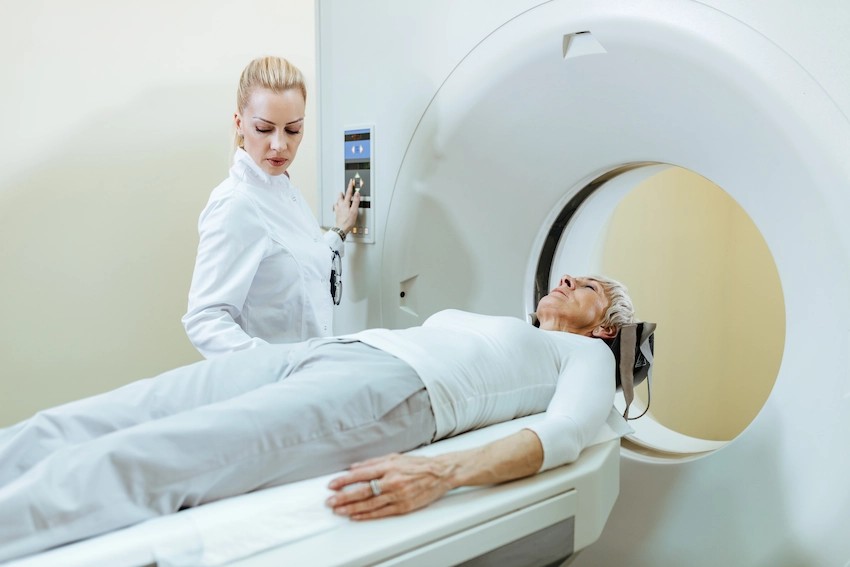
Several crucial factors can dictate whether you can have an MRI with dental veneers:
- Material of the Veneers: The majority of dental veneers at present are made of porcelain or composite resin, which are compatible with MRI. In case your veneers are old or if they contain metal, you should definitely verify this with your dentist. There may be a few dental restorations that are still made of metal alloys, and those are the cases that the MRI can be impacted, though it is quite a rare occurrence.
- Location of the Veneers: If your veneers are on teeth that are distant from the area being scanned, they will most likely not cause any issues. On the other hand, if the MRI is concentrated on the head or neck area, it is required to inform your healthcare provider about your dental veneers. The provider might, in such instances, take extra measures or use a different type of imaging to avoid the occurrence of interference.
- Presence of Other Metal Dental Work: The metal dental restorations in the mouth, like amalgam fillings, metal crowns, and braces, can lead to the occurrence of problems, regardless of whether they are metal or not. The metal fillings or crowns can not only twist the MRI images but can also be the cause of your discomfort as a result of the magnetic field. On the other hand, porcelain and composite veneers are generally considered to be safe for MRI scans.
- Type of MRI Scan: The power of the MRI’s magnetic field can also decide the amount of the effect that metal dental work has on it. High-field MRI machines (used for more detailed scans) may have more of a metal interaction than low-field machines. A dentist or a healthcare provider should know what kind of dental work you have, and then they should set up the MRI accordingly.
Alternatives to MRI for Patients with Dental Veneers?

Even though the MRI is an excellent imaging tool, it’s not the only option for a patient who has dental veneers or other kinds of dental restorations. In case there is a worry about metal in your mouth that can cause interference with an MRI or if you’ve got some specific issues related to your dental work, then other imaging options can be taken into account.
- CT Scans: A CT (computed tomography) scan is more way of looking inside the body to make a diagnosis. Usually, CT scans are employed to take the most detailed images of bones, organs, and other tissues within the body. In case a patient is not allowed to have an MRI due to metal dental work, CT scans are commonly the right substitute. Since they use X-rays instead of magnetic fields, there is absolutely no risk of interference coming from metal restorations.
- Ultrasound: An ultrasound can be chosen as a replacement for MRI in some cases. Although it doesn’t offer the same level of detail, it is still a non-invasive and safe method, and there is no risk if the patient has dental work.
- X-rays: In addition to dental and medical conditions, X-rays can be employed for diagnosis as well. Without giving the same level of detail as MRI, they are still an excellent tool for the detection of a wide range of conditions, especially in the oral cavity.
Always seek advice from your healthcare provider to find out what is the most suitable imaging method with regard to your dental treatments and particular needs.
Can an MRI Be Performed If You Have Braces?
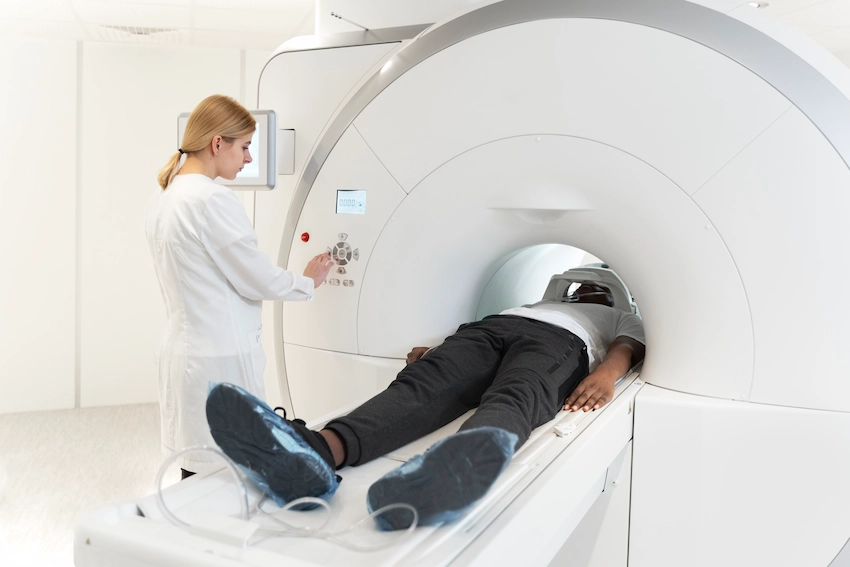
Generally speaking, metal braces, along with metal-based dental restorations, can cause an MRI scan to malfunction. Just to give you some examples, braces and metal crowns are made of materials that are susceptible to the magnetic field of the MRI machine, which in turn can lead to a number of problems.
- Image Distortion: The metal parts in your braces or crowns can interfere with the MRI images, thus the doctor may not be able to access the area with precision. This, in turn, may cause a doctor to wrongly diagnose the condition or require more imaging for confirmation.
- Physical Discomfort: The magnetic field can also cause some physical discomfort, especially if there are numerous metals in your mouth. The strong magnetic forces can sometimes shift metal dental work, which in turn can cause a minor discomfort or, in the case of a few extreme conditions, result in injury.
In addition to that, if you have metal-based restorations or braces, first of all, make sure to tell your doctor and dentist. They are the ones who will make the final decision on whether or not you are safe to take an MRI or another imaging modality would be more suitable for you.
What Dental Treatments Could Create Safety Issues with an MRI?

Generally, dental veneers are usually safe during MRIs. Nevertheless, their supporters need to be aware of the dental treatments that may involve metal and pose a risk to safety due to the creation of a metal edifice:
- Metal Crowns or Fillings: Metals that are used in traditional metal crowns or fillings, particularly those made of amalgam or gold, can distort an MRI scan. Besides, these metals can also form artifacts in the images, which makes it difficult to interpret the results.
- Braces: Braces with metal brackets and wires are the source of a large interference with MRI imaging. The metal components can distort the magnetic field, thus the accuracy of the scan is affected.
- Dental Implants: Generally, dental implants are made from titanium, which is considered safe for MRIs. On the other hand, some old implants or implants with certain coatings may be affected by the magnetic field. Knowing the material of your implants and talking to your dentist beforehand is always the safest approach.
- Retainers and Other Metal-Based Restorations: Any dental work that is done with metal, for example, metal retainers or bridges, can potentially cause an MRI to be compromised. In case you are having a lot of metal restorations, your dentist, as well as the medical team, might have to take extra steps, or they might recommend another imaging method.
If you have been treated with veneers or are carrying restorations, and an MRI is needed, please make sure that your medical team knows about it. They will be working with you to provide you with the most accurate imaging while at the same time ensuring that your dental treatments are safe. At Lema Dental Clinic in Istanbul, we employ the most up-to-date dental treatments that are compatible with all medical procedures, so you can always heal with a smile and full of confidence.
FAQ: Can I Have an MRI While Wearing Dental Veneers?
Yes, as long as the dental bridge is not made of metal, a magnetic resonance imaging (MRI) scan is not prohibited. If the bridge is made of metal, it can lead to image distortion, so you need to tell your doctor about it.
The answer is yes, as a rule, dentures are safe to work with an MRI machine, because they are usually made from non-metallic materials. Nevertheless, for greater precision in the photos, they are advised to be taken off during the procedure.
Amalgam fillings are made of a metal mixture and, thus, may result in an MRI image being obstructed. The metals may cause the MRI images to be distorted, while patients with dental metals are usually safe to undergo MRI. It is important, however, that you tell your doctor about your dental work before getting a scan.
Traditional metal braces are a mixture of metals, and this causes the MRI machine to be interfered with. On the other hand, Metal-free braces, such as ceramic ones, are normally safe for MRI as they are metal-free.
Indeed, zirconium crowns and images taken by MRIs are compatible since they are made of non-metallic materials. These crowns prevent the occurrence of image contamination and thereby ensure that the imaging is accurate and clear.