


Yes, overusing denture adhesive can cause irritation, stomach discomfort, or zinc-related health risks.
When you wake up, you brush your gums. You apply a thick layer of pink paste onto your plastic dentures. Many dental patients do this morning ritual. However, throughout your day, you still ingest a small amount of that denture glue.
Over the period of weeks and months, the chemical accumulation is silently happening inside your bloodstream.
Some patients come to our dental offices after meeting their general practitioners because they are physically and mentally very tired. Some even complain that their hands have a nerve-tingling sensation. Such patients often undergo several blood tests. However, the doctors are usually unable to find anything in the test results.
What actually happens is that the real culprit is often right inside your medicine cabinet. Yep, the denture adhesive can indeed cause your illness. The underlying healthcare issue is heavy metal toxicity.
At Lema Dental Clinic, we have treated the severe physical symptoms resulting from the dependence ondental glue almost every day. It is a serious health problem that needs urgent medical attention. Here is the detailed description of how the nervous system gets impacted by excessiveuse of denture paste:
Zinc Poisoning: The Hidden Risk
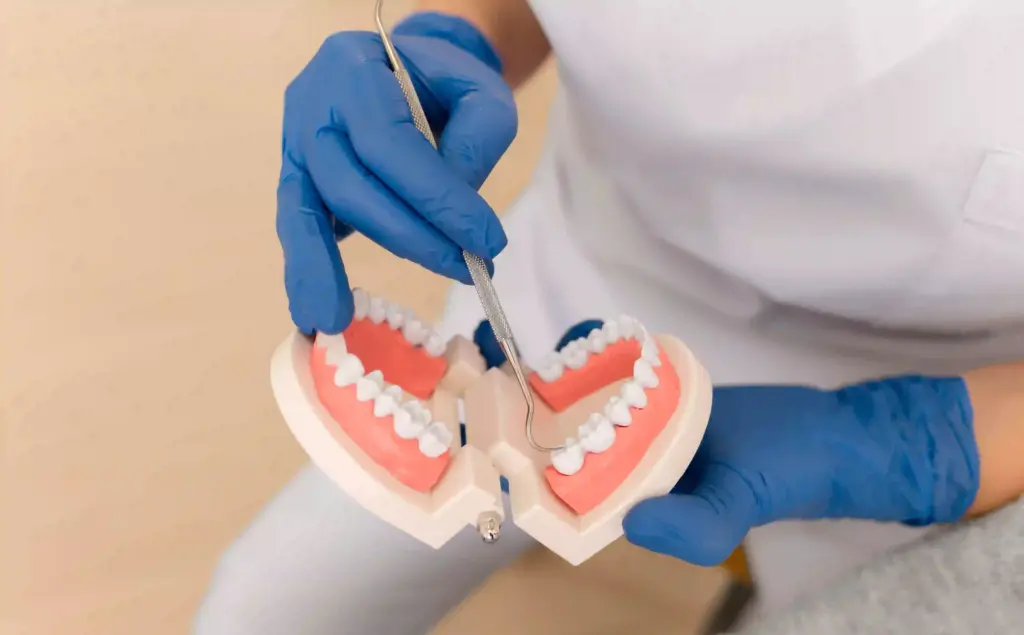
Most of the denture adhesives that are on the market nowadays include significant quantities of zinc. Zinc, in very small and measured doses, is a great mineral that your body’s defense system can use to ward off ailments.
But let’s see what the patient actually consumes. If the dentures do not fit, the patient will try to secure them more by putting on more glue. Instead of applying three small dots of glue that correspond to the size of a pea, they lay down a thick and heavy line of adhesive in the plastic palate area.
Accidentally, you may think that it is practically impossible to swallow any amount of denture adhesive during the course of one day. Only for the record, let’s see how much zinc a person ends up swallowing in the case of heavy use. (A person might dissolve a gram of dental adhesive per day due to the continuous wearing and going to the bathroom, eating,g and so on.)
Thus, a patient who is “lost” in the rough bushes of poor denture fit will unknowingly be exposed to a highly toxic zinc dose buildup, leading to major disruption of normal body chemistry.
The simplest model for discussion involves two metal plants competing to extract nutrients from the shared soil volume. Zinc grows so fast and vigorously that it virtually kills copper,r and raising one metal level very strongly drops the other one.
The high concentrations of zinc are therefore a limiting factor for dietary copper absorption in the gut. Copper is the main biological provider for the energetic needs of the nervous system. Deficiency of copper causes nerve degradation, demyelination, and impaired neurotransmission.
Dentures and Your Nervous System: Signs to Look Out For
The symptoms caused by zinc toxicity strongly resemble those of some very serious neurological diseases, and this similarity can lead to a wrong diagnosis, especially among the elderly. If you are a large-volume denture adhesive user, you must be on the lookout for these red flags:
- Neuropathy: Persisting numbness, tingling, or “pins and needles” sensation in your fingers and toes.
- Rapid loss of muscle strength or paralysis without any apparent cause, loss of good coordination or balance during walking or any other activity requiring the brain.
- Digestive troubles such as chronic nausea, painful stomach cramping, and a metallic taste that completely spoils your appetite.
- Extreme fatigue and body weakness that cannot be cured with regular rest or sleep.
Why Patients Depend So Much on Dental Adhesive?
We didn’t stop at writing the pieces and talking about the short-term and long-term effects of denture adhesive poisoning from one tube to another. We looked at jawbone anatomy and the effect of natural teeth on bone mass maintenance. Natural teeth physically support the jawbone. Once the teeth are taken out, the bone begins to resorb. Dentists use the term ” bone resorption ” for this biological process as bone resorption.
A standard denture simply lies on the surface of the gum. It really does not support the bone. The shape of your gum ridge completely changes within a short period of time, and the denture simply does not fit your mouth anymore. The plastic denture slips and slides around and rubs the soft tissue,s causing painful oral blisters.
Your first instinct is to buy more adhesive in order to prevent the denture from slipping around; however, as a result, a vicious and extremely dangerous health cycle is set in motion.
Permanently Moving Away from the Need for Glue

Our clinic encounters this scenario regularly. It is typical for overseas patients whom we treat to be completely worn out from their daily glue routines. The patients are afraid of getting permanent nerve damage and zinc toxicity. That is why they want to get out of the removable denture trap at all costs.
Our dentist, Polen Akkılıç, together with a surgical team, is the one especially dedicated to the work in this field. We are able to convert denture wearers to those who have a permanent set of teeth that is fixed in the jaw. In the following ways, through advanced methods of dental implantology—All-on-4 systems or Zygomatic implants for patients with severe bone loss—we have totally removed the use of toxic adhesives.
Fixed teeth are surgically implanted in the jawbone. They function almost similarly to natural tooth roots. Thus, in addition, the titanium implants used for this purpose actively stimulate the jawbone and permanently prevent the bone from shrinking.
Comparing Your Dental Options
| Feature | Traditional Dentures + Adhesive | Permanent Implants (All-on-4 / Zygoma) |
| Daily Routine | High effort (removing, cleaning, applying glue) | Easy (brushing normally like natural teeth) |
| Toxicity Risk | High (due to daily swallowed zinc paste) | Zero (no glues or adhesives needed) |
| Bite Strength | Weak (Only 20-30% of a natural human bite) | Strong (Up to 90% of a natural human bite) |
| Bone Health | Poor (rapid jawbone loss continues daily) | Excellent (titanium keeps the jawbone strong) |
| Taste & Texture | Palate covered (plastic blocks the taste of food) | Palate open (enjoy the full natural flavor of meals) |
Question & Answer Session
There should only be three or four tiny adhesive dots the size of peas for the whole day if your denture fits well. One standard tube of dental glue generally lasts a person about six to eight weeks. If you empty a tube every two weeks, your dentures do not fit any longer, and you are ingesting dangerous levels of zinc.
The symptoms initially occur in the form of unusual sensations in your extremities or a feeling of your toes being “asleep.” Most people dismiss these symptoms as signs of aging or poor blood circulation. However, in most cases, they are the first signs of copper deficiency caused by the toxic effects of an excess of zinc.
In the early stages of zinc toxicity, removal of exposure to the source of zinc (i.e, Zinc-based denture adhesive, along with copper supplementation, may halt the progression of symptoms. Unfortunately, severe nerve damage resulting from prolonged heavy metal toxicity may be permanent. It is for this very reason that we strongly recommend our patients opt for fixed dental implants rather than heavy reliance on pastes and adhesives.
The size of your plastic dentures has not changed, but the size of your jawbone has indeed changed. Since dentures lie on the top of the gums, the jawbone continues to shrink over time. A big gap will eventually be seen between the plastic denture and the soft gum tissue as the bone resorption progresses.
The All-on-4 implant placement technique is the recognized clinical gold standard of the day. Four titanium implants are securely placed into the jawbone, and a full, permanent bridge of beautiful teeth is attached. The teeth never come out, never slip, and do not require a single drop of toxic adhesive.
- Nations, S. P., Boyer, P. J., Love, L. A., Burritt, M. F., Morgan, J. A., & Glass, J. A. (2008). Denture cream: an unusual source of excess zinc, leading to hypocupremia and neurologic disease. Neurology, 71(9), 639-643.
- Willis, M. S., Monaghan, S. A., Miller, M. L., Holmes, R. W., Hossain, D., & Linder, H. E. (2005). Zinc-induced copper deficiency: a report of three cases initially recognized on bone marrow examination. American Journal of Clinical Pathology, 124(2), 220-226.
- Pfeiffer, C. C., & Braverman, E. R. (1982). Zinc, the brain, and behavior. Biological Psychiatry, 17(4), 513-532.
- Misch, C. E. (2007). Contemporary Implant Dentistry (3rd ed.). Mosby Elsevier.
- Albrektsson, T., Zarb, G., Worthington, P., & Eriksson, A. R. (1986). The long-term efficacy of currently used dental implants: a review and proposed criteria of success. The International Journal of Oral & Maxillofacial Implants, 1(1), 11-25.

