


Yes, denture adhesive can contribute to thrush if it traps bacteria or is not cleaned properly.
It really takes some getting used to when someone first wears dentures. We know the struggle quite well when your prosthesis comes loose, and you cannot even talk and chew freely anymore. Understandably, many people choose to use denture adhesive for a short period of time while their gums recover from healing.
However, this seems like a temporary solution, but in the longer run will bring forth quite a few issues. What we are worried about the most at the Lema Dental Clinic is the effect this gluing agent might have on your oral health.
Why Gluing Is The Main Culprit?
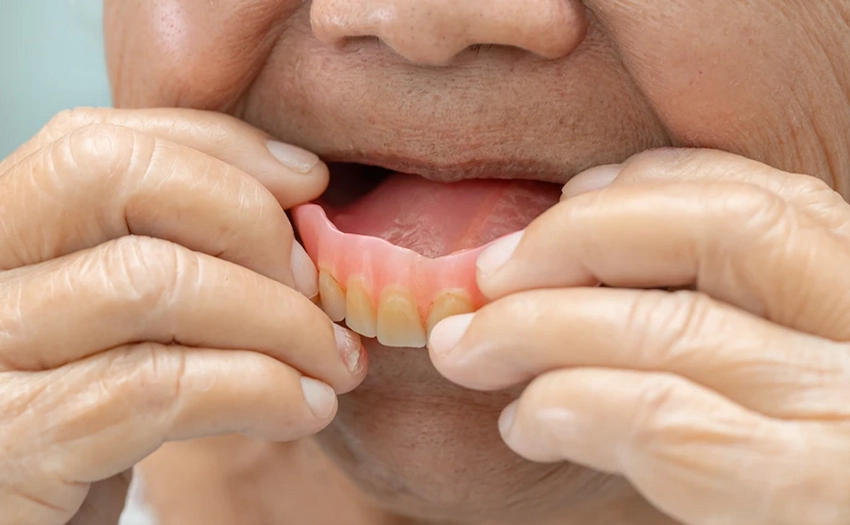
You know for a fact that a healthy mouth is an intricate community. When you glue your prosthesis, it forms a kind of unnatural covering which separates gums from the normal mouth milieu. With this covering, it is as if your tongue and palate are being suffocated and not breathing at all.
So, underneath that sealed layer, it will actually happen:
- Moisture trapping: A normal process of skin evaporation is hindered by the glue, causing the plaque to always stay wet.
- Bacteriological harboring: Bacteria love to live and multiply in the moisture trapped by the paste and also in the leftover food debris that accumulates in this place.
- Candida: This situation is very favorable for Candida, a yeast, to thrive. That is why sometimes patients feel that there is something like a red tongue or sore spots on their gums.
One fact of life is that, while it may appear that you are tightening the dentures, denture glue can also be the destroyer of your oral health and hygiene.
The Greenhouse Analogy in Science
At Lema Dental Clinic, our emphasis is on your overall condition and well-being. You can think of soft tissue under the lower part of the teeth (dental mucosa) as being a piece of land where you have to grow flowers. Covering a piece of land with a plastic film that does not let heat or water will bring about weed growth – such as the growth of harmful fungi that may lead to thrush.
Applying glue to a denture if it is not fitting well anymore leaves a space between your gums and the denture’s base. That pocket will be filled with fluids and food as you pass the time. Professor Coşkun Yıldız frequently states that such an approach creates a “greenhouse effect” under your denture. The conditions there – warm, moist, and dark – enable the fungi to flourish, so the patient develops the inflammation denture stomatitis characterized by the red areas.
Why Your Habit of Doing Things Every Day Is Important For This
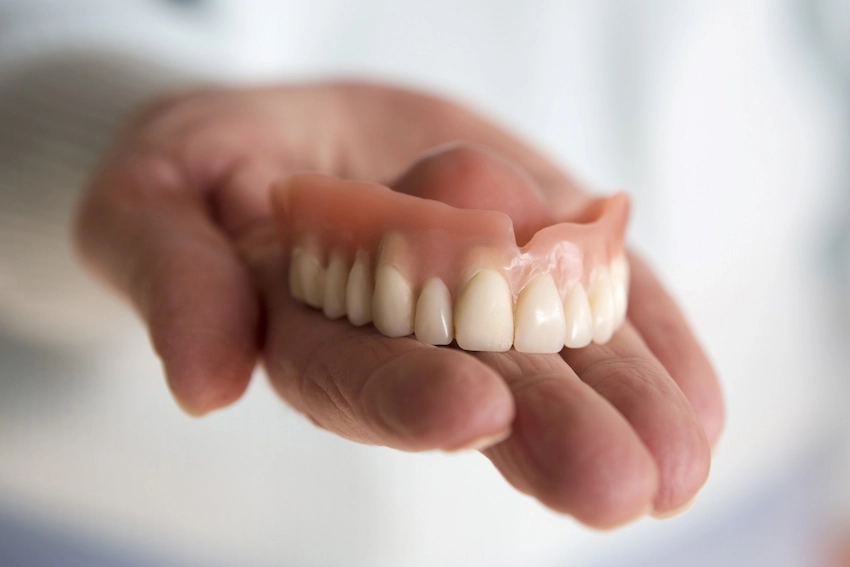
There is a point to consider: is the denture glue a main issue or a result of a problem management method? Dr. Polen Akkılıç and her team have observed that it is quite common for people with long-term irritation problems who rely too much on the adhesive. As a matter of fact, the first prevention method is the very simple and daily cleaning task.
You cannot leave a denture adhesive on your gums or any remaining glue on the denture. Even tiny amounts of residue will result in an extremely uneven or bumpy surface, which will be easily invaded by oral organisms, causing the infection. The patient gets irritated because of such persistent irritation from microflora.
Different Approaches: Adhesives Versus Permanent Ones
If you constantly need more and more dental adhesion, it probably means your bone structure has altered, and you no longer get a perfect fit on a toothless mouth because the shape has changed. Therefore, your dentist may need to make some changes, and you can also try a dental adhesive or fix it once and for all.
| Feature | Traditional Dentures | Fixed Implant Bridges |
| Stability | Requires synthetic adhesive | Fixed securely to bone |
| Cleaning | Complex (must scrub glue residue) | Simple (brush like natural teeth) |
| Thrush Risk | High due to trapped debris | Very low |
| Bone Health | Can cause bone loss | Preserves and stimulates bone |
| Comfort | Often shifts or causes irritation | Feels stable and natural |
Frequently Asked Questions
How do I know if I have thrush?
Common oral thrush signs and symptoms are white plaques on the tongue or the upper palate that are very similar to cottage cheese. There is a chance of getting a very bright red or even sore-looking skin area or a thin layer of underlying tissue below these plaques. If a burning sensation on the tongue or a strange taste has come up, then the mouth must be checked by your dentist right away.
Is it dangerous if I use denture adhesive every day?
Using it is definitely ‘dangerous’ for prolonged periods, but it’s a warning sign – so to speak. If a patient uses glue quite frequently to secure a lower denture,e it must not be a good fit of the denture. You do not have to be satisfied merely with a denture that is not perfectly and firmly seated but rather to ask for a better fit of the lower denture.
Does thrush cause pain?
Yes. One reason is constant sensations, especially when a patient is eating or drinking. That’s very uncomfortable. As a result, the dentists here at our dental facility want to correct any problems as soon as possible, not only from the physical side of it, but also from the mental aspect.
What’s the best way to clean my mouth?
Brush your gums gently with extremely soft bristles to improve circulation and to wash away any food that may be stuck in them. Always make use of the best quality denture cleansers for soaking. Make sure all residue that may be left from the dentist’s glue is cleaned off your gum tissue before you sleep.
What’s the secret of giving up using the denture glue permanently?
First of all, getting away from using glue altogether means getting into a permanently fixed dental prosthetic system. We specialize in All-on-4 or All-on-6 implants here in Turkey, for example. These implants are fitted directly to the bone,e and that means no more slippage and, naturally, not having to use any kind of paste, glue,ue or adhesive product, which will have its detrimental effect ao not only by not protecting the mouth from infection, but actually causing an environment in which the germs would thrive.
Academic References
- Davenport, J. C. (1970). The oral distribution of Candida in denture stomatitis. British Dental Journal, 129(4), 151-156.
- Gendreau, L., & Loewy, Z. G. (2011). Epidemiology and etiology of denture stomatitis. Journal of Prosthodontics, 20(4), 251-260.
- Nikawa, H., et al. (2003). Candida colonization and adhesion to denture base acrylic resins. Journal of Oral Rehabilitation, 30(9), 920-926.
- Webb, B. C., et al. (1998). Denture stomatitis: Aetiology and management. Australian Dental Journal, 43(2), 117-121.
- Zissis, A. J., et al. (2006). The significance of denture hygiene in the management of denture stomatitis. Gerodontology, 23(2), 105-112.

