


Swallowing too much denture adhesive may cause stomach upset or diarrhea.
You wake up, clean your dentures, and stick on your daily adhesive. For a lot of people, it’s a usual morning routine. But what if you get very painful stomach cramps? What if you have chronic, unexplained diarrhea? You might think you just ate something bad. The reality is quite different. The actual cause might be sitting right on your bathroom counter.
We at Lema Dental Clinic in Turkey have witnessed this same scenario repeatedly in our clinical practice. We hear these very frustrated patients with very severe stomach problems, and they say that they have seen the gut specialists for months but have never gotten any real answers.
You might be wondering – can your denture adhesive make you sick? The medical evidence is very clear that it can, and it all relates to one single ingredient in your denture adhesive – zinc.
The Chemistry of Denture Adhesives
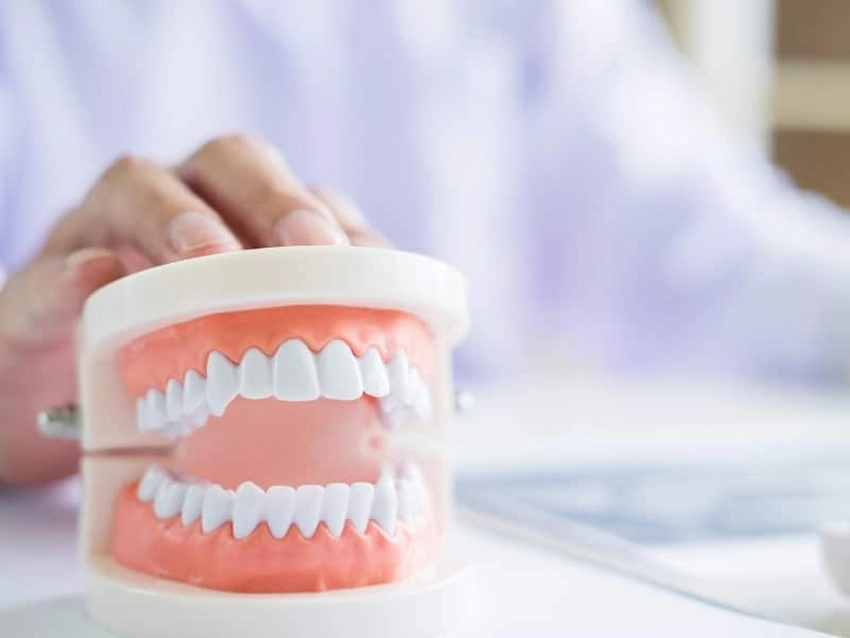
Zinc is the main active ingredient in most popular denture adhesives. It is a heavy metal that creates a tight and strong sticky bond between the plastic acrylic and your gums. If you use a very small amount, say the size of a pea, then the risk to your health is really quite low.
Having said that, let us take a closer look at the natural changes happening in your mouth over time. Your jawbone is just like the foundation of a house – when you lose your natural tooth roots, the bone starts to shrink very slowly, resulting in shifting and weakening of the foundation. Your denture sitting on the top becomes completely loose and unstable. Now,w to get a tight fit, patients start applying more and more adhesive throughout the day, and this extra adhesive leaks into the mouth, and you end up swallowing it continuously.
Your stomach is a very sensitive and delicate system. Being exposed to heavy metals such as zinc can make your stomach system completely off balance.
Zinc Toxicity and Your Stomach
When you take in too much zinc, the problem is that it stops your body from absorbing copper that leads to a very dangerous condition known as zinc toxicity. According to Professor Doctor Coşkun Yıldız, the very first signs of this toxicity are almost always in the stomach and gut.
Patients’ common complaints mostly include:
- Diarrhea continuing daily
- Very bad stomach pains
- Feeling of sickness or nausea
- Strong metallic taste in the mouth
- Extreme tiredness and loss of appetite
If you ignore these signals, the poison would ultimately reach your nervous system, resulting in loss of feeling in your hands or feet.
Moving Beyond Adhesives
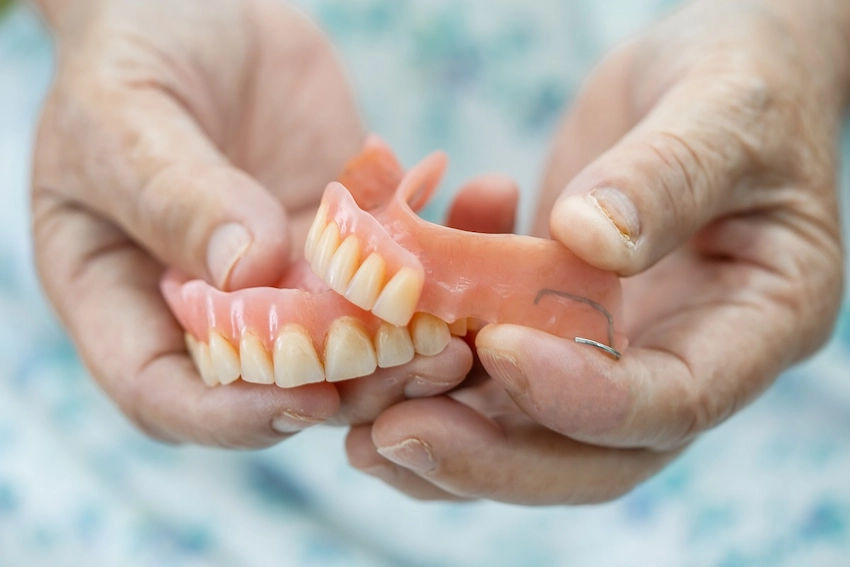
One should never have to choose between comfortably eating and experiencing chronic diarrhea. You actually deserve a feeling of complete security in your teeth without compromising your health by getting sick.
How things really stand at Lema Dental Clinic is this. Dentist Polen Akkılıç and her capable team in the world attract patients through their work. People come to us in this land of Turkey in a bid to get rid of stale denture adhesives that are toxic to their bodies. Through a change from removable plates to permanent teeth, we first give them a chance to breathe. We rely on high-quality and advanced solutions such as implants, All-on-4 and All-on-6 systems. This completely modern method removes any need for adhesive pastes.
Whereas a loose denture merely rests on gums as they shrink, these new teeth are solidly anchored in your bone. We provide high-quality zirconium fixed bridges that closely resemble natural teeth. They give you a beautiful smile and, most importantly, they protect your long-term gut health.
Quick Comparison: Removable Dentures vs. Permanent Implants
| Feature (Özellik) | Traditional Dentures (with adhesive) | Fixed Implants (All-on-4/6 Zirconium) |
| Stomach Risk (Mide Riski) | High (if zinc adhesive is swallowed) | None (no adhesive needed) |
| Bone Health (Kemik Sağlığı) | Bone continues to melt away | Implants keep the bone strong |
| Biting Power (Isırma Gücü) | Weak (20% of natural teeth) | Strong (Up to 95% of natural teeth) |
| Daily Care (Günlük Bakım) | Messy to take out, clean, and re-apply | Just brush and floss normally |
Patient FAQ: Ask the Doctor
How much denture adhesive is actually safe?
The answer: the less, the better. Try three very small dots for the top denture and a thin line for the bottom. If the adhesive oozes out upon biting, ongoing usage of adhesive is excessive,e and you will definitely swallow it. Iff the adhesive is causing diarrhea, what should I do?
What should I do if my adhesive is giving me diarrhea?
Stop using that adhesive right away. Buy a zinc-free brand and drink plenty of water. Then, go see your regular doctor. Ask them for a simple blood test to check your zinc and copper levels.
Can one buy denture adhesive without zinc?
Absolutely, yes. Since these health risks are very well-known, many companies even changed their formulas to completely get rid of zinc. Make sure you read the very back of the box carefully before buying any new adhesives.
Why are my dentures feeling very loose lately?
Jawbone melting away is one of the reasons that a problem is occurring. At Lema Dental Clinic, we make it a point to tell our patients that if there are no real tooth roots, the bone will merely shrink. A denture that was good five years ago is not going to fit today. So, you should either have a new fitting or choose permanent implants that are of higher quality.
Can I still get implants after my bone has shrunk?
Definitely, you will almost certainly be capable of it. Despite very severe bone loss, the surgical team at Lema Dental Clinic is familiar with the use of special techniques. Our team is able to use Zygomatic implants to give you safe, permanent teeth. We are equipped with a 3D scan to plan everything with total safety.
Academic References
- Nations, S. P., Boyer, P. J., Love, L. A., Burritt, M. F., Butz, J. A., Wolfe, G. I., … & Trivedi, J. R. (2008). Denture cream: an unusual source of excess zinc, leading to hypocupremia and neurologic disease. Neurology, 71(9), 639-643.
- Willis, M. S., Monaghan, S. A., Miller, M. L., Holmes, R. W., Bosserman, G., Perry, A., & Macik, B. G. (2005). Zinc-induced copper deficiency: a report of three cases initially recognized on bone marrow examination. American Journal of Clinical Pathology, 123(1), 125-131.
- Carlsson, G. E. (2014). Implant and root supported overdentures–a literature review and some data on bone loss in edentulous jaws. The Journal of Advanced Prosthodontics, 6(4), 245-252.
- Hedera, P., Fink, J. K., Bockenstedt, P. L., & Brewer, G. J. (2009). Myelopolyneuropathy and pancytopenia due to copper deficiency and high zinc levels of unknown origin II. The denture cream is a primary source of excessive zinc. Neurotoxicology, 30(6), 996-999.
- Al-Ghannam, N. A., Starr, C. B., & MacEntee, M. I. (2020). The effect of denture adhesives on the retention of complete dentures: A systematic review. The Journal of Prosthetic Dentistry, 123(3), 398-406.

