


Yes, dental implants can help correct buck teeth.
If you’ve been feeling that your “buck teeth” — medically referred to as a Class II malocclusion or an overjet — are the only thing that people notice about you for years, then you probably understand that your teeth have been your victim in more ways than one. Not only was the appearance of your teeth affected, but also the way you chew, the way you speak and even your breathing. Many patients come to us at Lema Dental Clinic and directly ask if a dental implant can simply “replace” the problem.
The short answer? No, a “one-size-fits-all” solution doesn’t exist, but if you do it right, it can be a game-changer.
Understanding the “Buck Tooth” Dilemma

An excessive protrusion of the upper front teeth over the lower teeth is one of the most common causes of the problem, which is typically either skeletal or dental. If you imagine your mouth as a house, in some cases, the windows (the teeth) are merely improperly angled, whereas, in other cases, the entire front wall (the jawbone) is protruded.
According to Professor Doctor Coşkun Yıldız, the treatment of an overjet is not just a matter of extracting a tooth and placing a screw. We must consider the “foundation”—your bone structure and gum line—to guarantee that any new tooth wouldn’t simply repeat the old problem.
Can an Implant Be the Solution?
Dental implants are designed mainly for replacing missing teeth hence they cannot be used for moving teeth that are already there. However, in certain scenarios, implants could be used in the following ways:
- Replacement of Protruding but Non-love Teeth: If your buck teeth have decay, are loose due to periodontal disease, or are structurally weak, we may be advised to remove them. Meanwhile, the Dentist Polen Akkılıç and her staff can carefully place implants to “restart” the inclination of your smile.
- Device for Braces: An implant can sometimes serve as an immovable object. Since teeth naturally move through pressure, an implant acts as a crowbar removing the other teeth through the process of its fixed placement.
- Complete Mouth Rehabilitation: The patients who come to us for a full “Smile Makeover” in Turkey are often implanted with us only when a bridge or an All-on-4 system is used to completely reconfigure the dental arch.
The Lema Approach: Artistry Meets Surgery
Our clinical experience at Lema Dental Clinic has taught us that dental implant treatment for patients with overjet who have buck teeth is not as simple as just setting a tooth. It is more like a sculptor who works out a new shape on the marble; his hands must be guided by nature, so that the new tooth will be of help, the lip not a hindrance, and your overall profile balanced.
If we had only installed an implant in the location of an ordinary buck tooth, the situation would have been repeated. We therefore resort to 3D advanced camera images like a basketball player uses his parabola found in the decision-making zone or “sweet spot” while Board football itself is that point where the crown is sitting vertically in the jawbone, hence the protrusion of the face instantly compromises reduction.
Comparing Your Options
| Treatment Option | Best For… | Timeline | Durability |
| Orthodontics (Braces/Invisalign) | Healthy but misaligned teeth | 12–24 months | Life-long (with retainers) |
| Dental Implants | Missing or severely damaged buck teeth | 3–6 months | 25+ years |
| Dental Veneers | Mild protrusion (camouflage) | 5–7 days | 10–15 years |
| Jaw Surgery | Severe skeletal issues | 1–2 years | Permanent |
Why Choose Turkey for Your Transformation?
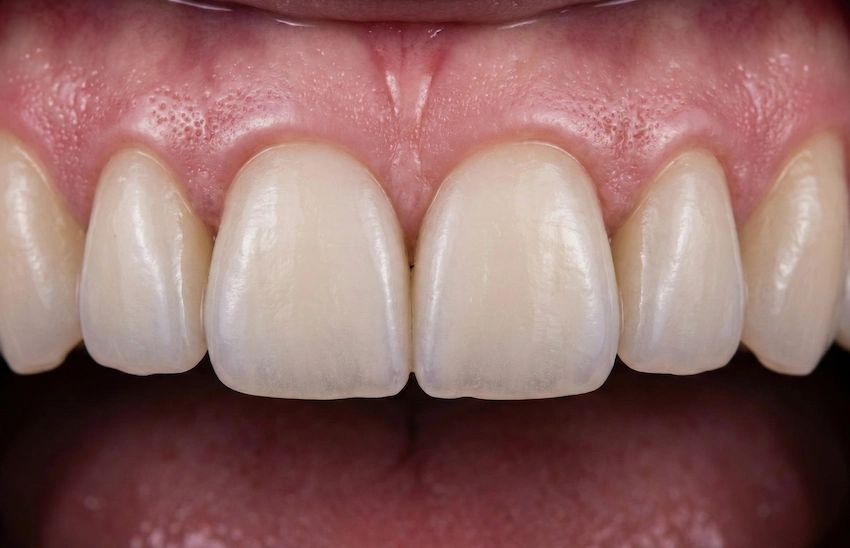
The question remains: why travel to Istanbul for this? Beyond the world-class technology, it’s about the intensity of care. At Lema, we compress what would take months in other countries into a streamlined, high-quality experience. You aren’t just a patient on a chart; you are a guest in our clinic, receiving specialized care from Professor Doctor Coşkun Yıldız and our dedicated surgical teams.
FAQ: Questions from the Patient Chair
Absolutely not. Dentist Polen Akkılıç and her team use the best quality zirconium crowns which are so close to natural enamel that they even have the same translucency. We go so carefully with the shade and texture that sometimes even you will doubt which of them is the implant.
This is the most common concern that we have with our patients. However, if we analyze deeper: actually there are very few pain receptors in the jawbone. Some patients report the feeling as “pressure” rather than pain and we offer excellent aftercare that will let you comfortably convalesce in Istanbul.
It’s a typical problem, but certainly not the end of the world. If the “base” is thin, we can do a bone graft – basically, it’s like adding a new piece to the “wall” so that the implant has a nice grip.
An implant can be seen as a root made of titanium. When it has become one with your bone (osseointegration), it’s there for the rest of your life. It may last a lifetime without any problem if you take good care of your hygiene.
Veneers can do wonders for slight imperfections – think of it like giving a “fresh coat of paint” to the interior. But if the teeth are very dull or loose, a veneer may just double their volume. Posts get to the roots of the problem and fix the situation completely.
- user, D., Sennerby, L., & De Bruyn, H. (2017). Modern implant dentistry based on osseointegration. Periodontology 2000, 73(1), 7-21.
- Moy, P. K., Medina, D., Shetty, V., & Aghaloo, T. L. (2005). Dental implant failure rates and associated risk factors. The International Journal of Oral & Maxillofacial Implants, 20(4).
- Proffit, W. R., Fields, H. W., & Sarver, D. M. (2018). Contemporary Orthodontics. Elsevier Health Sciences.
- Tarnow, D. P., Magner, A. W., & Fletcher, P. (1992). The effect of the distance from the contact point to the crest of bone on the presence or absence of the interproximal dental papilla. Journal of Periodontology, 63(12), 995-996.
- Jemt, T. (1991). Regeneration of gingival papillae after single-implant treatment. The International Journal of Periodontics & Restorative Dentistry, 11(1), 11-17.

