


Dental bone grafts are procedures aimed at regaining lost bone tissues in the mouth, which is a common situation after tooth extractions or to make the place ready for dental implants, etc. People who need to have a bone graft done often hear that bone grafting is safe and still they ask if the operation can cause cancer. We explain what dental bone grafts are, their workings, and if they could cause cancer. We also touch on the topics of minimizing cancer risks from the procedure and keep them safe during the operation.
What Is a Dental Bone Graft?
A dental bone graft is a procedure where a doctor inserts some kind of bone substance into a part of the jaw that lacks bone. The bone in the jaw is too feeble and slim to be able to support dental implants, so this is the method used to fix it. The graft can be taken from your body (autograft), a donor (allograft), or some artificial materials (xenograft or alloplast) may be utilized.
This process is done gradually most of the time. It is followed by implant placement after a healing period and the initial step, which is the graft placement. The main aim is to create bone again to provide sufficient support for the next dental work.
What Does a Dental Bone Graft Look Like?
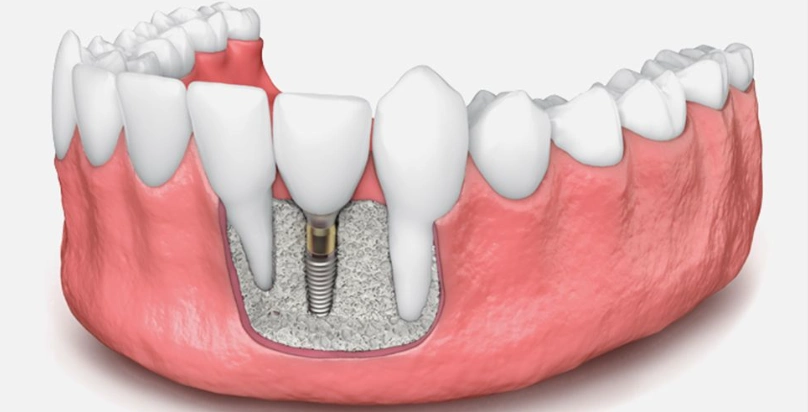
A dental bone graft, visually, is a small quantity of material that is inserted into the jawbone, usually, the place of a tooth extraction or bone resorption. The graft supply, either a donor or a synthetic, may be in small pieces or a paste-like substance, depending on what is utilized.
In the long run, the natural bone will absorb the graft material, and this will lead to new bone growth and, thus, will be ready for dental implants. Usually, this takes some months, and the area gets stronger as the bone heals gradually.
What Is a Dental Bone Graft Made Of?
The sources of bone graft for dental are in the form of several possible materials, each of which has its own distinctive properties. These include:
- Autograft: The bone is taken from the patient’s own body, most commonly from the jaw or hip area. It is usually the most effectual choice as the body is familiar with its own tissue.
- Allograft: The bone comes from a donor, and is generally obtained from a tissue bank. It is a popular choice because it is very convenient and does not require a second surgical site.
- Xenograft: The bone for the graft is taken from an animal (usually a cow), and later it is processed to make it safe for human use.
- Alloplast: Artificial bone is created to resemble natural bone, and thus, it can be used in place of human bone. The materials may be bioactive glasses or ceramics.
Every material has its pros and cons, and your dental surgeon will decide the most appropriate one for you after evaluating your condition.
What Is Dental Bone Graft Surgery?
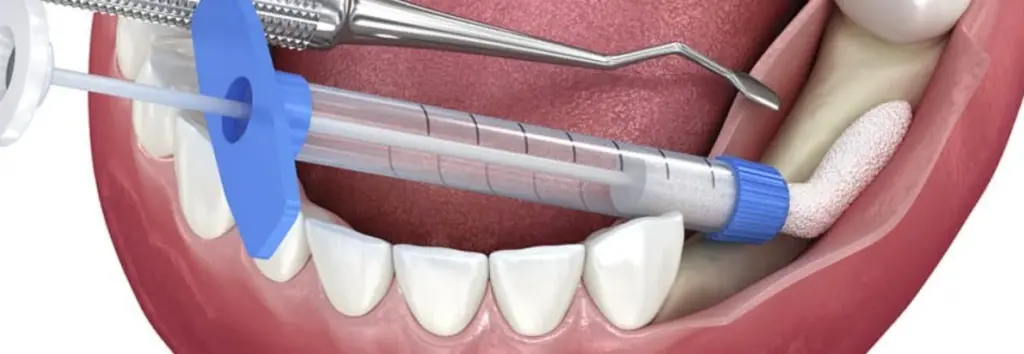
In simple terms, a dental bone graft operation is the method of mending and reconstructing a jawbone that has been either ripped or taken out by a shocking event, a tooth removal, or a disease of some sort. To put it simply, it is the insertion of grafting materials from the bone to the place in the jaw where the bone has disappeared due to resorption.
Generally, the entire procedure begins with the application of a local anesthetic that numbs the area so that the patient is free from pain. If the case is complicated, sedatives or general anesthesia could be administered too. Once the graft has been placed, the incision is closed, and the patient is brought to the recovery room. After the integration stage is completed, the patient can return for the implant fitting.
How Does a Dental Bone Graft Work?
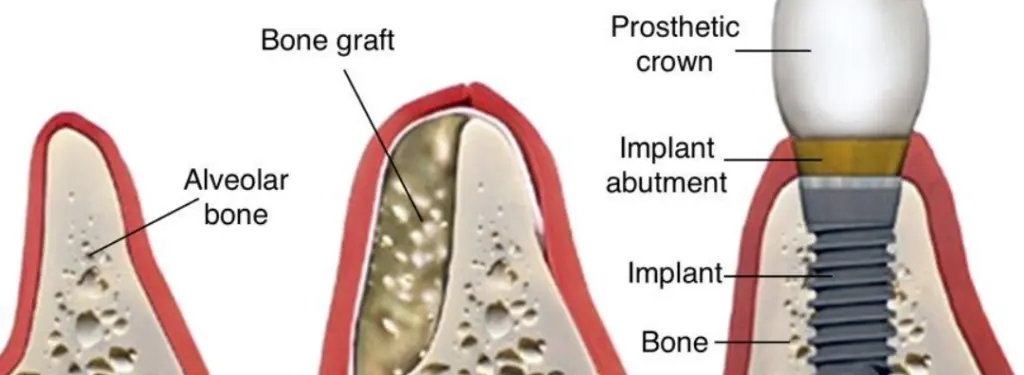
A dental bone graft works as a support for the body’sbone regeneration process. The grafted material turns into thestructure for new bone to grow and the bone that is around itgets the stimulation to regenerate. After that the implantedmaterial merges with the natural bone of the jaw thus the bonebecomes healthy and is able to carry the load that is necessaryfor dental implants.
Once the bone is implanted, the body will basically initiate the repair on its own. The time from the implant to the actual union of the bone can be different but it is generally in months and the doctor will confirm everything is fine by coming to the clinic.
Can a Dental Bone Graft Cause Nerve Damage?
In dental bone grafts, the procedure is usually done without any harm, but in one or two instances, the possibility of nerve damage is taken into account. The mandible has nerves that are extremely sensitive, and if these nerves are harmed as a result of a graft, the patient will probably discover that their lip, gums, or chin are numb and they may also feel some kind of prickling or tingling sensation.
However, the mishap isn’t near your local area. During the procedure, your dentist or oral surgeon will be very careful to avoid the nerves. A nerve injury can be a localized one whereby the sensation of the part of the body that is touched will come back after the swelling time is over, but in a few instances, it can be a permanent one though the percentage is very small.
Can a Dental Bone Graft Be Removed?
A dental bone graft removal is definitely possible, in a case where the graft does not integrate with the bone, or if there is a problem, the removal of the graft material may be required. Keeping a close eye on the healing process, your dentist will make the decision to removal as the option if there is rejection or infection.
The removal of a graft is generally simple, and the risks associated with it are low. It is important for you to comply with your dentist’s instructions during the recovery period to be safe from possible complications.
Could a Dental Bone Graft Lead to the Onset of Health Problems?
Bone grafting in the dental field is considered to be very safe, but it is still not free of the risks side effect-wise. Such risks are infections, graft failure, or difficulty with the anesthesia.
Infections may accompany any surgical intervention, and if they affect the graft material, then it needs to be taken out. The inability of the graft to join the jawbone will cause you to take the necessary steps to have it replaced. However, these are infrequent and can be very well managed with medical care if they occur.
Could a Dental Bone Graft Lead to Headaches?
After a dental bone graft, headache is almost never one of the symptoms. However, a headache can actually be the pain resulting from a swelling or pressure in the jaw area caused by the operation. In most instances, it is a short-lived pain and can be controlled by using over-the-counter analgesics and following the aftercare instructions provided by the dentist.
If after your surgery you suffer from headaches that are severe and continuous, it is essential that you see your dentist for checking whether there are no complications arising in connection with your operation.
Could a Dental Bone Graft Result in Cancer?
Right now, no evidence is found by research that associating dental bone grafts with cancer. Therefore, safety measures taken before implementing medical procedure materials used in the one are very strict whether the latter is autograft, allograft, xenograft, or alloplast.
The necessity for great care and caution remains through the entire process, notwithstanding the minor risk of cancer. Follow all the instructions after the operation and have your check-ups for confirming that all is going on well.
What Steps Can You Take to Reduce the Likelihood of Developing Cancer from Dental Bone Grafting?
- Choosing a competent dentist or surgeon: Make sure that your dental professional has done numerous bone grafting procedures and is skilled.
- After the operation, hygiene has to be kept up well and appointments for control have to be done. If you are careful with the instructions, you will be better and after the operation will be easier too.
- On the other hand, if one wants to decrease the possibility of cancer, then it is a good idea to stay away from smoking and excessive drinking of alcohol as these may delay the healing and raise the chance of getting some additional problems.
What Are the Best Practices to Minimize Cancer Risks with Dental Bone Grafts?
Some of the risk factors that can be brought down to nearly zero if great care is taken are as follows:
The use of materials for the graft selected to be of the highest quality, with the proper certification, and having undergone all necessary testing and clinical trials.
A dental professional selected carefully who adheres strictly to sterilization requirements and proper surgical procedures. Post-surgery recovery instructions followed, including avoiding foods that may cause irritation and refraining from smoking and alcohol.
How Could the Procedures of Dental Bone Graft Be Enhanced in Terms of Safety? To Lower the Risk of Cancer?
Dentists have the ability and do indeed take certain steps to lower the chance of problems when they perform dental bone graft operations. Among these are: guaranteeing the graft material is absolutely safe to be used, using very good and modern sterilization methods, and, also, not least, choosing a dentist who is not only skillful, experienced, and calm, but also has the qualities necessary to perform your dental bone graft operation.
Is there anything that can be done to stop the chances of getting cancer after dental bone grafting?
If you are aiming to stay away from cancer as a side effect of bone grafting by taking proper precautions in your life, then you are required to maintain a healthy lifestyle, make regular doctor visits, and be cautious during the recovery period. The reason behind it is that during a process, smoking and drinking alcohol only worsen the situation, hence they should be stopped as they facilitate the infection and make the recovery slower.
Summary of Dental Graft in Istanbul, Turkey
Such a situation where one’s jawbones urgently need restoration can be traumatic for a patient. A bone graft in the dental field can be a real-life saver in such a case. However, it is still uncertain if the procedure leads to cancer of bonethere are still questions about such a possibility. Nonetheless, the research is currently quite clear that there is no direct link between them. Individuals who contemplate undergoing bone graft may feel quite comfortable in terms of their safety, particularly when they are in the hands of a skilled medical team.
It is possible to achieve good outcomes if you select the correct clinic; a clinic that is not only recognized for the excellence of its work, but also for the safety of the patients. There is no doubt that LEMA Dental Clinic is the place to be in Istanbul, Turkey with cutting-edge technology, highly skilled dentists like Dr. Polen Akkılıç and Professor Doctor Coşkun Yıldız, and their focus being your comfort.
Top Location for Dental Bone Graft in Istanbul, Turkey: LEMA Dental Clinic
If you want the best dental bone grafting in Istanbul, then LEMA Dental Clinic is the place to go. Along with the diligent work of Dentist Polen Akkılıç and her team and the expertise of Professor Doctor Coşkun Yıldız, you can be sure that your bone graft procedure will be done with the utmost precision and the highest standards of care.
Sources:
- “Oral Cancer around Dental Implants Appearing in Patients with Head and Neck Cancer”
This systematic review examines the occurrence of oral cancer around osseointegrated dental implants in patients with head and neck cancer. While the study acknowledges the presence of oral cancer in some implant patients, it does not establish a direct causal relationship between dental implants and cancer development.Read the study here
- “The Link Between Dental Implants And Cancer: Myth Or Reality?”
This article discusses the safety of dental implants, emphasizing that extensive research has found no credible evidence linking dental implants to an increased risk of cancer. Learn more here
- “Cancerous Lesions in the Vicinity of Dental Implants”
This article reviews cases of cancerous lesions near dental implants, noting that while such occurrences are rare, they do not establish a definitive link between implants and cancer. Access the article here
- “RhBMP-2 Does Not Pose a Cancer Risk in Maxillofacial Surgery”
This study investigates the safety of recombinant human bone morphogenetic protein-2 (rhBMP-2) in maxillofacial surgery, concluding that it does not pose a risk for cancer development.
Frequently Asked Questions About Dental Bone Graft Surgery
A dental bone graft is a procedure used to restore lost jawbone tissue, often before a dental implant is placed.
Risks include infection, graft failure, and nerve damage, but these complications are rare and manageable with proper care.
The procedure typically takes a few hours, and full healing can take several months.
Yes, the materials used in dental bone grafts are FDA-approved and have undergone extensive testing for safety.
Consult with your dentist to ensure you’re a good candidate for the procedure based on your health condition.

