


Bonding creates a beautiful smile.
It’s not uncommon for us to encounter patients who think their smile is almost perfect. It could be that there is a tiny gap between the front teeth that’s giving a hard time, a slightly chipped edge caused by a childhood accident, or a single tooth that is a little narrower than the neighbors. Cosmetic dentistry has a very elegant way of fixing such subtle yet great mistakes.
From our point of view at Lema Dental Clinic in Turkey, we always refer to dental bonding as our favorite “artistic” tool. Where as porcelain veneers are like putting in marble countertops with a custom design, bonding is a master artist going to a great masterpiece and adding a perfect proportion of clay to it.
The Art of the Additive Approach
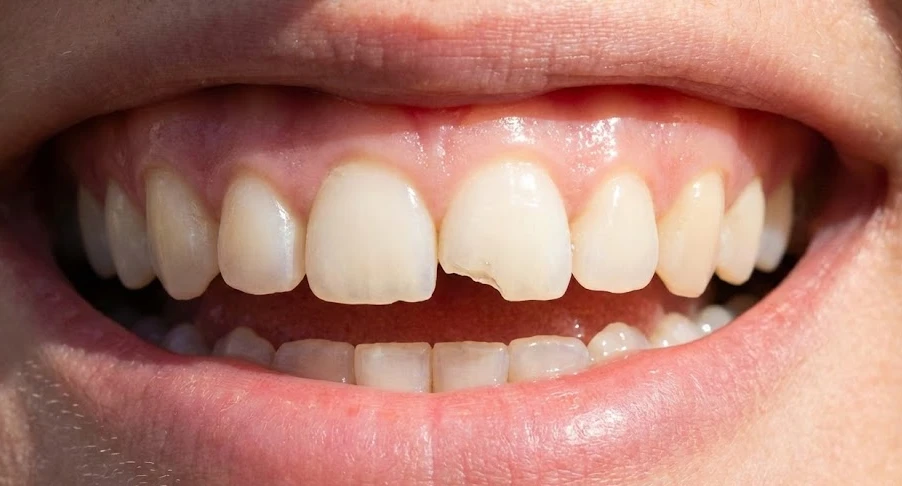
The truth is that most dental treatments involve cutting down some parts of your natural tooth. Dental bonding is a totally different thing. It is mainly a procedure that adds to your tooth.
Professor Doctor Coşkun Yıldız very often says that the feature of bonding that is most striking is that it is very little invasive. We take a high-density composite resin, which is a material that is very close to the natural enamel in its behavior and form it on your tooth only. We then apply a special light which we call curing or hardening which causes the resin to be fused as well as if it was your natural enamel.
However, the question remains: Is it suitable for everyone? If you intend to have a new color for your whole smile, you will probably need a more thorough solution. But when the aim is to remove the small defects in a localized way, the bonding takes the shortest and least invasive way most of the time.
But Let’s Look Closer: Bonding vs. Veneers
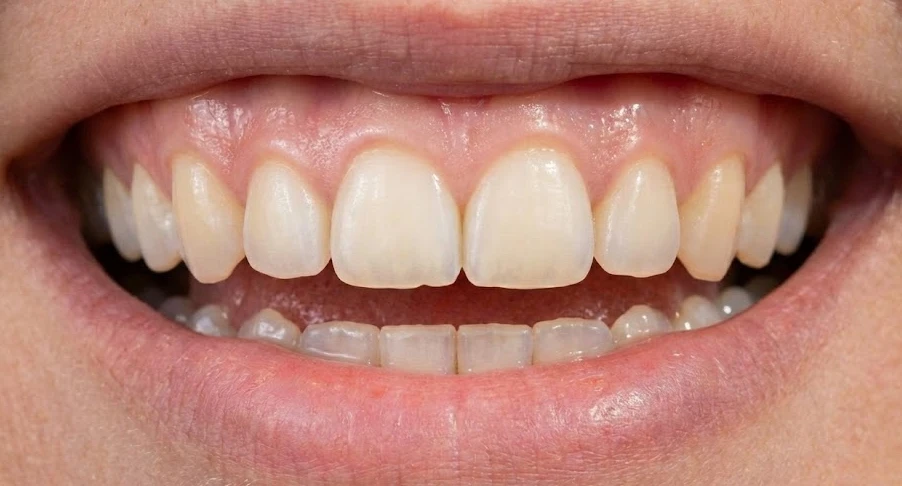
One of the things our clients in Turkey get confused about is whether they are supposed to choose bonding or porcelain veneers. Both can be very beautiful but quite different in their function in the long-term architecture of your mouth.
Here is what we see in the clinic when comparing the two:
| Feature | Dental Bonding (Composite) | Porcelain Veneers |
| Preparation | Usually zero tooth reduction. | Requires removing a thin layer of enamel. |
| Durability | 5–7 years on average. | 15–20+ years with care. |
| Stain Resistance | Can pick up stains over time (like natural teeth). | Highly resistant to staining. |
| Time in Clinic | Single visit (usually 30-60 mins per tooth). | 2–3 visits over several days. |
| Reversibility | Completely reversible in most cases. | Generally considered a permanent change. |
The Lema Touch: Why the Sculptor Matters
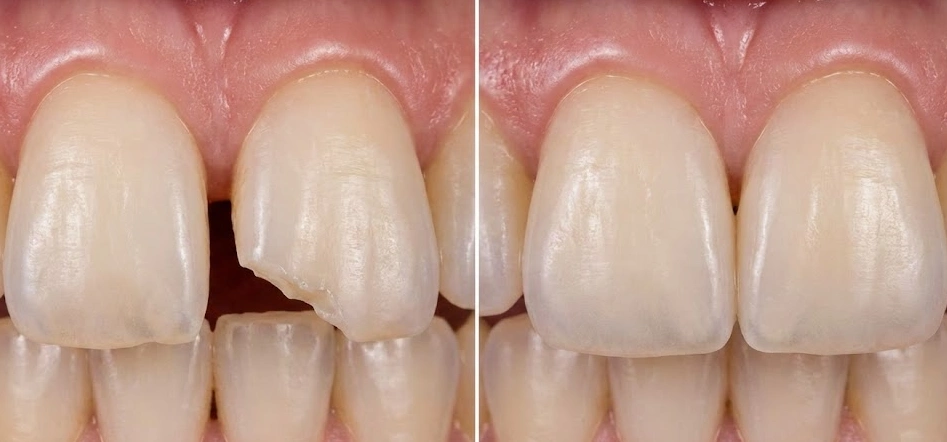
Because the resin is manually applied and molded by the artist’s hand, the outcome is a reflection of the practitioner’s dexterity. At Lema Dental Clinic, Dr. Polen Akkılıç and her team consider bonding as a canvas for their artistic expression.
They don’t just “fill a hole.” They consider the manner in which light interacts with your natural teeth—an attribute we call translucency. Natural teeth are not merely a flat, opaque white; they possess depth and subtle color variations. We have our team to create a very natural effect by layering different shades of resin to imitate this natural complexity so that when you smile in the bright sun of Turkey, your dental work remains a secret between you and your doctor.
A Metaphor for Your Smile’s Foundation
If your tooth is a house and the walls are collapsing and the roof is falling in, repainting will not work; you need to get a complete makeover (crown or implant). On the other hand, if the house is structurally fine but there is a small crack in the siding or a chip in the window frame, then bonding is the “architectural filler” that restores the home’s curb appeal without the use of a wrecking ball.”
Golden Smile Insights: Common Questions Answered
Not at all. Because we are usually adding to the tooth rather than drilling into it, anesthesia is rarely even necessary. Most patients find the experience as comfortable as getting a simple cleaning.
Treat them like your natural teeth, but with a bit of extra caution. While the resin is strong, it isn’t as hard as natural enamel or porcelain. We advise our patients to avoid biting directly into very hard objects like ice or hard candy with their bonded teeth.
es, but here is a clinical tip: bonding material does not respond to whitening gels. If you are planning to whiten your smile, we recommend doing so before your bonding session. Dentist Polen Akkılıç will then match the resin to your new, brighter shade.
Bonding is great for “camouflaging” minor misalignments, but it cannot move a tooth. If the crowding is significant, we might suggest orthodontic treatment first. However, for a single “tilted” tooth, bonding can often create the illusion of a straight smile.
One of the biggest advantages of bonding is its speed. Unlike veneers, which require lab time, bonding is finished in a single appointment. You can have your smile transformed in the morning and be out enjoying the sights of Istanbul or the Turkish coast by the afternoon.
- Ferracane, J. L. (2011). Resin composite—State of the art. Dental Materials, 27(1), 29-38.
- Dietschi, D., & Shahidi, C. (2016). Contemporary Anterior Composite Restorations: A Review of Techniques and Materials. Journal of Cosmetic Dentistry, 32(1).
- Terry, D. A., & Geller, W. (2013). Aesthetic & Restorative Dentistry: Material Selection & Technique. Quintessence Publishing. (Focuses on layering techniques for natural translucency).
- Peumans, M., Kanumilli, P., De Munck, J., Van Meerbeek, B., & Lambrechts, P. (2005). Clinical effectiveness of contemporary adhesives: A systematic review of current clinical trials. Dental Materials, 21(9), 864-881.
- Vargas, M. A. (2006). Conservative aesthetic enhancement: bonding for diastema closure. Contemporary Esthetics and Restorative Practice, 10(6), 22-28.

