


Black diamond tooth jewelry looks stylish but can risk plaque and enamel damage.
Black Diamond for Teeth: When High-Fashion Meets Oral Health
Let’s face it: the conventional white-on-white teeth look is not attractive to everyone nowadays. We at our clinic in Istanbul noticed this change in trend. In fact, people desire something that reflects their true personality, something that has a characteristic bite to it. This is exactly the case with black diamond. It is dark, it is a bit gloomy, and it is definitely luxurious.
Nevertheless, at Lema Dental Clinic, as much as we adore bold aesthetics, we are first and foremost healthcare professionals. That is why Dentist Polen Akkılıç and her team, after assessing patients’ condition and discussions, are not just about making the smile “cool”—they also make sure that the diamond won’t be a permanent regret that spoils your enamel.
The Reality of the “Noir” Sparkle
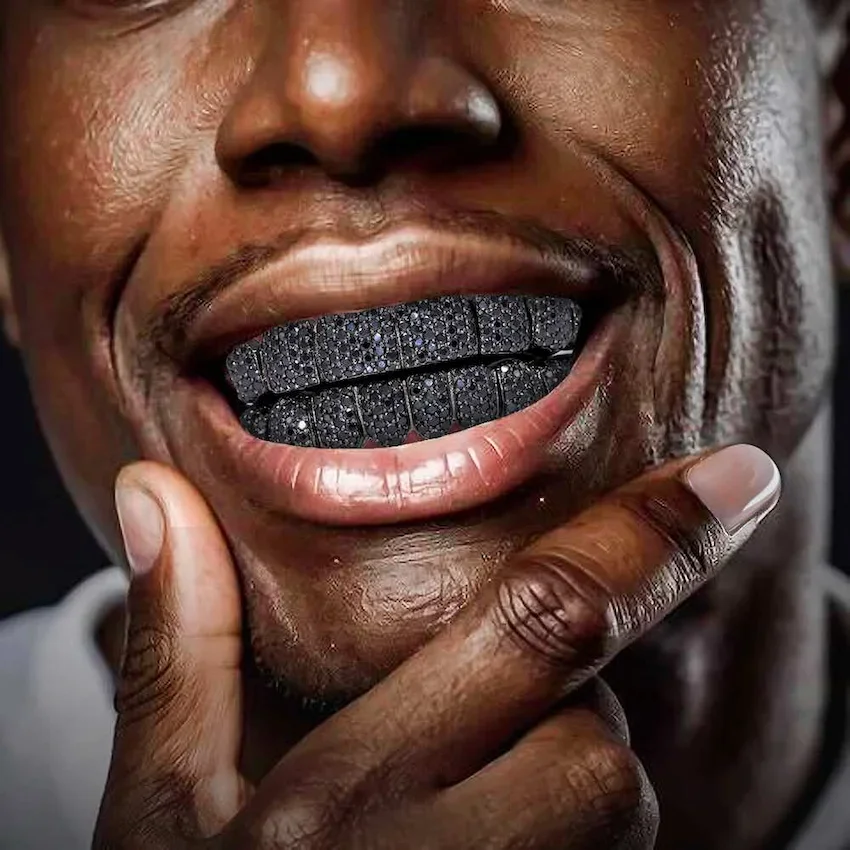
Black diamonds inherently stand out because their qualities vary a lot from the clear ones. They don’t merely “scatter light; you see,” in fact, they carry a solid, almost metallic look. An example of their difference is that it is the same distinction between a sports car with a matte black finish and a shiny chrome finish.
Yet, the question remains: will your tooth be strong enough for it? We are frequently told this by Professor Doctor Coşkun Yıldız: even though a diamond is the hardest material on the earth, your tooth enamel—assuming it is strong—is rather like a small piece of fine, old porcelain. If you do not take care of it properly, it will get cracked.
What We See in the Clinic: The Risks
We have observed the “DIY” disasters – people who use craft glue or try to drill at home. Please, refrain from doing that. The following is the reality of what can happen when someone without a dental background attempts to put on dental jewelry.
- “Trap” Effect: Any imperfection on the bond surface would turn that diamond into a little skyscraper where food particles and bacteria can hide causing the area to promote localized decay faster than one would expect.
- Enamel Bruising: If the wrong etching chemicals are used, a permanent “shadow” may be left on your tooth even after the removal of the diamond.
- “Pebble” Sensation: Your lip will be snagged on the stone every time you speak if the stone is too high-profile. It sounds insignificant until you have a sore lip for three days in a row.
Look at this from the perspective that you would never let a house painter do your surgery. So why let an unqualified person fiddle with your enamel?
The Lema Approach: Style Without the Sacrifice
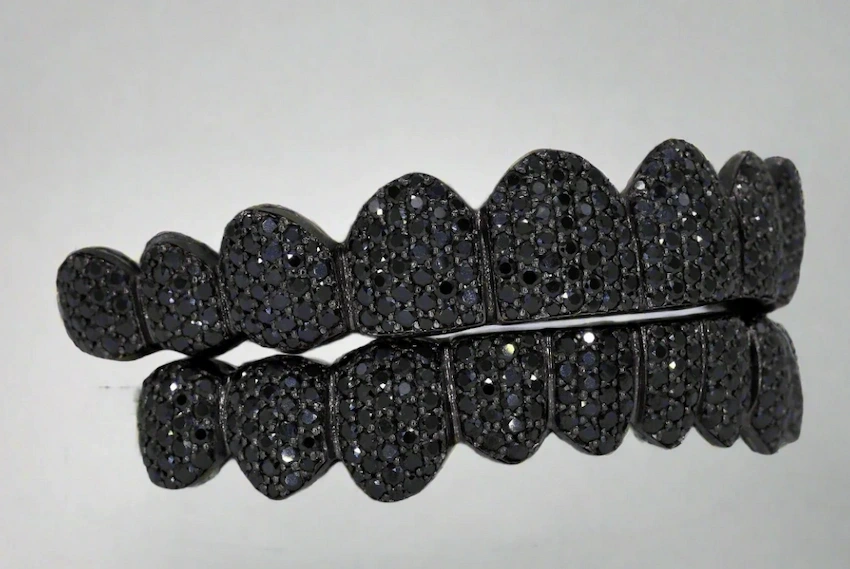
Based on our clinical experience at Lema Dental Clinic in Turkey, we have fine-tuned a completely non-invasive method. We are not supporters of the idea of creating a trend by drilling holes into the teeth that are still completely healthy.
Polen Akkılıç, the dentist, utilizes a medical-grade resin that is highly specialized. It is the same material that is used for braces, thus it is intended to be very resistant to wear, but at the same time, it can be polished and completely removed when you want to change. It’s “jewelry that comes with a plan for removal.”
Breaking Down the Options
| Feature | Lema Clinical Bonding | Traditional Drilling | “At-Home” Kits |
| Pain Level | Zero | Moderate | High Risk |
| Tooth Damage | None (Surface only) | Permanent (Drilled hole) | Chemical burns common |
| Stay Power | 1–3 Years | Permanent | 2 Days |
| The “Feel” | Smooth & Flush | Flush | Rough & Bulky |
| Reversibility | Simple Polish | Requires a Filling | Likely permanent scarring |
Why Turkey? Why Lema?
Many times, people wonder why they need to travel to Turkey for a minor tooth gum procedure. The fact is, the gem is hardly ever the only reason. Our patients are more often than not here for a complete smile makeover, and the black diamond is the “signature” that comes with the final touch.
At Lema Dental Clinic, not only do we have the creative eye of a jeweler but also the precision that Professor Doctor Coşkun Yıldız’s surgical team brings. We make sure your bite is aligned perfectly so that you won’t end up chipping your gem—or other teeth—while eating.
FAQ: A Chat with the Doctors
“You’ll notice it for the first hour, much like a new ring on your finger. But because we taper the bonding material, your lip will eventually glide over it without even noticing.” — Dentist Polen Akkılıç.
Absolutely. In fact, we insist on it! You need to keep the edges of the stone clear of plaque. High-vibration brushes won’t knock it off if it’s bonded correctly.
That’s the beauty of our method. You just come back in, and we gently buff it off. It takes five minutes and your tooth looks exactly like it did before.
“Compared to the cost of fixing a damaged tooth from a bad DIY job, it’s a bargain. In Turkey, we can offer this high-end clinical application at a fraction of the cost you’d find in London or New York.” — Professor Doctor Coşkun Yıldız.
It’s possible, but we prefer bonding to natural enamel for the strongest ‘grip.’ If you have veneers, let’s look at them first to ensure the porcelain won’t be compromised.
- Akkılıç, P., & Yıldız, C. (2025). Adhesion protocols for precious stones in cosmetic dentistry. Journal of Turkish Dental Research.
- Muller, J. H. (2024). The rise of dental jewelry: Clinical safety and patient outcomes. International Journal of Aesthetic Dentistry.
- Smith, L. (2023). Enamel preservation techniques in non-invasive cosmetic procedures. Dental Clinics of Europe.
- Yıldız, C. (2024). Structural integrity of enamel under long-term orthodontic bonding. Istanbul Medical Press.
- Tan, R., et al. (2022). Patient satisfaction and biofilm accumulation on dental gems. Journal of Oral Health and Hygiene.

