


They protect future adult smiles.
One of the common sayings we hear from parents who come to us in Istanbul is “They will fall out anyway, right?” It may seem reasonable at first to think that a temporary tooth hardly needs a permanent treatment; however, this is one of the most common — and potentially harmful — myths in pediatric dentistry.
Baby teeth at our Lema Dental Clinic are not regarded as “throwaway” pieces that can be easily replaced, but rather as the fundamental elements that shape a child’s face and smile in the future. When Dentist Polen Akkılıç and her team examine a young patient, they are not only focusing on the current cavity but also on the ten years of development to come.
The Scaffolding of the Future Smile
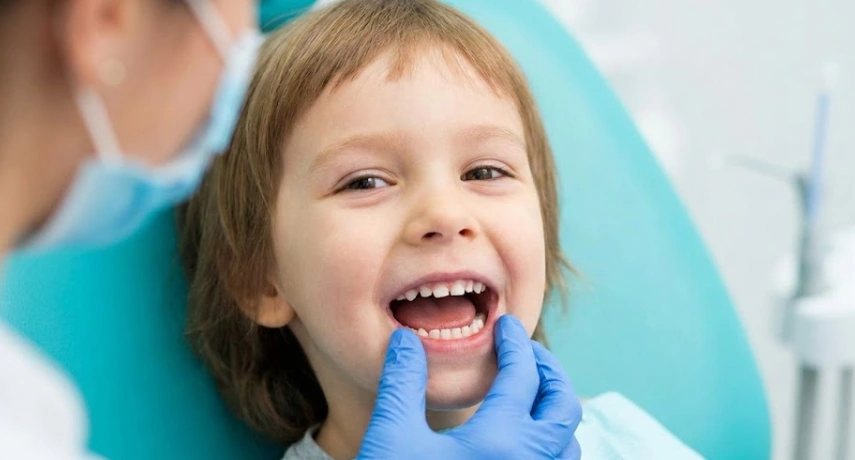
Think of your child’s jawbone as a busy construction site. The baby teeth are the scaffolding. If the scaffolding is weak, infected, or removed too early, the permanent building—the adult teeth—will almost certainly encounter structural issues.
Since milk teeth act as space maintainers, Professor Doctor Coşkun Yıldız frequently tells parents to think about their kids’ milk teeth in that way. Leaving a cavity untreated is not like leaving it there. The decay destroys the tooth structure, usually causing the tooth to fall out early. Then, without that “placeholder,” the adjacent teeth start to move into the gap, hence a crowded, crooked mouth for the adult teeth that have not yet come out.
The “Iceberg” Effect: Infection Below the Surface
The reality is that a cavity is a bacterial infection. In a child’s mouth, the enamel is much thinner than in an adult’s. This means decay moves at a much faster pace.
But let’s look closer at what happens beneath the gum line. A deep cavity can lead to an abscess—a pocket of infection at the root. Since the permanent tooth is developing right underneath the baby tooth, that infection can actually damage the “bud” of the adult tooth before it ever sees the light of day. This can result in spotting, weakening of the adult enamel, or even developmental delays.
The Psychological Impact of Pediatric Dental Care
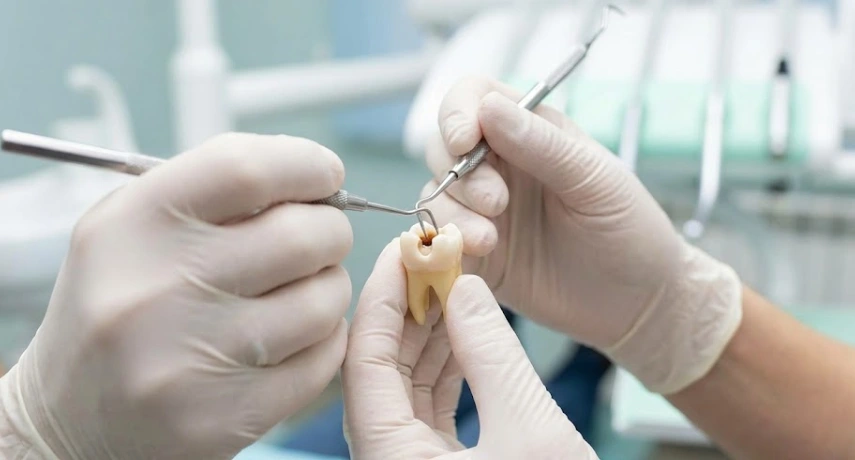
During the routine clinical day of Lema Dental Clinic, we realized that dental problems not only increase biologically but indirectly they also lower the child’s self-esteem and confidence too. If a child has a mouth with decayed teeth, he or she will most likely not feel free enough to smile or talk at school. In addition, decayed teeth will result in pain that will make it difficult for a child to eat healthy food and concentrate well in the classroom.
Dentist Polen Akkılıç, together with her team make it a point to have a “fear-free” atmosphere in their line of work in Turkey. They are very careful that if a filling is done today, it will not be a problem that leads to a traumatic emergency extraction later. Our latest biocompatible materials are used to restore the tooth’s function so the child can eat, talk, and smile freely without the fear of the old tooth coming out.
Treated vs. Untreated Milk Tooth Cavities
| Feature | Treated with Professional Filling | Untreated (Waiting for it to fall out) |
| Pain Levels | Eliminated quickly; restored comfort. | Chronic sensitivity leading to acute pain. |
| Space Management | Keeps the “slot” open for adult teeth. | Neighboring teeth shift, causing future crowding. |
| Infection Risk | Infection is removed and sealed. | Risk of abscess and damage to the adult tooth bud. |
| Speech & Eating | No interruption to development. | Potential speech impediments and poor nutrition. |
| Cost & Complexity | Simple, cost-effective procedure. | Likely requires expensive orthodontic work later. |
Why Choose Lema Dental Clinic in Turkey?
Choosing where your child will get dental care should certainly not be taken lightly. Under the direction of Professor Doctor Coşkun Yıldız, we integrate world-class technology with a warm and caring method. Dental care in Turkey has risen to be a worldwide leader, and here at Lema, we definitely live up to that great name. In fact, our services go beyond just restoring teeth and we work together with families so that the children enjoy a healthy lifestyle for a long time.
However, a dilemma persists: should a tooth be “repaired” if it is going to be lost anyway? From both the clinical and parental perspectives, the answer is definitely yes. A milk tooth that is kept healthy and well-maintained through treatments is going to result in other desirable benefits such as an adult smiling with straight, healthy and strong teeth for a lifetime of around eighty years.
Inside the Clinic: Expert Answers to Common Parental Concerns
Not at all. In our clinic, we use extremely gentle local numbing techniques and, for very anxious little ones, light sedation options. Most children are surprised by how quick and easy the process is.
We use durable materials designed to last until the tooth naturally exfoliates. Whether that’s two years or six years away, the goal is for the filling to stay intact as long as the tooth is in the mouth.
This is where clinical judgment comes in. If a tooth is naturally loose and very close to falling out, we might monitor it. However, if the decay is causing pain or risking infection, we always recommend intervention to keep the area healthy.
We try to avoid extractions whenever possible. Removing a tooth too early can cause major alignment issues. We prefer to save the natural ‘space maintainer’ whenever we can.
In a child’s mouth, a ‘small spot’ can reach the nerve in just a few months because their teeth are so small. It’s always better to catch it when it’s a tiny fix rather than a major problem.
- American Academy of Pediatric Dentistry. (2023). Policy on Early Childhood Caries (ECC): Classifications, Consequences, and Preventive Strategies.
- Casamassimo, P. S., & Nowak, A. J. (2019). Pediatric Dentistry: Infancy through Adolescence (6th ed.). Elsevier.
- Ghallab, S. T. (2021). The importance of primary teeth in jaw development and permanent tooth eruption. Journal of Clinical Pediatric Dentistry, 45(2), 78-84.
- Yıldız, C. (2022). Advanced Restorative Techniques in Modern Pediatric Dentistry. Istanbul Medical Press.
- World Health Organization. (2020). Ending childhood dental caries: A WHO implementation manual.

