


What is the Function of the Alveolar Ridge in Speech?
It is one of those things that people do hundreds, if not thousands, of times a day without even realizing it. It’s the silent partner in your conversations, the unsung hero of your clear pronunciation, and the most essential support of your smile. The alveolar ridge is what we mean – a tiny but powerful part of your mouth that really deserves its own moment in the spotlight.
Perhaps you have heard the term “alveolar sounds” in linguistics and were puzzled by the bony ledge behind your teeth or were simply handling dental health questions. In any of these situations, a thorough understanding of this structure is a must. This complete guide is your thorough exploration of the alveolar ridge world, resolving all the questions you might have, and its indispensable role in speech, eating, and oral health in general.
Where is My Alveolar Ridge? A Step-by-Step Exploration
We should perhaps begin with the most basic question: where is it? Finding your alveolar ridge can be easily, experimentally (or rather, tongue-on) proven without any help.
- The Initial Touch: Open your mouth slightly and feel the back of your upper front teeth with the tip of your tongue.
- The Backward Journey: Next, gradually move your tongue straight backward, away from the teeth. You will quite immediately come across a distinctly rounded and often a little bit rough bony arch.
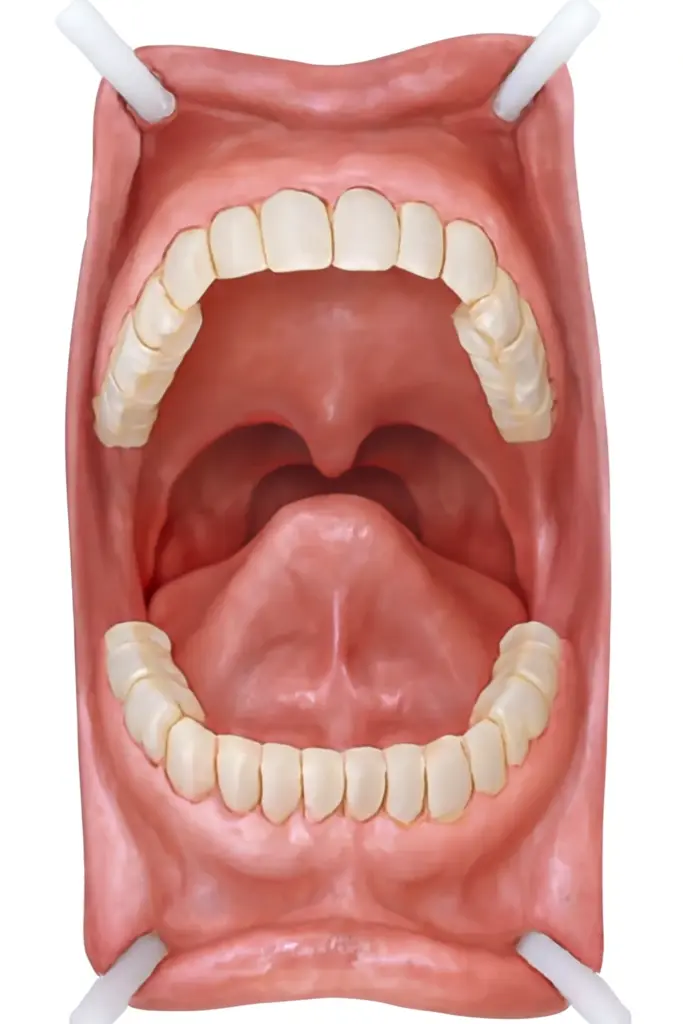
- You’ve Found It! This raised, textured area is your alveolar ridge. The alveolar ridge, or the ridges for that matter, are those areas where the gums meet the hard palate and the jaw becomes one with each other. It is not the flat, hard roof of your mouth (that will be the next step), but the specific, curved ridge that forms the border between your teeth and the palate.
In anatomical terms, the ridges are counted as two which are in your mouth: the one on your upper jaw (the maxillary alveolar ridge) and the other one on your lower jaw (the mandibular alveolar ridge). But, in terms of speech and everyday use, people usually refer to the most prominent one on the upper jaw, which is the main source of sound production, when they say “the alveolar ridge”.
Is the Alveolar Ridge the Hard Palate? Demystifying Oral Anatomy
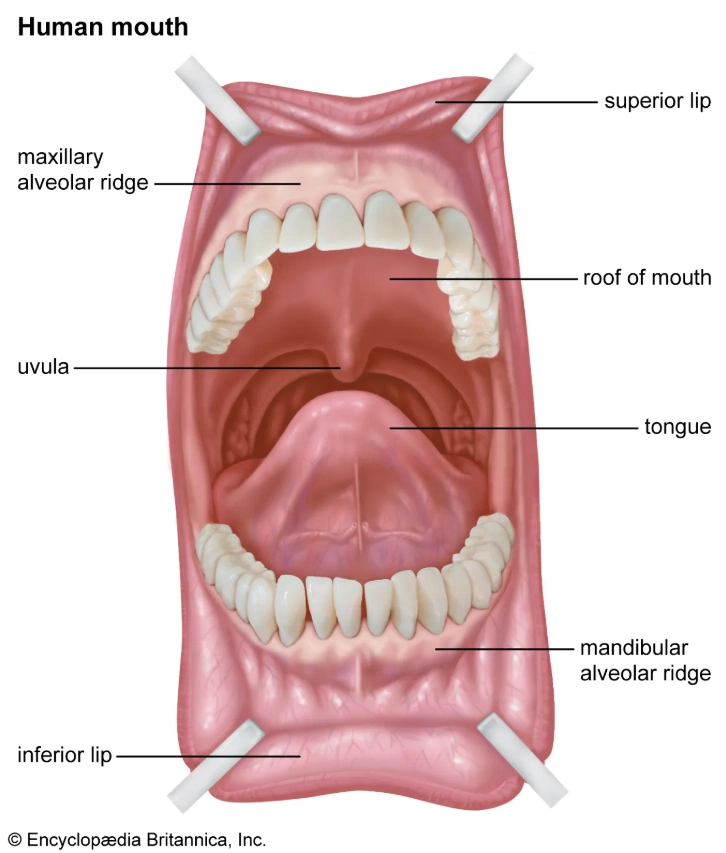
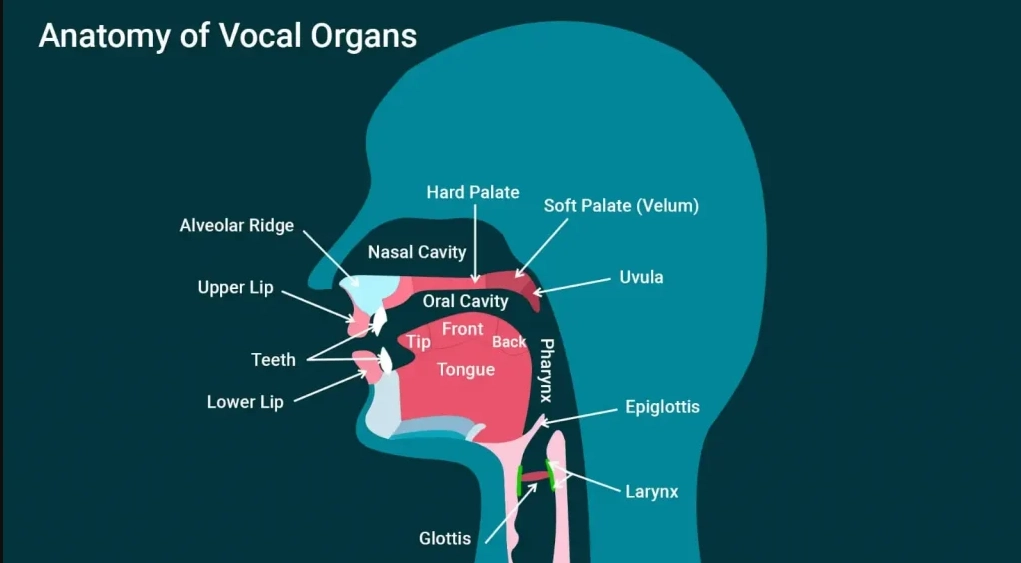
This point is frequently mixed up, but the answer is a definite no. The alveolar ridge and the hard palate are two separate but neighboring entities. Think of them as different sections of the same road.
- The Alveolar Ridge: This is the on-ramp. It’s the very first bone structure that you can find right behind your teeth. Its main function is structural: to accommodate the sockets (dental alveoli) that hold the roots of your teeth. It is characterized by an arched shape.
- The Hard Palate: This is the main highway. It starts exactly at the point where the alveolar ridge ends. It is the big, hard, rounded part that constitutes the major portion of the roof of your mouth. Whereas one of its main functions, besides separating the oral cavity from the nasal cavity, is to offer a surface for the tongue during swallowing, it also helps in the production of some sounds.
- The alveolar ridge is where the hard palate begins. Although they work hand in hand, they are distinct both anatomically and functionally.
Why is the Alveolar Ridge Important? Beyond Speech and Into Structure
First of all, the alveolar ridge has structural functions to perform as a human body part. It is the scaffolding of the two most important human involvements: communication and nourishment.
1. The Star of Speech Production (Articulation)
The most well-known function of the alveolar ridge is its usage as a primary articulator. Together with the tongue, it basically does the job of bringing about a set of sounds known as alveolar consonants. The following is the working principle:
When speaking, you control the flow of air from your lungs with the help of vocal folds, tongue, lips, and palate. To produce alveolar sounds, the tip or the blade of the tongue should come into very close contact with the alveolar ridge. This contact can:
- Completely interrupt the airflow for a very short time and then release it quickly, resulting in plosive sounds being produced like /t/ (as in “top”) and /d/ (as in “dog”).
- Tightening the space between the tongue and the alveolar ridge so the air comes through a narrow channel, thus causing a fricative sound such as /s/ (as in “sip”) and /z/ (as in “zoo”).
- Passing the air through the nose when the tongue apex is blocking the oral cavity, thus making a nasal sound like /n/ (as in “no”).
- Letting the air go around the tongue sides thus making a liquid sound like /l/ (as in “lip”).
In the absence of a well-formed and properly working alveolar ridge, such sounds as those get distorted, which in turn results in speech problems like lisping or generally inaccurate pronunciation.
2. The Foundation for Your Teeth
The alveolar ridge is structurally the actual basis of your dentition. It is not a separate, unaltered bone; rather, it is a dynamic, living tissue that is specifically made to accommodate your teeth. The spaces in the ridge, known as alveoli, are the places where the tooth roots are firmly held through the periodontal ligament. This complicated system does the function of a shock absorber when feeding.
Bone remodeling is a very important part of the process. The alveolar bone is always changing its shape visually due to the forces that are exerted by the teeth. Extraction of a tooth brings about alveolar ridge resorption. When there is no stimulation because the tooth is gone, the body resorbs the bone that is around the area. This problem in the future can make the dental restorations, like implants or dentures, more difficult, resulting in less bone volume being available for correct positioning.
What is the Alveolar Ridge of the Tooth? The Dental Perspective
From the dental point of view, “alveolar ridge of the tooth” means the part of the jawbone which has the dental alveoli – the sockets where the roots of teeth are held. This is the unit that supports the teeth.
- Composition: It consists of a specially modified skeleton known as alveolar bone proper (the cribriform plate, which is seen as the lamina dura in an X-ray) and the cortical and cancellous bone that supports it.
- The Lifecycle: The ridge is the result of development at the stage of infancy and childhood, alongside the eruption of teeth. Its condition depends entirely on the presence of teeth. Thus, once a tooth is taken out, the vacant socket heals, yet the bone underlying the ridge often lessens both in terms of height and width with time. This is the reason why dental professionals recommend the likes of bone grafting at the moment of extraction so as to keep the ridge for upcoming implants.
- Clinical Importance: Determining the alveolar ridge’s quality and quantity is a regular feature of dental check-ups, chiefly implant placement, denture, and orthodontic planning.
How to Tell if a Tongue Tie is Affecting Speech: The Critical Alveolar Ridge Connection
A tongue tie, or medically known as ankyloglossia, is an abnormality where the skin under the tongue (the lingual frenulum) is so short, tight or thick that the movement of the tongue is limited. Most speech sounds need the tongue tip to touch the alveolar ridge, so a tongue tie could be directly and significantly impacting here.
These are the signals that a liaison of speech may be induced by a tongue-tied condition in children and adults:
- Inability to Achieve Alveolar Contact: One of the most telling symptoms is the physical impossibility of lifting a tongue tip to contact the alveolar ridge. You can ask a person to say “la, la, la” or “ta, ta, ta” and look if the tongue tip is capable of making a definite contact.
- Articulation Errors: Lisping: A frontal lisp (producing “th” for “s”/”z”, e.g., “thun” for “sun”) is very common, as the tongue pushes forward instead of rising to the alveolar groove.Distortion of /t/, /d/, /n/, /l/: These may be sounds that are muffled, omitted, or replaced by other sounds that are produced deep in the mouth.
- Lisping: A frontal lisp (producing “th” for “s”/”z”, e.g., “thun” for “sun”) is very common, as the tongue pushes forward instead of rising to the alveolar groove.
- Distortion of /t/, /d/, /n/, /l/: These may be sounds that are muffled, omitted, or replaced by other sounds that are produced deep in the mouth.
- Compensatory Patterns: The body attempts a workaround. A person may alter their lip posture, excessively drop their jaw, or use the middle of the tongue instead of the tip during speech production, which can lead to articulation issues and result in unclear or “slushy” speech.
- Difficulty with Rapid Speech: The movements of the tongue may be slow, too much effort may be put, and the movements may not be accurate, especially when one has to quickly change sounds that need different tongue positions.
Should you recognize this pattern of behavior, referral to a speech-language pathologist (SLP) for professional assessment is very important. They can accurately assess the functional difficulties and typically coordinate with a dentist or ENT who can give a diagnosis and maybe even carry out a frenectomy (a procedure to release the tongue tie).
Alveolar Ridge Health: Resorption, Care, and Clinical Procedures
The condition of your alveolar ridge is of great importance not only for the proper oral function but also for the visual aspects.
What is Alveolar Ridge Resorption? This is the jawbone loss process after tooth removal. When the root is not there to stimulate the bone, the body considers the bone to be redundant and thus initiates the breakdown process. The speed of resorption is different for each individual but it is the fastest during the first year after a tooth is removed. Dentures that initially fit perfectly may gradually loosen over time due to the natural resorption of the alveolar ridge, which reduces available support for the prosthesis.
How to Keep Your Ridge in Good Condition:
- Good Oral Hygiene: Absolutely, a major gum disease, periodontitis, must be avoided at all costs, as it is this infection that eventually leads to the destruction of the bone that supports the teeth.
- Prompt Tooth Replacement: In case a tooth is mishap to be lost, discussing with your dentist about potential replacement, such as implants, will certainly be a great way of maintaining the bone.
- Bone Grafting: This is a popular method in which the material for the graft is put in the socket of extraction so that the resorption is minimized and the ridge remains intact.
How Do Dentists Measure Alveolar Ridge Height?
This one is beyond the realm of home practices and belongs solely to the clinical domain. To accomplish this task, dental and oral surgery specialists resort to several techniques:
- Clinical Probing: Periodontal probing, aided by a calibration scale, is employed in the physical measurement of the bone that surrounds the teeth.
- Radiographs: Panoramic X-ray is used when a broad overview is needed, whereas Cone Beam Computed Tomography is chosen for providing pinpointed 3D images which consequently lead to the accurate measurement of bone width, height, and density. This is crucial for dental implant planning.
The Alveolar Ridge: The Unsung Hero of Clear Speech and Oral Health
The alveolar ridge, to put it briefly, is a very significant part of the human body, the upper jaw, or the roof of the mouth, where it can be found. It is a living, breathing base; that is how it supports our teeth and enables us to make clear speech, which is, basically, the main way we communicate with the world. The alveolar ridge is the organ that not only assists us in pronouncing our language correctly but also, to a great extent, is the source of the success of dental treatments. By recognizing and appreciating this small yet mighty structure, we come to know that health, human communication, and anatomy are one amazing system.
References
[1] Norton, N. S. (2016). Netter’s Head and Neck Anatomy for Dentistry (3rd ed.). Elsevier.
[2] Ladefoged, P., & Johnson, K. (2014). A Course in Phonetics (7th ed.). Cengage Learning.
[3] Araújo, M. G., & Lindhe, J. (2005). Dimensional ridge alterations following tooth extraction. An experimental study in the dog. Journal of Clinical Periodontology, 32(2), 212-218.
[4] Webb, A. N., Hao, W., & Hong, P. (2013). The effect of tongue-tie division on breastfeeding and speech articulation: a systematic review. International Journal of Pediatric Otorhinolaryngology, 77(5), 635-646.
[5] Messner, A. H., & Lalakea, M. L. (2002). The effect of ankyloglossia on speech in children. Otolaryngology–Head and Neck Surgery, 127(6), 539-545.
[6] Vandenberghe, B., Jacobs, R., & Yang, J. (2007). Diagnostic validity (or acuity) of 2D CCD versus 3D CBCT images for assessing periodontal breakdown. Dentomaxillofacial Radiology, 36(1), 2-7.
FAQ’s About the Alveolar Ridge Oral Health and Function
Alveolar ridge is the part of the upper or lower jaw where the tooth roots are placed, i.e., the bony area. It supports teeth and oral structure, thus dental health and speech are influenced by it.
The alveolar ridge is one of the speech organs. The use of consonants “t”, “d”, “n”, and “l” is most typical where the tongue tip touches this part of the oral cavity. In case alveolar ridge is destroyed, sound may be unclear or imprecise.
Yes, when a tooth is lost, the lack of stimulation causes the alveolar ridge to resorb, or shrink. This can lead to changes in oral structure, making it harder to place dental implants or dentures and affecting speech clarity.
When alveolar ridge resorption happens, the bone left is insufficient for dental implants, thus it cannot be fixed tightly. Sometimes, a bone graft may be required to not only fill the gap but also to make it possible for the placement of the implant.
The alveolar ridge enables the tongue to assume the correct position for clear speech. When the ridge is either injured or insufficient, the tongue may not be able to make contact, leading to slurred speech.

