


3D dental renders help design and preview your smile before surgery for safer, more accurate treatment planning.
A 3D dental render gives patients a peek at a virtual version of their planned smile ahead of the start of treatment, a sort of time travel to the end. When a dentist explains, a patient still needs to visualize the treatment plan to some extent. On such occasions, digital tools offer an effective way of revealing a future tooth shape, size, position, and the overall look of a smile.
Dentist Polen Akkılıç and Prof. Dr. Coşkun Yıldız at Lema Dental Clinic can, among various ways, plan treatment using digital images. The clinicians and their team have to check everything: teeth and gums, how well you bite, and also your face and what treatment you’d expect, before they come up with the detailed treatment plan.
Sharing a digital preview with a customer can be an efficient means of both communication and planning. Nevertheless, it should be perceived more as a simulation of the treatment than an accurate final picture of the result.
What Is Digital Smile Design?
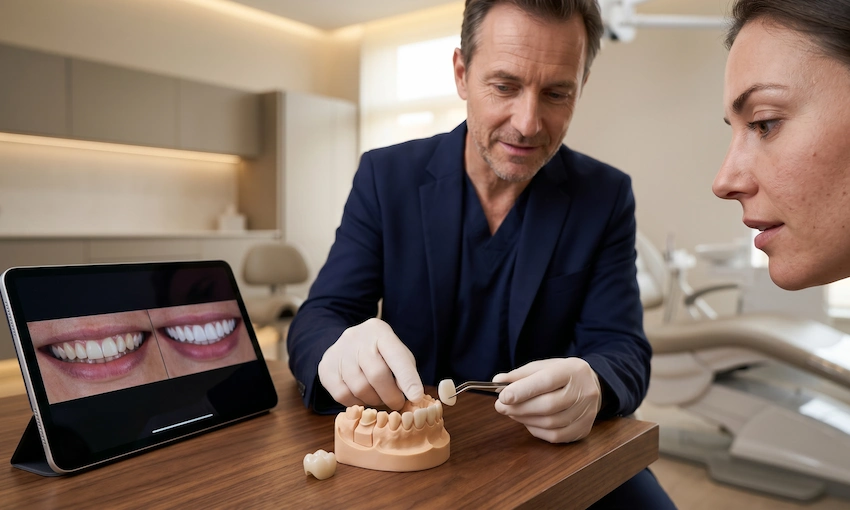
Digital Smile Design is a method of planning based on the patient’s dental photographs taken, scans, and dental records that results in producing a visual model of what the patient’s future smile will look like.
This method of planning helps to evaluate the way teeth interact with lips, gums, face, and the bite. The ability to plan cosmetic changes is thus increased, keeping the overall appearance intact and balance between different parts achieved.
In the right context, a digital smile plan might be a great aid in examining:
- Length and width of teeth
- Position of teeth and alignment
- Smile line
- Gum visibility
- Teeth position
- Smile proportions
Besides helping the dentist understand a patient’s wishes, this way of communication with the patient makes it easier for them to describe what they like or the aspects that they are concerned about right from the start.
How Digital Smile Design Technology Functions
In most of the cases, the work process starts with data collection in a digital form. This data may come from photos of the patient’s face, inside their mouth, or X-ray imaging, as well as digital scans for that case.
The dental professionals will put together this data in order to make a digital picture of a mouth and a smile. At that point, if there are any dental treatments required, the dentist can make sure to plan them virtually before any irreversible dental interventions start.
| Digital Planning Stage | What Happens? | Influence |
| Consultation | The patient discusses smile goals, preferences, and concerns | Helps the dental team understand patient expectations |
| Digital records | Photos and scans are collected | Creates a precise starting point for planning |
| Patient analysis | The smile is assessed together with facial structure and natural expression | Helps evaluate the smile in the context of the whole face |
| 3D Dental Render | A digital model of the proposed smile is created | Allows the patient to visualize the planned result |
| Review | The patient and dental specialist review the design together | Helps decide whether any changes should be made before treatment |
| Final clinical treatment plan | The dentist’s findings are combined with the approved digital design | Creates a clear blueprint for the final treatment |
By combining intraoral and facial scanning, digital workflows have enabled creation of a more complete 3D virtual patient. Yet, it is the technique used for scanning and registration that will primarily affect the precise degree of fit that can be produced.
Why Digital Smile Design Improves Treatment Outcomes
Improved communication is one of the main advantages of digital planning. The patients get a chance to visualize how treatment would look at the end through restorations.
The study conducted is a recent systematic review that found that the use of Digital Smile Design (DSD) was significantly linked with higher levels of patient satisfaction, treatment acceptance, and communication,n together with the perceived predictability by the patient regarding the outcome of aesthetic restorative dentistry. Yet, the researchers also pointed out the limitation that the existing literature was scarce, indicating the need for more long-term studies.
Numerically, digital planning not only saves time; it actually makes it easier for dentists and dental laboratories to get the idea behind the plan.
Dentist Polen Akkılıç and Prof. Coşkun Yıldız of Lema Dental Clinic work together to decide, through the clinical findings and digital planning, whether the proposed design is compatible with the patient’s biting and natural tooth structure.
Creating very straight or very white teeth is not the objective at Lema Dental Clinic. A successful smile is also one that naturally works with the patient’s face and oral health.
What Smile Problems Can Digital Smile Design Help?
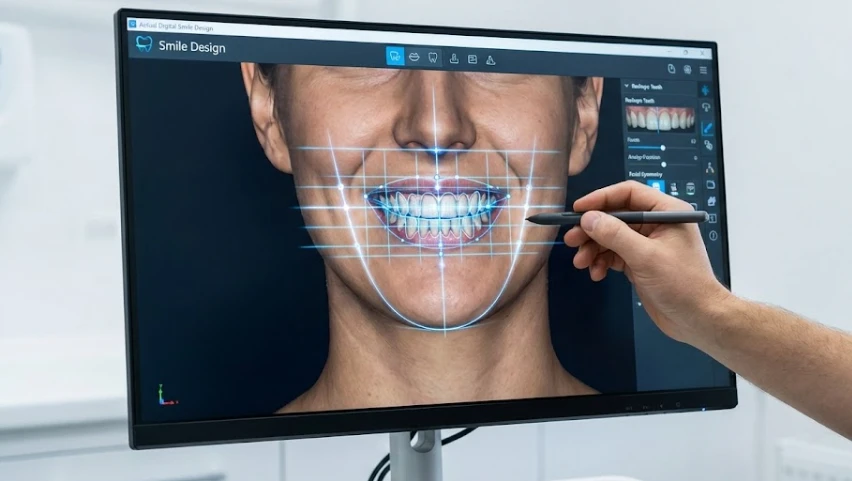
Digital Smile Design is great at highlighting various aesthetic issues visually even before the actual dental treatment starts.
Changes made to even a small feature can be a major step-up, for instance, correcting uneven tooth length, small gaps, worn edges, discoloration, asymmetry, or an unbalanced smiling line.
Patients can also benefit by digitally trying their desired tooth shades and different tooth shapes or proportions before settling upon a final design.
Nevertheless, a dental rendering or render cannot substitute for an actual clinical diagnosis. Issues such as dental decay, gum disease, insufficient bone, or bite disorders should still be properly diagnosed with a clinical examination.
Hence, a digital design will never take the place of the dentist’s diagnosis – it will just support it.
Can Digital Smile Design Be Applied to All Cosmetic Works?
Digital planning is adaptable in a wide range of cosmetic and restorative treatments; however, what kind of preview one gets is dependent upon the particular treatment selected.
Lema Dental Clinic, for instance, may use it for planning veneers, zirconia crowns, E-Max restorations, implant-supported teeth, full smile makeovers, and some dental treatments such as orthodontics, among others.
Digital smiles are an extra benefit for patients when several teeth are modified because in these cases, the dental specialist gets the opportunity to look at the overall beauty of the smile,e not only focusing on one tooth!
Virtually simulating dental treatment is a technique used in orthodontics. According to research that involved all dental setups, virtual setups, in general, were clinically quite accurate. However, it is quite common to have deviations between the actual outcomes and what was predicted through these setups.
Therefore, the patients who undergo a dental digital render should know that the 3D render is a representation of the dental plan. Nevertheless, natural teeth, healing, tooth grinding, gum responses, and other clinical factors can influence the appearance of the tooth.
FAQ
Is digital smile planning painful?
Not at all. Digital smile planning itself doesn’t involve surgery. It is mainly about taking pictures, scanning, measuring, and doing some digital analysis of the data.
How accurate is the virtual treatment preview?
These days, computerized imaging systems have been really accurate and are capable of delivering very clear, elaborate, and life-like visualizations of dental restoration before it happens. On the other hand, one cannot be 100 % certain of the result beforehand. A simulated view is quite different from an actual physical one. There have been cases when the real outcome was different from what had been expected, and this often depends on the nature of the tooth and gums, bite, healing characteristics, and even how good the technical qualities of the material used to restore the missing tooth are.
Will I get to choose my final smile?
Patients usually have a discussion with the dental team about what kind of tooth shape, proportions, and overall appearance a patient would like to have. Nevertheless, the dental professional will design a final smile that also addresses the clinical needs and functions.
What procedures can be previewed?
From dental planning to the simulation, digital technology can be used for a variety of procedures such as veneers, crowns, smile makeovers, implant restorations, some orthodontic treatments, etc. However, an accurate workflow is determined only once the treatment has been decided.
How much does it cost?
The cost of digital planning will vary greatly depending on the type of planning done and the nature of the treatment planned. Our dental clinic, Lema Dental Clinic, will give the details about any planning costs that may be relevant after we have assessed the patient’s case.
References
- PubMed – Digital Smile Design and Patient-Centered Outcomes in Esthetic Restorative Dentistry
Systematic review examining patient satisfaction, communication, treatment acceptance, and predictability with Digital Smile Design. - PubMed – Techniques and Accuracy for Aligning Facial and Intraoral Digital Scans
Systematic review examining methods used to create a three-dimensional virtual dental patient. - PubMed – Accuracy of Virtual Setup in Simulating Treatment Outcomes
Systematic review examining the accuracy of virtual planning compared with actual orthodontic outcomes. - PubMed – Patient Outcomes and Working Time for Digital Versus Conventional Impressions
Research reviewing patient experience and clinical workflow with digital impressions.

