


The 333 rule basically presents a daily oral care regimen that is not only easy and clinically reliable but is also in harmony with natural saliva activity and enamel condition. Dentist Polen Akkılıç explains that keeping a daily routine not only lets your enamel stay strong by avoiding it from abrasive damage, but also it lessens the bacterial load during the whole day. When you adopt a certain routine, your brushing skill gets more accurate and effective.
According to Professor Doctor Coşkun Yıldız, the 333 rule is a supportive system that helps you to keep your gum health stable and lowers the plaque gradually. The main idea of the rule is to perform brushing in a gentle and controlled manner for a certain period which in turn prevents irritation of soft tissues and leads to better hygiene in the long-run. This method is equally advantageous to children as well as adults because it establishes a solid habit that results in the better functioning of oral health over time.
What Is the 333 Rule for Brushing Teeth?
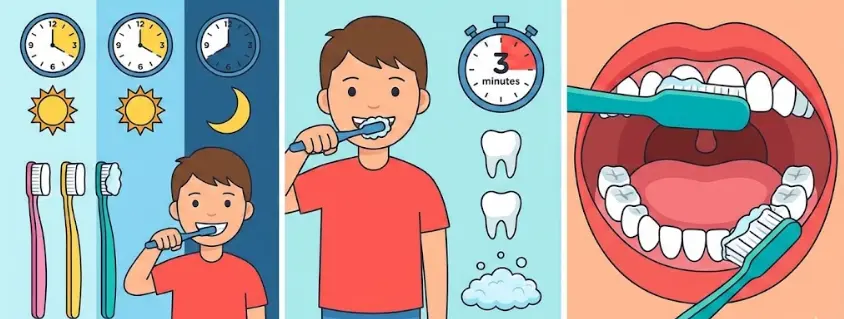
The elements of the 333 rule are three essential steps: brushing teeth three minutes after eating, brushing for three minutes, and applying this routine three times per day. Each step complements the others in a way that ensures safe cleaning by making use of the saliva to neutralize acids before brushing, providing enough time to clean every tooth surface, and refreshing the mouth throughout the day. Doctor Polen Akkılıç points out that these steps assist you in cleaning properly without emitting enamel.
This strategy is very beneficial in terms of oral hygiene because it creates ideal pH levels and bacterial balance which can be maintained over time. Professor Doctor Coşkun Yıldız points out that following the 333 rule is a great way of preventing gingival irritation as it promotes slow, gentle movements rather than hurried ones. Those who use this method demonstrate better plaque control and more normal gum margins when they undergo clinical examination.
How the 333 Rule Helps Your Oral Health
The 333 rule is beneficial for oral health as it integrates brushing with the body’s natural functions. After three minutes from the meal, it is advised to brush as the saliva will have stabilized the acid levels, making the enamel relief. Doctor Polen Akkılıç suggests that the best time to brush is after a three-minute interva,l for the mechanical wear will be at its minimum and the toothbrush will remove food particles effectively and safely. By occupying this time interval, the strength of the enamel is protected in a long-term perspective.
Brushing should be thorough and for a complete three minutes to ensure proper cleaning of all the surfaces, including molars, premolars, and interdental spaces. Professor Doctor Coşkun Yıldız indicates that the result of short brushing sessions is that some areas remain with plaque deposits, which then leads to the rapid onset of gum inflammation. Three minutes of brushing with one’s full attention gives enough contact time for fluoride in toothpaste to work with enamel and thus structural resistance is enhanced.
Benefits of the 333 Rule
- Supports enamel surface integrity
- Helps maintain stable gum health
- Reduces plaque formation
- Improves daily breath freshness
- Balances oral pH levels
- Builds a predictable hygiene habit
Recommended Tools for the 333 Method
If you are willing to perform the 333 steps efficiently, then do not forget to also have the right tools at your disposal. A toothbrush with soft bristles will take care of your enamel, while, at the same time, it will be a gentle helper in removing the plaque, especially that which lies in the gumline. Doctor Polen Akkılıç points out that one should decide on the soft bristles because they lower the mechanical stress and at the same time make the brushing more comfortable. Toothpaste with fluoride keeps the enamel crystals strong and makes the tooth less susceptible to demineralization in daily routines.
Besides the areas, laurels in oral hygiene between the use of a dental floss and interdental brushes completing the 333 rule step, can be found. Professor Doctor Coşkun Yıldız is very supportive of this decision, as he argues that these instruments are indispensable for the control of plaque buildup in narrow areas where bacterial colonies most likely come from. Oral hygiene, when paired with correct usage of supportive wellness instruments, would denote a stage higher in hygiene sustaining and consolidation.
| Component | Description | Benefit |
|---|---|---|
| 3 Minutes After Meals | Brush three minutes after eating | Protects enamel and allows acid stabilization |
| 3 Minutes of Brushing | Brush gently for three minutes | Ensures full plaque removal |
| 3 Times a Day | Brush morning, midday, and night | Maintains continuous oral cleanliness |
Why Specialists Recommend the 333 Rule
Dentist Polen Akkılıç recommends using the 333 rule as it makes one more conscious and thus lessens the need for interventions in oral organs and tissues. The daily practice is the perfect way to attain even cleaning, thereby, the enamel gets stronger, and the gums become more resilient. Those who practice this legislation show the progress of their daily oral hygiene in follow-up visits, which is the direct effect of the structure providing for safe and predictable daily care.
Professor Doctor Coşkun Yıldız elucidates that the 333 rule leads to periodontal stability as it lessens the deposition of plaque along the gumline. The method involves gradual and controlled brushing without exerting too much force, thus, both enamel and soft tissues being kept safe. This makes the 333 rule a secure and fairly efficient guide for those intending to have healthier teeth and oral comfort over time.
References
- Bailey, D. L., & Johnson, N. W. (2019). Fluoride mechanisms and enamel protection: A comprehensive clinical review. Journal of Dental Research, 98(7), 753–760.
- Christensen, G. J. (2016). Why proper toothbrushing matters: Evidence-based recommendations for clinicians. The Journal of the American Dental Association, 147(6), 434–439.
- Fejerskov, O., Nyvad, B., & Kidd, E. A. (2015). Dental caries: The disease and its clinical management (3rd ed.). Wiley Blackwell.
- Heasman, P. A., Heasman, L., Stacey, F., & McCracken, G. I. (2015). The effectiveness of toothbrushing: Systematic review of clinical trials. International Journal of Dental Hygiene, 13(4), 251–265.
- Larsen, M. J. (2017). Chemical events during toothbrushing and their enamel effects. Caries Research, 51(6), 486–492.
Frequently Asked Questions About the 333 Rule for Brushing Teeth
The purpose of the 333 rule is to support safe and structured brushing habits. It promotes controlled technique and improves daily oral hygiene.
You wait three minutes because your saliva needs time to neutralize acids. This protects your enamel from abrasion during brushing.
Yes, it helps your gums stay healthier because longer brushing supports thorough cleaning. It also reduces plaque buildup along the gumline.
Yes, it is safe when paired with soft bristles and fluoride toothpaste. This combination reduces irritation and protects enamel.
Children can use it under supervision. It helps them build strong oral hygiene habits.
Yes, it keeps your mouth clean throughout the day. This improves breath freshness.
It can lower cavity risk by removing plaque before it hardens. Consistent brushing also strengthens enamel.
Yes, flossing supports complete cleaning. It removes debris that brushing alone cannot reach.
Both electric and manual brushes work well. The key factor is gentle, consistent technique.

