So You Want Whiter Teeth… But What About the Zing? ⚡
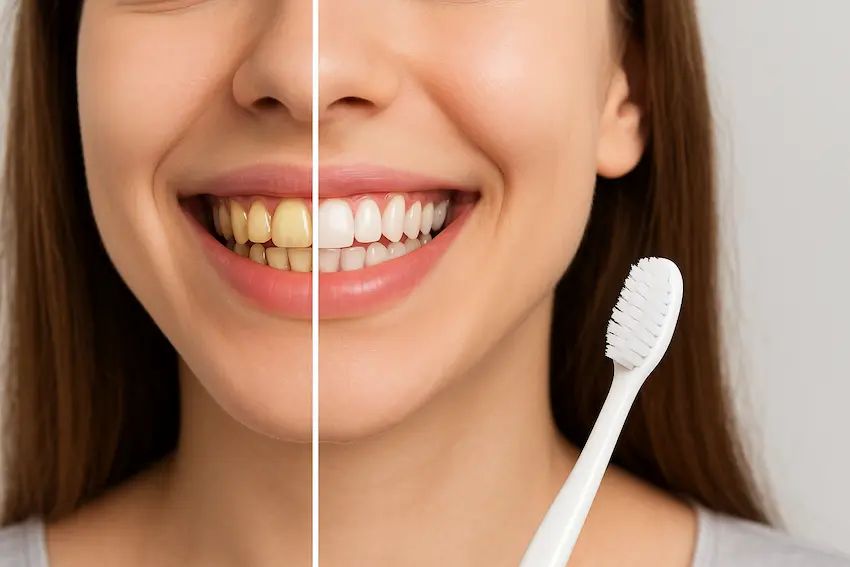
Let’s get real―who doesn’t want to have a radiant smile? Teeth whitening is among the leading cosmetic dental treatments that patients seek out. The trend goes anywhere from weddings, graduations, social media glow-ups, to just “why not?”- teeth whitening.
Here’s the flip side of the story:
The thing is that a lot of people complain of sensitivity of the teeth after whitening and the sensation can be as if cold air is blowing through your whole jaw. 😖 There is nothing to fear from this condition—it’s very frequent, it’s normally only for a short time, and it’s quite controllable.
The questions of why it occurs, what one should expect, and how clinics such as Lema Dental Clinic in Istanbul make teeth whitening: Safe, gentle, and effective, are addressed here.
💡 What Causes Tooth Sensitivity After Whitening?
To fully grasp the concept of sensitivity after whitening, one has to know what whitening is all about.
Whitening products (both in-office or at-home) generally use hydrogen peroxide or carbamide peroxide to remove stains that are situated inside the tooth. Even though it changes the color quite fast, it also temporarily “peels off” the enamel’s microscopic pores, which can reveal the inner layer of your tooth (dentin).
Dentin is a substance that is very abundant in minute nerves, so when it is revealed, you feel that these:
- Cold zaps 🧊
- Sweet shocks 🍬
- Occasional throbbing 🔊
Luckily, these negative reactions mostly disappear within several hours up to several days following the treatment.
🕒 How Long Does Whitening Sensitivity Last?
Most of the patients are such that:
👉 Sensitivity lasts for 24 to 48 hours in the most cases is the average duration.
You may experience:
- Sudden sharp twinges (especially a cold or sweet food)
- A dull ache in the particular teeth
- If a whitening gel has touched the soft tissue, you may have sensitivity in your gums
Everyone is different—some people feel nothing, but others may require a day or two to feel back to normal. The team at the Lema Dental Clinic always follows procedures that reduce the chance of sensitivity before, during as well as after whitening.
🚩 Who’s More Likely to Get Sensitivity?
More factors lead to a higher risk of you suffering from the whitening process if you have the following:
- Thin enamel that is natural
- Tooth roots that have been exposed or gums that have receded
- Situations of sensitivity that have already existed
- Cracked teeth or micro-fractures
- Teeth (fillings, bonding, etc.) that have been recently worked on
Not quite certain about your point of view?
A brief inspection at Lema can be of assistance in establishing the suitability of a whitening procedure for you.as well as the means of accomplishing that.
🧊 What Can You Do to Manage Sensitivity?
On whitening days or just in confidence you have some sensitivity here is a list of easy steps to take for comfort and reduction of sensitivity.
✅ 1. Use Sensitivity Toothpaste
If you want to calm teeth’ nerves, use toothpaste that has potassium nitrate or stannous fluoride as its main ingredients. Start using it one week before you undergo the whitening procedure and keep using it after the treatment.
✅ 2. Avoid Very Cold or Hot Foods
If your teeth are temperature-sensitive, then it is better to use lukewarm meals and drinks. Have room-temperature water and herbal tea for drinks.
For the time being, you better skip hot coffee and ice cream. 🍦☕
- Right after bleaching, your enamel is likely to be more sensitive. Use a soft-bristled toothbrush and do not brush vigorously, especially along the gumline.
- Help the enamel absorption of minerals with a fluoride rinse. Use a fluoride mouthwash daily (make sure it is alcohol-free!) or get a professional fluoride treatment from your dentist.
- Whitening should not be your obsession. Whitening too much and too frequently is not good. Do not do whitening in quick succession or overdosing with over-the-counter products.
- Follow your dentist’s advice to avoid overdoing it such as the custom bleaching at Lema Dental Clinic.
Within the scope of whitening at Lema Dental Clinic, it is not only about the smile that you can upload on Instagram but more about the method that would be done safely, comfortably, and with proficiency. To make the sensitivity better, here is their offer.
The group looks into the pre-intervention inspection for signs of sensitivity that may be:
- Gum recession
- Enamel wear
- Tooth fractures
Only if your teeth are healthy enough, you are allowed to whiten them.
Lema applies a clinically tested, pH-balanced gel as the main agent for stubborn stains but does not harm enamel.
The gums are protected during the in-office whitening procedure against possible irritations or burning caused by the gel.
✔️ Desensitizing Treatments
After the whitening treatment, fluoride gels or sealants can be used to calm the teeth and prevent the pain from entering the teeth.
✔️ Personalized Aftercare
Each patient is provided with a clear set of aftercare instructions alongside certain product recommendations that are designed to alleviate discomfort and promote the effectiveness of the treatment.
🍽️ What Should You Eat After Whitening?
In addition to refraining from extreme temperatures, you will also want to avoid consuming foods and drinks that can potentially stain your newly whitened teeth.
Don’t drink or eat for 48 hours:
- Coffee ☕
- Red wine 🍷
- Dark sauces (soy, tomato)
- Berries 🍇
- Colored candy or gum
Eat:
- White rice 🍚
- Chicken or fish
- Mashed potatoes 🥔
- Milk or water
- Bananas 🍌
Words to live by: “white t-shirt diet”—if it would stain a white shirt, it could stain your teeth.
🌟 Final Thoughts: Yes, Whitening Sensitivity Is Normal
Extreme sensitivity is not what is meant when it is said that feeling of a little sensitivity after whitening is normal. It is simply that your teeth have to adjust to the new state—and this will go away very soon.
Through the right preparations, intelligent aftercare, and the deft professional intervention from a clinic like Lema Dental Clinic in Istanbul, you will be able to effortlessly flaunt your white and radiant smile—but not at the cost of discomfort.
So, get ready to light up your smile—just do it smartly. 💙
No—it’s temporary and usually fades within 24–48 hours.
Yes, but with caution. Your dentist may recommend a milder product or desensitizing prep before treatment.
Not always. With professional care and spacing treatments properly, sensitivity can be managed.
Not usually. It’s a common reaction and doesn’t mean enamel was harmed—especially when done professionally.
In-office whitening at a trusted clinic like Lema Dental Clinic offers the best results with the lowest risk.