That “Zing” You Feel Isn’t in Your Head 😬
You’ve just taken a sip of nice and cold water, and—OUCH! A sharp, tingling jolt shoots through your tooth. Or it could be a spoon of ice cream, a hot coffee, or even brushing your teeth that triggers it. To be honest with you, the discomfort? It is tooth sensitivity and if it persists, it is time to trace what your teeth are intending to tell you. 🦷⚠️
The good news is that? You are not on your own. The number of those who suffer from sensitive teeth is in the millions. And the even better news is that? Most of the time, it is potentially treatable as long as the cause is known.
On this point, let’s identify the common triggers and their effect on your teeth and how Lema Dental Clinic in Istanbul can make you smile again.
🧠 What Is Tooth Sensitivity?
Tooth sensitivity (or dentin hypersensitivity) is a condition that arises when the enamel that serves as a protection for your teeth is damaged or your gums have receded, thereby exposing the sensitive layer underneath (dentin).
This dentin has direct communication with the nerve of your tooth and if it comes across cold, hot, sugar, or even brushing, it is so easy that these things would call for a nerve pain. 😵💫
❓ What Does Sensitivity Feel Like?
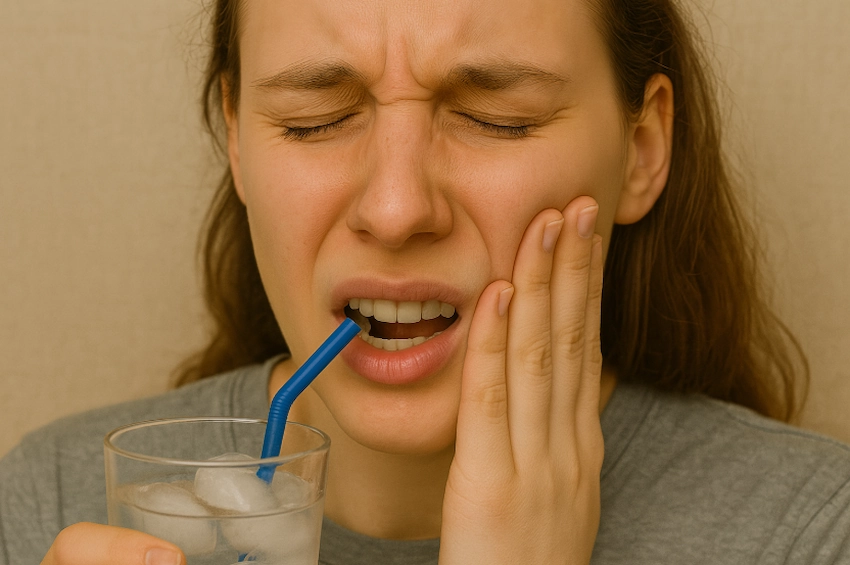
The symptoms of tooth sensitivity are as follows:
- A brief, acute pain or “zing”
- Sensitivity to cold or hot drinks
- Pain on brushing or flossing
- Discomfort from sugary or acidic foods
- A dull ache in the vicinity of the gumline
It can be one tooth or more that are affected, and the pain may be intermittent or continuous until it is treated.
🚩 What Causes Tooth Sensitivity?
Below are the most typical offenders that keep your zingy smile concealed:
1. Brushing Too Hard (or With the Wrong Brush)
Using too much force to brush your teeth or a hard-bristled toothbrush may result in the loss of your enamel as well as gum irritation.
Lema Tip: Choose a soft-bristled toothbrush, use gentle, circular motions, and avoid using a back-and-forth sawing motion.
2. 😬 Grinding or Clenching Your Teeth
Bruxism (teeth grinding), whether caused by stress or happening during sleep, can lead to a gradual wearing down of enamel and the formation of small cracks which allow dentin to be exposed.
Solution: You can consult your dentist at Lema to get a custom night guard just for you to protect your teeth during sleep.
3. 🍋 Acidic Foods and Drinks
The list includes:
- Citrus fruits 🍋
- Soda 🥤
- Foods made with vinegar
- Wine 🍷
- Sports drinks ⚡
…can gradually peel off the enamel and make teeth more sensitive.
Lema Tip: After having acidic foods or drinks, rinse your mouth with water and do not brush your teeth right away as the enamel that has been softened by acid can still be damaged by brushing.
4. 🦷 Gum Recession
When your gums recede from your teeth, the root is the part that is uncovered. Roots are not as strong as enamel and have several small nerve openings.
Initial signs of gum recession are:
- People who brush too hard
- Smokers 🚬
- People with gum disease
Solution: Lema Clinic is good at solving periodontal issues and has the procedures for the support of patients with major loss of gum deposits.
5. 🧼 Tooth Whitening
Most a patient undergoes whitening treatments (office or home) then they get the temporaryensitivity. Peroxide in the whitening gels can sometimes irritate the dentin layer; hence this is a normal reaction.
Lema Tip: Lema’s cutting-edge whitening methods are equipped with a special technology that uses desensitizing agents to make sure that the patients don’t feel post-treatment discomfort.
6. 🦷 Cracked, Chipped, or Worn Teeth
Fracture can become sensitive soon next to biting or sipping, though the first may still not be visible.
Besides, enamel loss caused by wear and tear can contribute to the issue as well.
Solution: At Lema Clinic, through a thorough dental examination and digital scan, even the tiniest cracks and the smallest enamel damages can be detected.
7. Using Whitening or Abrasive Toothpaste
There is a big difference in the quality of toothpaste. Some are made whitening and powder-based on charcoal and they are very abrasive so they can wear out your enamel quickly.
Lema Tip: For maximum protection and relief, we suggest you to take a toothpaste for sensitive teeth with active ingredients such as potassium nitrate or stannous fluoride which works in a natural way.
8. 🦠 Untreated Cavities or Gum Disease
Usually, a very sharp, and constant pain which becomes worse with time is a sign of a deep cavity or gum disease at its early stage.
Moreover, both situations allow the bacteria to go deeper, thus coming in direct contact with the nerve of your tooth which causes bad breath.
Solution: Locate the problem at Lema; the sooner, the better. Treatment time and cost decrease concurrently with the stage of the problem.
🏥 How Lema Dental Clinic in Istanbul Can Help
- Digital X-rays 📸
- 3D scans 🖥️
- Gum health checks
- Brush gently with a soft-bristle brush 🪥
- Use sensitivity toothpaste daily
- Avoid overly cold, hot, or acidic foods 🍦☕🍋
- Don’t grind—wear a night guard if needed 😴
- Floss carefully, but don’t skip it! 🧵
- Rinse with a fluoride mouthwash 🧴
✔️ Fluoride Treatments
They not only strengthen enamel but also help to close the dentin tubules which are the pathways through which the sensitivity occurs.
✔️ Desensitizing Gels or Pastes
Once these are put on the tooth, they reduce the nerve activity and at the same time they block the sensitivity triggers.
✔ Restorative Treatments
So with the help of bonding, crowns, and veneers the surface of the damaged or worn teeth can be rebuilt as well as protected.
✔ Periodontal Therapy
By slowly or even stopping the destruction and giving back your gumline, the treatments are the solution only if the problem is gum recession.
✔ Lifestyle & Product Advice
The help of the celebrity Dentist Lema in building habits that will not only protect your teeth but most importantly will keep them healthy in the long run is from the toothbrush to the diet.
✅ What You Can Do at Home
Here is a list of home remedies which you can manage while waiting for your appointment:
- Brush your teeth with a soft bristle toothbrush, and do it gently 🪥
- Make use of toothpaste for sensitive teeth on a daily basis
- Keep away from foods that are too cold, hot, or acidic 🍦☕🍋
- If you habitually grind your teeth, then wear a night guard 😴
- Do careful flossing, but don’t avoid it! 🧵
- Use a fluoride mouthwash 🧴
Don’t forget: These are only temporary solutions. Visit a professional for a long-term remedy.
🧠 Final Thoughts: Your Teeth Shouldn’t Hurt
The fact that your teeth are sensitive is not something normal—it is a warning sign. It might be only one of these issues: the erosion of enamel, the irritation of nerves, or the recession of gums. The more time you let pass, the more it will be aggravated. The bright side is that? Most of the reasons for that are easily treatable especially when caught at an early stage.
So in the event that it doesn’t feel good when you sip, bite, or breathe—then do not let it be there by your side. Have Lema Dental Clinic in Istanbul come to your aid to discover the source and make a plan that will keep your teeth for a lifetime. 💙
Not always! Many cases are reversible with proper treatment and care.
Yes—but you’ll need a special formula and pre-treatment from your dentist.
Yes. It can wear down enamel and irritate your gums, exposing nerve-rich areas.
Yes. Sensitivity can be caused by enamel wear, gum recession, or even minor cracks.
Look for ingredients like potassium nitrate and stannous fluoride for nerve-calming effects.