


Tooth contouring is a quick cosmetic treatment that gently reshapes small edges, chips, or uneven teeth.
For the majority of patients, it’s the smile that seems to cause the most issues. They notice a small chip. Maybe even point out a rough edge. Or a canine tooth may appear too sharply pointed. They are not interested in radical changes. That’s just them asking for a natural look.
However, the truth is that you’re not necessarily forced to go for full veneering always. In fact, a perfect smile at times just means removing a bit of material.
A very mild and gentle therapy is the subject of our attention here. We call it a shaping of a tooth, or more precisely, micro-contouring.
How Micro-Contouring Works
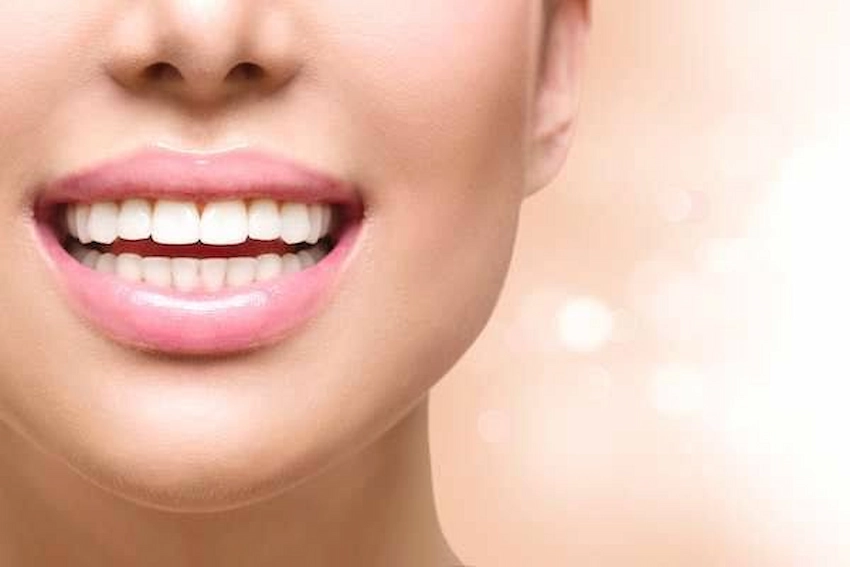
We reshape and polish just the outside layer of your tooth,h which is made up of the dental enamel. It’s the outer cover that can be compared to painting glass that is placed on top of a portrait; we remove imperfections in the surface and polish the glass without the artist’s painting being in any way damaged.
In this particular way, our patients who have been treated in Lema Dental Clinic feel as if we’re making fine art.
Dentist Polen Akkılıç and her team use high precision equipments to reshape the tiny areas of your enamel. Let’s get closer to the list of issues that micro-contouring can address:
- Repairing minute chips,
- Making misshapen teeth the same size,
- Smoothening out jagged teeth,
- Aligning your front teeth.
Though it sounds like a risky treatment, it is not. The dental enamel has no nerves, and thus, the treatment doesn’t cause even the smallest discomfort.
Contouring vs. Other Options
Our patients often question if there is any other way besides contouring they might pursue. The ultimate decision will be based on your condition.
In case you have a tooth you want to be larger for some reason, then we may have to resort to bonding. We literally use a very strong dental bonding agent to glue and make the tooth bigger with the help of composite materials.
On the other hand, it will not be a good idea to use our contouring method for increasing the size of your teeth.
The following is what we have experienced in our clinic when making these decisions:
| Treatment | Main Goal | Enamel Removal | Time Needed |
| Micro-Contouring | Removal of chips or smoothing out rough edges of the tooth | The amount removed is the tiniest of all | One visit (30 mins) |
| Dental Bonding | Gap filling or tooth size increase | Seldom, even minimal | One visit (1-2 hours) |
| Porcelain Veneers | Fully transforming the smile | A decent amount, still | A few visits (1 week) |
How to Know If Dental Contouring Is Suitable For You?
Not everyone’s tooth can be modified without risking their dental health. Professor Coşkun Yıldız is one of the leading dentists who has repeatedly made the remark that one of the most critical steps is to decide whether a person is suitable for tooth contouring.
Your enamel must be very strong and in excellent overall condition before undergoing tooth contouring, as the procedure removes some layer of your enamel. If your enamel was thin to begin with, even taking away a minute layer will expose the tooth’s inner layer, causing the tooth to hurt and turn yellow, which is really unpleasant.
It is due to the above reasons that pre-appointment diagnostics are extremely crucial, which is why our dental patients who want contouring come for consultation in Turkey, where we never miss that part of the dental checkup.
We start every ppatient’streatment by measuring their tooth enamel level first.
Frequently Asked Questions
Doesn’t micro-contouring cause pain?
No, in fact, this work only involves reshaping the surface layer of the tooth, and this area doesn’t contain any nerves. We can say it is nothing to do but a mild buzz. And you certainly don’t need local anesthesia.
Do the results of the procedures last for long?
Well, it is the case that it will never come off because we have changed the tooth’s shape in reality. The new tooth look will be yours forever as long as no one breaks your teeth again with a crack here and there. However, you just need to take care of your teeth so you don’t have new cracks from your biting habits.
Can it make my crooked teeth appear straight?
If tooth misalignment is minimal, tooth contouring can create an appearance of straight teeth. Edges of slightly crooked teeth can be rounded off to make them look even. However, for those with teeth heavily crowded, the solution would involve orthodontic treatment, and only after having that contouring or any other type of tooth work that you have already considered will be viable.
Will I get sensitive teeth after this treatment?
In most cases, if the procedure is carried out very carefully, tooth sensitivity is unlikely to happen. However, in situations where the dentist accidentally removes more than the normal layer of enamel, patients can indeed be the ones who suffer from sensitivity. We make sure we are working on a healthy enamel layer so we cannot hurt the patient.
Why go all the way to Turkey for such treatment?
The thing is, the majority of clients decide to micro-contour their teeth in connection with other procedures. That could be teeth whitening or some sort of a direct bond. The trip to our Lema Dental Clinic in Turkey is an enjoyable experience where you get excellent dental services, and it feels more like a vacation than you would normally think of a dental appointment.
Academic References
- Alothman, Y., & Bamasoud, M. S. (2018). The success of dental veneers according to preparation design and material type. Open Access Macedonian Journal of Medical Sciences, 6(12), 2402-2408.
- Goldstein, R. E., Chu, S. J., Lee, E. A., & Stappert, C. F. (2018). Esthetics in dentistry (3rd ed.). John Wiley & Sons.
- Heymann, H. O., Swift Jr, E. J., & Ritter, A. V. (2013). Sturdevant’s art and science of operative dentistry (6th ed.). Elsevier Health Sciences.
- Magne, P., & Belser, U. (2002). Bonded porcelain restorations in the anterior dentition: A biomimetic approach. Quintessence Publishing.
- Terry, D. A., & Geller, W. (2013). Esthetic and restorative dentistry: Material selection and technique (2nd ed.). Quintessence Publishing.

