


Full mouth implant recovery improves day by day with proper care.
Congratulations on receiving a new dental prosthetic. Maxillofacial surgery is a big step in our clinical career. As the effectiveness of local anesthesia fades, you may start to feel discomfort, which indicates that the healing process from the biological standpoint has started.
To put it bluntly, your maxillofacial region is going through a very intensive surgical operation. So, if your alveolar jawbone is the foundation of a new hospital, then pouring concrete and installing titanium fixtures should be likened to that courtyard. And just as it continues to gain its physical strength, the whole foundation should not be subjected to heavy loads. Wound healing is not a matter of days; it requires precise care and biological patience.
Our team at Lema Dental Clinic in Turkey believes in the power of knowledge, and we would like to share a small secret: knowledge can be a stress reliever! An informed and calm patient is a good tissue healer.
The Immediate Post-Operative Phase: Days 1 to 3
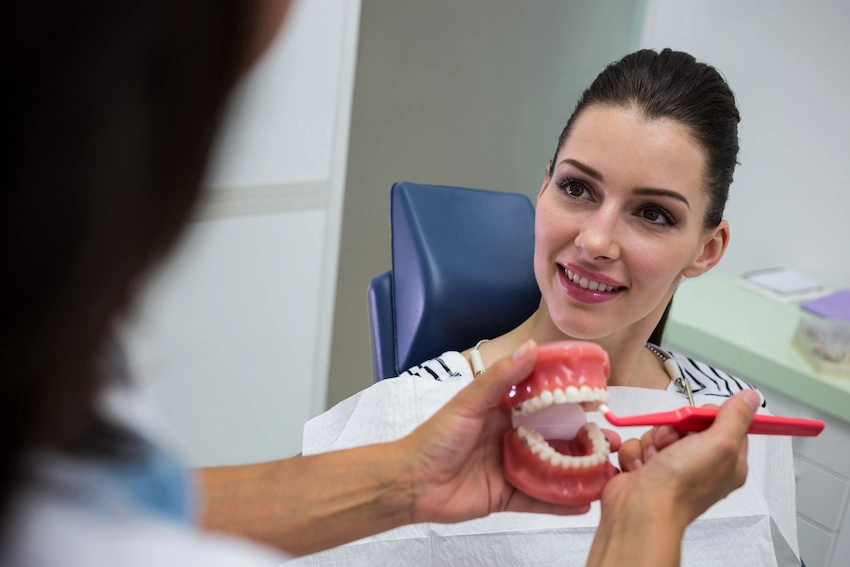
According to the studies, 72 hours after surgery is the most important period for the bleeding to stop and vascular repair to begin. Your body reallocates the blood during this time, especially to the oral mucosa, to initiate the process of cellular repair.
What happens in a clinical setting is usually postoperative edema (swelling), and this is quite limited and completely normal. According to our experience, it usually reaches its maximum level on the third day. Along with that, you will probably observe some discoloration of the skin under the mandible or on the cheeks. This is a hematoma (bruising), and to a certain extent, it is considered a normal part of the healing process. In such cases, a range of therapies exists from icing to early corticosteroids. In addition to being a medical doctor, Professor Coşkun Yıldız is a very experienced surgeon, and one of the things he always emphasizes is “Cold therapy is your best friend. Besides that, use the antibiotic prophylaxis and analgesics as you were prescribed to control the pain receptors.”
- Rest: When you lie down, keep your head raised with pillows to decrease vascular pressure and facial swelling.
- Diet: Take in only liquid nourishment. You can have cold soups, yoghurt, and protein shakes as they will not only provide the nutrients but also save your caloric intake.
- Care: Do not spit. Avoid creating negative pressure in the oral cavity. Using a hard suction device can cause the detachment of the crucial blood clots that are protecting the oral wound healing sites.
Soft Tissue Epithelialization: Days 4 to 7
The intense swelling and purple-colored bruise under your skin that you noticed after the operation will be less noticeable from day 4 onwards, as the acute edema will subside completely,y and the underlying bruising from the mandible or cheeks will be a fading yellow. Physically, ly you will feel more stable and energetic.
Let me tell you how your body reacts on the cellular level. Gingival tissue undergoes rapid epithelialization. It covers itself with the newly formed cells to protect the surgical incision, and this is a biological seal that prevents oral pathogens from entering and harming the titanium implants.
International patients entrust Dentist Polen Akkılıç and her team to ensure that their gums heal properly during this phase of treatment. Through careful examination and adjustment of your provisional acrylic prosthetics, they address even the smallest uneven occlusal bite forces that can disrupt the healing of titanium fixtures. Transitioning to a soft mechanical diet? Think scrambled eggs, mashed potatoes, and soft, flaky fish.
The Physiology of Osseointegration: Weeks 2 to 6
Upon reaching the 2-week mark, your oral mucosa will appear fully healed, and there will be no visible signs of inflammation. At this point,t you can safely use your temporary dental bridge when speaking and smiling.
The true miracle is, however, happening inside your maxillary and mandibular bones. Osseointegration is the name of this complicated clinical procedure. Osteoblasts, the cells responsible for bone formation, are actively dividing, and at the same time, they attach themselves firmly to the titanium oxide layer of the implants. We can imagine it by thinking about how a tree is planted. The roots biologically need to grip the soil strongly before the tree can be exposed to the strong winds. Your dental implants function in an identical manner. They serve as artificial tooth roots. So it is only natural that your living bone needs time to permanently lock them in place.
Clinical Milestones of Bone Healing
| Post-Operative Phase | Clinical Time Frame | Dietary Protocol | Physiological Milestone |
| Acute Hemostasis | Days 1 to 7 | Liquid nutrition only | Blood clot formation and initial mucosal closure |
| Cellular Mitosis | Weeks 2 to 4 | Soft mechanical diet | Osteoblast cells attach to the titanium surface |
| Primary Integration | Weeks 5 to 8 | Gentle mastication | Woven trabecular bone forms around the fixtures |
| Final Osseointegration | Months 3 to 6 | Normal masticatory load | Dense cortical bone fully secures the implant |
Frequently Asked Questions
Not for a second! Our surgical team is always able to place an immediate provisional bridge on the same day. The day you have surgery, you can already enjoy full dental function and aesthetics as your final zirconia restorations are made in our dental laboratory.
Pressure is the main symptom patients indicate, rather than pain. Our use of guided 3D CT scanning ensures that these are the least traumatic surgeries. And if there happens to be any soreness, the usual store-bought painkillers are enough to get you through the first few days without discomfort.
If it is a sedentary job, 3 to 5 days of recovery should be sufficient. Lifting heavy objects or doing strenuous exercise, running, or any high cardiovascular work should be avoided for 7 to 10 days. Due to the fact that blood pressure increases, it causes throbbing pain at the surgical sites, which can result in delayed healing.
Tobacco is terrible! Nicotine causes your blood vessels to become constricted or narrowed, thus depriving your gingival tissue of oxygen. Smoking slows the formation of new blood vessels (angiogenesis) and is the number one factor medically for implant failure. If you want to heal, you have got to quit smoking.
Use chlorhexidine antimicrobial rinse only for the first 72 hours as prescribed. Mechanical brushing on the fresh sutures shall be avoided. By the end of week 2, Dentist Polen Akkılıç and the staff will hand over a surgical-grade ultra-soft brush to you and teach you how to safely remove plaque without hurting the tissues.
- Albrektsson, T., Brånemark, P. I., Hansson, H. A., & Lindström, J. (1981). Osseointegrated titanium implants: requirements for ensuring a long-lasting, direct bone-to-implant anchorage in man. Acta Orthopaedica Scandinavica, 52(2), 155-170.
- Buser, D., Sennerby, L., & De Bruyn, H. (2017). Modern implant dentistry based on osseointegration: 50 years of progress, current trends and open questions. Periodontology 2000, 73(1), 7-21.
- Cochran, D. L. (1999). A comparison of endosseous dental implant surfaces. Journal of Periodontology, 70(12), 1523-1539.
- Davies, J. E. (2003). Understanding peri-implant endosseous healing. Journal of Dental Education, 67(8), 932-949.
- Misch, C. E. (2015). Dental implant prosthetics (2nd ed.). Elsevier Mosby.

