


Denture adhesive may cause palate yellowing if residue, stains, or poor cleaning build up over time.
Many international tourists visit Lema Dental Clinic in Istanbul as one of their few stops, mainly seeking a resolution to the constant, yellowish discoloration present on the roof of the patients’ mouths, i. e., the hard palate.
Among the most common reasons cited in the cases we receive at Lema Dental Clinic are complaints about discoloration caused by denture glue.
To be frank, the use of such adhesives creates the illusion that you have put up a wall between your oral tissues and your prosthetic device – a wall that allows for the movement of the latter only until the former is not supported sufficiently.
On the other hand, denture adhesives are generally thought to offer comfort to their users for a short time; however, a large body of research suggests that if one uses them constantly over years, the consequences in the long run can be quite dangerous for the health of one’s mouth.
Palate Discoloration – The Story Told in Colors
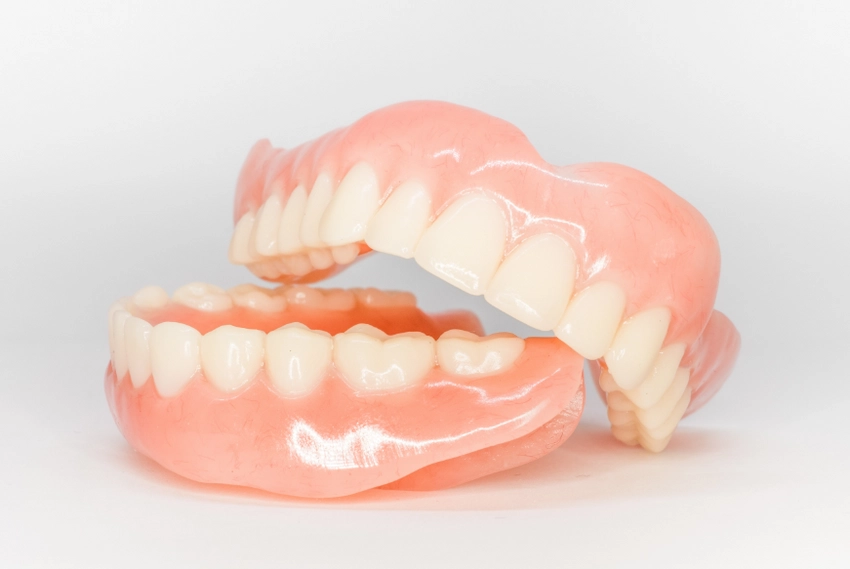
Lema Dental Clinic frequently encounters such color changes. We only rarely think it is a cosmetic problem.
More usually, it is an indication that your oral mucosa (mucous membrane of the mouth) is under considerable stress.
Your palate is a very gentle piece of tissue (the one above your teeth) that needs to have the right amount of water and air to remain healthy. If you place your palate under layers of adhesive and plastic, then it cannot “breathe” at all. Bacteria and microorganisms find that to be an almost perfect spot for them.
Possible contributors to the development of a yellowish tint are:
- Bacterial Build-up: Through the formation of sticky and resistant layers, these microorganisms remain attached to adhesive material.
- Chemical Reaction: A possible hypersensitivity may be developed towards the constituents like polymers, plasticizers, or zinc of commercial adhesives, in the case of the mucosa.
- Inflammation of the gum lining caused by fungi, i. e., denture stomatitis: This is often the result of a poorly fitting prosthetic device or insufficient care after surgery.
Denture Adhesive: Only a Temporary Fix
According to Dr. Coşkun Yıldız, denture adhesives are not intended to be a long-term support for dentures. They are more like first aid. A temporary solution that you can rely on until you have found out what the problem is and how to fix it for good.
One of the main reasons that you continue to apply more and more of the bonding agent to your denture is because of the loss of teeth.
Teeth are one of the factors that keep the jaw bones in their shape. So when you lose your teeth, this process known as bone resorption is going to affect your denture’s fit. That means that the use of denture adhesives is bound to increase, which in turn leads to the buildup of bacteria on your palate,e as these products do not allow the mucosa to breathe.
| Feature | Traditional Dentures + Adhesive | Implant-Supported Restorations |
| Stability | Depends on frequent glue application | Tightly attached to the jawbone |
| Palate Health | High risk of irritation/yellowish hue | Healthy; tissue is open and visible |
| Sensory Perception | Acrylic blocks natural taste and feel | Natural sensation is restored |
| Jawbone | May accelerate bone loss | Stimulates bone retention |
| Daily Cleaning | Cumbersome and tedious | Simple (like natural teeth) |
Lema Dental Clinic Treatment Methodology
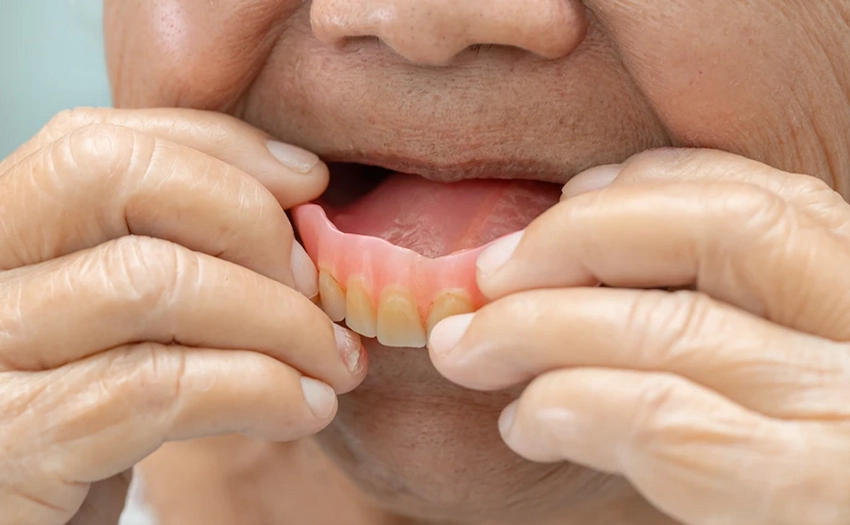
Before commencing the treatment of your mucosal lesions, the doctors of Lema Dental Clinic, such as Polen Akkılıç, M. D,. carry out a full set of examinations to detect the cause of your inflamed tissues in the most probable way. We suggest the majority of cases, changing those unstable dentures for All-on-4 / All-on-6 dental implants.
A shift from a removable to fixed-implant bridge eliminates the need for plastic covers and glues.
Thus, mucosal tissues are free from the stress and allowed to regain their natural and healthy color. The vast majority of the patients whom we serve at Lema Dental Clinic are quite pleased by not only the physical changes but also the freedom of moving and speaking around the mouth area without having one’s denture suddenly dislocated.
Frequently Asked Questions
Is this staining of the roof of the mouth going to be permanent?
The answer is, in general, ‘no’. With proper treatment and a properly functioning mouth restoration, the skin of your oral mucous will probably recover its natural hue.
Is denture adhesive a risk factor for a person to develop allergies?
Actually, it can. Although such incidents are uncommon, exposure to chemicals in adhesives can cause redness, swelling, or yellowing in a person’s tissues.
Is that yellowing necessarily a result of the presence of a more severe infection?
It is quite likely that you will end up having “denture stomatitis”, a fungal infection quite common in such cases. Once it comes to denture stomatitis, it should not be regarded too easily since the infection may lead on to more serious complications. Therefore, you should consult a specialist to find out a proper treatment for that.
If I must use the paste, how to clean my roof?
First of all, the whole palate needs to be cleaned before you sleep (even if you don’t have your dentures or prosthetics on). You might use lukewarm water and clean with your finger or a brush with very soft bristles, carefully massaging the palate’s surface and at the same time removing all traces of glue which has dried out. Otherwise, the mouth will not be able to rest,t and the cells of the mucosa will have no chance of regenerating themselves.
After how many days can one expect the complete solution to be installed?
There are a whole bunch of factors like bone density and your general health, etc., influencing the possibility for a permanent restoration. The good news is we are usually able to provide immediate loading, which means in a matter of days, we may take your temporary dentures and replace them with fixed implants.
Academic References
- Felton, D. A. (2011). Edentulism and comorbid factors. Journal of Prosthodontics, 20(S1), S1–S5.
- Goiato, M. C., et al. (2010). Denture stomatitis: a literature review. Journal of Oral Rehabilitation, 37(1), 60–65.
- Grasso, J. E. (1996). Dentures, adhesives, and oral health. Journal of Prosthetic Dentistry, 75(6), 619–623.
- Tallgren, A. (1972). The continuing reduction of the residual alveolar ridges in complete denture wearers. Journal of Prosthetic Dentistry, 27(2), 120–132.
- Zissis, A., et al. (2008). Oral mucosa alterations in removable denture wearers. Journal of Oral Rehabilitation, 35(1), 21–25.

