


Translucent teeth look clear at the edges and can be treated with bonding, veneers, or enamel-strengthening care.
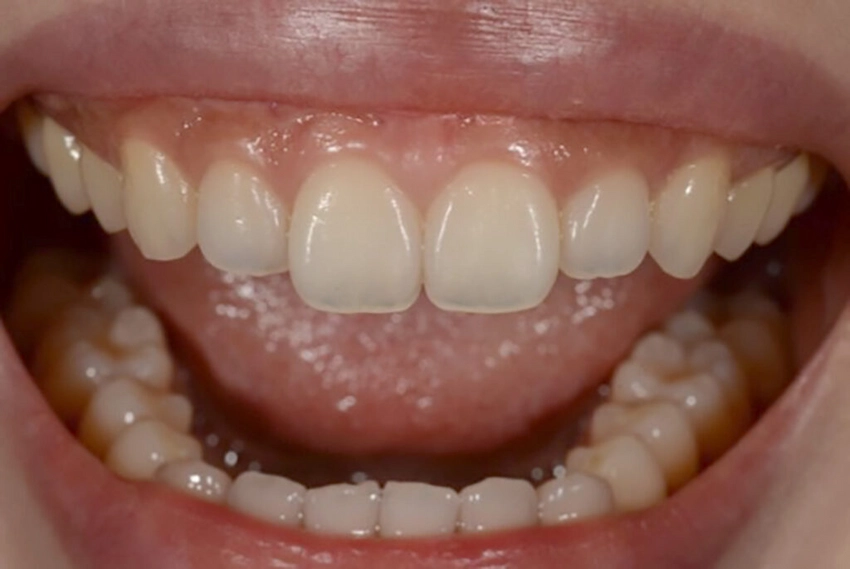
Your reflection in the mirror shocks you to your bones. You notice that the borders of your front teeth have become see-through. Instead of being solid white, the teeth seem like thin glass.
In fact, your enamel is being worn away.
As a medical copywriter working with leading dental surgeons and regularly approached about tooth enamel issues, I can tell that the feeling of a fading grin is not uncommon. But let’s dive into what really is going down in your mouth here. The good thing is, we can recognize the early signs, and there are dentists around who can do your teeth right again with modern means.
What Leads to the “Glass Tooth” Effect?
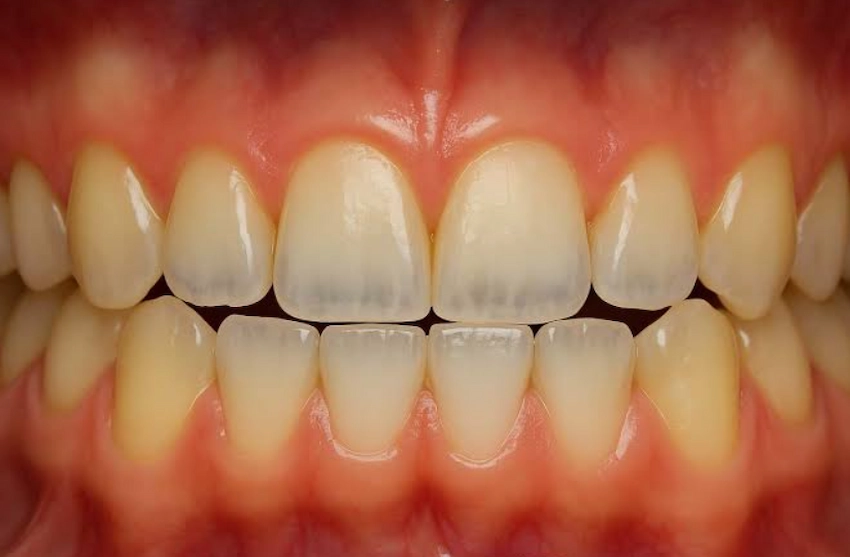
To appreciate this better, think of a tooth as a light bulb. The dentin (light bulb core) is the inner part of your tooth. Enamel (outer covering) is like protective frosted glass.
If the top visible layer starts to thin, the amount of light passing through increases, making it translucent. Picture your two front teeth completely coated only by enamel with nothing behind them but the air – you can literally see through them with your eyes removed.
Unbeknownst to you, daily activities that you are doing cause tooth enamel destruction:
- Acidic Foods: Sodas, lemons, and wines cause loss of tooth enamel due to their high acidity.
- Stomach Acid: With acid reflux disease, the corrosive stomach acids enter your mouth.
- Teeth Grinding: Nighttime grinding of your teeth leads to slow erosion of outer layers.
3 Effective Professional Methods to Repair Translucent Teeth
Let me explain through some clinical examples that I came across. One common issue is patients who are desperately searching for the magical toothpaste that will miraculously regrow their enamel.
Unfortunately, it’s a reality check for them because enamel is a nonliving layer that can only get more translucent with time, never thicker. Fortunately, we can still help you have your enamel returned to the way it was. Depending on the extent of enamel wear, the dentist decides what the most reasonable way to do this is. At Lema Dental Clinic in Turkey, for example, our experienced clinical team will recommend only the procedure that best suits your situation.
1. Composite Bonding: A Swift Solution
We believe dental bonding is ideal for fixing very thin-layer damage that can hardly be detected. As such, we apply the color-matching material only to the clear edges.
- Initially, tooth preparation is performed to shape the area where you want to add a new color layer using a bonding process.
- Once a tooth or teeth are thoroughly prepared, a dentist will bond the tooth(es) with medical adhesive, then place a resin onto the bonding layer, which will harden under a curing light after a certain amount of time.
- This procedure takes very little time and is quite painless as well – the only thing your patient will possibly feel is an unusual sensation that comes from light-curing a tooth.
2. Porcelain Veneers: Dental Elegance
In cases where the loss is covering the whole front of the teeth, we do not suggest dental bonding as it will not be strong enough. Porcelain veneers to the rescue!
Think of a veneer as a custom-manufactured super-durable shield that will serve as the enamel. Dentist Polen Akkılıç and her team use very thin layers of porcelain to produce natural-looking veneers that closely resemble healthy tooth tissue, with no fake look at all. Veneers, when properly placed, will hide all translucent areas of the teeth, mask other aesthetic issues, and act as a shield protecting the tooth from further damage.
3. Dental Crowns: Structural Armor
Enamel loss is quite common when acid regurgitation is involved or when there is a habit of heavy teeth grinding. The entire outer shell of the tooth can rarely be repaired with veneers alone because they do not provide coverage for the sides of the tooth.
Professor Coşkun Yıldız often refers to a full cap of porcelain or zirconium dioxide as a perfect solution for a broken-up or heavily worn-down weak tooth. The dental crown becomes totally enclosed in the artificial tooth, which gives back the original dimensions, form, color, appearance, and physical strength of the natural one.
Treatment Comparison Table
| Treatment | Indication | Celebration time! | Procedure Category |
| Composite Bonding | Faint clear line on front teeth | About five to seven years | Super simple, fast procedure |
| Porcelain Veneers | The front half of the tooth is translucent | Ten-fifteen plus years | Gentle, accurate |
| Dental Crowns | Totally compromised, deeply worn-down tooth | Fifteen-twenties plus years | Entire coverage of the tooth |
Frequently Asked Questions
Is it possible to repair translucent teeth at home without any help?
You can get very effective oral care by using a special toothpaste that further reduces enamel erosion. However, the enamel you’ve lost will not come back. Only dentists can change the translucent areas into solid-looking ones.
Will the procedure cause any discomfort?
The answer is definitely no. Bonding is a dental treatment so easy that even anesthesia is rarely used. We will numb your mouth very thoroughly before veneer and crown procedures. At Lema Dental Clinic, our staff is known for putting the patient’s comfort as their number one priority.
What steps should I take to safeguard my teeth?
You need to pinpoint the reason that it is occurring. If you grind your teeth, a nighttime appliance should be provided by your doctor. When acidic food is taken, a straw may be used for drinking, and then your mouth is washed with water immediately.
Is dental bonding or veneers the best choice for me?
That will largely depend on the extent of enamel loss. If it is only a very small portion of the edge that is transparent, then bonding is a great option. If your entire front is also thinning or yellowing, veneers will give you a more effective way to cover the discoloration.
What’s the main reason why patients are flying to Turkey for their treatments?
Turkey is a preferred destination where medical tourism has been booming lately, with Lema Dental Clinic among many. Here, you get to enjoy top-of-the-line materials, expert medical staff including Professor Doctor Coşkun Yıldız and Dentist Polen Akkılıç, and at the same time a perfect climate in the country.
Academic References
- Bartlett, D. W. (2005). The role of erosion in tooth wear: etiology, prevention and management. International Dental Journal, 55(S4), 277-284.
- Lussi, A., & Carvalho, T. S. (2014). Erosive tooth wear: a multifactorial condition of growing concern and increasing knowledge. Monographs in Oral Science, 25, 1-15.
- Peumans, M., Van Meerbeek, B., Lambrechts, P., & Vanherle, G. (2000). Porcelain veneers: a review of the literature. Journal of Dentistry, 28(3), 163-177.
- Sofan, E., Sofan, A., Palaia, G., Tenore, G., Romeo, U., & Migliau, G. (2017). Classification review of dental adhesive systems: from the IV generation to the universal type. Annali di Stomatologia, 8(1), 1-17.
- Zero, D. T., & Lussi, A. (2005). Erosion—chemical and biological factors of importance to the dental practitioner. International Dental Journal, 55(S4), 285-290.

