


Dental crowns protect weak teeth by covering damage, sealing cracks, and blocking decay.
In reality, a toothache with a severe throb is the last thing that you want disrupting your life.
After the dental decay breaches the enamel, which is the hardest outer layer of a tooth, it will do further damage to the softer layers inside. Leaving it at this point, the normal fillings won’t be enough to hold back. Most times, we have people who, even after years of fighting with the same decaying tooth,h come back to see us. Many have been stuck in the same frustrating cycle of always patching and repairing.
At Lema Dental Clinic, we have seen that a tooth that is almost lost can still be saved only if you take the right approach. It is going to be a structural strengthening that you will need. This is precisely the point where the advanced technology of a dental crown becomes very useful.
Historic Building Analogy for a Tooth with Decay
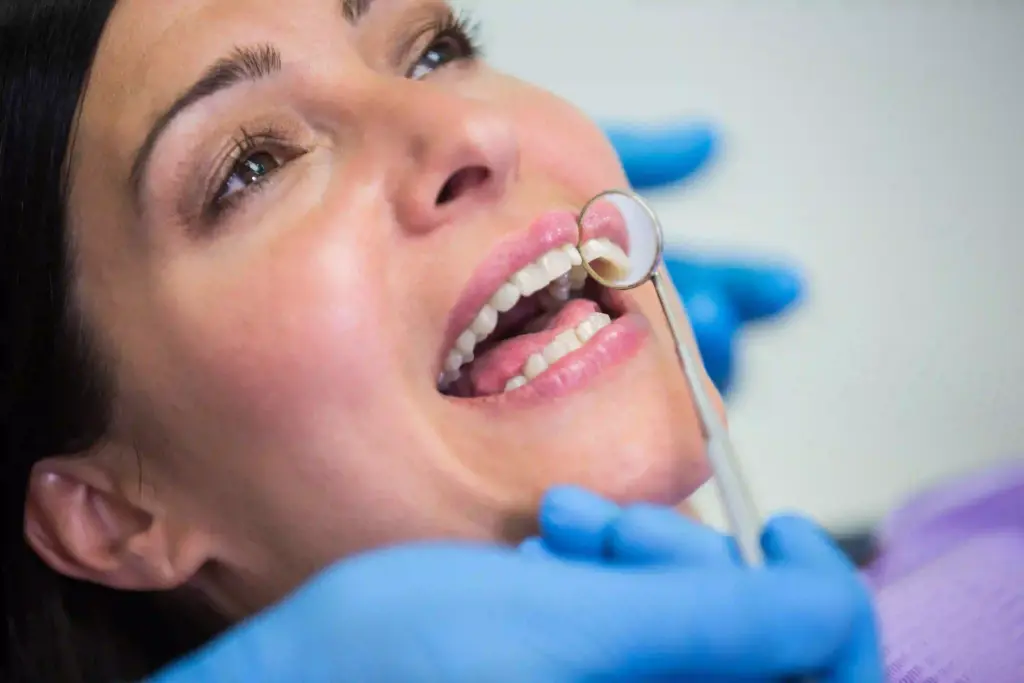
If the tooth decays, consider it the same as a house having a weak foundation. You can continuously fix wall cracks and repaint as well. But if the underlying main structural beams that carry weight are weak, then the entire house can collapse.
Why is it that we don’t understand mouth dynamics better? People do not consider that the power jaws can produce, says Prof. Dr. Coşkun Yıldız. With them, not only do we perform the essential functions that have been mentioned, but jaws alone can put a force of several hundred pounds on your enamel during these activities. If a tooth has been deeply decayed, then under such pressure, the tooth walls may break or collapse.
Dental Crowns Really Are “Crowns”
Consider a dental crown as a player’s headgear, specially designed for protection. Filling is like working inside the tooth, while a crown covers the whole visible tooth permanently. The barrier extends even down to the gum line.
The scenario in our practice is the following: when a tooth gets fractured or is deeply decayed, bacteria depend on tiny cracks, leading them into the nerve chamber at the center of the tooth. Getting a crown done achieves the following two important medical results at the same time:
- 360-Degree Seal: The crown makes a totally blocking barrier. It excludes plaque, saliva, and harmful bacteria. The decay process is stopped dead in its tracks.
- Load Distribution: The crown surrounds the tooth structure. Because of this, it takes up the heavy forces of chewing and distributes them evenly. It affects the delicate natural tooth underneath, not flexing or cracking.
Fillings and Crowns: When Does the Filling Pass Crime?
This brings us to the point: when is it that a filling cannot serve the purpose any longer? Anyhow, let us here see a clinical comparison of the restoration methods we use in our practice.
Here is the organized and formatted Markdown table based on your data, optimized for maximum readability and clean structure:
Comparison of Dental Restorations
| What Restoration Is? | Who It Is Intended For | Degree of Structural Protection | Life Expectancy on Average |
| Standard Composite Filling | Surface decay, minor fillings. | Low: Will not stop the fracture of teeth. | 5–7 Years |
| Inlay / Onlay | Intermediate decays, damaged surfaces for chewing. | Medium: Only protects some parts of the tooth. | 10–15 Years |
| Full Dental Crown | Extensive decay, root canal teeth, and large breakage. | Maximum: Covers almost the entire tooth structure. | More than 15 Years |
How Crowns and Matching Your Bite Fit Together?

Getting a crown that can perfectly stop decay is actually quite a creative process. To give a very artistic flavour to this form of dentistry is Dr Polen Akkılıç and her team in Turkey. So, placing a crown on your tooth is not the only thing that matters. It is about resurrecting the unchanged micro-anatomy of your bite.
The clinic experts use a series of advanced digital scanning methods and top-quality materials like monolithic zirconia or E-max. This clever pairing ensures that even the minute points where the crown sits against the gum are so excellently matched. A perfect margin essentially means that no bacteria can find a way in to cause infection. As a result, the tooth remains healthy for an extended period.
FAQs
No. We really understand how the mere thought of dental treatment intimidates a person. We make sure that the patient has been administered a strong anesthetic before starting any treatment. Usually, patients describe it as if it were only a simple filling. Apart from that, we will work really hard to ensure your comfort and relaxation during the process.
First, we remove all parts of your tooth that are infected and decayed, even the microscopic parts. After that, we meticulously clean your tooth and shape it to the respective crown. We then use special dental cement to bond the crown onto the tooth. Furthermore, as the tooth is fully sealed from bacteria in the mouth and the existing bacteria are eradicated, the decay can no longer progress.
As a crown is made of quality ceramic or zirconia, it is not possible for the crown to decay. However, the natural tooth at the gum level can still be exposed. Your tooth under the crown will most likely be very well protected if you brush properly and floss daily.
As long as you are diligent with your daily dental care, the best crowns can easily last 15 to 20 years, and sometimes a lifetime, especially if you are quite prompt in taking care of problems in your teeth to the treatment with regular check-ups. We have materials that are very resistant to the constant wear, rough and tumble of everyday life.
They initially come here for a vacation, and during that time,e they spoil themselves by getting top-quality dental care at a very affordable price.
- Al-Makramani, B. M., Razak, A. A., & Abu-Hassan, M. I. (2018). Clinical evaluation of full ceramic crowns: A 5-year retrospective study. Journal of Prosthodontic Research, 62(3), 320-325.
- Batson, E. R., Cooper, L. F., Duqum, I., & Mendonça, G. (2014). Clinical outcomes of three different crown systems with CAD/CAM technology. The Journal of Prosthetic Dentistry, 112(4), 770-777.
- Goodacre, C. J., Bernal, G., Rungcharassaeng, K., & Kan, J. Y. (2003). Clinical complications in fixed prosthodontics. The Journal of Prosthetic Dentistry, 90(1), 31-41.
- Pjetursson, B. E., Sailer, I., Makarov, N. A., Zwahlen, M., & Thoma, D. S. (2015). All-ceramic or metal-ceramic tooth-supported fixed dental prostheses (FDPs)? A systematic review of the survival and complication rates. Dental Materials, 31(6), 603-623.
- Rekow, E. D., Silva, N. R., Coelho, P. G., Zhang, Y., Guess, P., & Thompson, V. P. (2011). Performance of dental ceramics: challenges for improvements. Journal of Dental Research, 90(8), 937-952.

