

Treatment
Dental implants
A titanium root placed in the jaw, and a tooth built on top of it. It is the only replacement that becomes part of the bone rather than resting on it — which is why it is the one that stops the jaw from shrinking.
- Surgery
- 1–4 hours
- Anaesthetic
- Local or sedation
- Healing
- 3–6 months
- Lifespan
- 15 years to life
What it is
A dental implant is a medical-grade titanium post placed into the jawbone where the root of the tooth used to be. Over the following months the bone grows onto its surface and locks it in place — osseointegration — and the post becomes a foundation that a crown, a bridge or a full arch can be built on.
That is the difference from every other option. A removable denture and a conventional bridge sit on the gum and on the teeth either side of the gap; they replace what a tooth looks like and some of what it does. An implant replaces the root as well, so it carries a bite the way the original tooth did and keeps loading the bone, which is what stops the jaw receding under the missing tooth.
Bone that is not being used disappears. An implant is the only replacement that keeps using it.
Dr. Polen Akkılıç
Which one you need
A single implant
One post, one crown, and the teeth either side left untouched — which a conventional bridge cannot claim, since it has to be cut into them for support.
One missing tooth
An implant bridge
Two or more implants carrying a fixed bridge across the gap. Fewer posts than teeth, and nothing removable.
Several missing teeth in a row
All-on-4, All-on-6, All-on-X
Four to six implants placed to carry a full fixed arch. Where the bone allows it the temporary teeth go on the same day, and the final ones follow after healing.
A whole arch, upper or lower
Two ways of fixing it on
Screw-retained
- The common one. The crown, bridge or overdenture is screwed onto the titanium post.
- A dentist can take it off again — for a repair, a hygiene visit, or a change years later — and put it back.
- The join is strong enough to take a heavy bite without loosening.
Screwless
- Newer. The prosthetic is held by a friction or press-fit lock instead of a screw.
- Nothing to work loose, so fewer mechanical failures over time.
- A simpler placement and, in the clinic’s experience, a shorter healing period for the tissue around it.
What we place
The system is chosen for the case, not for the invoice — and you are told which one before it goes in.
- Straumann
- Nobel Biocare
- Zimmer Biomet
- Dentsply Sirona
- BioHorizons
- Osstem
- Megagen
- BEGO
- Medentika
- Implant Direct
- Euroteknika
- Hiossen
What happens to you
Two visits, and a wait at home in between
Before you fly
A plan and a price
You send a photograph and what you want changed. You get back which treatment applies, how many implants it takes, and what it costs — before a flight is booked.
Day 1
Scan, plan, surgery
A CBCT scan, the plan confirmed against it, and the implants placed the same day under local anaesthetic or sedation. Surgery runs one to four hours depending on how many go in.
Days 2–5
Temporary teeth, then home
Swelling peaks around the second or third day and is easing by the seventh. Where the case allows it, you fly home with temporary teeth in place.
3–6 months
Osseointegration
The bone grows onto the implants. Nothing to do but keep them clean; this part happens at home.
The second visit
The final teeth
You come back for the crowns, bridge or arch — designed digitally, milled and glazed in our own laboratory, and fitted to a bite we check before anything is fixed.
Getting here
Istanbul is a direct flight from most of Europe and from ten North American cities.
| Departure city | Flight time | Airlines |
|---|---|---|
| UK | ||
| London (LHR/LGW/STN) | ~3h 50m | Turkish Airlines, BA, Pegasus |
| Manchester / Birmingham | ~4h 10m | Turkish Airlines, Jet2, Pegasus |
| Ireland | ||
| Dublin (DUB) | ~4h 30m | Turkish Airlines |
| Europe | ||
| Amsterdam (AMS) | ~3h 30m | Turkish Airlines, KLM, Pegasus |
| Switzerland | ||
| Zurich (ZRH) / Geneva | ~3h 10m | Turkish Airlines, SWISS, Pegasus |
| Denmark | ||
| Copenhagen (CPH) | ~3h 25m | Turkish Airlines, SAS, Pegasus |
| Norway | ||
| Oslo (OSL) | ~3h 55m | Turkish Airlines, Norwegian, SAS |
| Sweden | ||
| Stockholm (ARN) | ~3h 50m | Turkish Airlines, SAS, Pegasus |
| USA | ||
| New York (JFK / EWR) | ~10h direct | Turkish Airlines, United |
| Chicago (ORD) | ~11h direct | Turkish Airlines |
| Los Angeles (LAX) | ~13h direct | Turkish Airlines |
| Canada | ||
| Toronto (YYZ) / Vancouver | ~10–12h direct | Turkish Airlines, Air Canada |
| Australia | ||
| Sydney / Melbourne | ~17–20h, 1 stop | Turkish Airlines, Qatar, Emirates |
Questions
Does it hurt?
Not during: the surgery is done under local anaesthetic or sedation. Afterwards there is soreness and swelling, controlled with painkillers and cold packs. Most patients feel it for three to seven days and it has usually gone by the end of the first week.
How long do they last?
Anywhere from fifteen years to the rest of your life. What decides it: how well you keep them clean, your general health and bone density, the quality of the implant itself, and the hand that placed it.
When can I eat normally again?
Cold or lukewarm soft food for the first 24–48 hours — yoghurt, smoothies, that kind of thing — and soft food for the rest of the first week, chewed on the other side. No straws and no hot drinks early on, because both put pressure on the site. Then back to normal, gradually.
How much swelling should I expect?
Swelling is the normal response to the surgery. It peaks on the second or third day and starts going down by the seventh. Cold packs on the first day help most.
Can it fail?
It can. The risk is higher where the bone is weak or the patient smokes — which is why the scan comes before the plan, and why bone grafting or a sinus lift is sometimes part of the answer rather than an upsell.
Who does the surgery?
A board-certified implantologist. Every procedure at Lema is carried out by a doctor, and you are told which one before you book — ask, and we will name them.
Patients
The people who already came
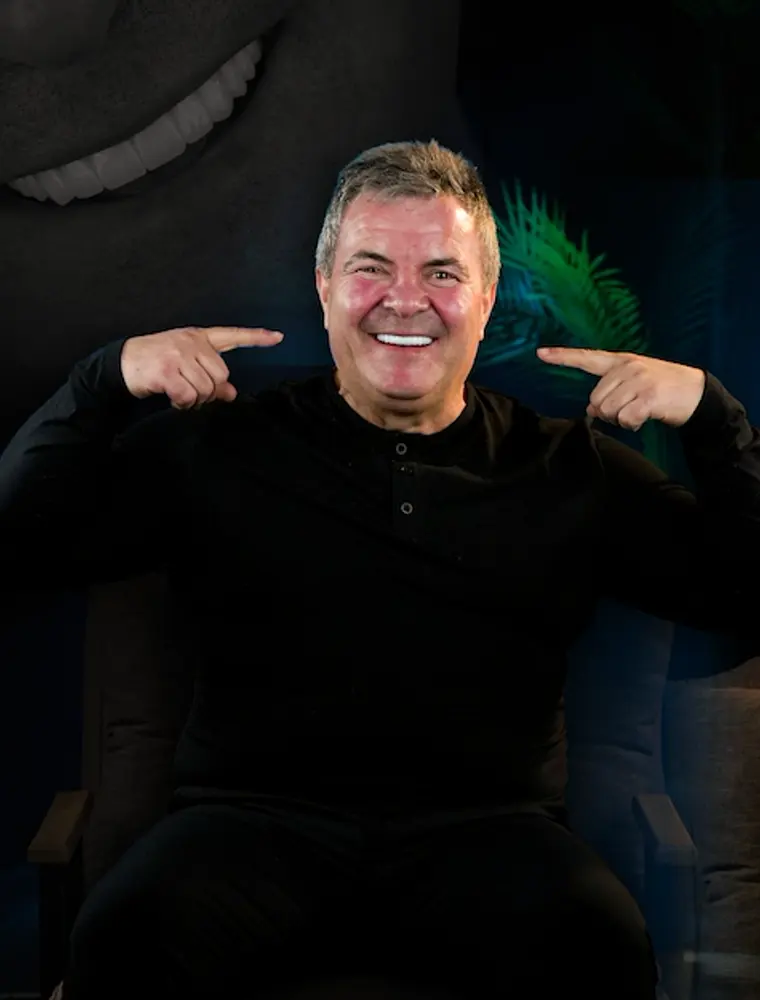
Six of our patients, filmed at the clinic and talking about their own treatment. They are the clinic’s patients rather than any one procedure’s — what each of them had is in the film.
Find out if this is what you need
Send a photograph and a sentence about what is wrong. You will get a named doctor, a plan and a price — before you book a flight.

References
- Lifespan of dental implantsJung, R. E., Zembic, A., Pjetursson, B. E., Zwahlen, M., & Thoma, D. S. (2012). Systematic review of the survival rate and incidence of biological, technical and aesthetic complications of single crowns on implants. Clinical Oral Implants Research, 23(s6), 2–21.
- Pain after implant surgeryKhouly, I., Braun, R. S., & Ordway, M. (2021). Analgesics for dental implants: A systematic review and meta-analysis. Frontiers in Pharmacology, 12.
- Risks and side effectsEsposito, M., Grusovin, M. G., Polyzos, I. P., Felice, P., & Worthington, H. V. (2010). Interventions for replacing missing teeth: dental implants in fresh extraction sockets. Cochrane Database of Systematic Reviews.